Revyson: your all-round partner for geotechnical insight
Text Niels Rouvrois Beeld Revyson
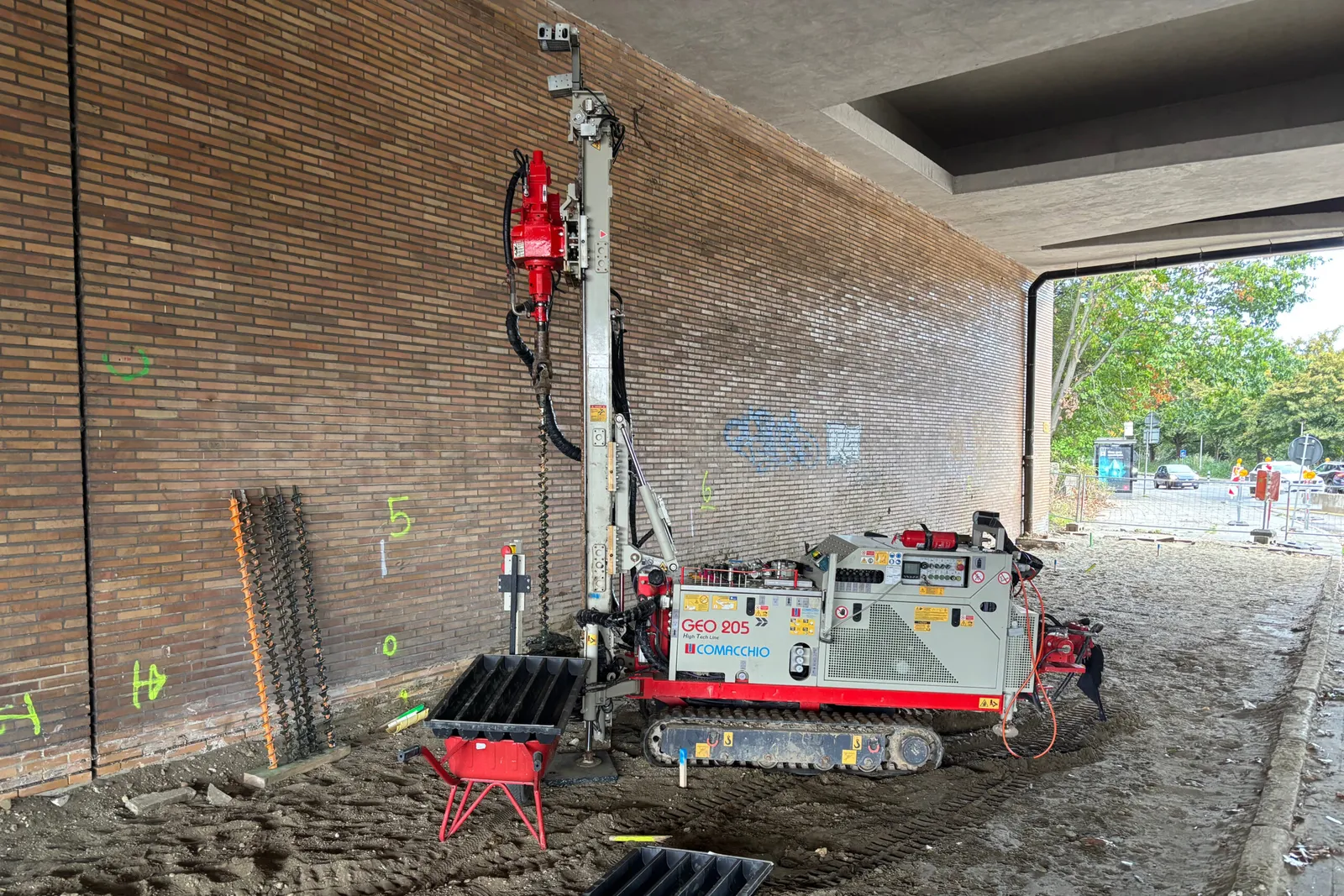
With a broad range of services as its foundation, Revyson has established itself in the market as a reliable and responsive partner for geotechnical ground investigations. “We support architects, engineering consultancies, contractors, property developers and public authorities at every stage of the geotechnical process,” says Ludovic Huysentruyt, geotechnical project engineer at Revyson.
Starting from the concept for a foundation, excavation, dewatering system … Revyson determines and carries out all the necessary tests. “A successful construction project starts with accurate, reliable knowledge of the ground conditions,” explains Ludovic Huysentruyt. “Our services begin with the necessary desk studies, followed by field investigations, the required calculations and quality checks after completion. In addition to geotechnical investigations, we also offer expertise in related fields such as dewatering, environmental soil investigations and archaeological monitoring. This enables us to offer our clients a complete range of services.”
Services & delivery
Revyson stands out for its broad range of ground investigation services for foundation and retaining wall techniques. Ludovic Huysentruyt: “We take a hands-on approach and help our clients determine the right investigation package. This prevents time and budget being wasted on incomplete or unnecessary investigations. We provide a solid basis for further studies and design decisions. The name Revyson reflects this approach: Re-Vision & Sonderingen. We review every project critically and tailor the investigation to its specific needs. The result: reliable data that enables engineers and designers to make informed choices, fully in accordance with the applicable standards and codes.”
Revyson currently has an extensive range of investigation methods, including cone penetration tests (CPTM, CPTE & CPTU), boreholes (auger and geophysical logging boreholes), usually combined with pressuremeter tests, piezometers (with or without monitoring), plate load tests, infiltration tests, vibration measurements and sonar tests. We describe some of these below, but do take a look at the revamped website, www.revyson.be. It lists all the techniques, and you can download the corresponding information sheets for each one.
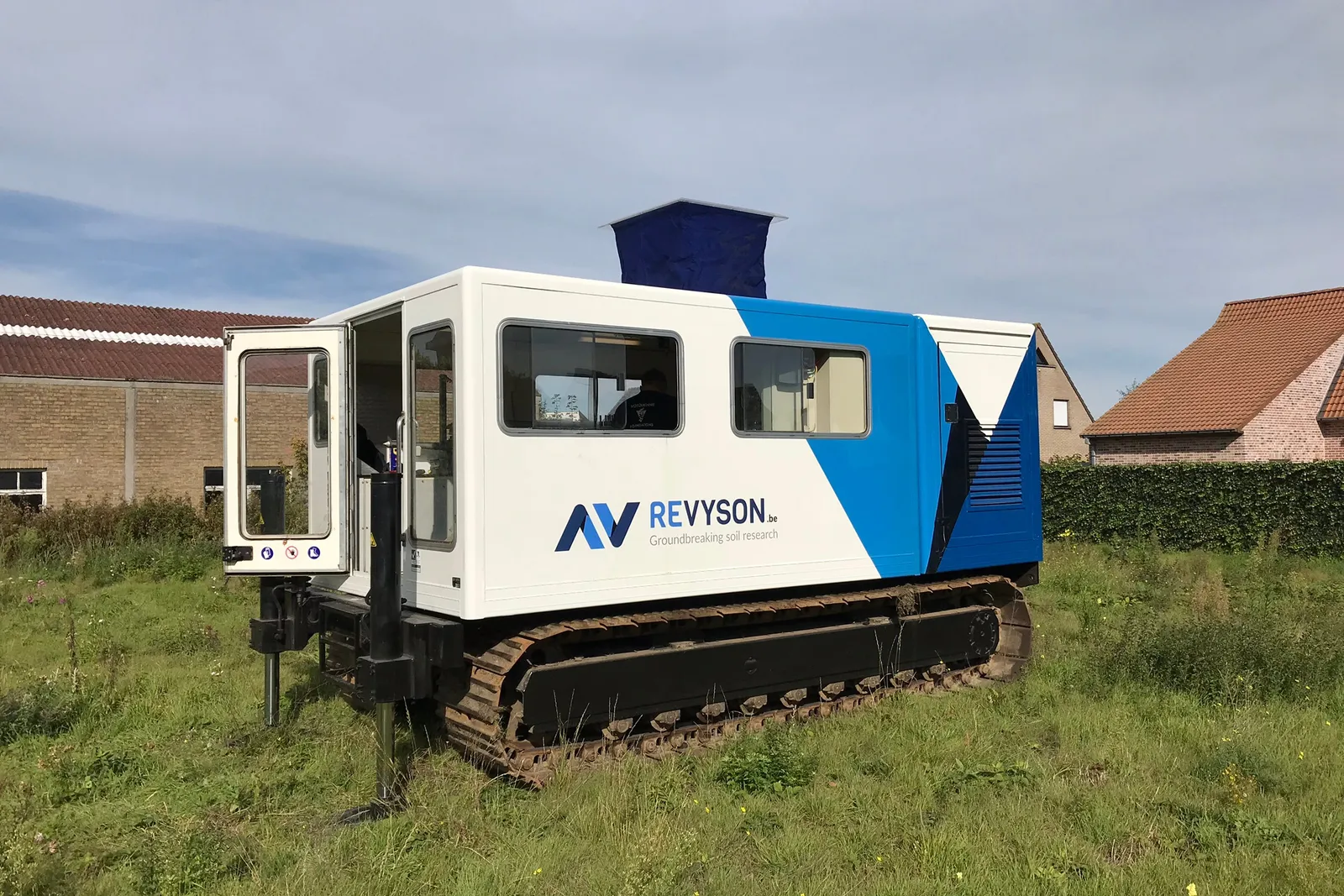
Cone penetration tests
A cone penetration test involves slowly pushing a cone into the ground using constant hydraulic pressure. As it penetrates the ground, two parameters are measured: cone resistance, which indicates the force acting on the tip of the cone, and sleeve friction. These measurements provide valuable information about the soil profile and the types of soil layers, as well as the bearing capacity and stability of the ground.
The test results can be used to determine the soil’s bearing capacity and provide a substantiated foundation recommendation. Many Belgian standards and calculation rules use these tests in their calculations, which is why this type of testing is so important. The main limitation is that the cone cannot penetrate hard ground such as weathered rock or sandstone layers. In these cases, Revyson uses boreholes combined with pressuremeter tests (see below).
Boreholes
There are two types of borehole investigation: those involving sampling and those involving the recording of drilling parameters.
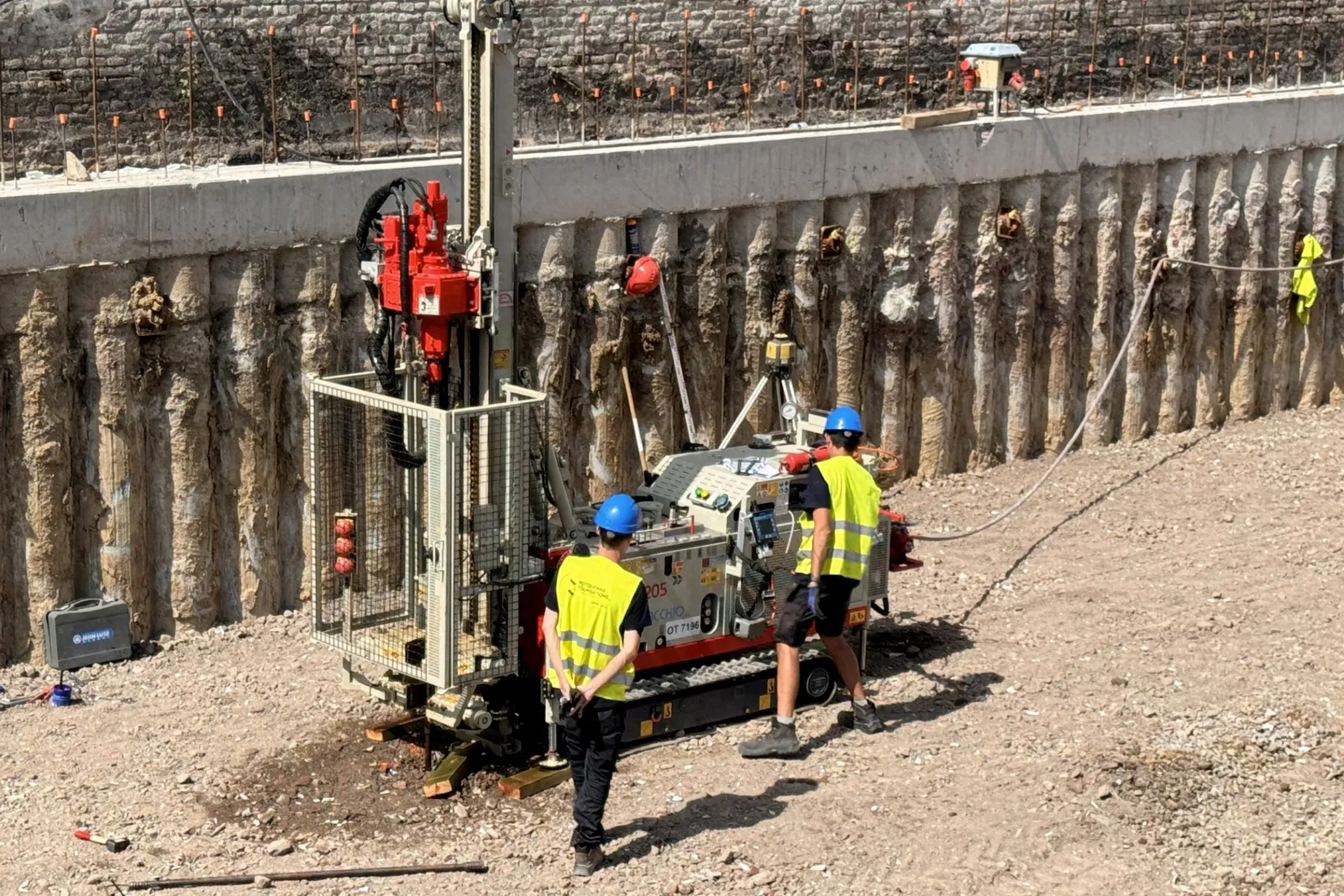
A commonly used sampling method is auger drilling. In this technique, a spiral-shaped drill rod, known as an auger, is screwed into the ground at a constant rotational and penetration speed. As the drill penetrates the ground, soil gradually fills the spiral and is then collected and analysed to establish the soil profile. If required, this can be combined with the installation of a piezometer to determine the groundwater level.
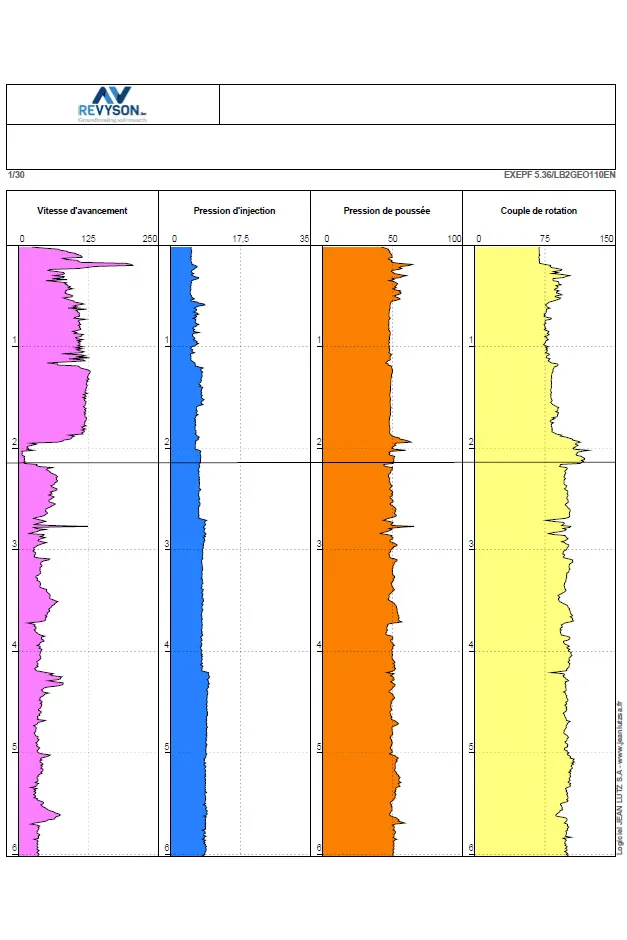
Geophysical logging boreholes are used to record drilling parameters. How exactly does this work? While maintaining constant downward pressure on the drilling tools, we record parameters such as penetration rate, drilling torque and injection pressure. The longer it takes to reach the target depth, the harder the ground.
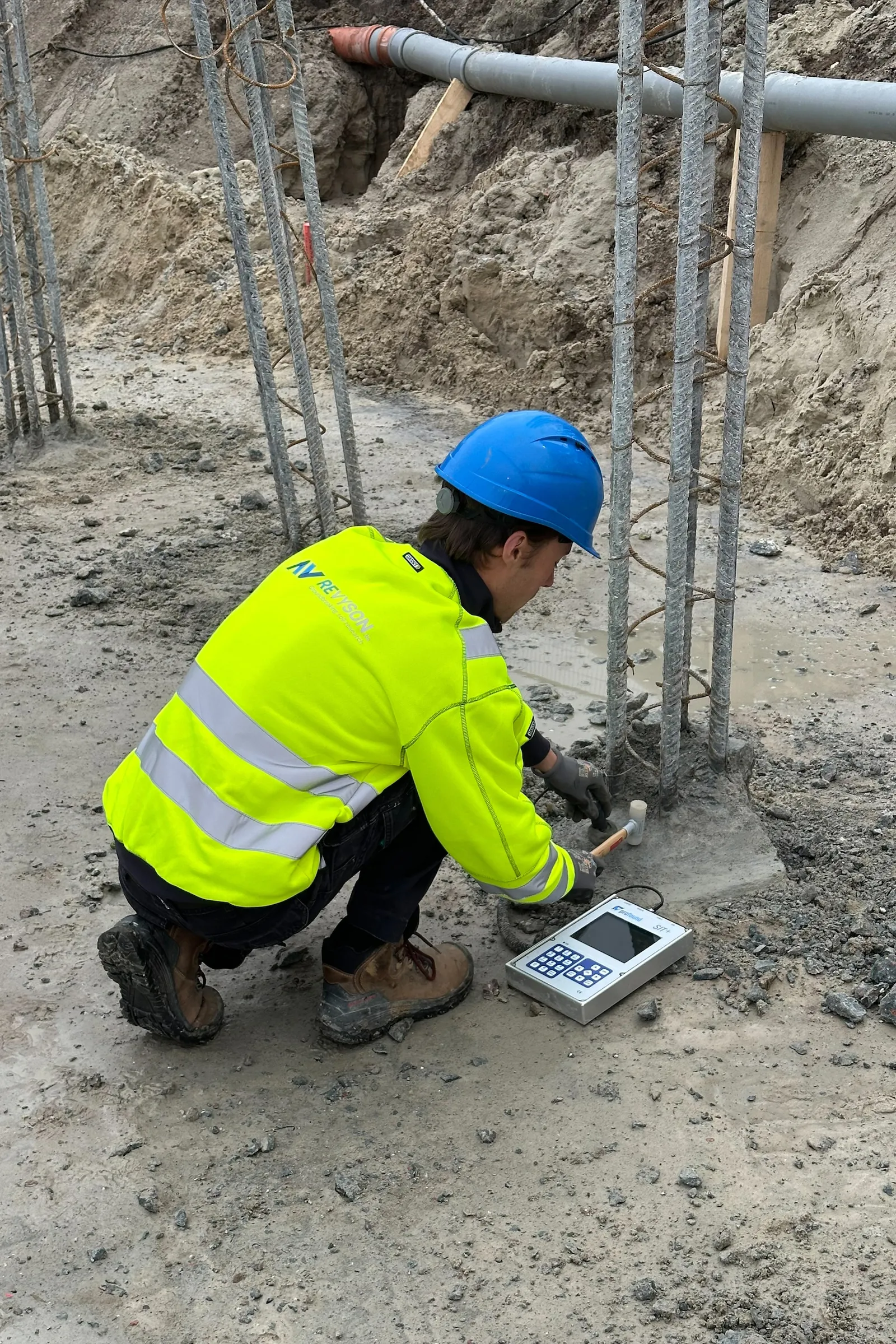
These boreholes are very often combined with pressuremeter tests. In this test, a cylindrical measuring instrument, the pressuremeter, is placed in a borehole. It consists of a flexible membrane that is gradually inflated. As the pressure in the cylinder rises, the expansion of the membrane is measured. The relationship between pressure and deformation can be used to calculate the compressibility, stiffness and strength of the soil. These parameters can then be used to determine the bearing capacity of piles in this ground.
Continuing to expand
In the near future, Revyson will further expand its offering to include environmental boreholes, unexploded ordnance investigations and geophysical scans for the non-destructive detection of cables, pipelines and anomalies. “This will enable Revyson to strengthen its position in the market as an all-round partner for geotechnical investigations. Revyson stands for reliability, flexibility and innovation. We deliver substantiated insights and hard data, the foundation on which you can build with confidence, both literally and figuratively,” concludes Ludovic Huysentruyt.
Visit the revamped website: www.revyson.be
Question about this story? Ask your question
Keep following this
Get an email when a new story is published. No account needed.
- ThemeUsing and protecting the subsurface
- SubjectYearbook