OMGEVING, spatial projects to address tomorrow’s challenges
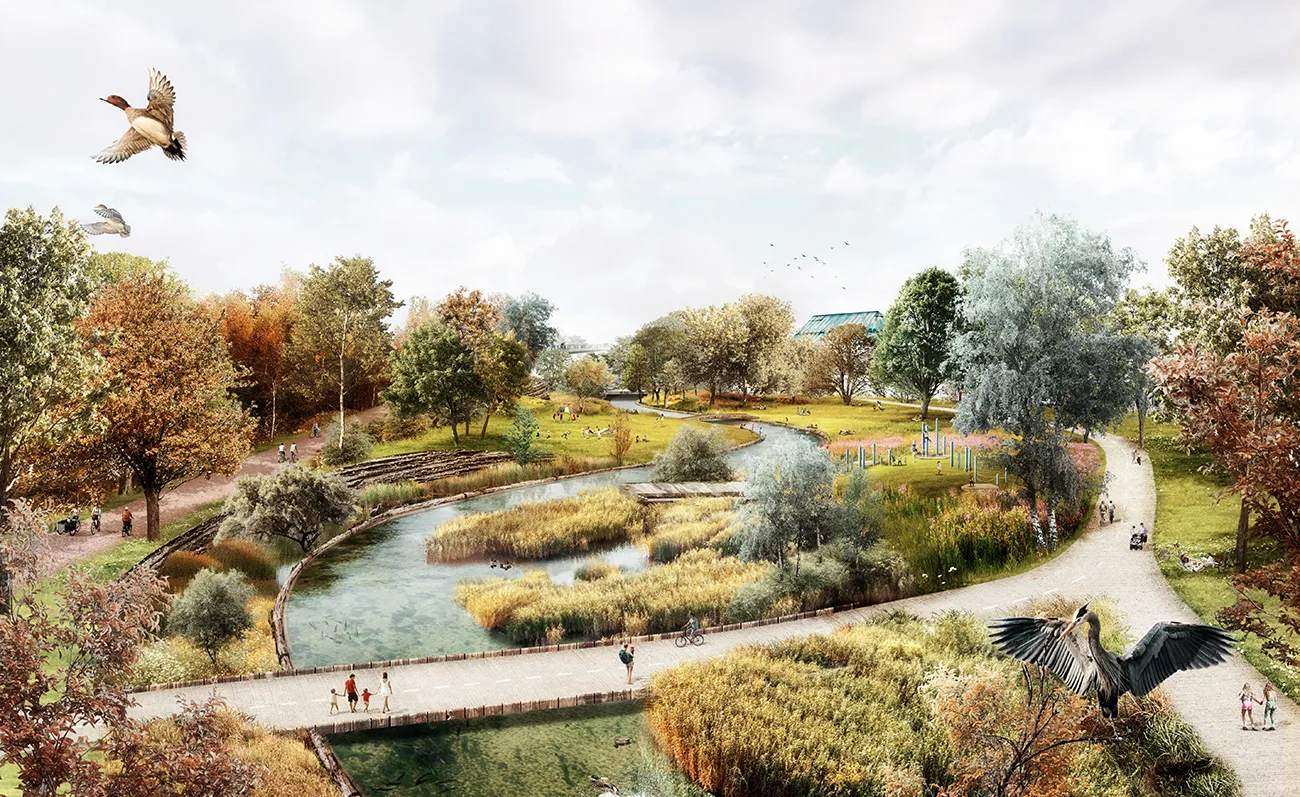
OMGEVING landscape architecture urbanism is a leading design practice that has been taking an integrated approach to the spatial quality of our living environment for 50 years. The team comprises more than 80 committed and experienced landscape architects, engineers and spatial planners working from Antwerp, Ghent and, more recently, Ho Chi Minh (Vietnam). In addition, 30 members of staff are partners in the co-operative.
OMGEVING aims to be innovative and shuns well-trodden paths, standard solutions and assembly-line work. Creativity, alternative ways of thinking and a certain independent-mindedness are hallmarks of the practice. An open attitude and intensive dialogue with the client are crucial to meeting every challenge. Clients may be public authorities or private organisations.
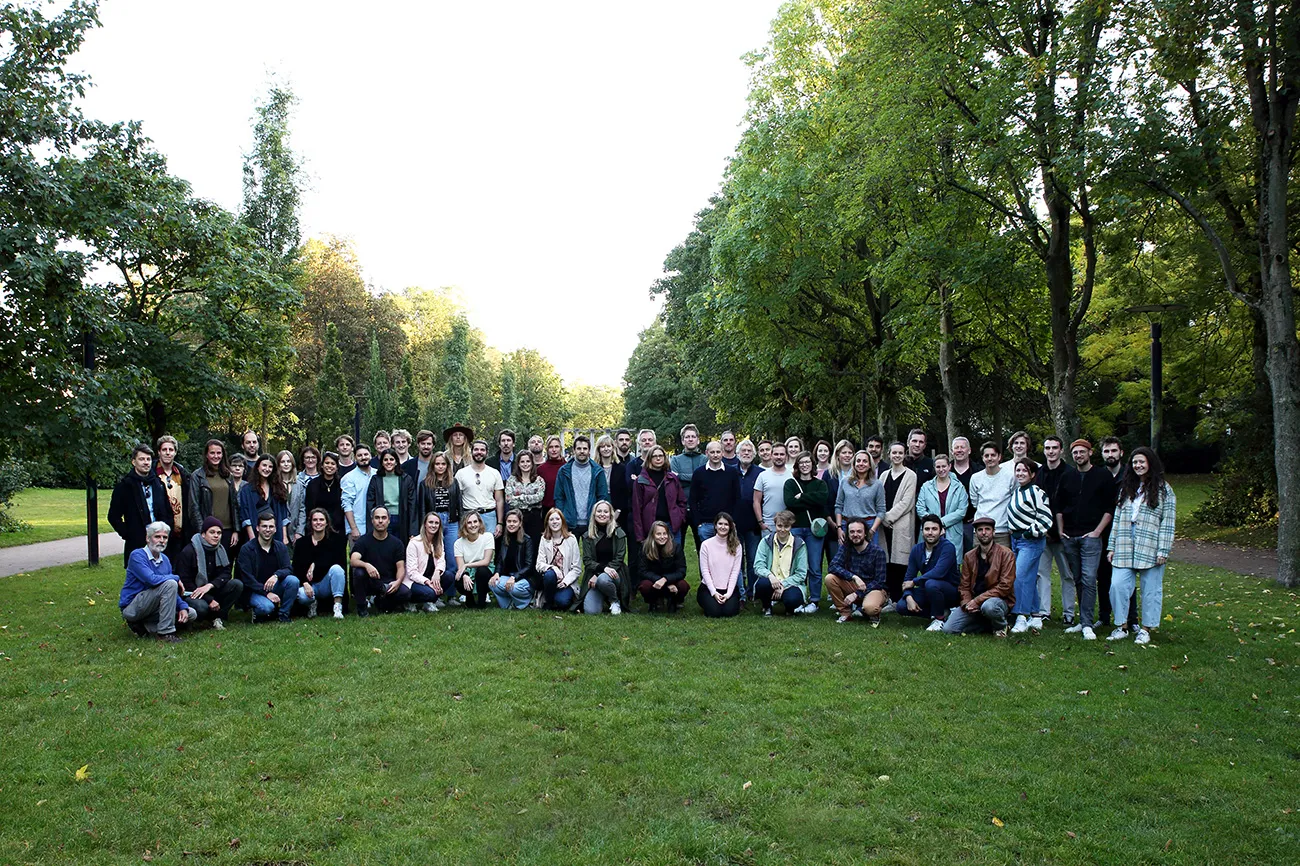
Cross-fertilisation with the client
The carefully considered end result is not the work of one mind, but of an interdisciplinary team of skilled people, including both employees and partners, who share the same values and objectives, as does the client. This allows for the flexible use of scenarios, research through design and compelling final visions. It also enables the team to share its knowledge with a degree of authority in public debate. An integrated approach, creative and well-founded solutions, and above all human capital are OMGEVING’s most important keys to success.
Quality living spaces as a driver of a ‘healthy’ society
OMGEVING believes that spatial quality can be created and offers solutions to today’s challenges: climate change, sustainability, environmental awareness … The practice is involved in complex spatial challenges, from large-scale mobility projects to schemes that improve liveability. Examples include the study of the eastern section of the R0 Brussels ring road, Linkeroever and Schijnpark in Antwerp. OMGEVING is also leading the design for the redevelopment of the R4 ring road in Ghent. Green spaces, ecoducts, safe cycle paths and road infrastructure are woven together in the landscape.
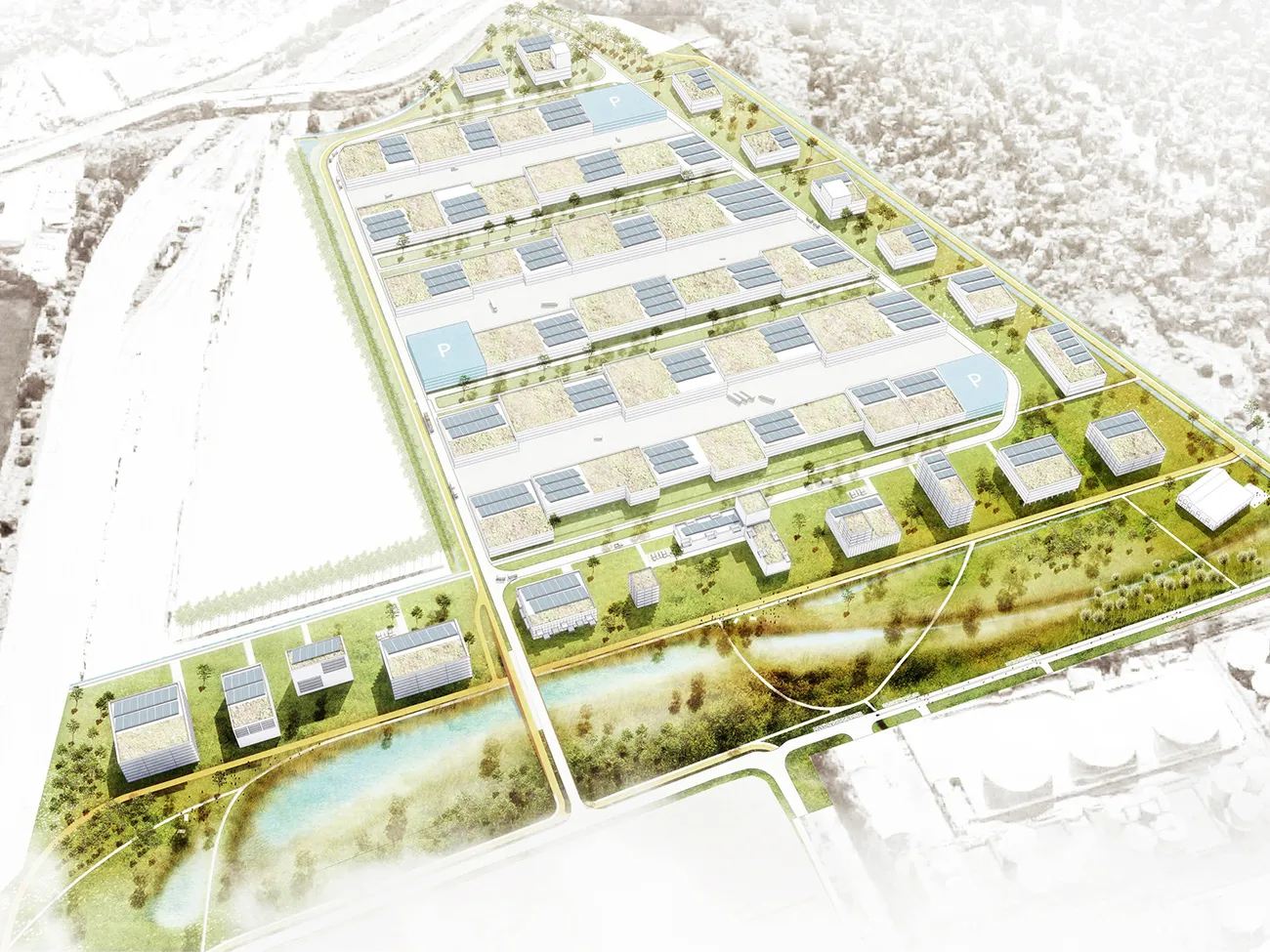
Blue Gate: Belgium’s first circular business park
OMGEVING aims to build the broadest possible public support for projects that address future challenges and, above all, are feasible and realistic. The Blue Gate project in Antwerp is a prime example. OMGEVING was involved as early as 2011 in developing ideas for this former brownfield site south of the city of Antwerp, working closely with the City, PMV and De Vlaamse Waterweg. In 2015, the team worked with DEME-DEC and Bopro to develop a fully integrated design and is currently helping oversee its implementation.
Innovative features:
- Covers 100 ha, with a water retention basin of over 20,000 m², designed to withstand rainfall events with a 1-in-100-year return period.
- A safe, pleasant cycle link between the City and southern districts such as Hoboken.
- Helps manage water resources in the nearby Hobokense polder.
- No gas connection, but a district heating network.
- Opportunities to reuse the retention basin water, for example to irrigate Antwerp’s urban green spaces.
In short, Blue Gate is much more than a business park. It is also a recreational area with green spaces and spontaneous natural development.
Space in Flanders is becoming increasingly scarce
Developing new open space is far from ideal. OMGEVING sees considerable potential in brownfield sites, underused developed areas and multi-purpose use of space. Its residential projects, such as the former Agfa site Minerve in Edegem, the Meurop site in Bonheiden and Le Saffre in Oudenaarde, are fine examples.
OMGEVING sees many challenges ahead, but is above all looking for projects and clients ready to tackle tomorrow’s challenges NOW.
Question about this story? Ask your question
Keep following this
Get an email when a new story is published. No account needed.
- SubjectYearbook