Natural stone: choosing wisely for sustainability and beauty
Text and images Maris Natuursteen
Designers make decisions that shape the streetscape for generations. The choice of materials made today affects not only appearance and comfort, but also the future of our living environment. That is why sustainable design starts with choosing the right material for the right place.
Peter Maris believes natural stone is an exceptionally strong choice. It is a pure natural product: the earth does the work, not a factory. As a result, extracting and processing natural stone requires far less energy than producing concrete or clay products and asphalt.
Natural stone uses up to four times less energy than concrete
A recent study shows that, for a 1,000 m² paving project over a period of 100 years, the total energy requirement for natural stone setts is approximately 471,900 megajoules (MJ). MJ is a unit that indicates how much energy a material has required over its entire life cycle, from extraction to installation. The lower the figure, the more sustainable the material. By comparison, the energy requirement for concrete paving blocks over the same area and period rises to 1,149,000 MJ, and to 2,136,000 MJ for concrete slabs. That is more than four times as much. For clay pavers, the figure is as high as 3,995,000 MJ, and for asphalt it is 5,210,000 MJ (source: Sustainability Study of external paving Deutscher Naturwerkstein-Verband e.V.)
Sustainability in black and white
“Natural stone is also one of the most climate-friendly choices in terms of CO2 emissions,” says Peter Maris. The same study concludes that natural stone setts emit almost seven times less CO2 than precast concrete, while clay pavers perform even worse. Thanks to its exceptionally long service life, often more than a hundred years without needing replacement, natural stone’s environmental impact remains low throughout the entire period a project is in use.
At Maris Natuursteen, sustainability is embedded throughout the company’s policies. It is already well advanced in the CO2 Performance Ladder process, actively measuring, reducing and transparently reporting its emissions. The company is also carrying out life cycle assessments (LCAs) for various natural stone materials, so that it can demonstrate to designers and clients, with figures, that natural stone is the sustainable choice for their specific project.
Old setts, a new future
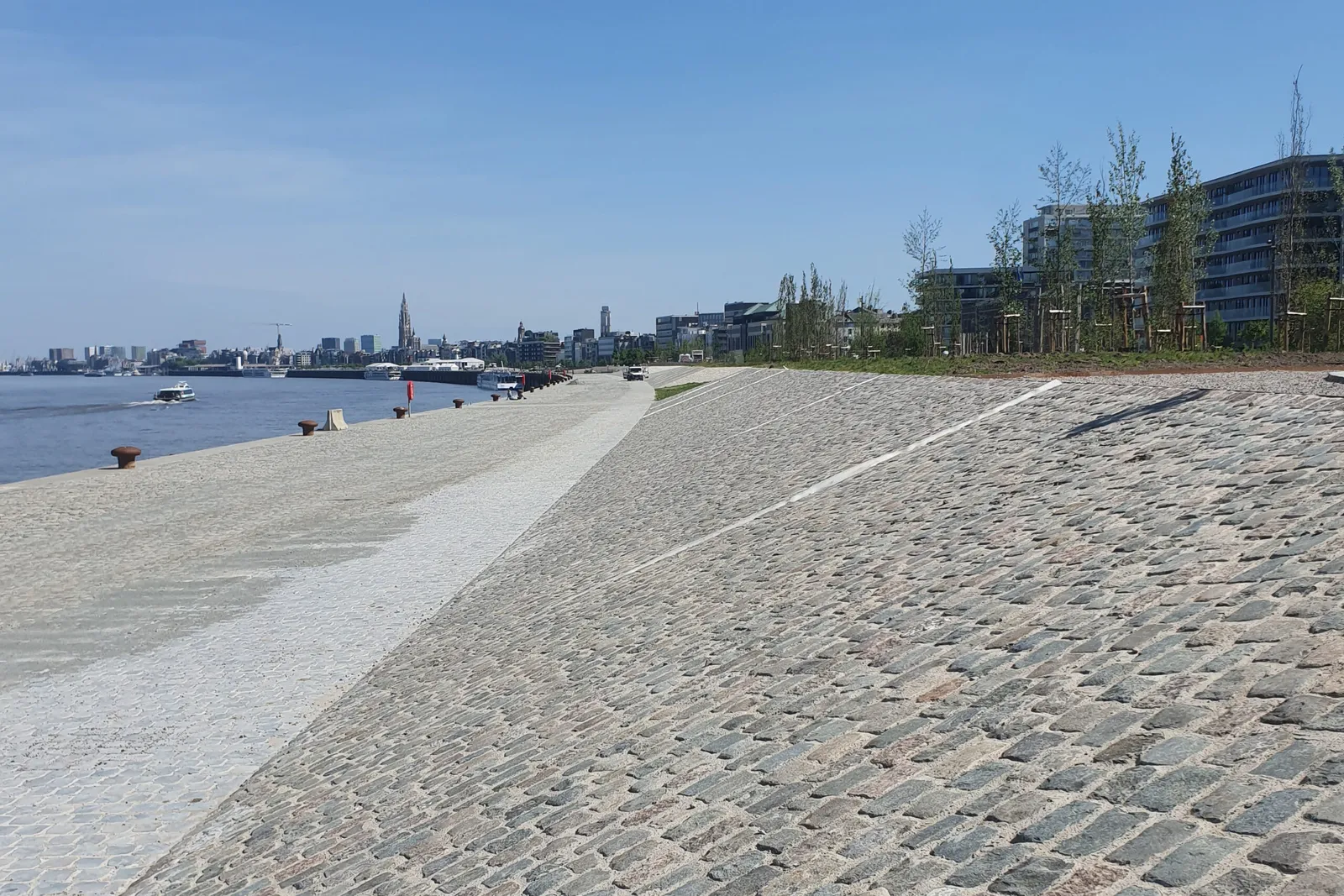
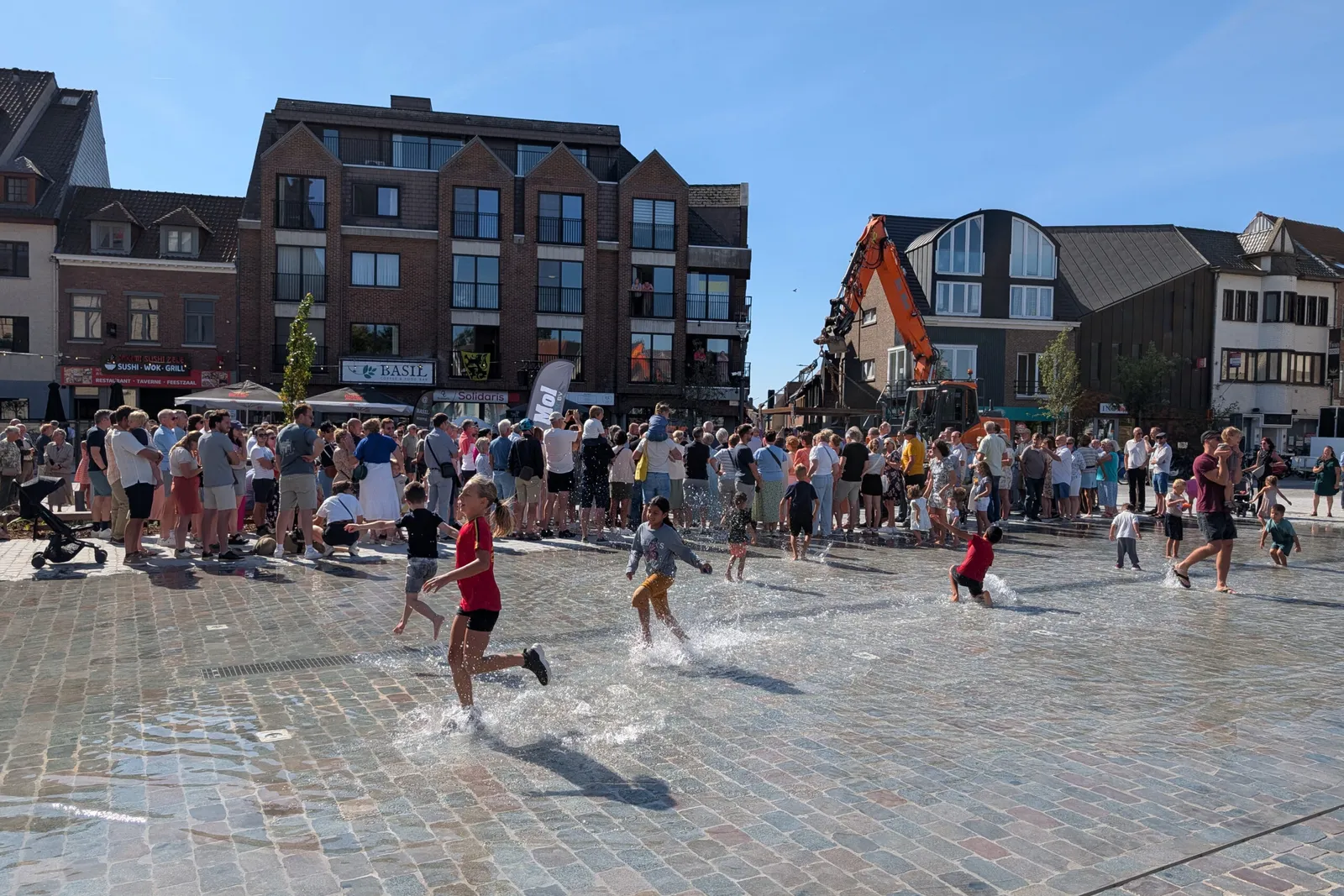
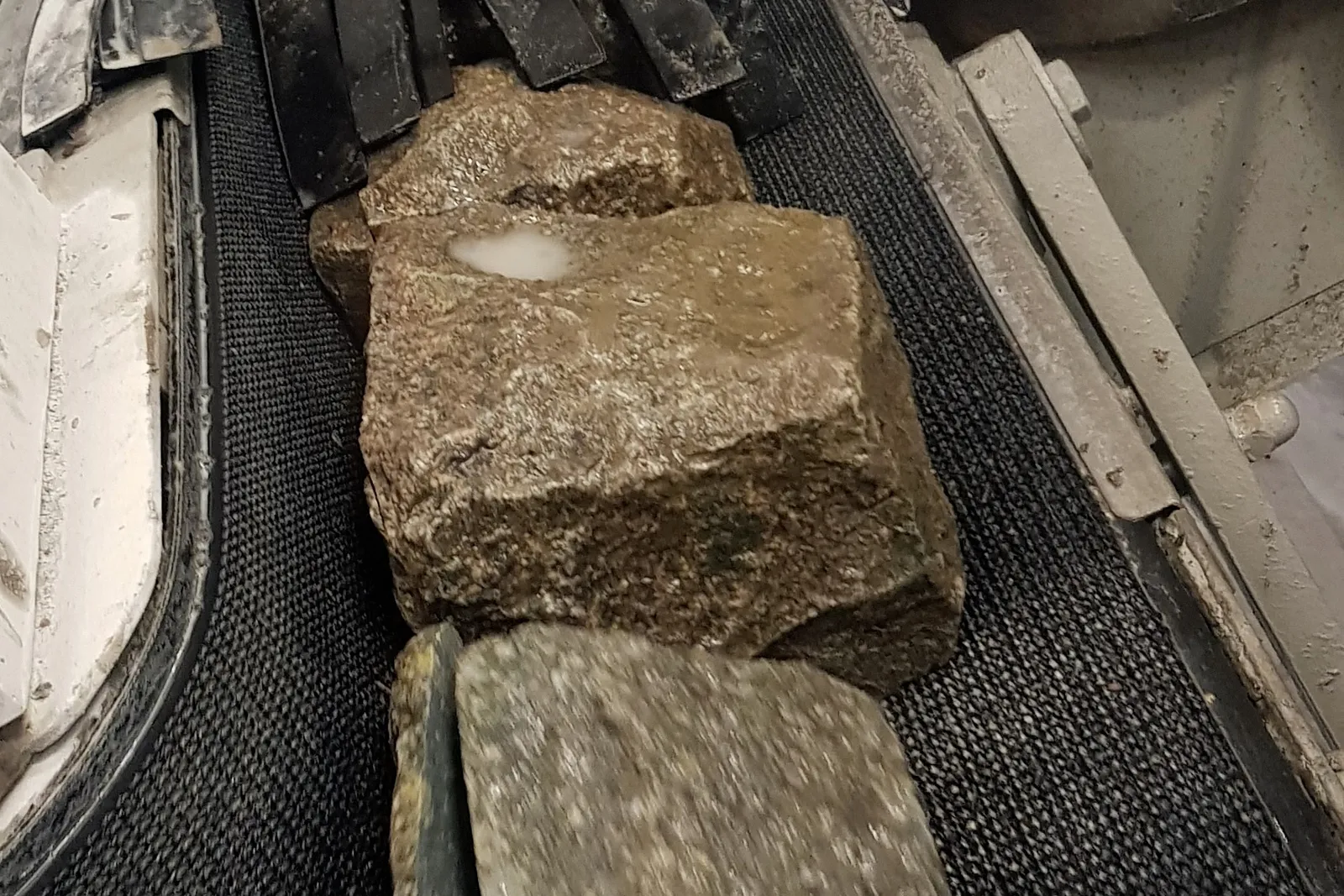
A significant part of the company’s work involves the careful recovery of old setts and paving materials. It selectively removes existing natural stone, cleans it and sorts it by stone type and size. The materials are then brought back into circulation as fully fledged building materials, either in their original form or sawn. This approach reduces the need for new extraction and transport, saves substantial amounts of CO2 and energy, preserves the authentic character of historic materials and aligns seamlessly with the circular construction objectives set by public authorities. Reclaimed setts offer the same, and often better, technical performance as new materials, but with a much smaller ecological footprint.
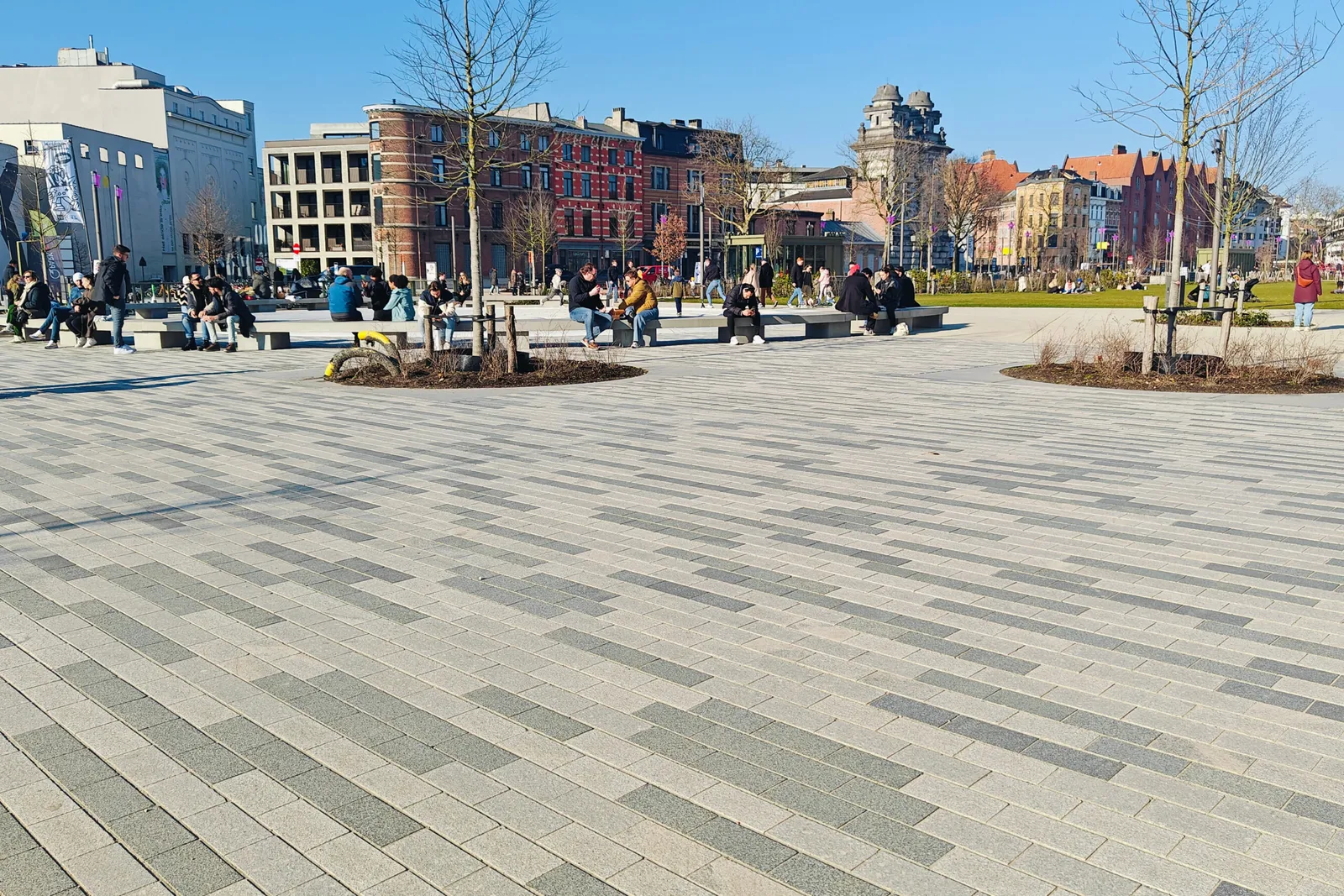
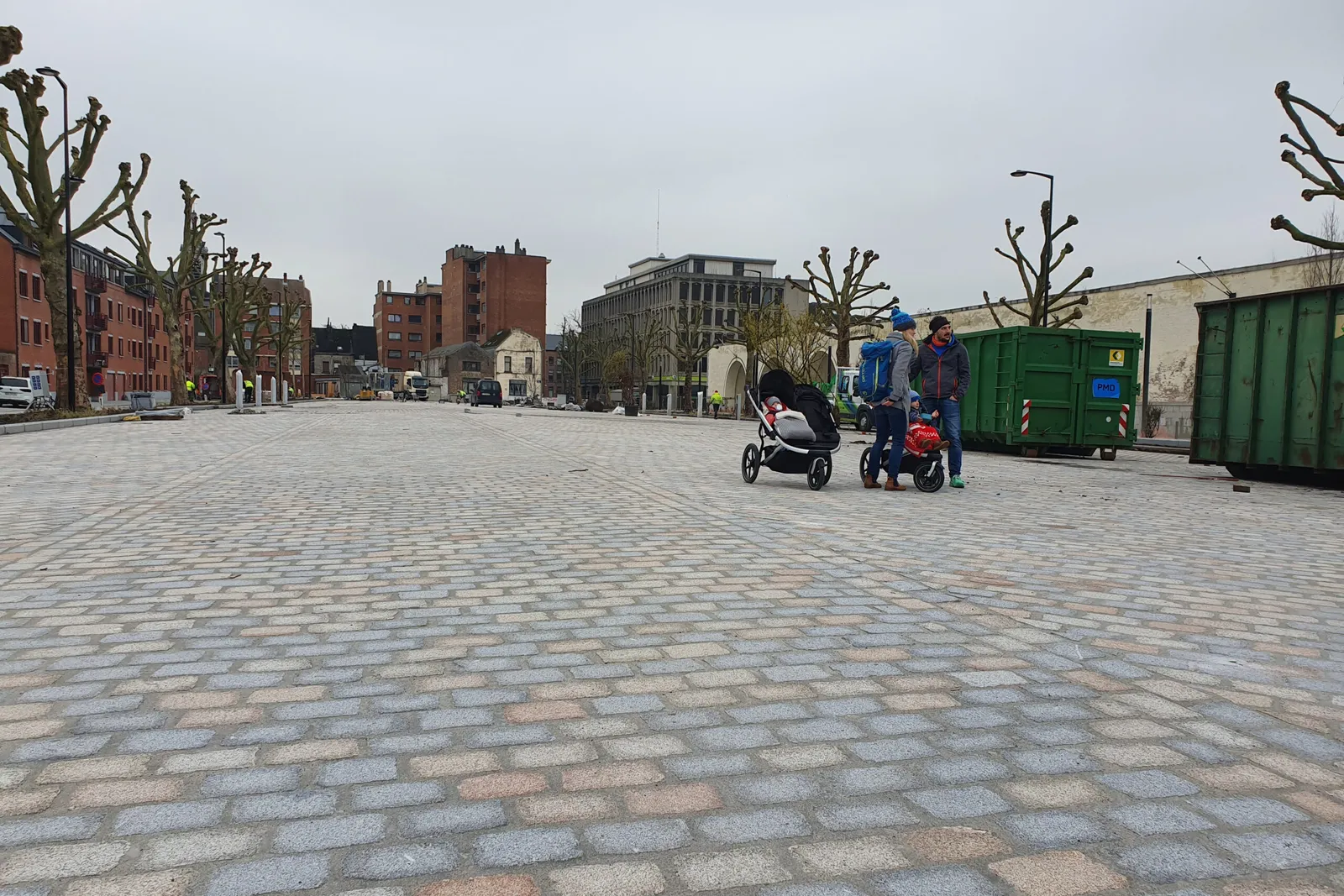
There is another advantage to natural stone, whether reclaimed or new: virtually every city or municipality has enough space to opt for natural stone setts. Think of parking spaces, squares, village centres … Places where materials with a much higher carbon footprint are still often used, even though natural stone offers significant technical and aesthetic benefits. By making this conscious choice, designers make a tangible difference: visible on the surface, felt in the climate impact and lasting thanks to natural stone’s exceptionally long service life.
Transparency throughout the supply chain
“However, these reclaimed materials are not always available in every required size or quantity,” Peter Maris continues. Some projects therefore call for new natural stone. Even then, sustainability and transparency remain just as important. “That is why we have endorsed the principles of the TruStone initiative, the Flemish-Dutch covenant for International Corporate Social Responsibility (IMVO). We are thereby committing to mapping our entire supply chain and identifying and mitigating risks such as child labour, unsafe working conditions and environmental damage. Specifically, we subject foreign quarries and production facilities to rigorous inspections and audits through the independent organisation Xertifix. On site, it verifies compliance with the guidelines of the OECD, the United Nations and the International Labour Organization (ILO) on human rights, working conditions, a living wage and environmental protection.”
Back to nature
Peter Maris says natural stone is sustainable not only because it lasts longer and can be reused several times. As a pure natural material, it can also be returned to the natural cycle without difficulty at the end of its service life. It can simply be given back to nature, with no negative impact on the environment. It is beautiful because it brings character and timelessness to every outdoor space. In this way, spaces can be created using a material that has value not only today, but for generations to come.
Question about this story? Ask your question
Keep following this
Get an email when a new story is published. No account needed.
- SubjectYearbook