Dirk Van Loo, CEO of COPRO, sees similarities and differences compared with 10 years ago

COPRO was established 38 years ago in response to a need within the sector. There was a need for an independent third-party body to inspect construction products, and COPRO took on that role. This task still forms the basis of COPRO’s DNA today. To mark the 10th anniversary of Grond/Weg/Waterbouw, Dirk Van Loo, who succeeded Erik Barbé as CEO of COPRO in 2016, dug out COPRO’s 2011 annual report. “On the one hand, we see many changes compared with 10 years ago, but on the other, we were already very forward-thinking at the time,” he says.
Anyone leafing through COPRO’s 2011 annual report, available to consult free of charge at www.copro.eu, will soon see that a great deal has changed organisationally. Chairman Fernand Desmyter was succeeded by Filip Boelaert, and Dirk Van Loo took over as CEO from Erik Barbé. “So there have been some changes at board level, but when we look at the overall vision, we see that it is still the same,” says Dirk Van Loo. “COPRO is still an impartial body, partly public and partly private. The chairman’s foreword from 2011 is still relevant today. The objectives, activities and mission have not changed.”
More certified products
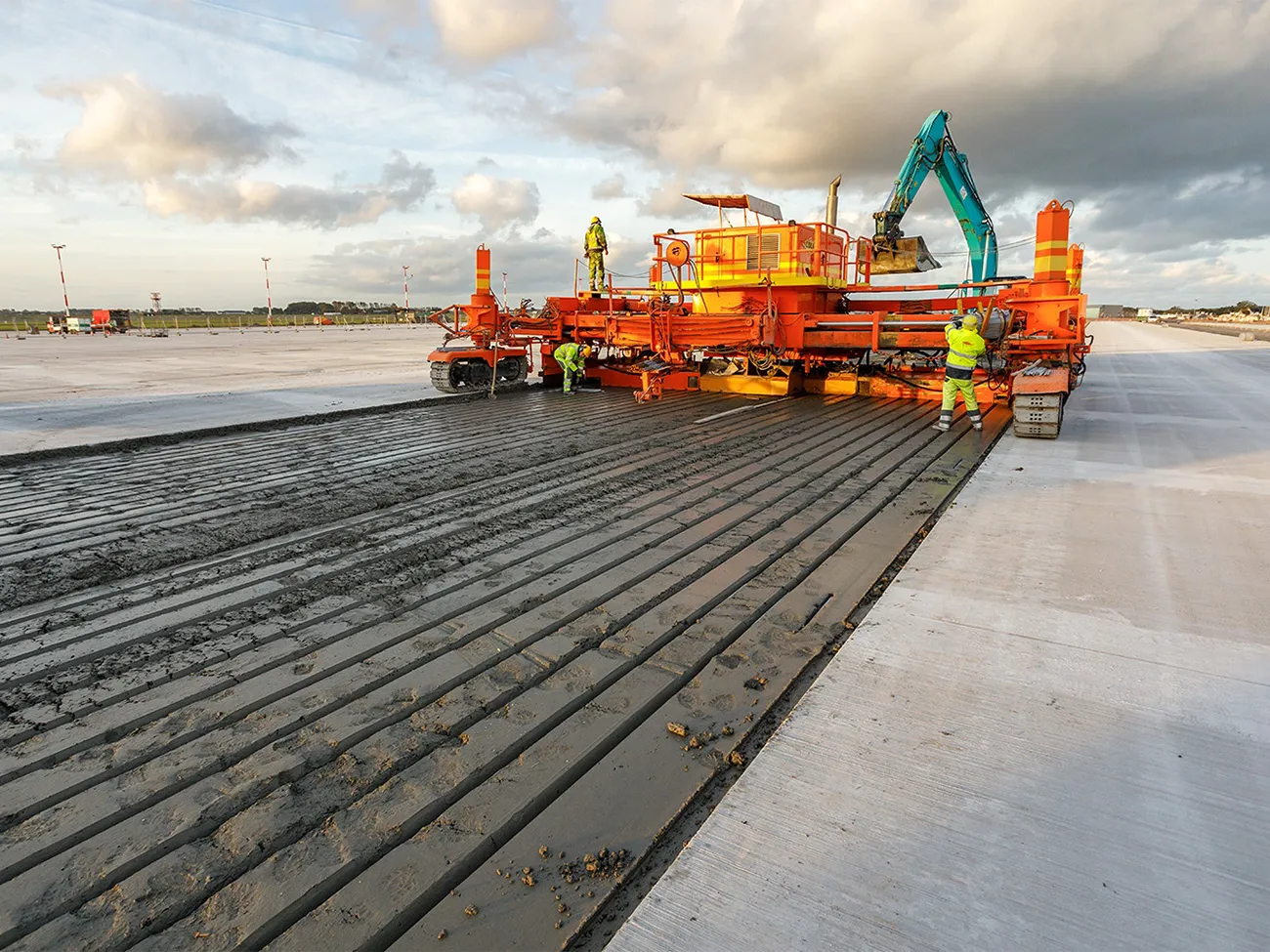
There is a clear difference between 2011 and today when it comes to certified products. Dirk Van Loo says: “What stands out is that certification has since been developed for a great many products. Ten years ago, we thought that almost all products in the road construction and infrastructure sectors could be produced under certification. But, of course, many products have been added in recent years. I’m thinking of pavement concrete and linear elements in ready-mixed concrete, such as channels and New Jerseys. Other examples include composite sewer covers, sorting installations and secondary aggregates generated as industrial by-products, which can be given a second life in applications such as asphalt and concrete. We see a need for trust, particularly in the context of the circular economy, which has led to certification being developed and continuing to be developed.”
The road to digitalisation
The 2011 annual report also shows that COPRO Extranet was launched around that time. It is an interactive platform where users can find all the technical data sheets for COPRO-certified products. Dirk Van Loo says: “Extranet is still in use today. It has evolved enormously, and we are still working on expanding it. This shows that COPRO had already embarked on the road to digitalisation in 2011. And, importantly, we are currently working with other organisations on a shared platform. Documents such as technical data sheets and certificates are now exchanged digitally between manufacturers, contractors and clients, but digitalisation is about much more than that. These documents contain data that can be integrated directly into the BIM process. And it is vital that this data is validated by a third party. Data only gains ‘value’ when it is trusted. Not only digital progress, but also technological progress compared with ten years ago, has been remarkable. Requirements for products have changed considerably, particularly in terms of sustainability, the environment and the circular economy. And we are only at the beginning of that journey.”
Rainwater
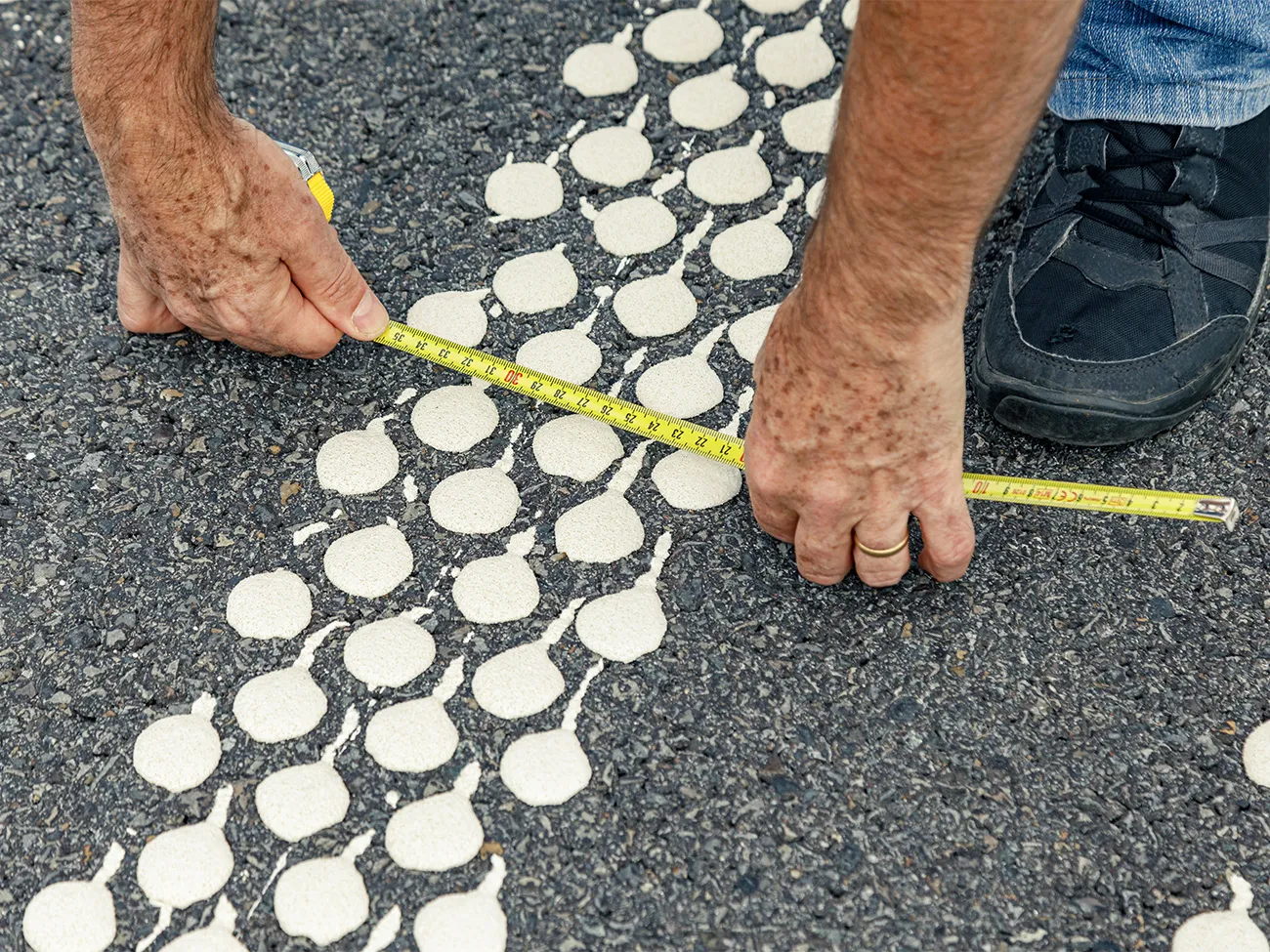
Perhaps the most striking page in the 2011 annual report is the last one, which discusses the drainage and storage of rainwater. The 2011 annual report states: “The working group is currently considering how quality control for permeable paving can be organised. This takes into account both the materials used and the method of installation.” And nothing could be more relevant today. Dirk Van Loo says: “Buffering and infiltration systems have been certified for some time, but we expect the first certification of installers in 2022. It is striking that the importance of installation was already being discussed in 2011. The products themselves may have the right properties, but factors such as the subsoil, installation and maintenance have a huge influence on the end result.”
The importance of certification for installation
Certification for installation will remain a focus for COPRO in the years ahead. “The sector is aware of the importance of installation. A group of installation certificates is now ready, covering the repair and installation of safety barriers, or guardrails. This group serves as one of the test cases for certification of installation, as it is a typical example where the quality of the product itself only partly determines the quality of the end result. Installation is also crucial. But we certainly face a number of challenges. For certification of installation, manufacturers, installers, experts, public authorities and engineering consultancies all need to reach a consensus on the ‘right’ way to carry out the work. A number of test cases will bring the areas for improvement to light. Another concern we are very mindful of is the administrative burden that such a certificate places on the installer. COPRO’s job is to make this as simple and accessible as possible,” concludes Dirk Van Loo.
Een zakelijke vraag aan Copro? Get in touch
Companies in this story
Keep following this
Get an email when a new story is published. No account needed.
- ThemeMaterials with a lower environmental impact
- SubjectYearbook
- CompanyCopro