“Climate adaptation and innovation are, and will remain, crucial”
Text Niels Rouvrois Beeld De Vlaamse Waterweg
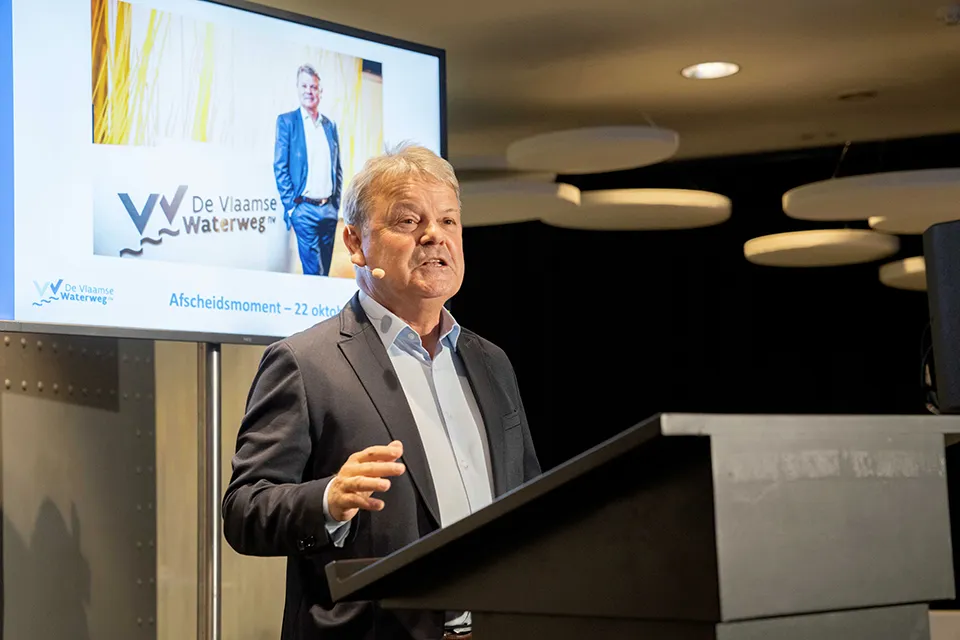
After a career spanning almost four decades at De Vlaamse Waterweg nv and its predecessors, Chris Danckaerts retired on 1 November. As chief executive, he led the organisation through some of the biggest transformations in its history. The merger of the waterway authorities, shifting freight to our navigable waterways, accelerated digitalisation and automation, and improving resilience to water-related risks were central to this work. But the challenges ahead remain considerable. “The impact of climate change, greening inland shipping and increasing its share of freight transport call for appropriate policy measures and investment,” Chris Danckaerts tells GWW in an interview, which we might call a farewell conversation.
The merger: a boost to capacity and stakeholder engagement
The merger of nv De Scheepvaart and Waterwegen & Zeekanaal nv, officially completed on 1 January 2018, marked a major turning point in the history of De Vlaamse Waterweg nv. “A logical and necessary merger that enabled us to work more efficiently and speak with one voice to stakeholders and government authorities,” explains Chris Danckaerts. “It was no easy task, given the expanded area of operations and the differences in corporate culture, processes and procedures. But we can look back on a successful operation that established De Vlaamse Waterweg as a strong brand. The merger also strengthened De Vlaamse Waterweg’s position as one of Europe’s largest players in inland shipping and water management.”
Innovation and digitalisation: investing in the future
Under the banner of Smart Shipping, De Vlaamse Waterweg has been working for some time on an innovation and digitalisation programme built around 4 pillars: smart vessels, smart infrastructure, smart data and smart regulation. Digitalisation, automation and innovation play an essential role in strengthening inland shipping’s position in the logistics chain. De Vlaamse Waterweg took a pioneering role in implementing River Information Services (RIS), a system that provides inland shipping operators and freight forwarders with real-time information on every aspect of shipping traffic. Chris Danckaerts says: “Our RIS model also became the standard for shipping management in thirteen European countries where waterway transport plays a role, something we can be particularly proud of.”
In 2018, De Vlaamse Waterweg became the first waterway authority in the world to open its network to trials of automated navigation. This proactive approach means that many vessels in Flanders are already operated remotely from control centres. According to Danckaerts, this development can deliver significant efficiency gains for the sector. The ambition for innovation goes further still: “We aim to have all locks and movable bridges fully remotely operated by 2032. As a first step, the locks on the Albert Canal and in the Leie basin are already being operated from remote-control centres in Hasselt and Evergem. This will improve the flow of shipping and reduce waiting times.”
Four-tier container shipping on the Albert Canal
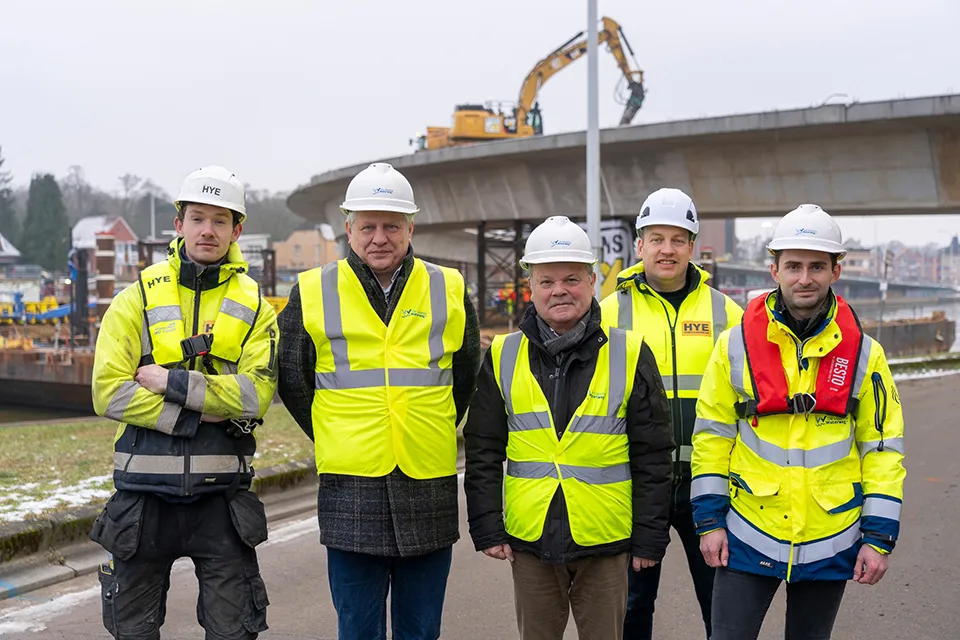
As the serving chief executive, Chris Danckaerts witnessed the raising of the last of the 62 bridges over the Albert Canal, enabling inland vessels carrying four tiers of containers to navigate the canal safely and smoothly from early 2024. Chris Danckaerts says: “Completing this immense project was an absolute milestone for me personally. Not just because it delivered many splendid bridges, true landmarks, but above all because of our approach, which successfully combined in-house expertise with the use of external engineering consultancies. The project also included a public-private DBFM partnership to deliver 15 bridges, a collaboration model regarded as best practice for other PPP projects. We also worked exceptionally well with the many local authorities, ensuring that the completed bridge projects served not only the needs of the waterway but also improved road safety, particularly for cyclists and pedestrians.”
Seine Schelde Vlaanderen
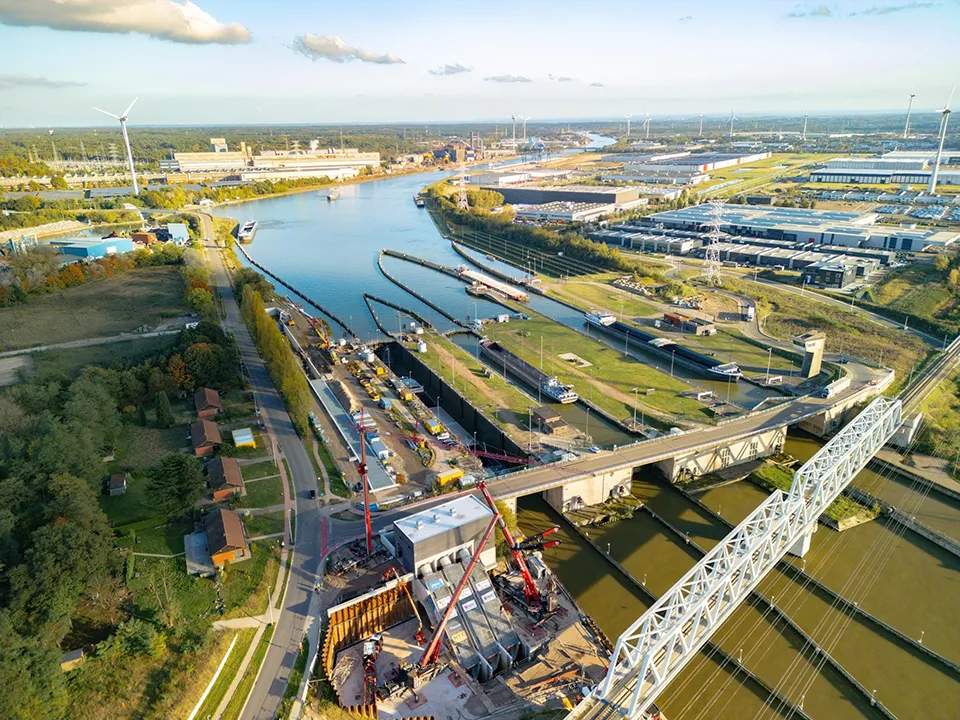
Seine Schelde Vlaanderen is another high-profile project that has taken shape in recent years. Cooperation with the French and Walloon authorities to further develop the European waterway network by creating a waterway link between the Seine and the Scheldt for vessels carrying 4,500 tonnes has been exemplary. Chris Danckaerts says: “The priority within the Flemish part of the Seine Schelde project is to upgrade the Leie as a link between the ports of Ghent and Antwerp. And we have made good progress. The locks have been adapted, several bridges have already been raised to 7 metres, and work is well under way to widen the Leie. We still hope to complete the project by 2030.”
Logistics Valley Flanders
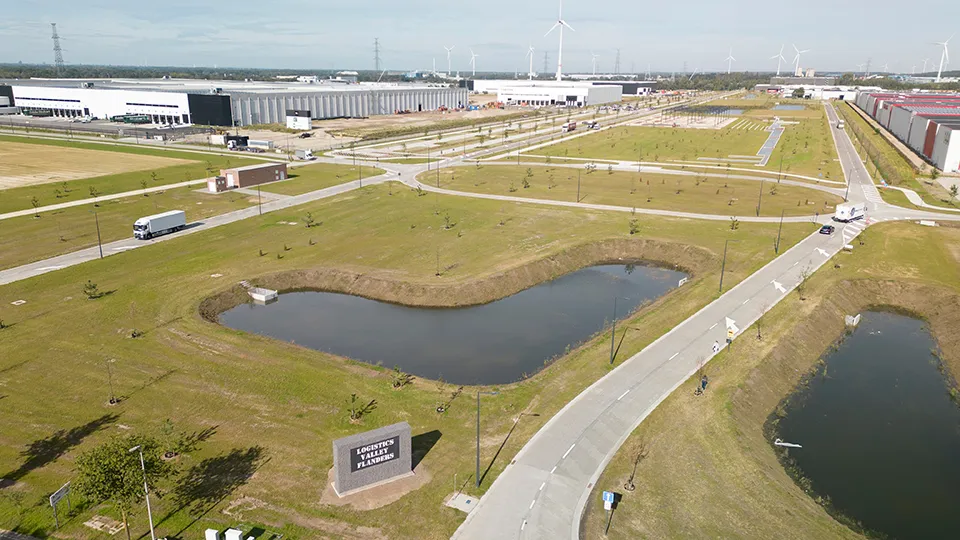
The Logistics Valley Flanders project, a multimodal industrial estate, involves the redevelopment of the Ford site. Its location alongside the Albert Canal offers many additional opportunities for water-related businesses. Chris Danckaerts says: “De Vlaamse Waterweg was appointed developer of the water-related C-zone and client for the demolition and remediation works and the construction of all the site’s infrastructure. A 430-metre quay wall was also built to serve a container terminal. The scale of the project, and the speed with which it was delivered in partnership with public authorities and private investors, make Logistics Valley Flanders a remarkable achievement we can all be proud of.”
Water-related businesses lead Danckaerts straight to an important issue. To take inland shipping to the next level, the space available alongside waterways must be used efficiently and responsibly. “Several regions urgently need more space for economic activity if inland shipping is to increase its share of the transport chain,” he says. “It is a shame that we so often have to disappoint businesses that want to set up alongside the water because there is no space available. We need to anticipate the growth of inland shipping and ensure there is enough room for transhipment points and logistics hubs. That is the only way inland shipping can realise its full potential as a sustainable mode of transport.”
Managing flood risk and water scarcity
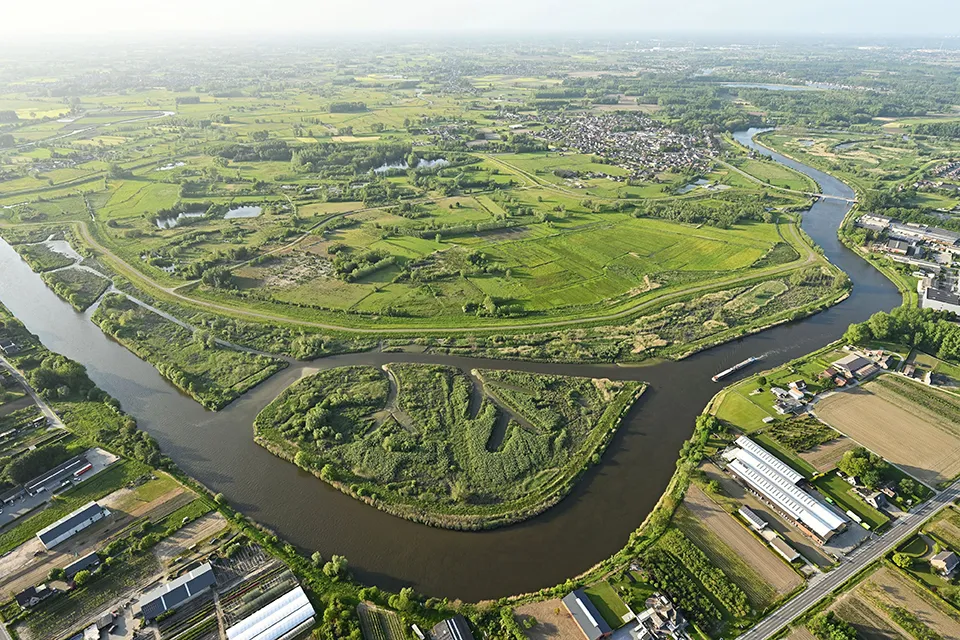
Climate change is undoubtedly one of the biggest challenges facing De Vlaamse Waterweg. Long periods of intense rainfall and prolonged drought are both expected to become more frequent. “Fortunately, a great deal has already been done to manage their impact. With fixed and mobile pumping installations, De Vlaamse Waterweg has made its waterways better equipped to cope with water scarcity. The Sigmaplan, with its raised embankments and flood storage areas, and the Ruimte voor de Maas project, a collaboration with Rijkswaterstaat, have more than proved their worth. Without the work carried out, the consequences in Flanders would have been far more severe during north-westerly storms coinciding with spring tides and during the Waterbom in July 2021,” Chris Danckaerts stresses.
Danckaerts is pleased to note that the 2024-2029 Flemish coalition agreement endorses the recommendations of the Weerbaar Waterland advisory report to further strengthen resilience to water-related risks, not only in the Scheldt Valley, along the Maas and in the Westhoek, but also in the river basins of the Leie and Dender. Chris Danckaers says: “Hopefully, the public interest served by these essential projects will finally outweigh objections from campaign groups. Tackling flood risk remains a key priority for the future of the Flemish waterways.”
Greening and modernisation
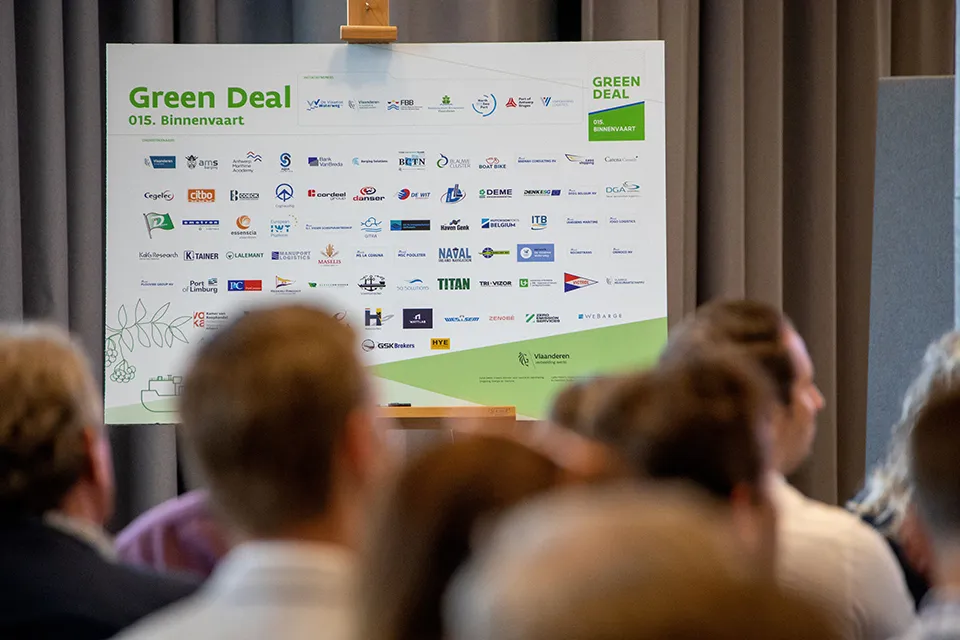
Another priority for De Vlaamse Waterweg is greening inland shipping. Chris Danckaerts says: “Our ambition is to shift as much freight as possible from road to water, and that can only happen if inland shipping becomes more attractive, but above all, more sustainable. The Green Deal Binnenvaart is a step in that direction. Around 100 stakeholders have committed to achieving zero-emission inland shipping by 2050 through the introduction of new technologies and fuels. De Vlaamse Waterweg also wants to play a leading role in this.”
Maintain first, then build
Alongside water management, greening, modernisation and digitalisation, asset management is also crucial to the healthy future of our waterways. The safety and reliability of existing infrastructure must be an absolute priority if businesses and the public are to have confidence in the waterways. Chris Danckaerts says: “The condition of some infrastructure gives us cause for concern, and this is down to its age. There was a peak in construction in the 1960s and early 1970s, and those structures now need attention. The coalition agreement’s commitment to increased investment in maintenance is therefore very welcome.”
Connecting further
“I look back on my career and my 10 years as chief executive with satisfaction and a sense of achievement. But above all, with gratitude. Gratitude to all the employees of De Vlaamse Waterweg, who ensure that our organisation is there every day, doing what is expected of a public agency. And gratitude to everyone who helped us achieve positive results: policymakers, public authorities, local authorities, inland shipping organisations, waterway users and all kinds of interest groups.”
As he leaves, Chris Danckaerts hands over an organisation that is ready for the future, but will need to keep challenging itself. Innovation, climate adaptation and spatial planning will remain central. Chris Danckaerts is clear: “We must not rest on our laurels, there are and will continue to be major challenges. But I have every confidence that De Vlaamse Waterweg will rise to these challenges and continue to connect Flanders through its waterways.”
Question about this story? Ask your question
Keep following this
Get an email when a new story is published. No account needed.
- ThemeSpace for water and green infrastructure
- SubjectYearbook