Belgian milling specialist TopOff continues to impress in France
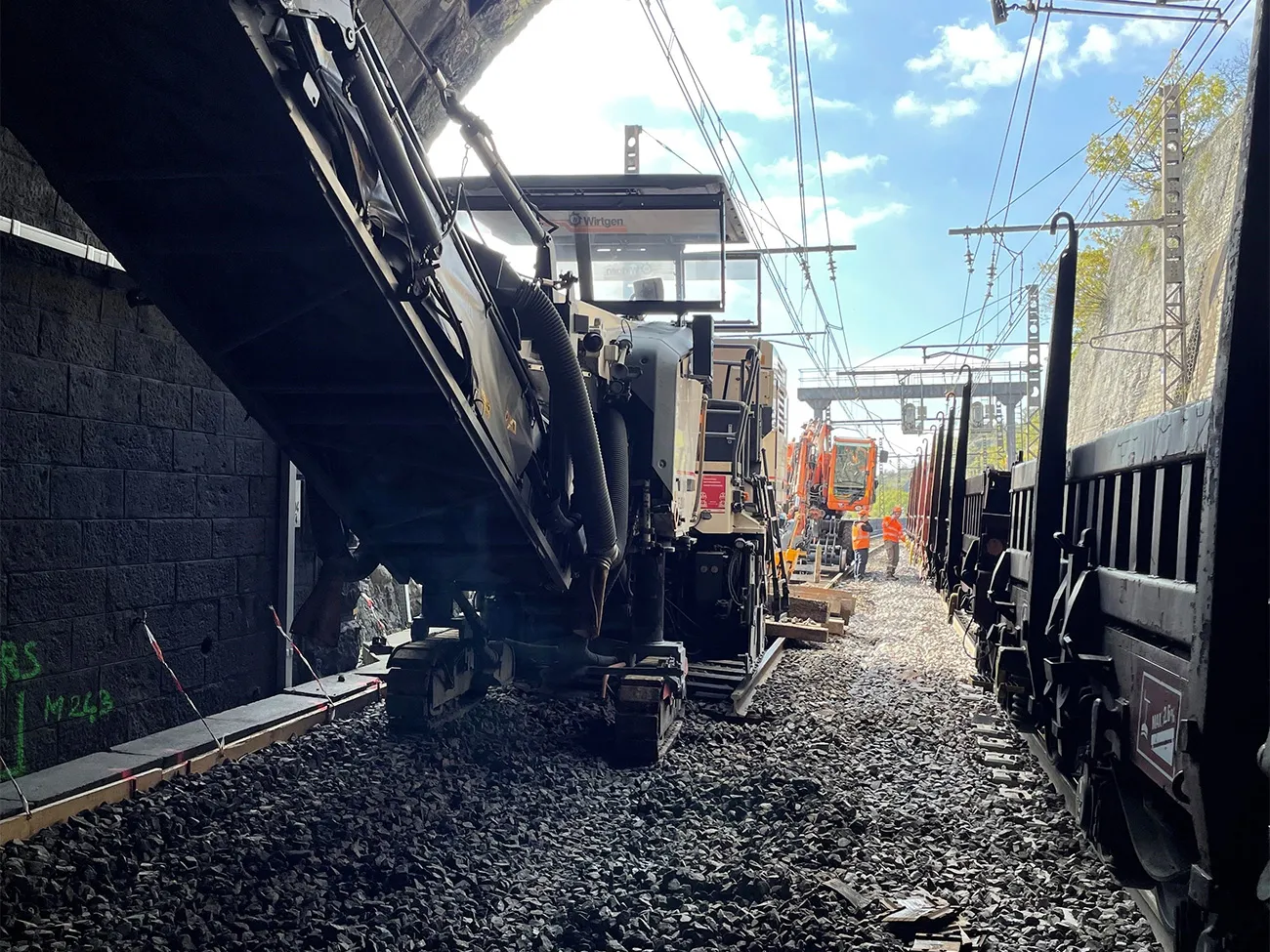
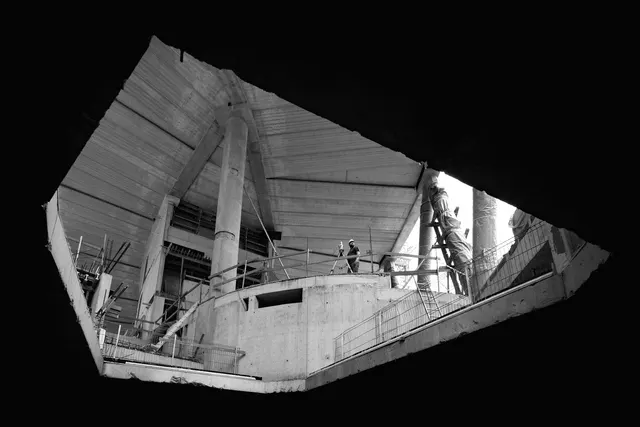
TopOff continued to make its mark in the French rail sector in 2022. Using its own sophisticated, patented 3D milling technique, TopOff had already worked on the Paris Metro twice in recent years. In 2022, the milling specialist from Houthalen worked for main contractor Colas in tunnels in Dijon, on behalf of French railway company SNCF. Speed and precision go hand in hand with its self-developed milling technique, and efficiency was also key in Dijon.
TopOff carries out its rail work under the name of its subsidiary Innotrax. “Innotrax grew out of the idea that fine milling concrete could create a perfectly flat surface,” says John Vastmans, who runs both companies. “As a specialist subcontractor, TopOff achieves excellent results with 3D milling, and I had been looking towards the rail sector for some time. We started thinking about it and eventually developed a process in which we lay a concrete slab track at an increased thickness, then 3D mill it flat using a micro-fine milling machine. That is still the basis of the technique today, and we patented it straight away.”
Success in France
The unique technique attracted attention in France, where TopOff first worked on the Paris Metro in 2019. John Vastmans says: “TopOff was the only foreign company among the five candidates for the first phase of the project, and yet we won the contract. That was remarkable. The client trusted us and was interested because we immediately offered to use 3D milling. In July 2021, we were brought in again for a second phase of the project. This involved adjusting rail heights at two stations. We also completed this work successfully, quickly and accurately. Given SNCF’s tight schedule, we have to be very flexible, and that is one of our strengths.”
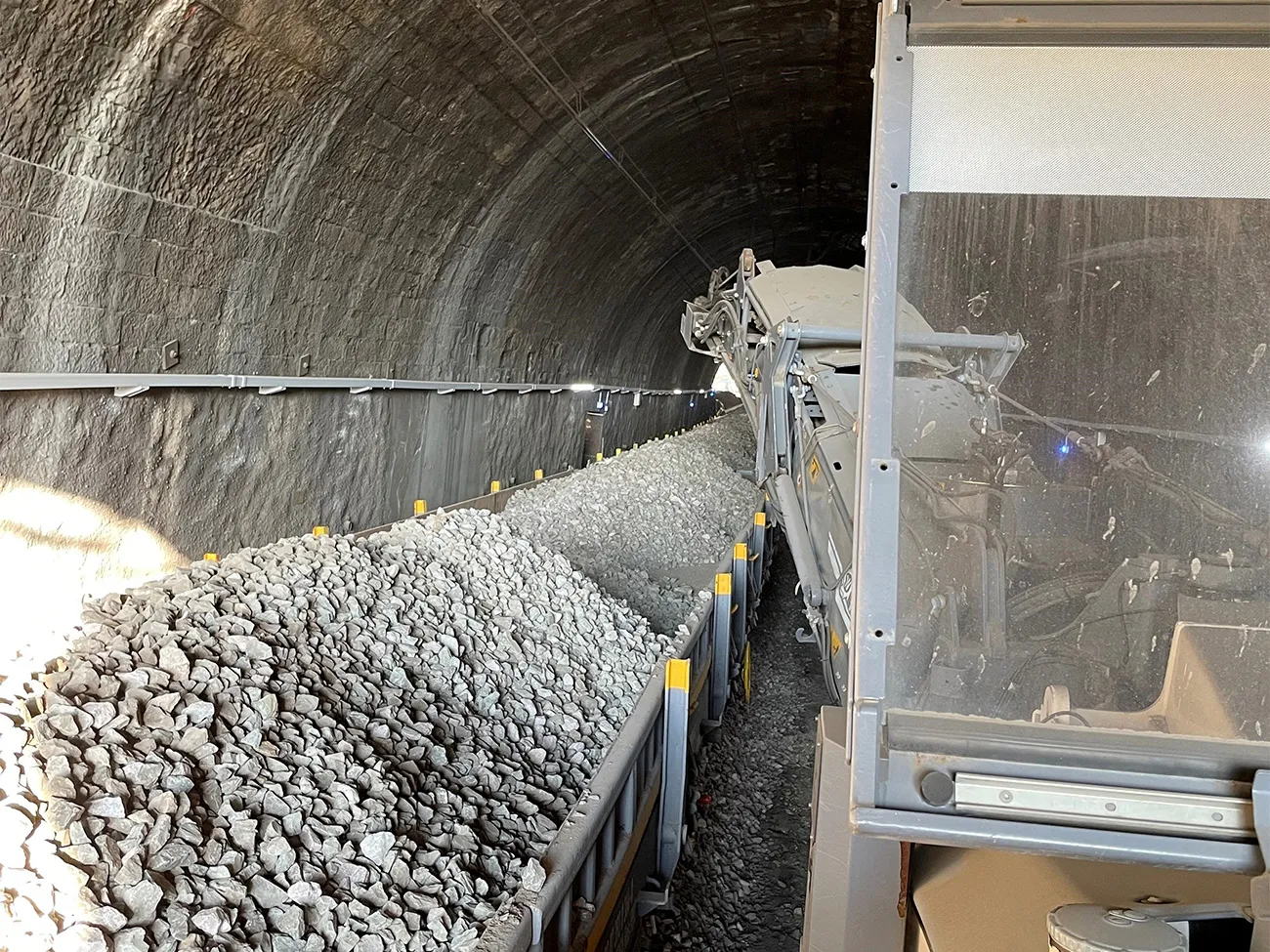
The successful project in Paris brought TopOff further opportunities. In Dijon, too, the Limburg-based company’s capabilities have been recognised. “The first phase of the work involved milling away the ballast, then 3D milling the rock down to the required level. We were able to work on such a large French rail project as a Belgian contractor mainly because of our innovative approach. For this work, for example, we use a milling machine with a laterally shiftable milling drum. This allows us to load the milled material onto a train running on the track next to the one that has been dismantled. We completed work in two tunnels this way in 2021, and in September this year we were back on site for four weekends.”
Significant time savings
For the client and project owner, this means substantial savings in valuable time. “That’s because there’s no need for another method of removing the milled material,” says John Vastmans. “Traditionally, this is done with cranes. Because they have to constantly take the overhead lines into account, they can never handle the volumes we do. Working faster also means shorter closures. That is a major benefit, as the high-speed train to and from Geneva in Switzerland runs along the route in question. The time we are given to carry out the work during each closure is limited.”
Useful for road construction
The laterally shiftable milling drum has also proved its value on numerous roadworks in recent years. “We’ve been using it in road construction for about 6 years now. The drum was actually developed for work on motorways. A conventional milling machine has a belt drive on the left, which means you can never mill right up against the Jersey barrier, leaving at least 30 cm of old asphalt in place. Our laterally shiftable milling drum lets us mill right up to the barrier. Using the drum on a rail project is a first, but it certainly won’t be the last. The logistical benefits are enormous. What’s remarkable is that our current client on the Dijon project, Colas, heard about our specialist capabilities from its competitor Eiffage, our client on the two-phase Paris Metro project. That makes the story all the more remarkable. The client, SNCF, is also pleased with our quality and way of working. We hope to carry out more projects in France in the future,” concludes John Vastmans.
Een zakelijke vraag aan Top-Off NV? Get in touch
Companies in this story

Keep following this
Get an email when a new story is published. No account needed.
- ThemeFuture-proofing roads and railways
- SubjectYearbook
- CompanyTop-Off NV