









What’s the best way to transport an excavator?
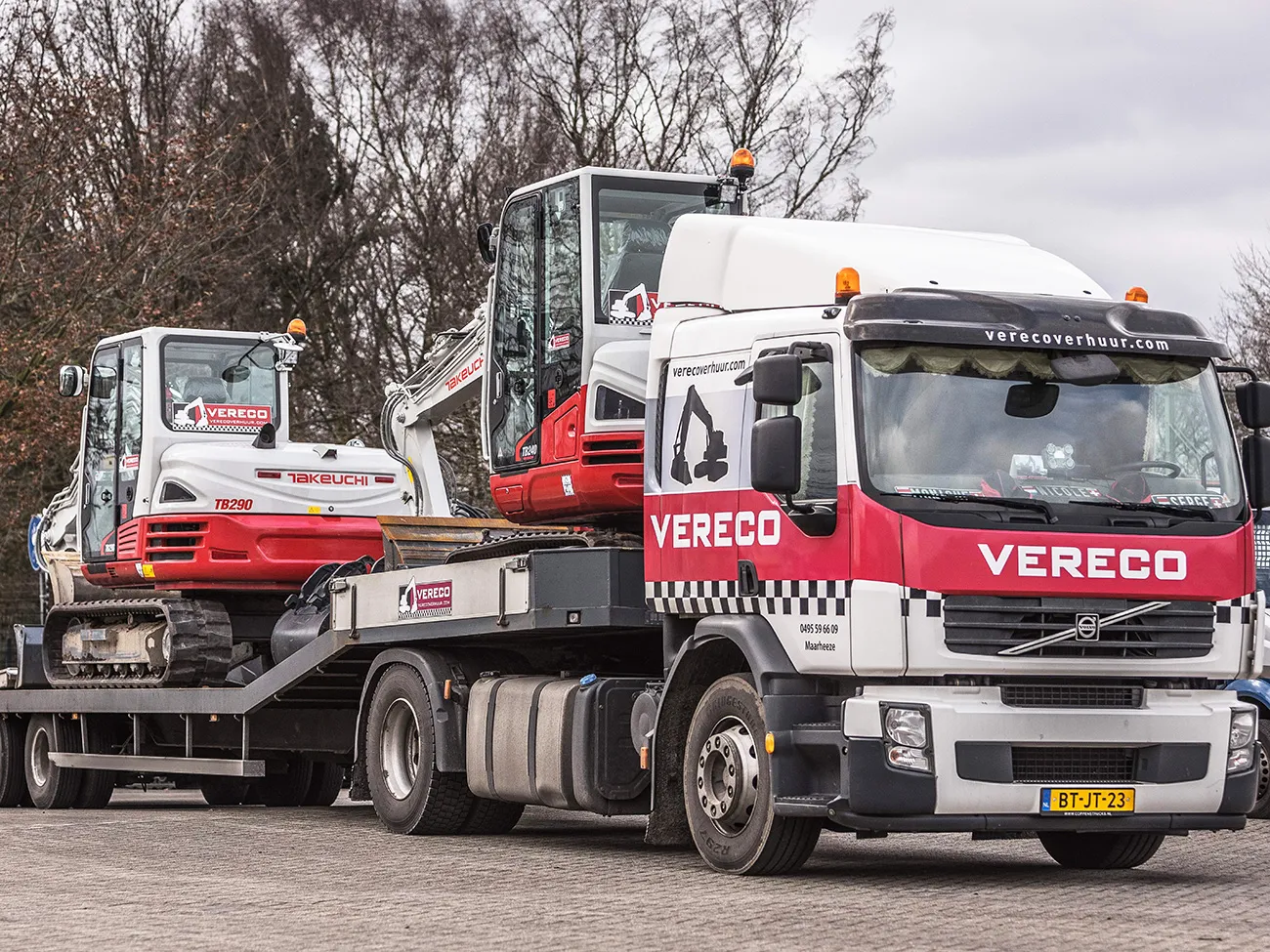
Once you have hired an excavator on Graaver.com, it is important to get it to the right location. Fortunately, almost all our hire partners offer an affordable transport service, so you can be sure your hired machine will arrive safely at your worksite. Would you rather transport the excavator yourself? You can do that too!
There are several things to bear in mind when transporting an excavator, from securing the machine properly to positioning it correctly on the trailer. One important factor keeps coming up: weight.
Small but mighty
The weight of the excavator determines how it should be transported. The right choice depends on the permitted maximum mass of the towing vehicle and trailer. This is the unladen weight plus the maximum payload. A van, for example, has a towing capacity of 3,500 kg, depending on the trailer. This means a van can tow a trailer carrying relatively small machines (up to 2.5 tonnes). You need a B+E driving licence to transport an excavator on a trailer.
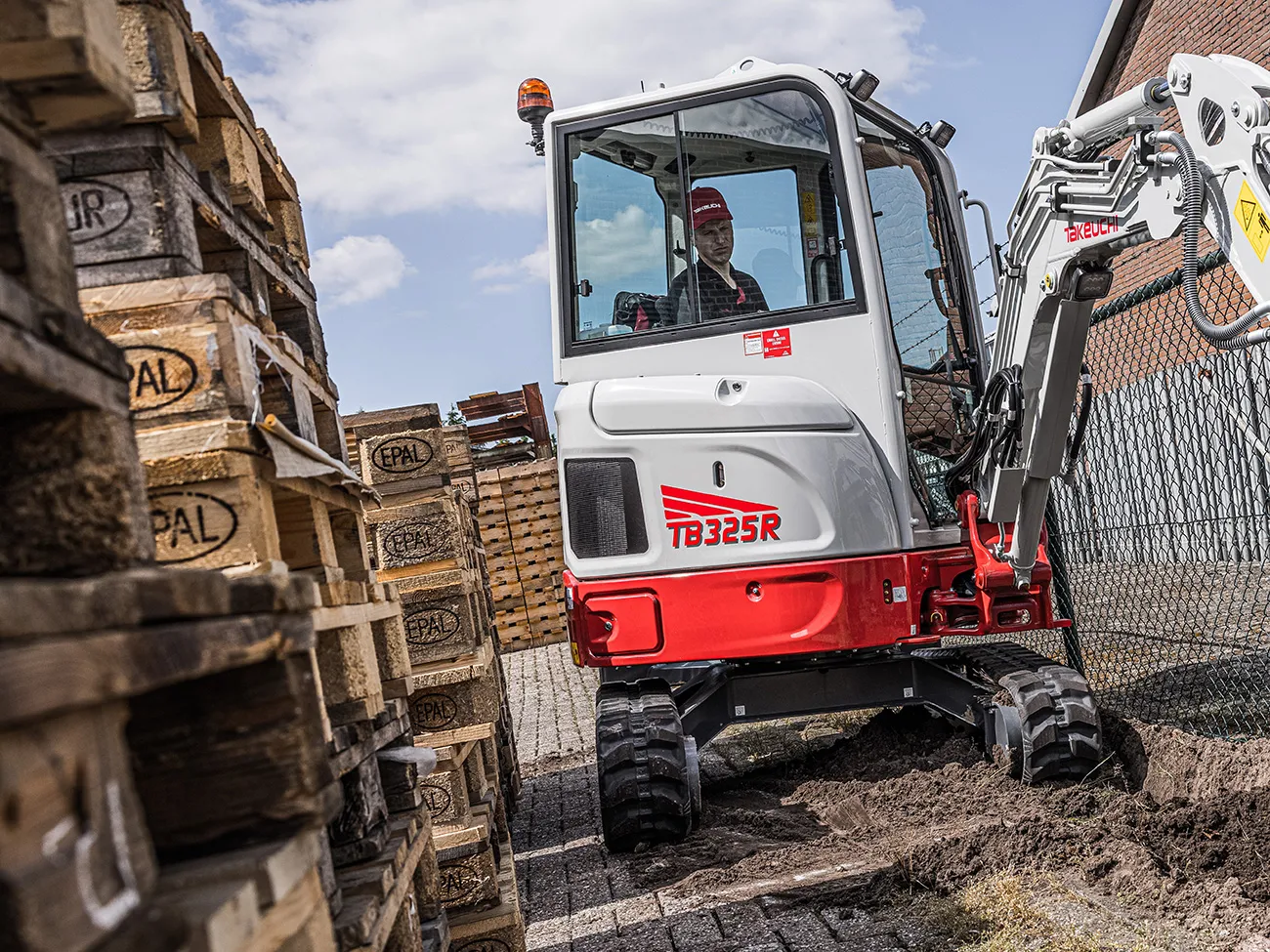
The brand-new TB325R makes no compromises when it comes to digging performance or breakout force. This machine has been specifically designed to be transportable on a trailer. In short, do you have a trailer, want to make sure you comply with the regulations, and want the most powerful machine in its weight class? Then the TB325R is for you!
Heavy-duty options
There are several options for transporting the larger machines in the fleet. You can choose from a BE combination, a box truck, a low-loader or a Euro low-loader. A BE combination has a maximum permitted weight of 7.5 tonnes. Larger machines therefore require heavier-duty transport. In the Netherlands, a box truck and a tractor unit with low-loader have a maximum weight of 50 tonnes. In Belgium, the limit is 44 tonnes. A Euro low-loader is required for heavier loads. However, you need a permit to use a Euro low-loader.
Securing your excavator
Securing an excavator is essential for safe transport. There are several things to consider. First, the type of running gear. Machines with rubber tracks can be secured using ratchet straps. Only use undamaged straps, do not place any loads on them and do not tie knots in them. Avoid sharp edges to prevent the straps from being cut.
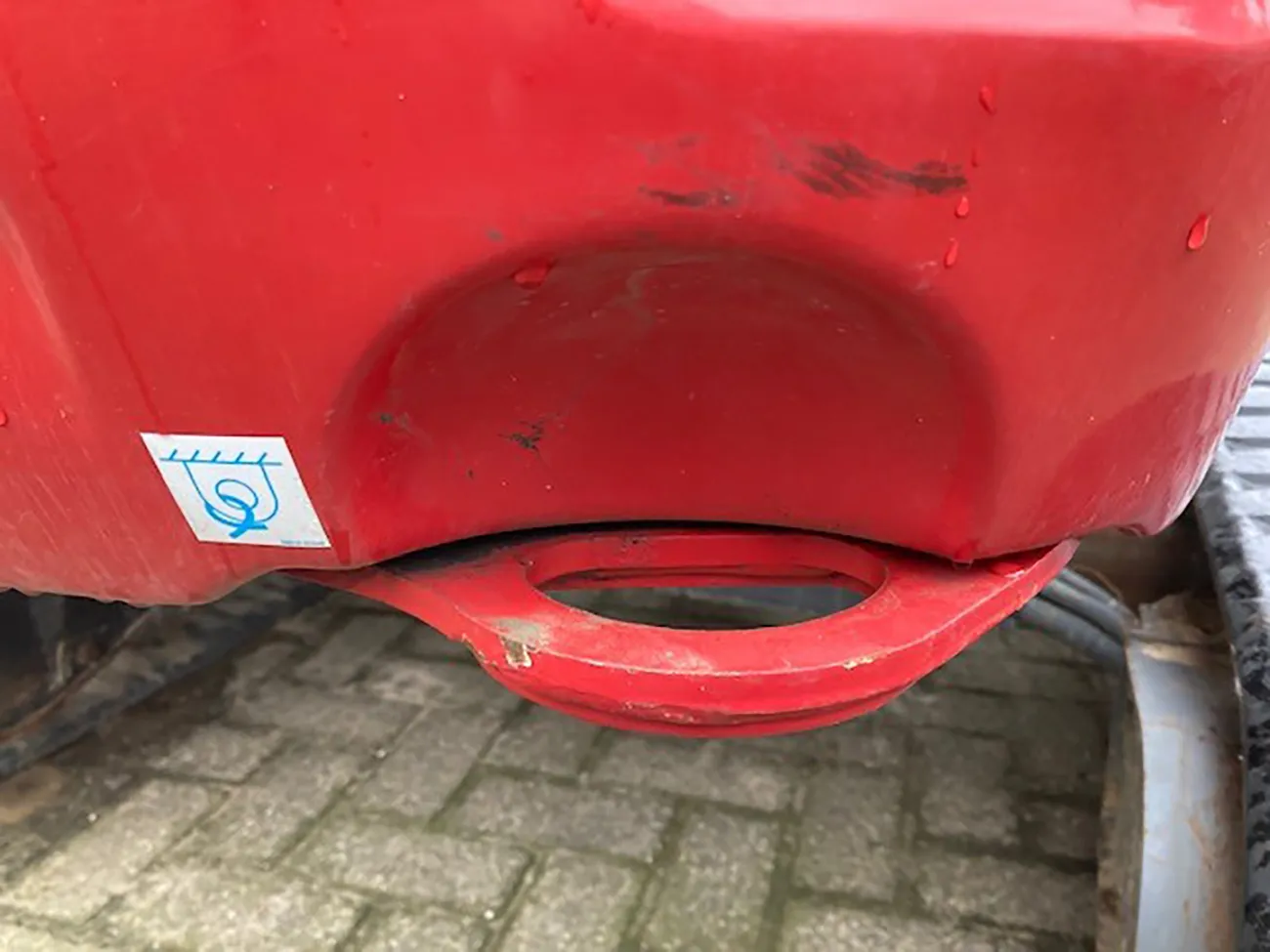
For machines with steel tracks or wheels, chains are required by law to secure the machine. Rubber mats must also be placed under steel tracks. The machine’s weight determines how many chains or ratchet straps you need. Always attach chains or straps to the designated points, such as lashing eyes. On some new machines, these points are marked with a sticker, as shown in the image. Remember to secure loose buckets and other attachments as well as the excavator.
You now know almost everything about transporting your excavator. You can put this information into practice straight away. That way, you can prevent accidents and unnecessary fines, and move from one job to the next with peace of mind. Still not sure what to do? Graaver’s hire partners will be happy to help.
Visit graaver.com now to find a hire partner near you
Een zakelijke vraag aan Graaver? Get in touch
Companies in this story
Keep following this
Get an email when a new story is published. No account needed.
- ThemeSmarter, safer construction site management
- SubjectGeneral
- CompanyGraaver







