









VlaWeBo highlights the importance of innovation and digitalisation
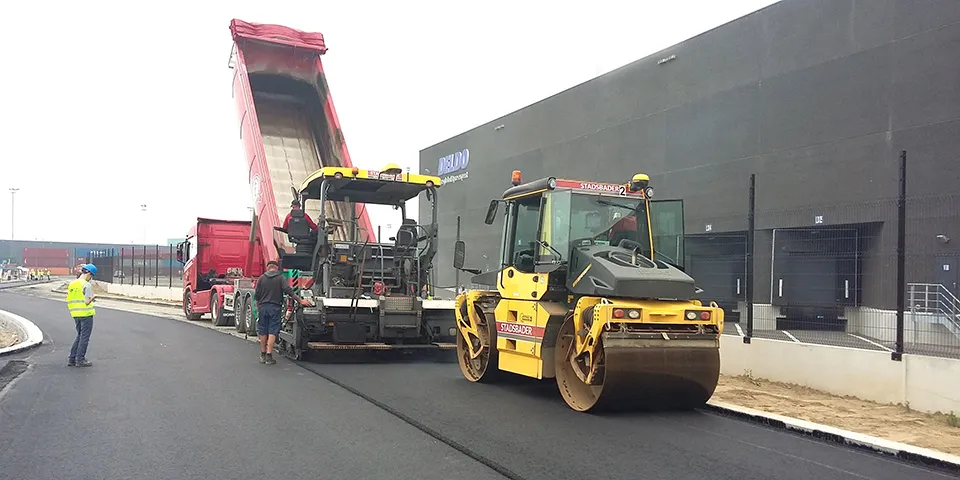
At Road Construction Day at Matexpo, VlaWebo (Flemish Road Builders) organised a breakfast session on Innovation and Digitalisation in Infrastructure Projects. The seminar explored ‘smart’ concrete and asphalt roads in greater depth, heard a contractor explain how it had switched from paper documents to digital applications, and discussed practical experience from the first BIM pilot project.
A large number of interested attendees gathered in the meeting room at Kortrijk Xpo. “We are delighted with the strong turnout,” said Eli Desmedt of VlaWeBo as he opened the seminar. “Innovation and digitalisation are topics close to the hearts of road builders, and everyone is increasingly engaging with them in their own specific segment.”
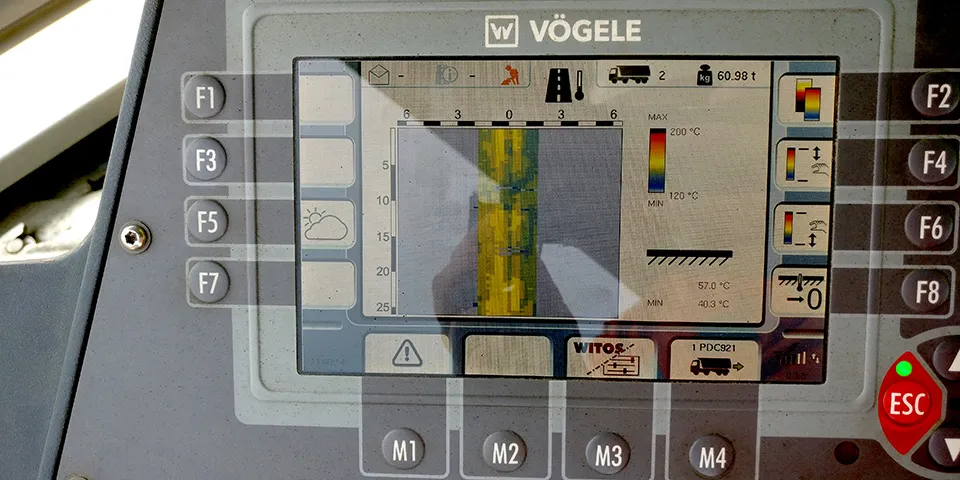
The Road_IT project demonstrated that the technology is already available.
Sensor technology in asphalt works
“Looking to the future with innovative sensor technology in asphalt works.” That was the working title of the presentation by Dr Ir Wim Van den bergh, Senior Lecturer in Infrastructure Works, Asphalt Technology at the University of Antwerp. “The aim is to extend the road’s service life by improving the quality of the end product,” said Professor Van den bergh. “The overarching goal is sustainable road construction. Road authorities are interested, but there is still room for improvement.”
The Road_IT project demonstrated that the technology is already available. The objectives of Road_IT were to develop and demonstrate an integrated, coherent IT process control system, enabling all existing sensors and actuators, each with their own operational IT systems, to communicate and archive data in a practical way. Van den bergh: “In practice, we built an IT architecture around 4 demonstration case studies: optimising logistics by coordinating transport with processing, evaluating temperature using an infrared line scanner, reporting on asphalt paving operations on a site, and archiving process data for real-time evaluation and future analysis. Port of Antwerp put these new technologies into practice through a recent tender, successfully testing commercial systems.”
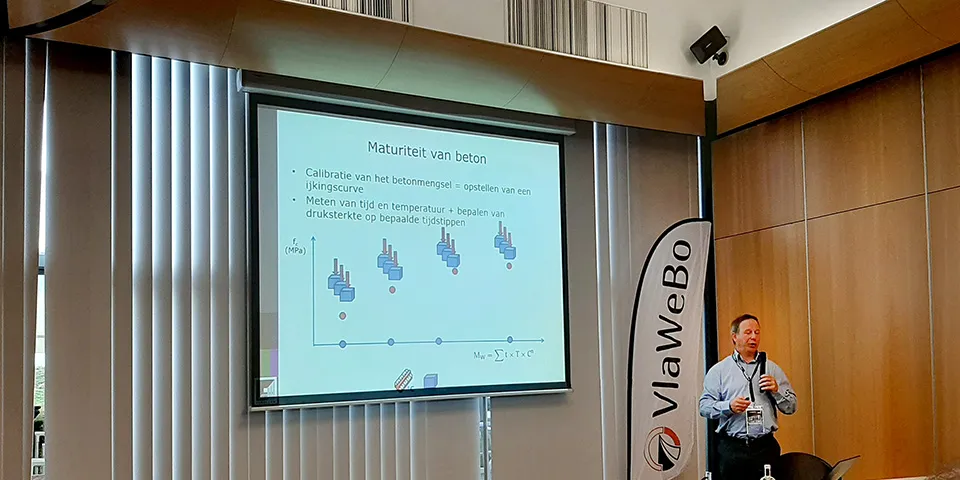
Sensor technology can be particularly useful not only for asphalt, but also for concrete.
Fewer core samples thanks to sensors
Sensor technology can be particularly useful not only for asphalt, but also for concrete. “It can support the client, contractor and road authority alike,” said Ir Luc Rens, consulting infrastructure engineer at FEBELCEM, the Federation of the Belgian Cement Industry. “It improves quality, shortens the construction and commissioning periods, increases durability, and adds value to the maintenance and repair of ‘smart concrete roads’. Sensors embedded in a concrete pavement, combined with the maturity method, can determine when the concrete is ready for sawing, exposed aggregate finishing and opening to traffic. This eliminates the need to take core samples. Sensor use has been included in the specifications for two projects requiring fast-setting concrete, and the technology will soon be used on site. Sensors also offer other possibilities, such as monitoring durability by measuring moisture content and corrosion…”
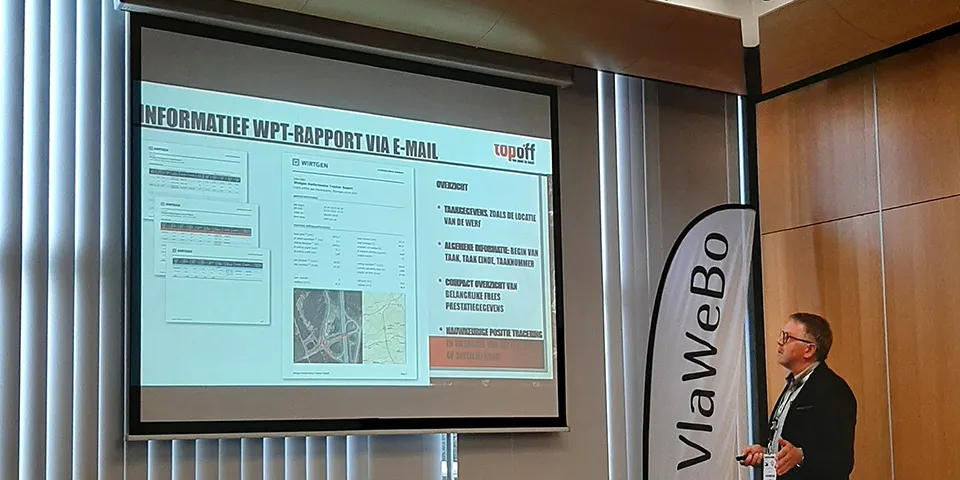
“With Top-Off, we made the transition from paper to digital.”, John Vastmans, CEO.
Digitalisation and BIM
It is widely recognised that the construction sector is not at the top of the class when it comes to digitalisation. But the transition is under way. This is clear, among other things, from the account given by John Vastmans, CEO of Top-Off. “With Top-Off, we made the transition from paper to digital, and we are now reaping the benefits,” he said. “We invested in 3D machine control, digital job sheets, a track & trace system and the Wirtgen Performance Tracker (WPT). The benefits are considerable. Where we used to need three or four screens, with the track & trace system we can now monitor everything on one screen. And integrating the WPT brings transparency, even more accurate measurement, efficient invoicing, and quick, straightforward cost reconciliation.”
Alongside digitalisation on the shop floor and construction site, and sensor technology in asphalt and concrete works, BIM (Building Information Modelling) is also gaining ground in the sector. Bert Van Quekelberghe, BIM manager at Willemen Infra, closed the seminar at Matexpo with a presentation of initial experience from a pilot project in Zwartberg (Genk), in collaboration with the Agency for Roads and Traffic (AWV). BIM is a key priority for the agency. “BIM (digital collaboration in the construction sector) is becoming increasingly important, including for infrastructure projects. As a road authority, we want to lead the way, both in collaboration during the design and execution of projects and in the use of intelligent information models for ongoing management and maintenance,” says the AWV website. A crucial part of this is ensuring that all the stakeholders get on board. Digitalisation is under way, and all parties will have to take responsibility.
Een zakelijke vraag aan Top-Off NV? Get in touch
Companies in this story

Keep following this
Get an email when a new story is published. No account needed.
- ThemeFuture-proofing roads and railways
- SubjectGeneral
- CompanyTop-Off NV







