









Vierendeel bridges in Mechelen get a major facelift
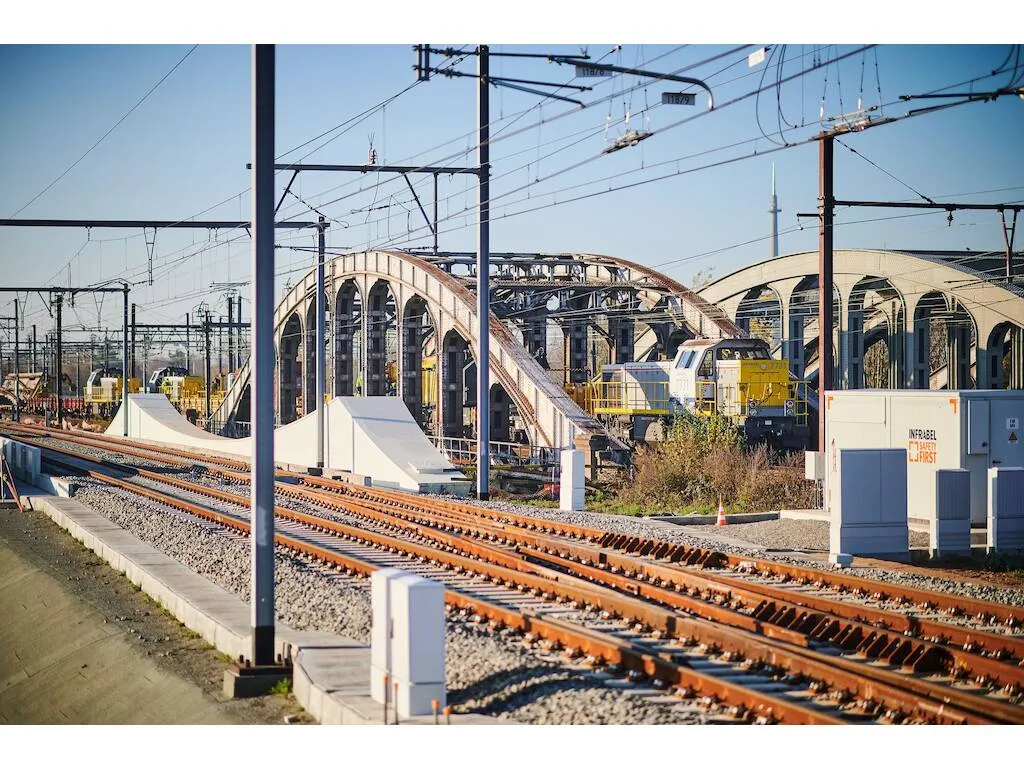
Anyone passing along the Leuvense Vaart canal in Mechelen will no doubt have noticed that one of the large Vierendeel bridges has been completely renovated. Since spring 2019, Infrabel and TUC RAIL have been working together to renovate the first two railway bridges. The renovation is part of the large-scale renewal of railway infrastructure in and around Mechelen.
To meet future mobility challenges at national and international level, railway infrastructure in and around Mechelen is undergoing a major transformation. At the end of 2020, a new rail bypass, the last missing piece of Belgium’s high-speed rail network, entered service.
In the first phase, the new track and platforms on the rail bypass are being used to create additional capacity, allowing the rest of the railway infrastructure at Mechelen station to be renewed and optimised. This optimisation is largely shaped by the presence of four Vierendeel railway bridges with ballastless track, which are in need of a thorough facelift.
In the first phase, Infrabel and TUC RAIL are renovating the two Vierendeel bridges over the Leuvense Vaart on the Brussels–Antwerp railway line (line 27) and the Dendermonde–Leuven railway line (line 53). These 63 m span, riveted, double-track steel bridges are listed as industrial heritage. Renewal of the line 27 bridge was completed in November 2020. Work on the line 53 bridge will begin in autumn 2021. In the second phase, Infrabel and TUC RAIL will tackle the two remaining bridges on the Brussels–Antwerp railway line (line 25), over the Leuven-Dijle canal and Leuvensesteenweg. These bridges are also listed as industrial heritage, and the latter is a protected monument.
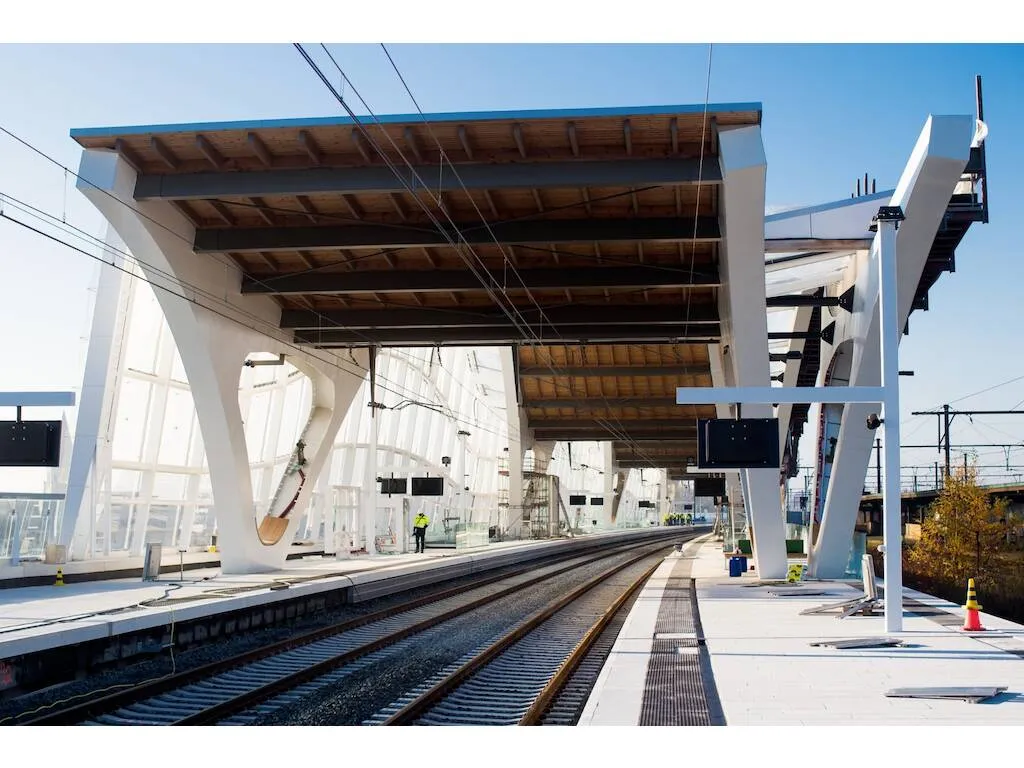
Easy to maintain and compliant with current standards
The renovation of the Vierendeel bridges involves more than simply repainting them. It also needs to anticipate an optimised rail alignment and simpler maintenance. This means replacing the timber sleepers with steel frames to which the track is fixed directly. TUC RAIL also made a number of modifications to comply with current occupational safety regulations.
A logistical tour de force
As the first bridge is on the busy Brussels–Antwerp railway line, Infrabel could take only one track out of service at a time, and then for a limited period of around 8 months. The bridge was therefore renovated one half at a time, always alongside a track that remained in service. Some work, such as installing the steel frames on the bridge, was carried out at night or during a full, temporary closure of the line. This work had to be scheduled and co-ordinated well in advance. TUC RAIL is overseeing the work. The company specialises in delivering new railway infrastructure and adapting and modernising existing railway infrastructure. TUC RAIL has the expertise needed to complete large-scale, phased and multidisciplinary projects successfully.
Before work began, TUC RAIL first built a temporary cable bridge so that the cable trays on the bridge being renovated could be completely cleared. A protective platform was also installed beneath the bridge to fully protect cyclists and pedestrians using the route below from falling debris.
In the first phase, track A on the bridge was taken out of service and that half of the bridge was completely stripped back. TUC RAIL then erected scaffolding around the half of the bridge being renovated and installed a partition between the two tracks to protect rail traffic. The scaffolding and partition were then covered with fully sealed shrink wrap.
The enclosure was then pressurised to prevent dust and lead-containing particles from spreading into the surrounding area during abrasive blasting of the steel structure. The steel structure was then inspected, and all severely corroded, broken or missing components were replaced before the entire structure was repainted. TUC RAIL’s technical teams closely monitored the stability of the structures and the bridge itself throughout.
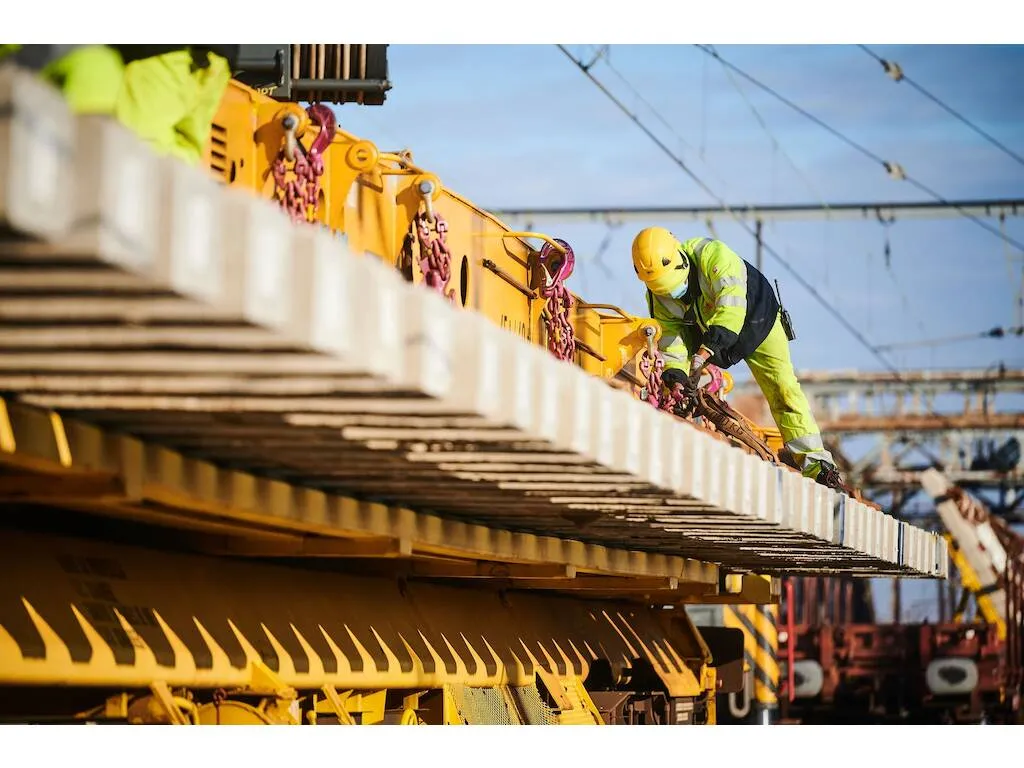
The steel frames were then placed on the bridge and aligned, temporarily supported with bolts and wedges, and grouted with non-shrink epoxy mortar. Once the epoxy mortar had hardened, the pre-tensioned bolts connecting the steel frames to the bridge were tightened. This connection and the epoxy mortar bedding are sufficiently elastic under dynamic loads and bond perfectly to the metal structures, preventing dirt and water from penetrating the contact surface and causing corrosion.
Once track A had been completed and returned to service, track B on the bridge was taken out of service and the same work was carried out. After around a year and a half, the bridge was fully renovated and could return to service. After renovating the superstructure, TUC RAIL also renovated the abutments. The existing masonry was removed and the necessary concrete repairs carried out. The concrete abutments were then faced with new masonry, matching the appearance of the original abutment facing exactly.
Question about this story? Ask your question
Keep following this
Get an email when a new story is published. No account needed.
- ThemeFuture-proofing roads and railways
- SubjectGeneral







