









Unique asphalt solar collector keeps path on UAntwerpen campus free of snow and ice
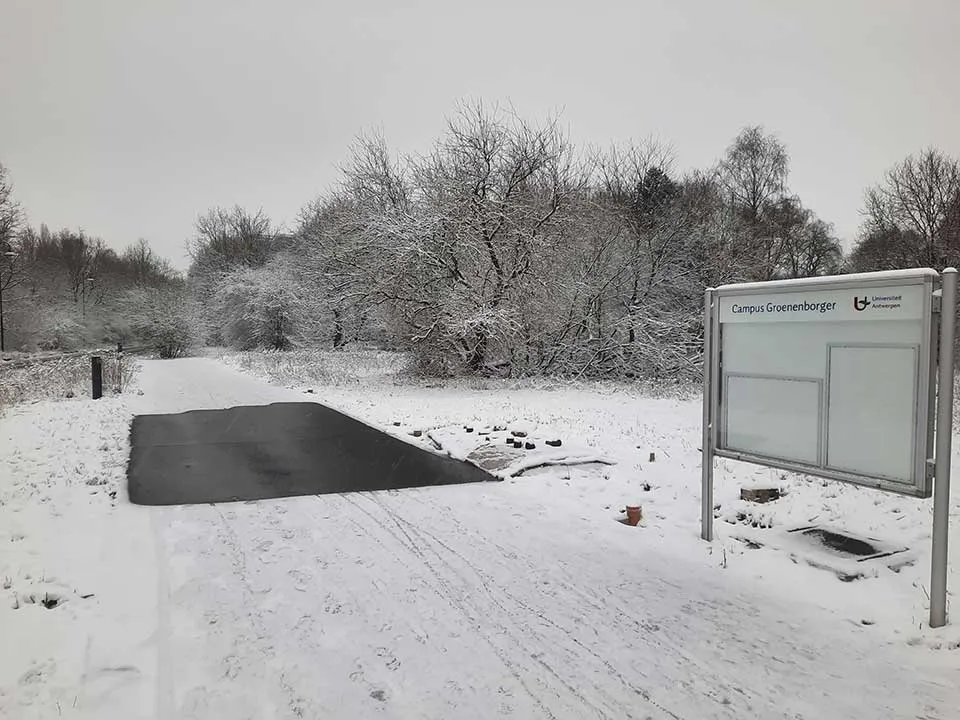
Despite the efforts of gritting crews, snow and ice made roads dangerously slippery during the cold snaps this past winter.
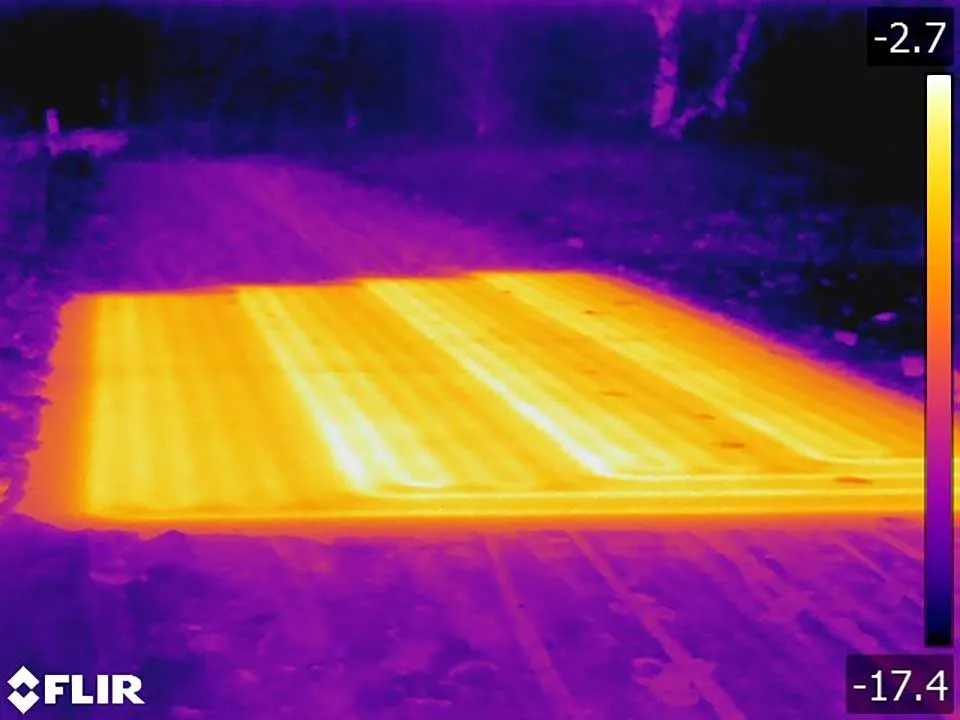
One exception was a stretch of cycle path on UAntwerpen’s Campus Groenenborger. A system of pipes carrying flowing water ensures that snow and ice cannot gain a foothold on the asphalt.
The EMIB Research Group (Energy and Materials in Infrastructure and Buildings), part of the Faculty of Applied Engineering at the University of Antwerp, has extensive expertise in asphalt. Its researchers are running several public-road trials of quieter, more sustainable asphalt. In 2017, a path was laid on Campus Groenenborger incorporating no fewer than eight innovative asphalt technologies.
Like underfloor heating
“One of these technologies involves an asphalt solar collector system,” says Professor Wim Van den bergh. “The asphalt contains a system of pipes carrying flowing water. Think of it as underfloor heating. In summer, the water cools the asphalt, while in winter it warms the road surface. This makes it possible to control the asphalt temperature continuously, which is very beneficial for the road surface.
Conventional asphalt is exposed to temperatures ranging from -15° C to 55° C, because the sun heats it up. This causes rutting in summer and small cracks in the road surface in winter. The innovative technology prevents these problems, giving the asphalt a much longer service life.
Cheaper in the long term
Wim Van den bergh: “The heated asphalt has another major advantage: ice cannot form and snow does not settle. That is why the severe cold snap blanketed almost all of Flanders in white, except for one stretch of cycle path on the campus on Groenenborgerlaan.”
The asphalt solar collector system naturally requires a higher initial investment, but over time the technology is often even cheaper. “Of course, you have to take all the parameters into account,” explains Wim Van den bergh. “The longer service life is one factor, but the asphalt is also safer, helping to prevent accidents caused by, for example, ice forming on the road.”
Question about this story? Ask your question
Keep following this
Get an email when a new story is published. No account needed.
- ThemeFuture-proofing roads and railways
- SubjectGeneral







