









Trends in concrete surface treatments for decorative road pavements
The use of concrete in public spaces and urban environments is undoubtedly on the rise. Both precast concrete products and cast-in-situ concrete offer designers and architects a wide range of shapes, colours and textures. This makes it possible to create either a modern, clean look or a rustic appearance, or to integrate the surface harmoniously into its surroundings.
Exposed aggregate concrete is particularly popular. The technique involves spraying a retarder onto the fresh concrete surface and, after a few hours, removing the top layer of mortar, usually with high-pressure water, to reveal the stones at the surface. By varying the colour of the stones and the underlying mortar, the result can either complement or contrast with the surroundings. Thanks to the growing knowledge and experience of suppliers, designers and contractors, the quality of completed projects has steadily improved over the past decades.
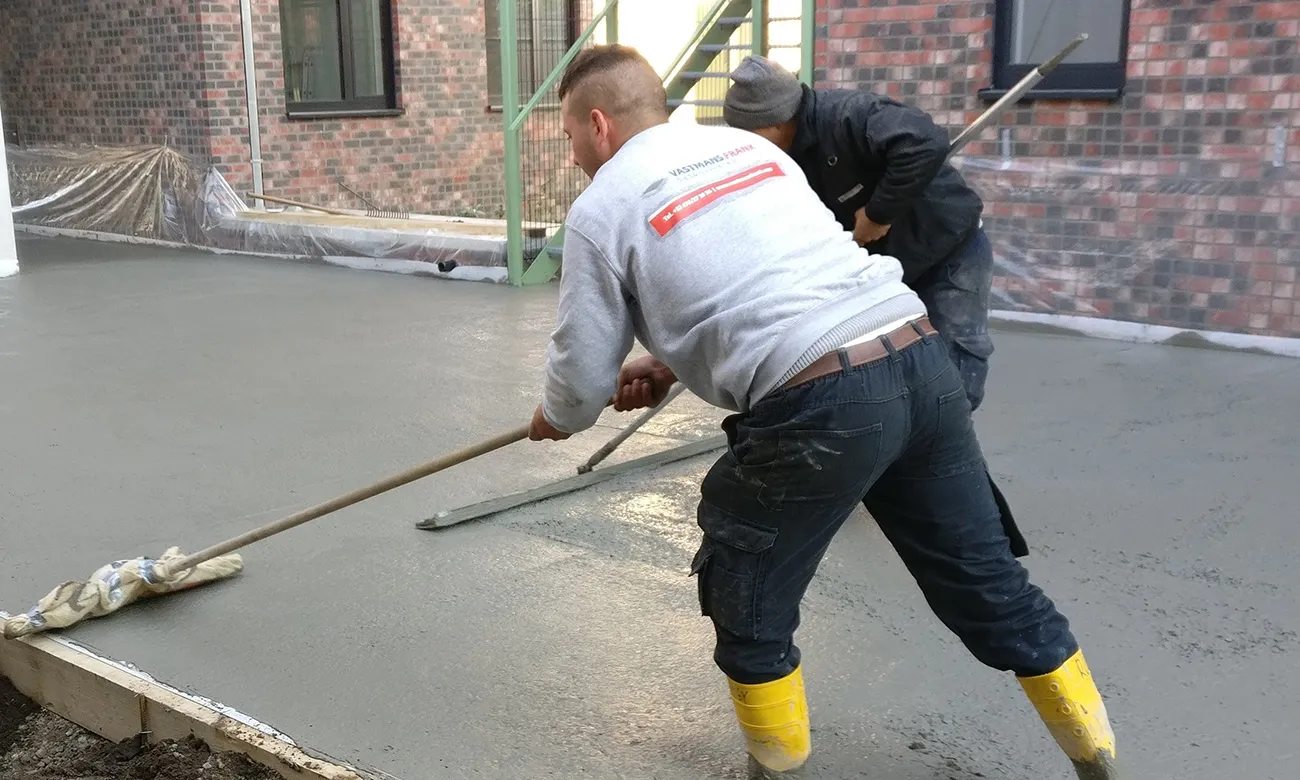
In recent years, however, there has also been growing interest in other surface treatments. Most involve mechanical treatment of freshly hardened concrete: polishing or grinding, bush hammering and blasting. There is also another way to finish fresh concrete, alongside brushing and exposing the aggregate: dragging a piece of jute fabric over the fresh concrete.
Polishing or grinding
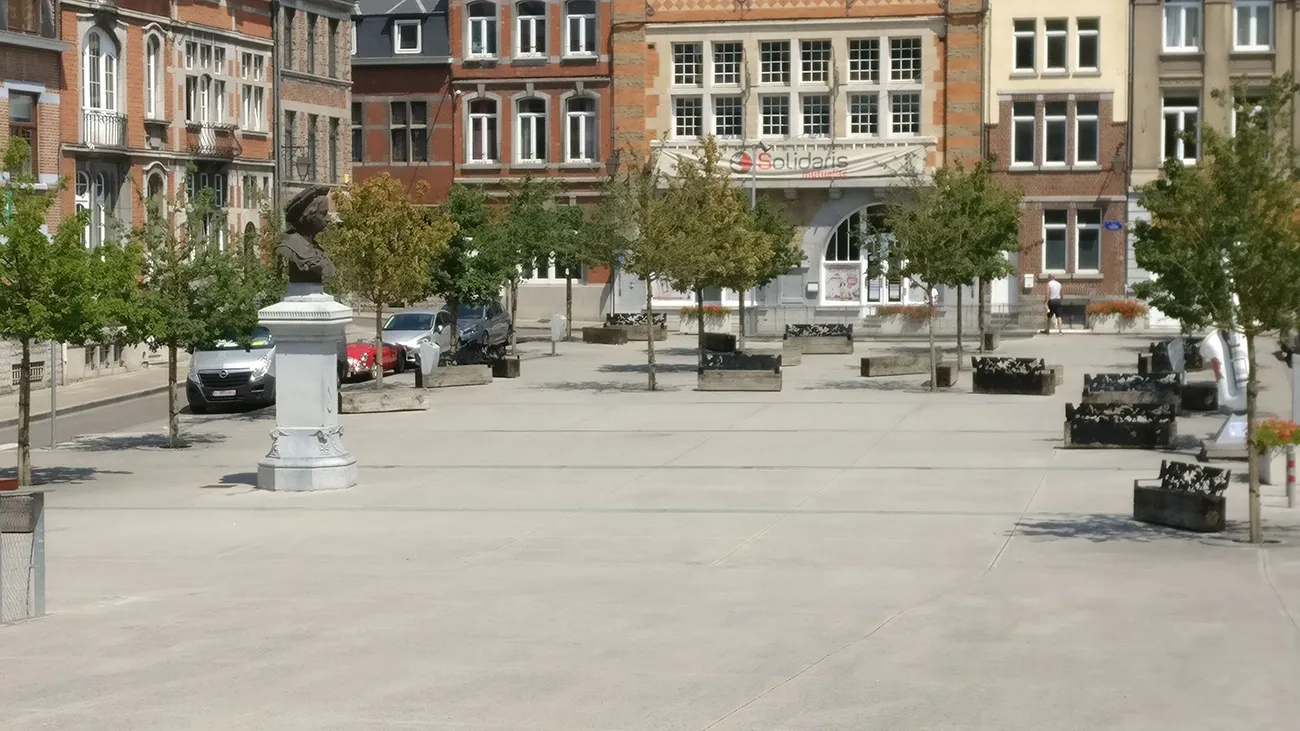
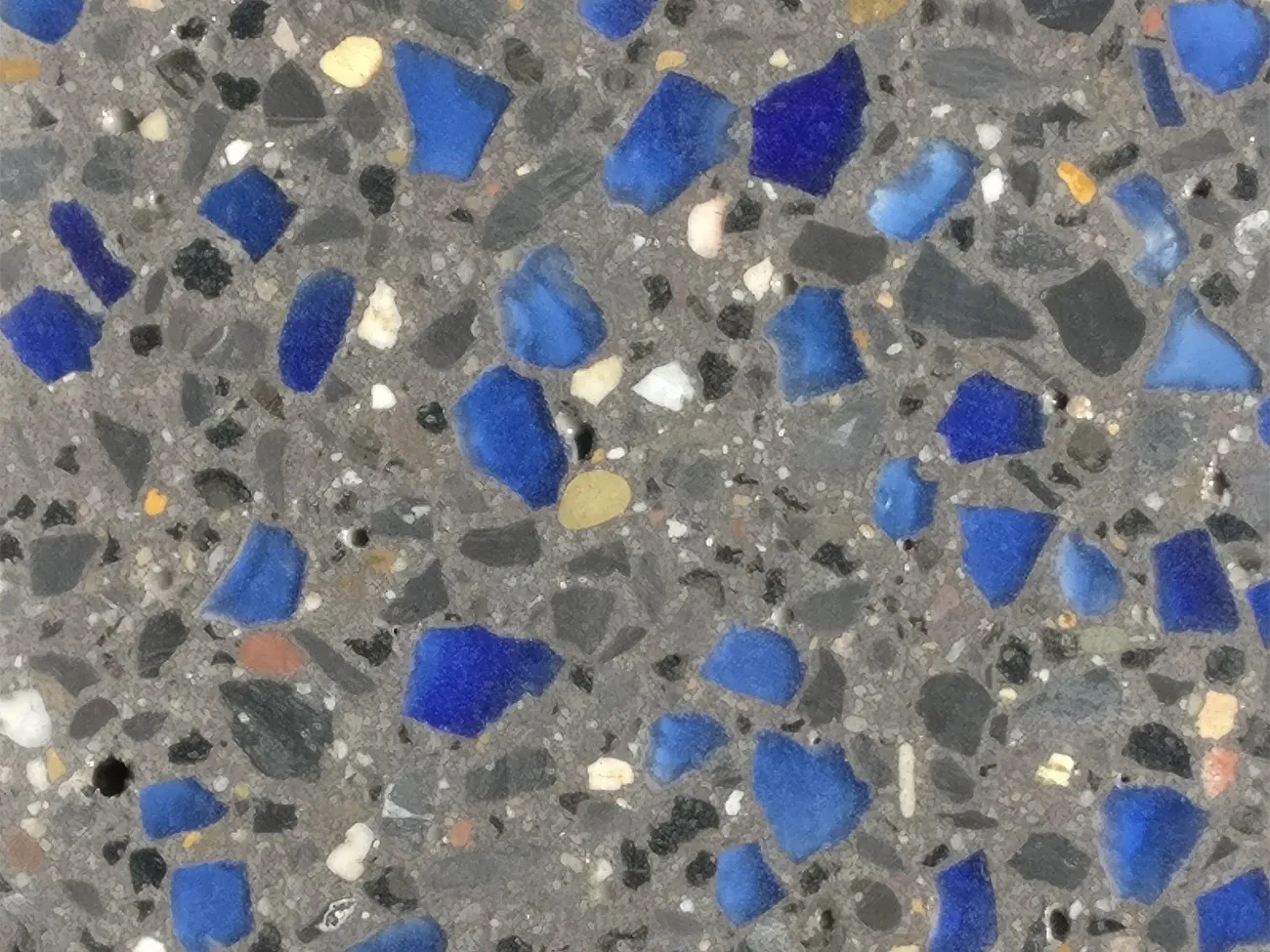
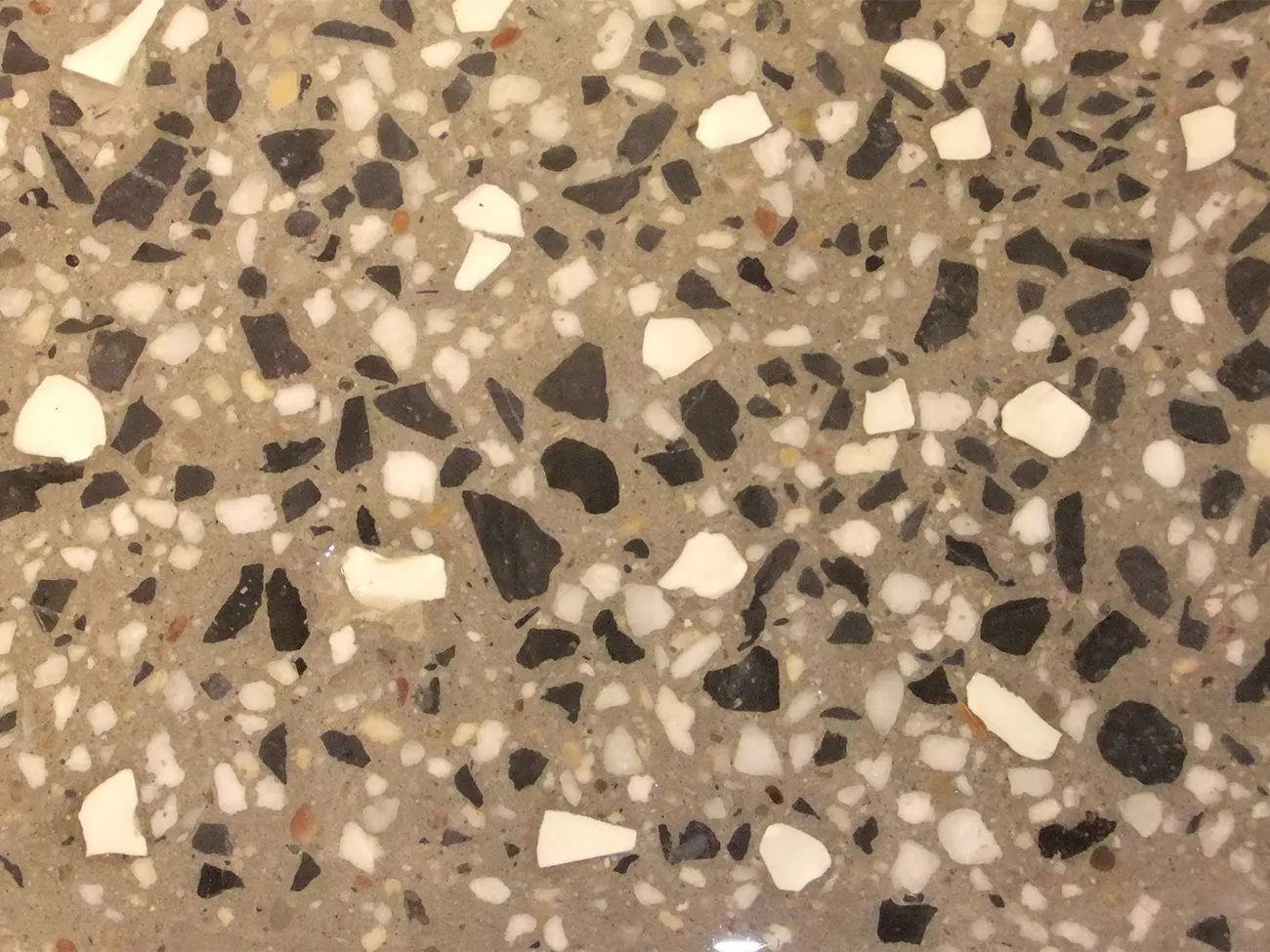
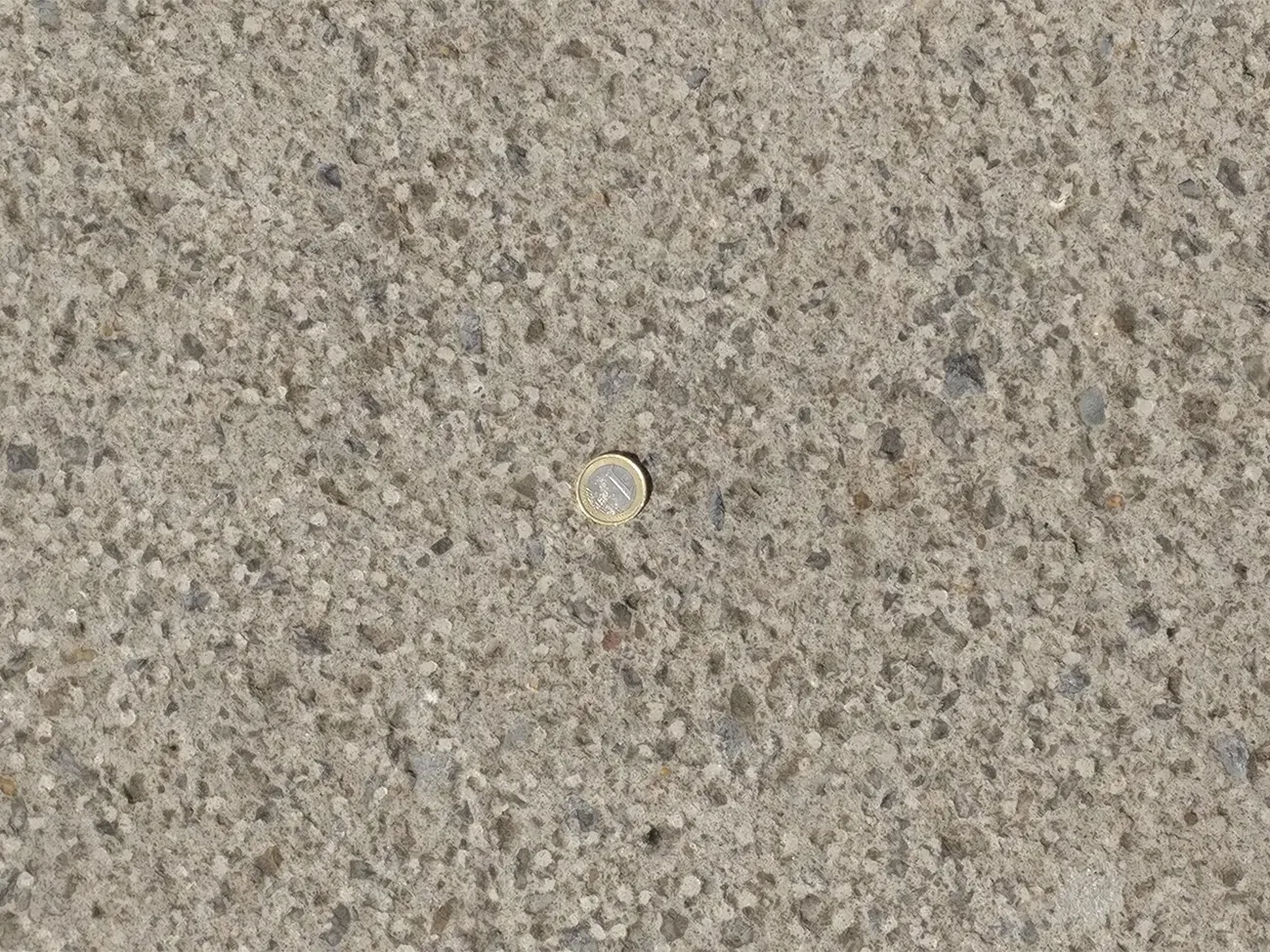
This does not mean power floating fresh concrete with a helicopter trowel, but rather grinding the hardened concrete surface with rotating discs, removing approximately 4 mm. This reveals the ground stones and mortar together. The concrete does not have to be fully hardened: for conventional pavement concrete, the treatment can be carried out after just 48 hours. The technique is also used for indoor floors, usually with a polished, glossy finish. For outdoor pavements, slip resistance must be taken into account, so grinding is limited to a ‘coarser grain’. This treatment can be combined effectively with incorporating other materials into the surface layer, such as glass granules or phosphorescent stones, which are white in daylight but glow blue, yellow or green in the dark.
A few reference projects are Atomiumplein in Brussels, Strekdammen in Ostend and Schengenplein in Antwerp.
Bush hammering
The surface is hammered using mechanical equipment fitted with pointed chisels. It is sometimes ground beforehand. The result is a roughened surface with a rather rustic appearance.
Blasting
The terms sandblasting, grit blasting or shot blasting are used according to the blasting medium. The medium, together with the intensity, blast angle and travel speed, determines the final appearance. Light sandblasting will reveal only the tips of the stones beneath the mortar. Intensive shot blasting can produce a surface similar to exposed aggregate concrete. The difference is that blasting also chips small pieces off the stones at the surface.
Dragging jute fabric
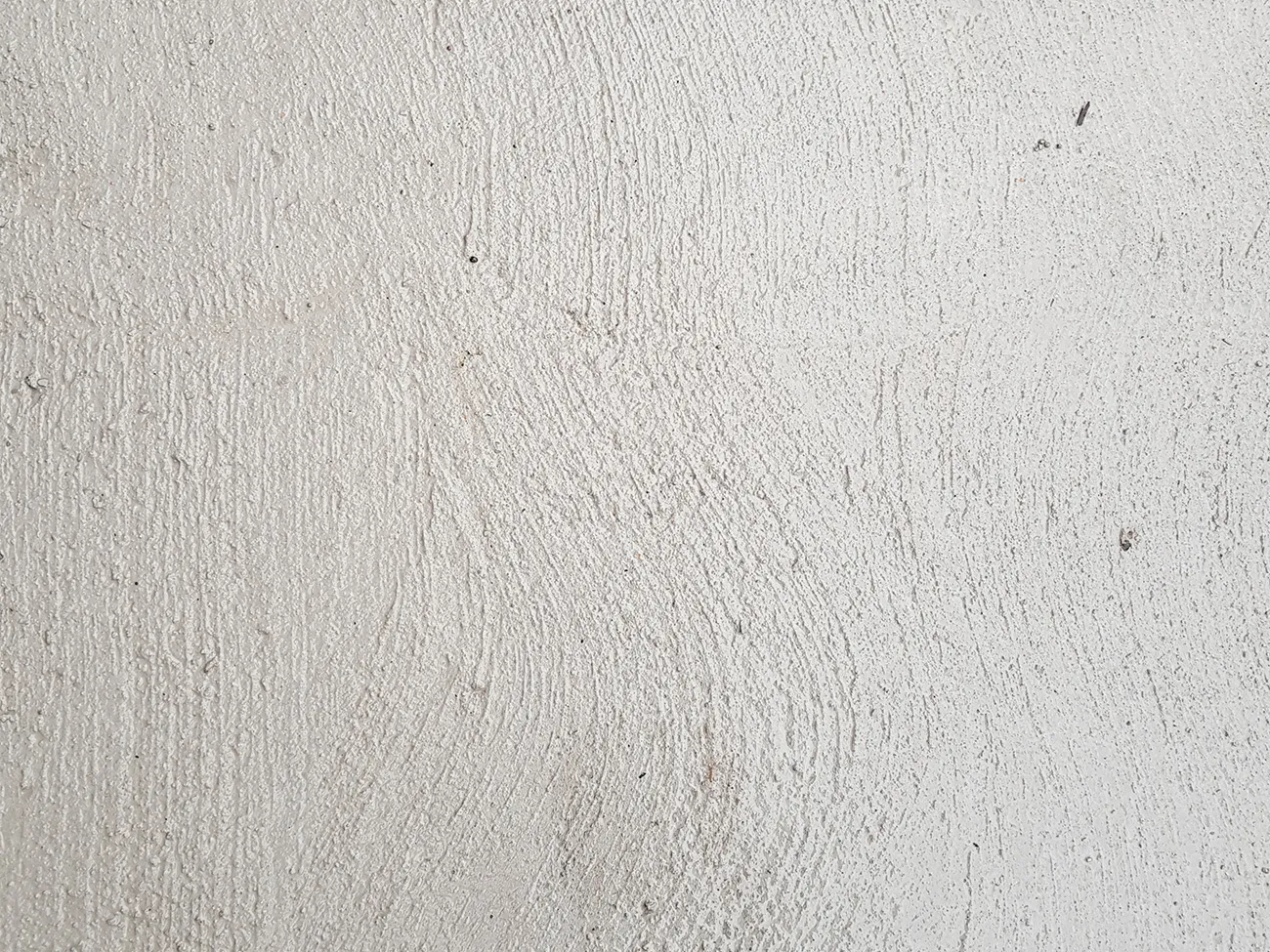
This technique was used for many years on German motorways, where a piece of jute fabric was mechanically dragged in a wave-like motion. The texture is comparable to a light, wavy broom finish. In public spaces, it can simply be carried out by hand, just like brushing, immediately after the concrete has been poured, compacted and levelled. The first project was an outdoor landscaping scheme in Abdijstraat in Hemiksem, designed by Bureau France of Lier.
Making the right choice
The designer must choose the right surface finish for fresh concrete or treatment for hardened concrete, taking into account the desired appearance as well as construction conditions, cost, timescales and other factors. For mechanical treatments, it is advisable to use specialist companies with the necessary equipment and a track record of successful projects.
Question about this story? Ask your question
Keep following this
Get an email when a new story is published. No account needed.
- ThemeMaterials with a lower environmental impact
- SubjectGeneral







