









Three in five drivers forget to slow down at roadworks
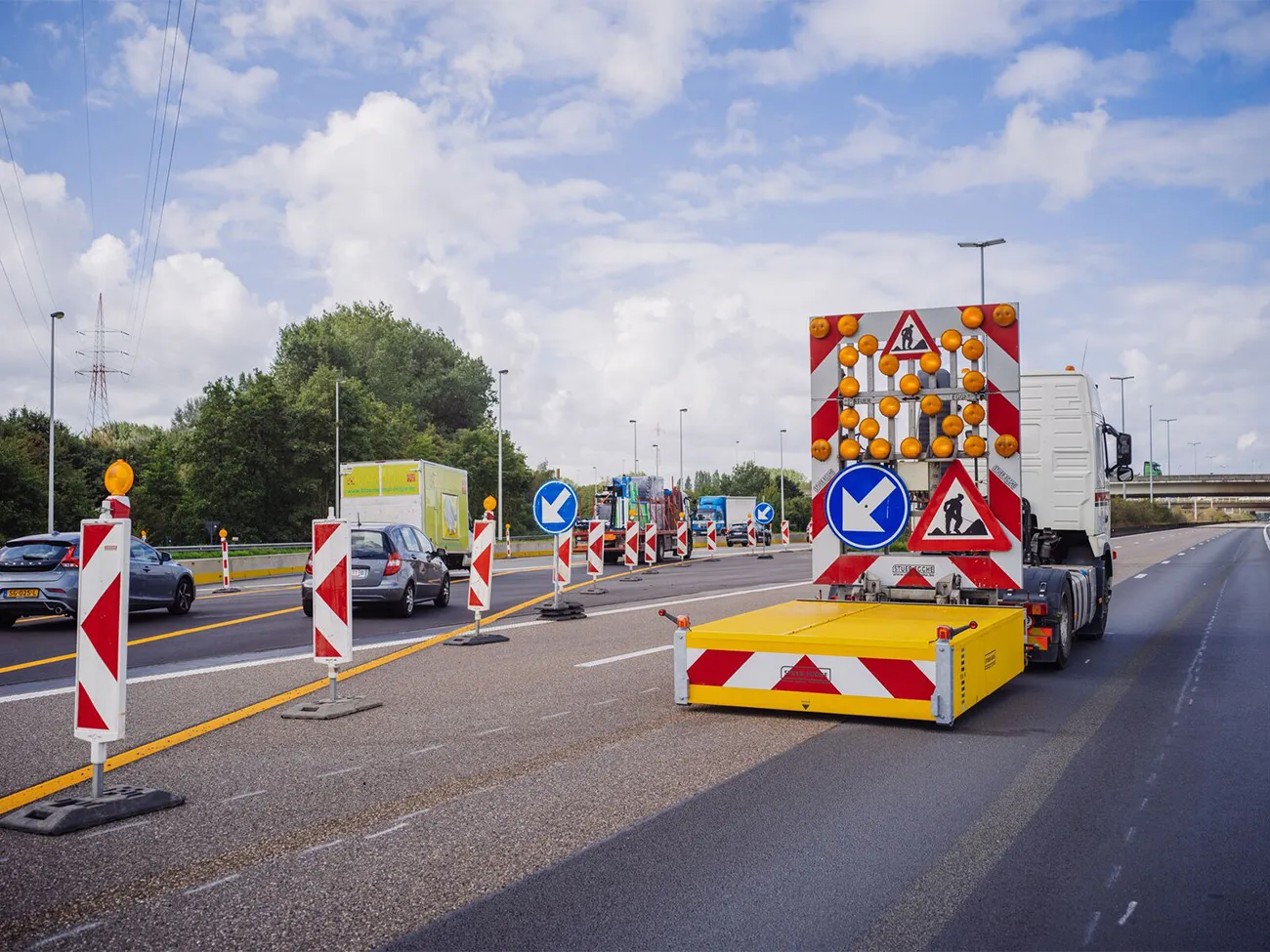
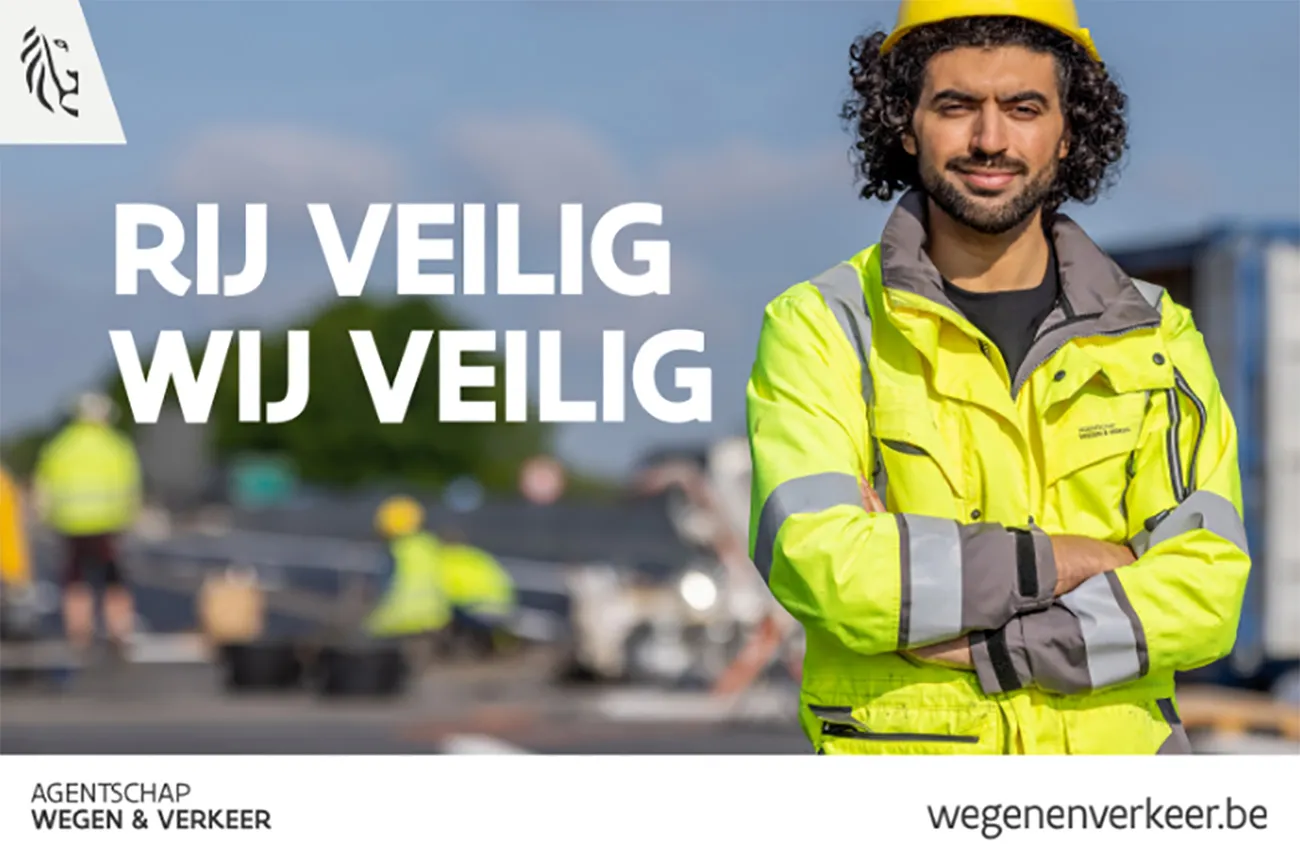
Many road accidents still occur at roadworks every year. This morning, Flemish Minister for Public Works and Mobility Lydia Peeters and the Agency for Roads and Traffic (AWV) launched a new campaign on safe driving near roadworks. The call to ‘Drive safely, keep us safe’ also highlights the risks faced by road workers.
In 2020, there were almost 20% fewer accidents than in 2019*, as a result of a fall in traffic that year. We saw barely any such decrease in accidents at roadworks. In 2020, 11 people were killed and 443 injury accidents occurred at roadworks in Flanders. By comparison, in 2019 there were 7 fatal accidents and 454 injury accidents. “Road safety, including around roadworks, is my priority. Making roadworks safe, combined with safe driving by motorists, must reduce the number of accidents,” says Minister Peeters.
Appeal to drivers: stay alert and do not drive too fast
Roadworks temporarily create new traffic situations. These may involve fewer and narrower lanes, lane shifts or diversions across the central reservation. A moment’s inattention can cause an accident with serious consequences. “Pay extra attention as you approach roadworks,” the minister stresses. “Follow the signs alongside and on the road, and stick to the speed limit.” Notably, Vias points out that, compared with drivers in other European countries, Belgian drivers are the most likely to say they forget to slow down near roadworks: as many as 63% admit to doing so.**
Making roadworks safe with speed checks at critical locations
Safe driving is one thing, but making a worksite safe is just as important. When preparing each project, AWV assesses what is needed to prevent accidents. Roadworks are announced well in advance using fixed and variable signs, and the speed limit is reduced. AWV also takes additional measures where necessary. At the works on the viaduct in Gentbrugge, for example, the number of accidents fell sharply after more visible road markings and lane signs were introduced and speeds were reduced over a longer distance.
In consultation with the police, AWV installs mobile speed cameras and average speed checks at roadworks. Manned checks are also carried out during critical phases of works that involve a high safety risk. This includes situations where road workers are working right beside a busy road.
Studies show that speed checks make people drive more slowly. Recent figures*** from a mobile average speed check on the E314 at Boorsem show that 85% of drivers travelled at an average speed of 68km/u, thereby complying with the 70km/u speed limit.
Campaign focuses on road workers
The issue is not just the safety of drivers, but also that of road workers. “Working on a site is life-threatening when drivers speed or drive recklessly. I also still hear too many stories about verbal and physical abuse by drivers. I understand the frustration caused by queues at roadworks, but do not take it out on the people working there,” Minister Peeters concludes.
The ‘Drive safely, keep us safe’ campaign will run throughout June, with posters along major roads and a social media campaign.
Sources:
- Statbel, 2020, a year like no other on the road
** (Via Vias) Fondation Da Vinci, European Barometer
*** Federal Road Police, E314 Boorsem towards Leuven statistics, 29 March, 26 April 2022
Question about this story? Ask your question
Keep following this
Get an email when a new story is published. No account needed.
- ThemeFuture-proofing roads and railways
- SubjectGeneral







