









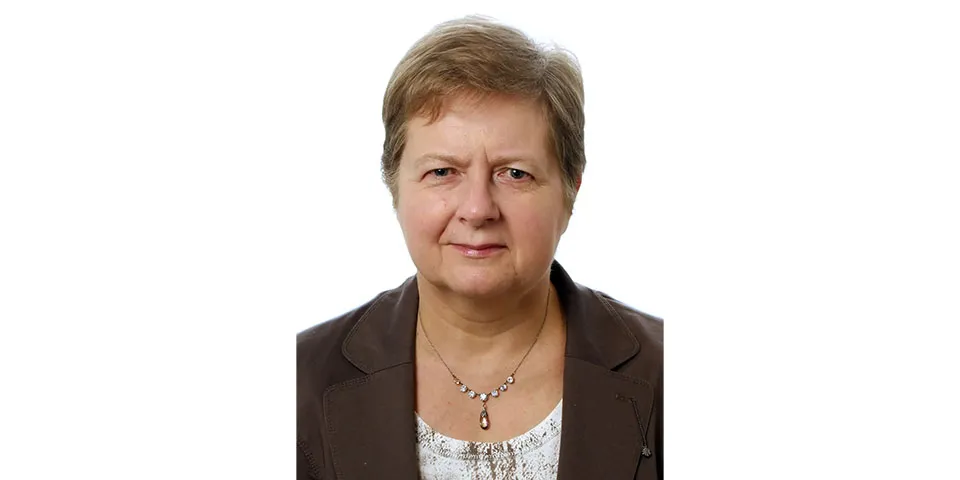
The Pen | Martine Serbruyns, Director of the Railway Safety and Interoperability Service (DVIS)
Railways are a lever for European and national policy to promote greater sustainability and safety in mobility and transport. Investment is being made in both safety and capacity. For Infrabel, this amounted to 800 million euros in 2019, for example. Many of Infrabel’s investments, as well as those made by NMBS at platforms and stations, require work to be carried out on or near the railway. As Director of the Railway Safety and Interoperability Service (DVIS), I would like to use this contribution to draw attention to the safe execution of this kind of work.
Railway safety and construction sites
Accident statistics for recent years show that rail travel is safe for passengers. Since the Buizingen disaster, three passengers have died and 17 have been seriously injured between 2011 and 2018, around 8% of all rail casualties. The number of train collisions and derailments is indeed relatively low. Accidents mainly occur at the interface between the railway and its surroundings, for example at level crossings. Because of the long braking distance and lack of opportunities to swerve, train drivers can only rarely stop in time when an obstacle suddenly appears.
For Infrabel, the Belgian infrastructure manager, safety is a priority. Maintaining, renewing and expanding the rail network is a major activity with a direct impact on safety. Wear and ageing play an important role in the risk of accidents. In addition, specific investments are being made to roll out the European Train Control System, ETCS. This system calculates the maximum safe speed and displays it on a screen in the driver’s cab. It intervenes if the train driver is travelling at an inappropriate speed or ignores a stop signal. It provides a very effective safeguard against train collisions and derailments. It can also be used to enforce a lower speed at work sites. However, it cannot take account of obstacles that unexpectedly enter the train’s clearance envelope, such as a crane boom, a tool, a vehicle or a worker. Human error can have serious consequences, and there is currently no modern technology available to help workers on site avoid such errors.
The infrastructure manager has therefore developed rules and procedures for working on and alongside the tracks to limit risks. To make a proper assessment of the risks and the measures required, it is important for the contractor and client to build a clear picture together, from the planning stage, of the schedule, the equipment to be used, the staff who will be on site, and so on. This allows each party to take the necessary measures to ensure that the work is carried out safely, such as temporarily taking tracks out of service where necessary, training staff, using safety systems on cranes and installing safety nets … This is necessary not only during the work itself, but also during site preparation, demolition work and site clearance.
Train collisions and derailments are relatively rare. Their occurrence will be further reduced in future by the rollout of the ETCS train protection system. However, ETCS plays only a limited role in preventing incidents and accidents involving obstacles that unexpectedly enter the train’s clearance envelope. Thorough preparation and close cooperation between the client and contractor therefore remain essential to assess rail-related safety risks properly, select an appropriate protection method and apply it correctly at every stage of the work. We must ensure that a safe mode of transport is not achieved at the expense of the people who build and maintain it.
Question about this story? Ask your question
Keep following this
Get an email when a new story is published. No account needed.
- ThemeFuture-proofing roads and railways
- SubjectGeneral







