









“The importance of digitalisation can hardly be overstated”
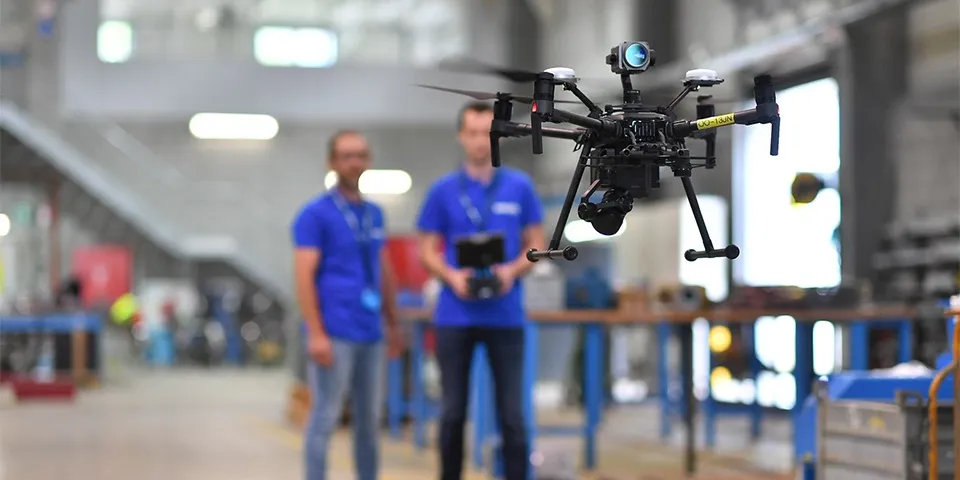
A digital transformation is under way worldwide, and the construction sector must move with it. No easy task in a sector built on tradition, but the digital ball is growing and rolling ever faster. Infrabel is one example of this. The Belgian railway infrastructure manager is making a major commitment to digitalisation: “In our sector, and compared with our European counterparts, we are even at the forefront of the digital revolution,” says CEO Luc Lallemand.
Infrabel has been undergoing a digital transformation for several years. How important is digitalisation?
Luc Lallemand: “The importance of digitalisation can hardly be overstated. Society as a whole has been making the transition from mechanical to digital for some time, and the railways in particular obviously cannot afford to be left behind. Many people still think that rail is a backward-looking industry, but the opposite is true.”
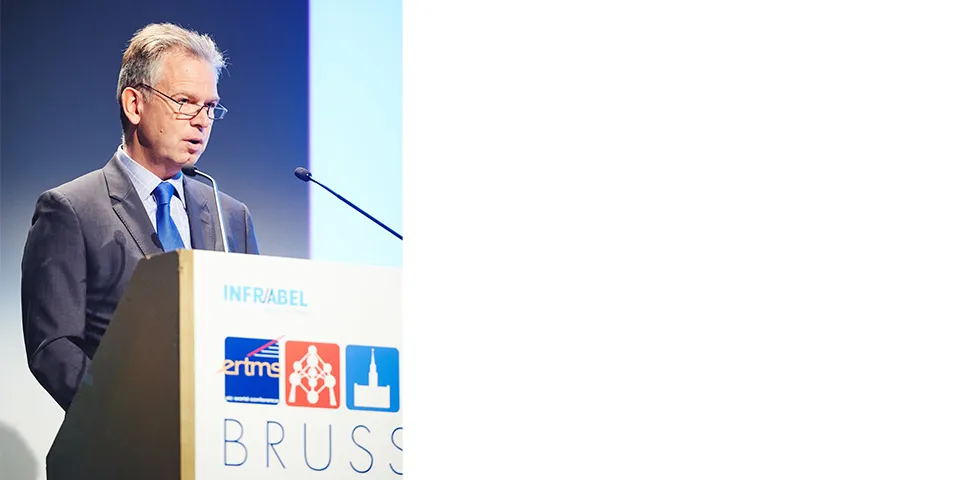
Luc Lallemand, CEO of Infrabel. (Image: Benjamin Brolet)
Do you feel that Infrabel got on board in time?
“I would go even further. In our sector, and compared with our European counterparts, we are at the forefront of the digital revolution. In recent years, we have already won several prestigious awards in this field, and I say that with justified pride. Infrastructure managers from abroad come to Belgium to see how we approach this. A while ago, we even had visitors from Japan. Japanese engineers came to see a system we use to measure points, which they want to introduce in Japan too.”
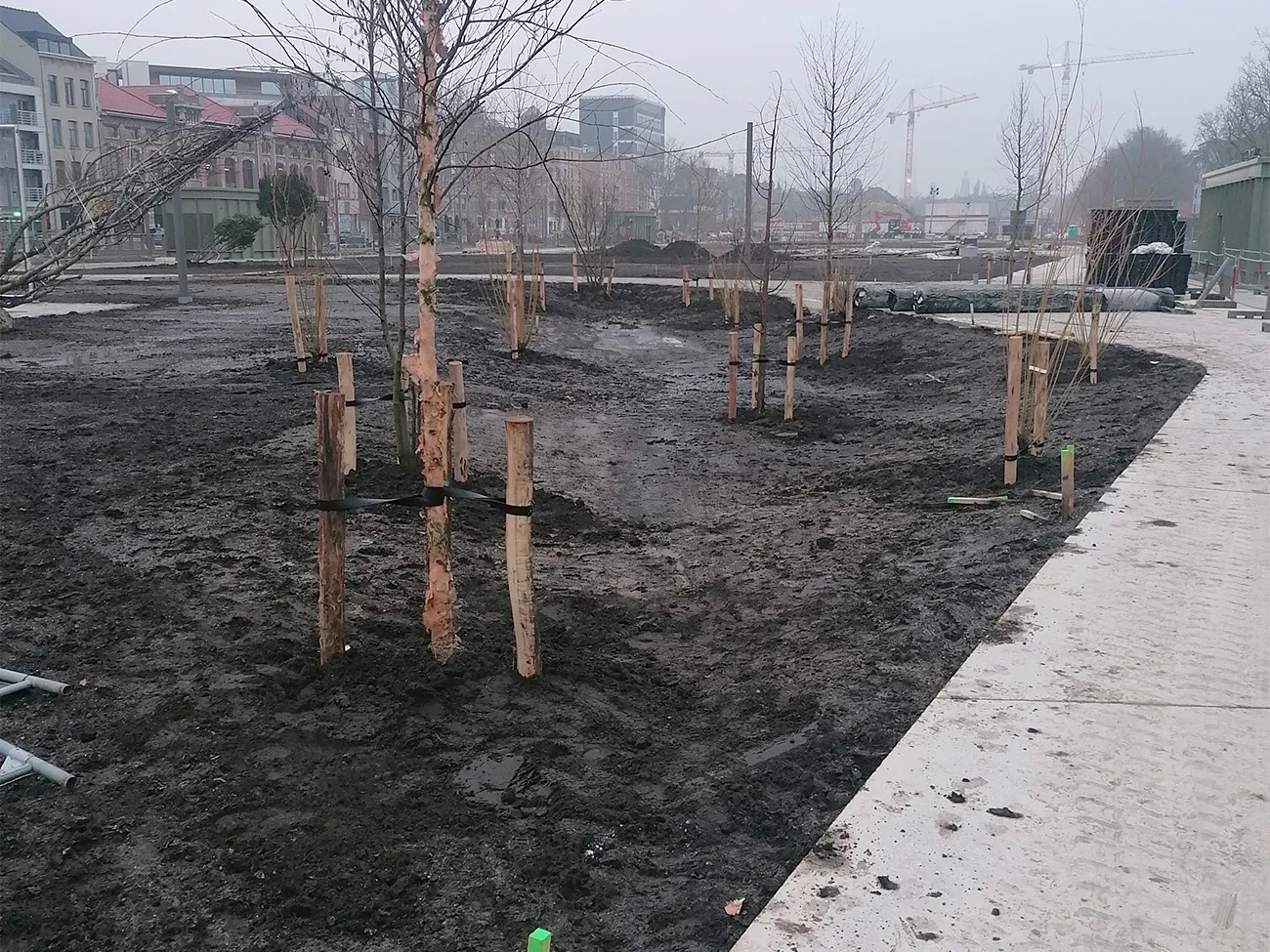
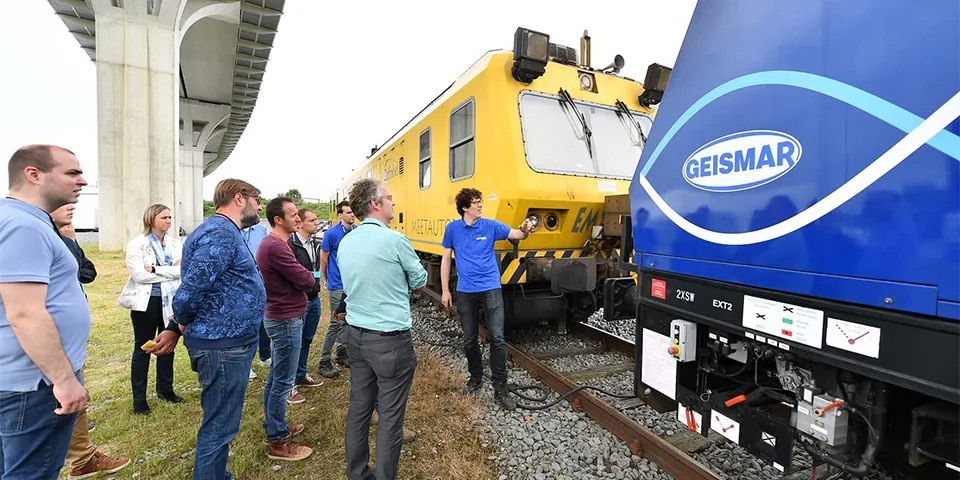
Infrabel organised the Digital Days in June.
At the start of 2014, Infrabel began digitising the entire Belgian railway network through the Smart Railway project. How proud can you be of that project?
“Smart Railway is something we are particularly proud of. It is also a perfect example of how technology and digitalisation can serve our customers, the people who use the railway. I always compare it with a car. Anyone buying a car today knows it is packed with electronics. When you take it to the garage, it is connected to a computer that shows what needs servicing. We do something similar with our tracks. We digitise them. We measure them digitally and install sensors everywhere to collect data. These large volumes of data are gathered centrally, and maintenance teams are sent out on the basis of that information. So you could say that our ‘Smart Tracks’ (Smart Railway) talk to us and tell us when maintenance is needed. This is known as predictive maintenance. It means we can solve problems before they arise. That improves the safety and punctuality of rail services.”
Infrabel organised the Digital Days in June. Are you pleased with the response to the event?
“Our Digital Days were a success. There was considerable interest from the press, our customers and stakeholders. Visitors to our Digital Days saw Infrabel at its most innovative. That is important externally, especially as we want to attract new people to come and work for us. Anyone working in digitalisation, Big Data and innovation would surely like to work for a company that is at the forefront in those fields. But it was also a great move internally. The event gave us the opportunity to show our staff what we are doing in digitalisation and how we see the future.”
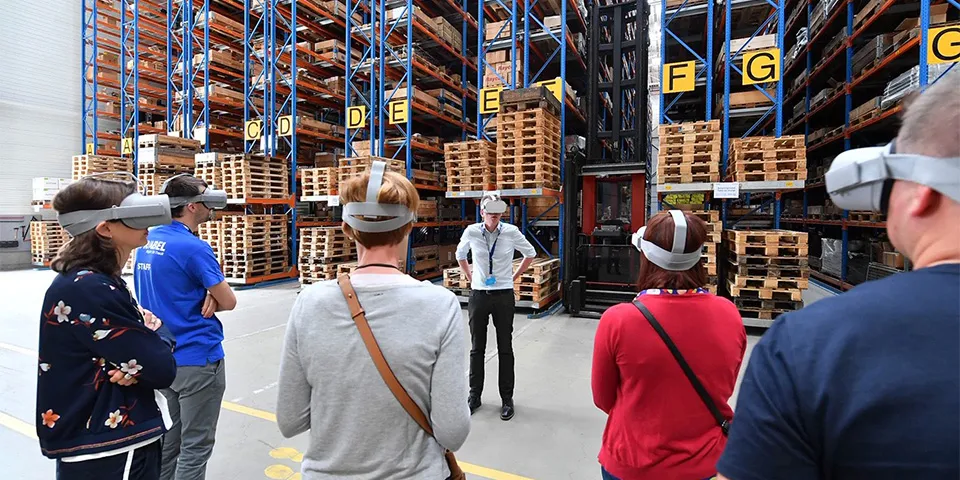
Digital glasses with augmented reality also offer opportunities.
Infrabel also supports open data. How far can you go with that?
“Open data is coming for everyone. Before long, it will in any case become a legal requirement. As a company, we need to be prepared for that. That is why we have already decided to make much of our data, such as our punctuality figures, public and available to the general public. I believe transparency is important, so I am happy to go a long way with it. Of course, there are limits to that transparency. It goes without saying that we do not share data that could compromise anyone’s privacy, just as we do not share sensitive data about our critical infrastructure, for security reasons.”
How important is it for digitalisation to take hold not only in core activities, but also in support units?
“Digitalisation at Infrabel has always extended across both areas, covering support activities as well as core activities. They cannot be separated from one another. The support units, including finance, procurement, production, storage and distribution, and personnel management, were digitised 9 years ago with the introduction of a single integrated ERP system (Enterprise Resource Planning), which replaced more than 100 legacy applications and their associated databases. In recent years, we have expanded this ERP with cloud-based applications that run on all possible end-user platforms, such as tablets, laptops and smartphones. This digitalisation also extends beyond the boundaries of the company. For example, for several years we have been able to make internal purchases through our suppliers’ online shops without the end user even realising it.”
Digitalisation at Infrabel has always extended across both areas, covering support activities as well as core activities.
The rollout of the ETCS system is further proof that digitalisation and technological innovation are high on Infrabel’s list of priorities.
“The great advantage of ETCS is that it provides full protection throughout a train journey. On the one hand, the system drastically reduces the risk of passing a signal at danger. With ETCS, a train driver knows well in advance when a signal will be at red. ETCS also takes the braking curve into account. The aim is to use the system to prevent a train from passing a signal. On the other hand, ETCS continuously monitors a train’s speed. If a train travels faster than permitted, the system intervenes and automatically applies the emergency brake.
ETCS 1, 2 and 1 Limited Supervision are three different levels. How do the systems differ?
Every train running under ETCS receives the necessary information about signals and the maximum permitted speed in the cab, regardless of the level and whether the train is operating in Full or Limited Supervision. With ETCS Level 1, in both Full and Limited Supervision, this information is transmitted by signals from fixed balises installed between the tracks.
With ETCS Level 2, the information is transmitted not by balises but via GSM-R masts located alongside the tracks. In ETCS Limited Supervision, the onboard computer receives the information we send to the train over a shorter distance than in Full Supervision. In Limited Supervision, this information is also not displayed on the train driver’s screen. ETCS Limited Supervision is a system that runs in the background. The train driver looks out of the cab and follows the signals, as in situations without ETCS.”
What does the rollout of this system say about Infrabel’s ambitions?
“With our ETCS Master Plan, we are showing considerable ambition. The EU requires all Member States to install ETCS on their sections of the freight corridors, the main freight railway lines in Europe. But we are among the countries that want to do more than equip only their sections of the corridors with ETCS. Under our ETCS Master Plan, we will equip the entire Belgian rail network with ETCS. This is an ambitious decision that puts us among Europe’s leaders in ETCS. We have also regularly shown ourselves to be pioneers in ETCS in other ways. For example, we were the first EU Member State to equip our section of the freight corridors with ETCS. We were also the first country to have ETCS L2 FS at a border crossing. And of all the countries with plans to equip their entire network with ETCS, we were the first to equip a conventional railway line with ETCS L2 FS on top of the existing lineside signalling system.”
Infrabel began this work in 2009. Where do things stand in 2019?
“We have already completed a large part of our ETCS Master Plan. We met our first target, the accelerated rollout of TBL1+, at the end of 2015. We have since rolled out ETCS on more than 1,500 kilometres of track, to be precise, 24% of our main network. That puts us among the leaders in Europe.”
Will Infrabel continue to invest heavily in digitalisation in the coming years?
“We need to keep a close eye on developments and continue to ask critical questions, such as ‘which technologies are useful to Infrabel?’, ‘what will improve safety and punctuality?’, ‘where can we become more efficient?’ and ‘what can help reduce costs?’. More specifically, for example, we are now asking ourselves how the 5G mobile network could help us, and whether digital clothing could be useful. Think of a jacket that lights up or shoe soles that vibrate when danger is approaching. Digital glasses with augmented reality also offer opportunities: technical maintenance staff can keep both hands free to work while accessing technical plans through the special glasses. It is important to understand that digitalisation is a meticulous process that needs firm foundations. It has to be achieved step by step. The major challenge is how to align our people with digital applications. People must remain at the centre of digital transformation, whatever happens. Training and supporting our field staff in the use of all these digital tools is extremely important. Infrabel will continue to invest heavily in this.”
Question about this story? Ask your question
Keep following this
Get an email when a new story is published. No account needed.
- ThemeFuture-proofing roads and railways
- SubjectGeneral







