









The emergency corridor is still not second nature, 5 years after its introduction in the Highway Code
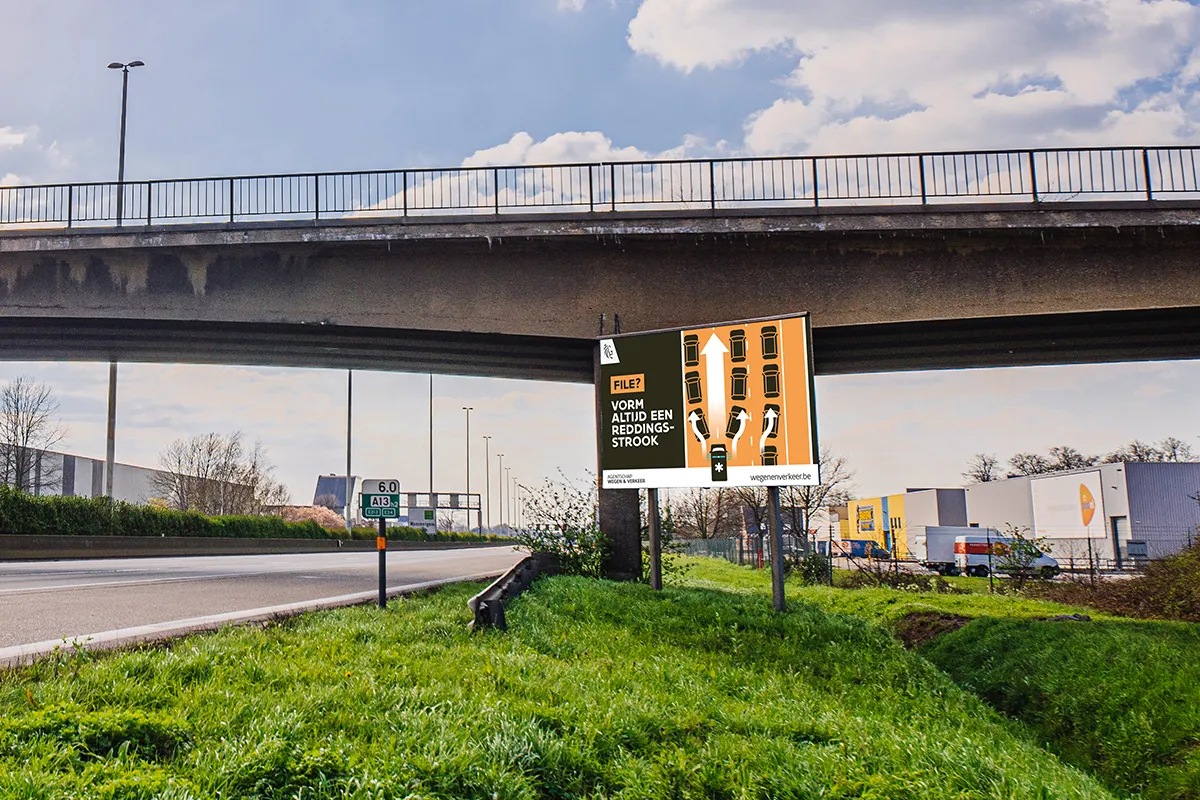
Agentschap Wegen en Verkeer (AWV) is launching another campaign about the emergency corridor in January. A survey of drivers shows why this remains necessary. Around one in five Flemish respondents still do not know what the emergency corridor is or how to form one, 5 years after it was introduced in the Highway Code.
Traffic jam? Always form an emergency corridor
Forming an emergency corridor is simple. As soon as traffic slows, cars in the left-hand lane should move as far left as possible, while cars in the middle and/or right-hand lane should move as far right as possible. So, whenever traffic is backed up on a road with more than one lane, an emergency corridor should be formed.
The emergency services and recovery operators use the clear space to reach the scene of an accident quickly. This means casualties receive help sooner and the road can be cleared sooner, helping to keep traffic queues shorter.
Nearly 4 in 5 Flemish people (78%) know what an emergency corridor is and give a correct definition, according to an evaluation of the latest campaign. Three years earlier, the figure was still below 3 in 5 (58%). Meanwhile, nearly 7 in 10 respondents (68%) say they form an emergency corridor without prompting.
Faster help for casualties and less congestion after an accident
But this knowledge does not always translate into practice. Although the emergency corridor has been a legal requirement on Belgian roads for almost 5 years, traffic controllers at the Flemish Traffic Centre and the emergency services say it is still not second nature.
“We often see drivers panic when we approach with sirens and flashing lights,” says zone commander Col. Jan Jorissen of the Noord-Limburg emergency response zone. “Vehicles move in every direction, blocking the way for our priority vehicles and costing us valuable time. That is why we think it is very important to keep the emergency corridor in the public eye. It gives drivers clear guidance, saving us time and making our work safer.”
“The emergency corridor literally saves lives, and this new campaign is necessary,” stresses Flemish Minister for Mobility and Public Works Annick de Ridder. “Create the clear space as soon as traffic slows, and do not wait until you see flashing lights. When the emergency services arrive, the emergency corridor allows them to drive straight to the accident without interruption. And remember: the emergency corridor can also be used by vehicles with orange-yellow flashing lights, not just those with blue flashing lights. Technical services and recovery operators can also get to work sooner, clearing the road faster and helping traffic to get moving again.”
Stickers on emergency vehicles
The campaign will appear in January on posters along motorways and regional roads, and on the Flemish Traffic Centre’s digital message signs. VRT Radio will also continue to remind listeners about the emergency corridor in traffic bulletins covering accidents.
New this year is the ‘Swipe de Reddingsstrook’ social media campaign, showing drivers how to form an emergency corridor. For the first time, emergency vehicles in the Noord-Limburg emergency response zone will also display transparent stickers on their rear windows to raise awareness of the emergency corridor. Other emergency response zones can contact AWV to order the same stickers.
___
* Online survey (IPSOS) following the Reddingstrook campaign in January 2024, among 600 drivers in Flanders who regularly use motorways and regional roads.
Question about this story? Ask your question
Keep following this
Get an email when a new story is published. No account needed.
- ThemeFuture-proofing roads and railways
- SubjectGeneral







