









The emergency corridor is not yet a reflex in traffic jams
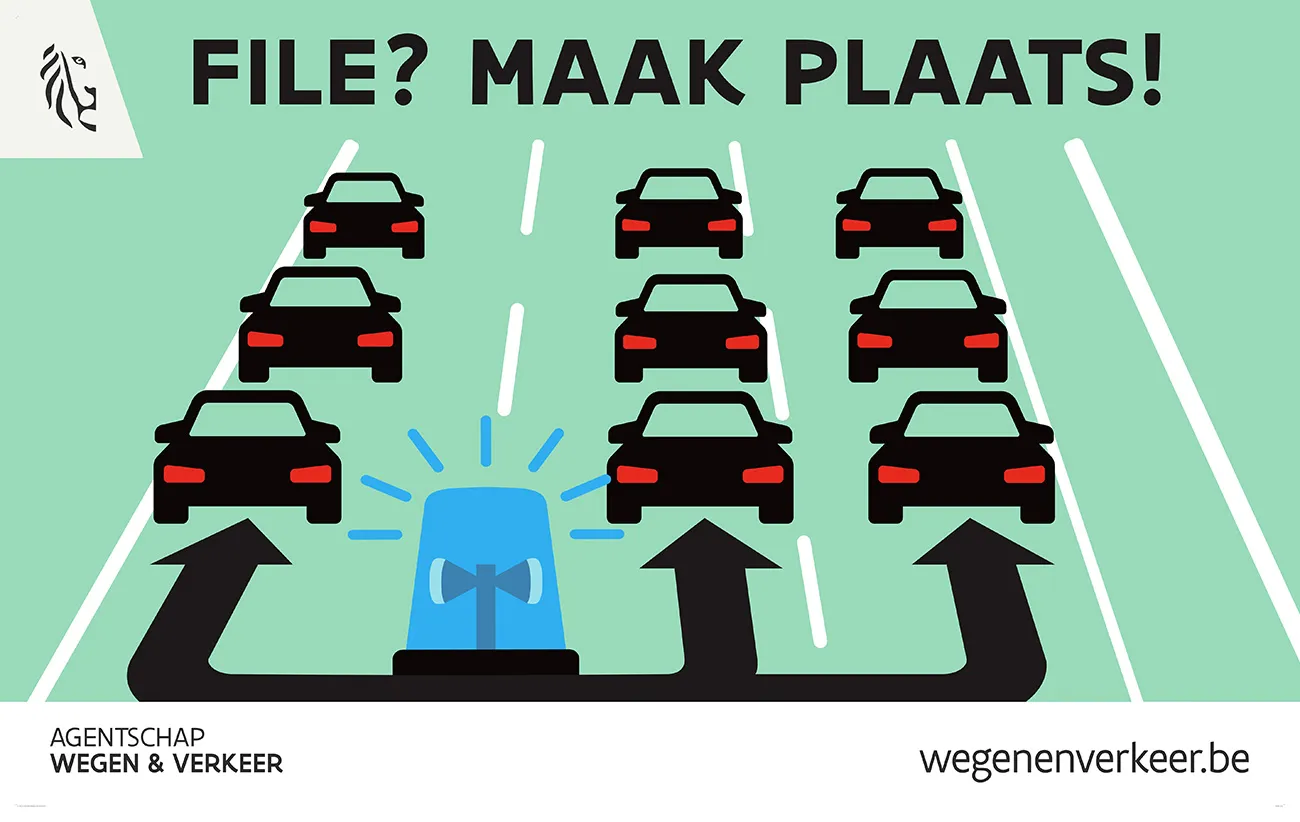
When traffic queues on roads with more than one lane, form an emergency corridor. This has been a requirement in the Highway Code since 1 October 2020. But many people still fail to follow the rule. A new campaign by the Agency for Roads and Traffic (AWV) aims to change that.
Today, only three in five drivers form an emergency corridor spontaneously. “That figure needs to rise,” says Lydia Peeters, the Flemish Minister for Public Works and Mobility. “Since the emergency corridor was introduced, we have run two campaigns and have seen the positive impact of this awareness-raising work. But we want even more people to make forming an emergency corridor a reflex. The route must be clear before the ambulance or fire brigade arrives. That way, our emergency services can reach the scene of an accident quickly.”
Don’t wait for the sirens
An emergency corridor is required in a traffic jam, even if there are no flashing lights in sight. Yet fewer than one in five drivers knows this. “We see it from the Traffic Centre too,” says Peter Bruyninckx. “When people see smoke in the distance or hear sirens, they move aside. But forming an emergency corridor spontaneously is much less common. Our traffic operators then see on the cameras how emergency services have to struggle to reach the scene. It’s frustrating.”
Every minute counts when there’s an accident, says Kris Segerink, an officer with the Zuid-Oost Emergency Response Zone. “If we have to create space when our ambulance or fire engine arrives, we lose valuable time. Don’t wait for the sirens. Form an emergency corridor as soon as traffic slows down,” he urges.
Keep the hard shoulder clear
Forming an emergency corridor is simple. Vehicles in the left-hand lane should move as far left as possible. All the others should move as far right as possible.
Do not cross the white lines unless there is no alternative. Keep the cycle path and hard shoulder clear. Recovery vehicles, as well as other vehicles on their way to the incident, also use the hard shoulder to reach the scene. This helps clear the road sooner and ease the traffic jam.
Traffic desks back campaign
In August, AWV is running a month-long campaign featuring posters, videos on social media and messages on 64 digital traffic information signs operated by the Traffic Centre. The VRT traffic desk is also taking part. From 16 August, its team will remind listeners about the emergency corridor when reporting accidents.
Question about this story? Ask your question
Keep following this
Get an email when a new story is published. No account needed.
- ThemeFuture-proofing roads and railways
- SubjectGeneral







