









Sponge label recognises cities and municipalities taking action against flooding and heat
Text Joris Hendrickx Beeld VLARIO en Natuurpunt
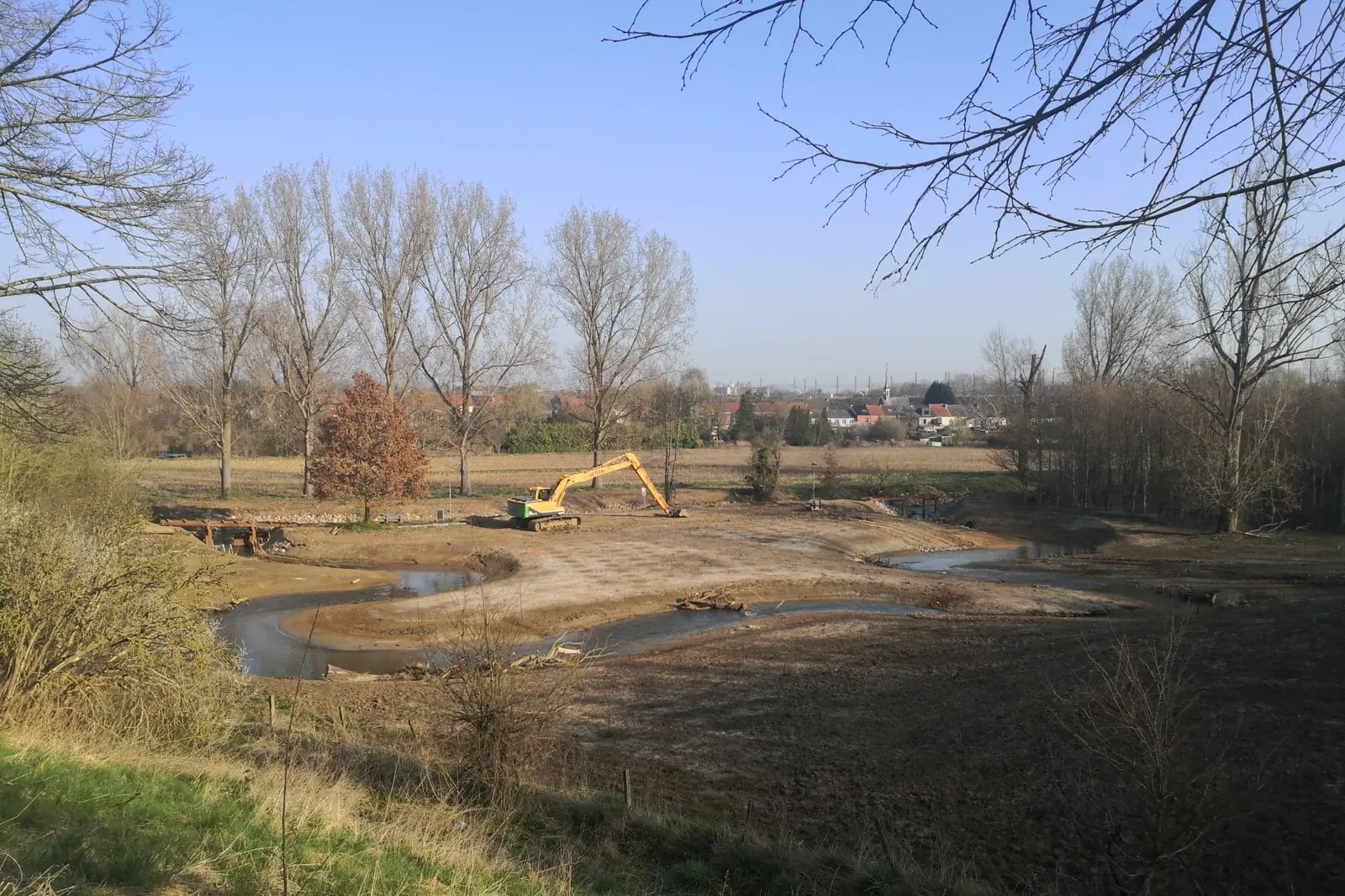
Cities and municipalities face a clear choice: make room for water or continue to accumulate risks. The new Sponge Municipality label gives local authorities a practical framework for making this transition. The label, an initiative that grew out of the Green Deal Climate-Resilient Environment and is led by Natuurpunt and VLARIO, encourages them to depave, green their surroundings and put water at the heart of their policies.
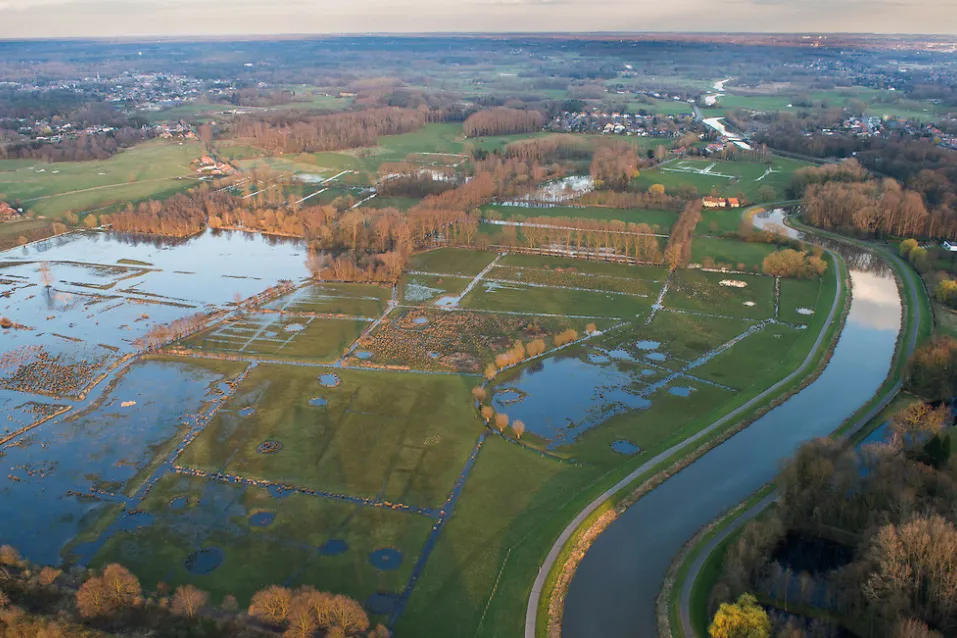
Flanders is increasingly presented with two bills at once: one after torrential rain, the other after drought. First, streets, gardens and basements fill with water. A few weeks later, warnings reappear about low groundwater levels, dry soils and pressure on water reserves. This is not because too little rain falls, but because, with so much hard surfacing and water draining away too quickly, Flanders is still losing too much rainwater that could prove extremely valuable later.
Under the motto ‘Smart with water. Strong for the future!’, the ‘Sponge Cities’ focus group within the Green Deal Climate-Resilient Environment has just launched the Sponge Municipality label. It highlights the cities and municipalities adapting their areas to a new climate, and making room for water to stay where it falls.
No longer a green ideal, but essential infrastructure
“Continuing to prioritise rapid rainwater drainage today means building in vulnerability for tomorrow,” says Wendy Francken, director of VLARIO. “Holding on to water intelligently is increasingly key to whether neighbourhoods can withstand heavy rainfall, heat and drought. Municipalities and cities that fail to act now will pay more later.”
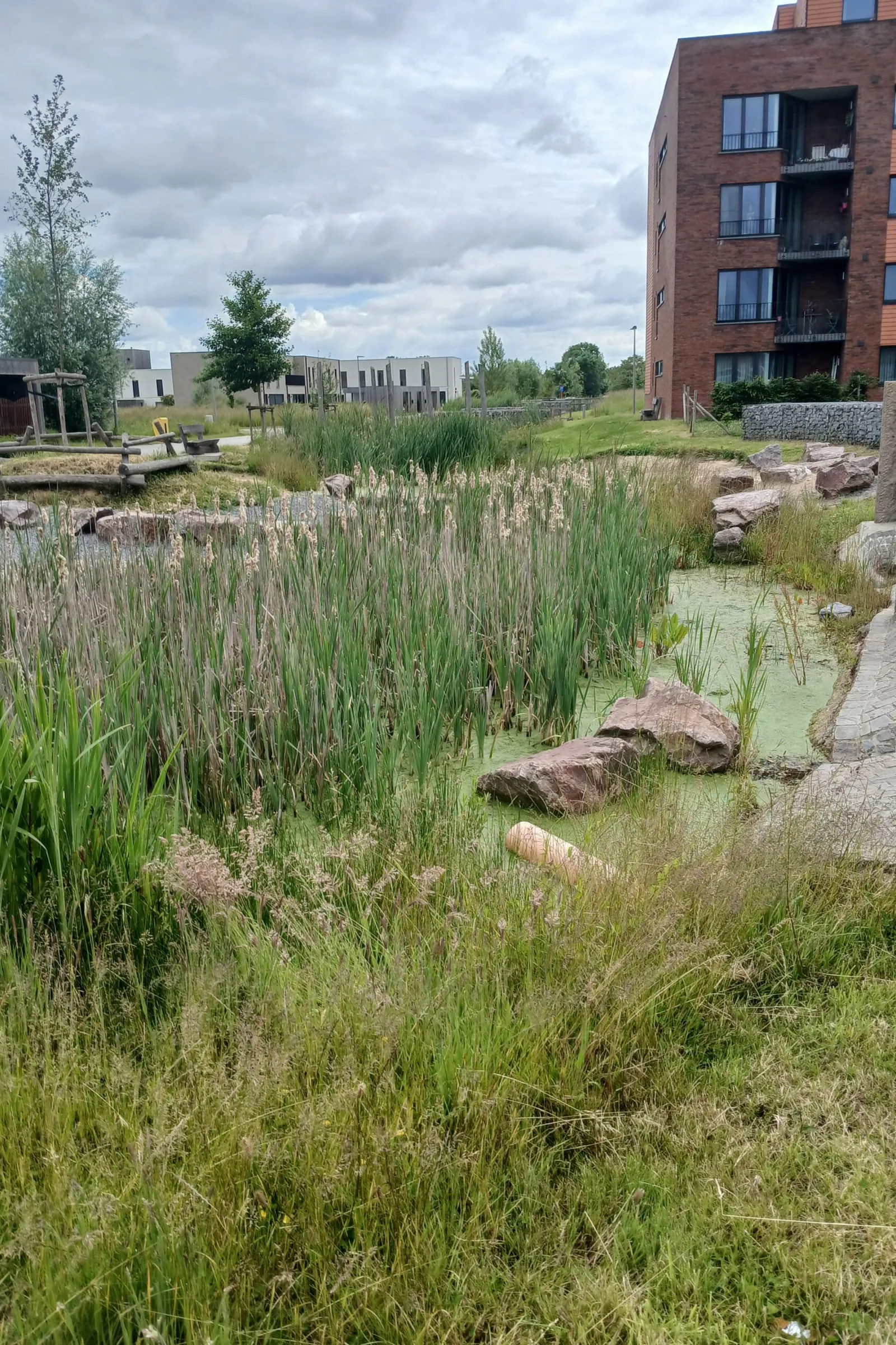
To earn the sponge label, local authorities must show that they systematically prioritise depaving, infiltration, water storage and smart use of space. In practice, this means fewer paved squares and car parks, more open ground, infiltration areas, rainwater reuse, space for wetland habitats and projects that retain water rather than sending it away. Every additional square metre of hard surfacing increases pressure on sewers, raises flood risk and reduces the natural water buffer.
“We are making water retention a structural priority,” says Flemish Minister Jo Brouns. “Those who depave and promote infiltration today are investing directly in safety, liveability and economic resilience.”
According to Lander Wantens of Natuurpunt, nature is still often underestimated in this regard: “Open space and wetlands contribute more to flood safety than conventional infrastructure alone. Where nature is given space, water gets time again, and that is precisely what is lacking in many places today. With the new sponge label, we want to highlight the power of nature-based solutions in a positive way.”
Facts and figures underline the need for a sponge label
- 15.7% of Flanders is now covered by hard surfaces: a total of 213,680 hectares of concrete, asphalt and roofs.
- A further 21,110 hectares were paved over in ten years: equivalent to around 30,000 additional football pitches of hard ground.
- 2024 was the wettest year on record, with 1,199 mm of rainfall.
- At the same time, Flanders is among the European regions with the lowest water availability per capita.
- More than €500 million has already been invested in water resilience through the Blue Deal.
- Meanwhile, 5,000 hectares of wetlands have been created to retain water for longer.
- Sponge measures work: CurieuzeNeuzen, a large-scale study in Flanders with around 5,000 monitoring points, showed that greenery and water measurably lower temperatures: by up to 4°C during the day and around 2.9°C at night, with temperatures still around 2.4°C lower at a distance of 100 m, and the effect felt up to 1 to 2 km away.
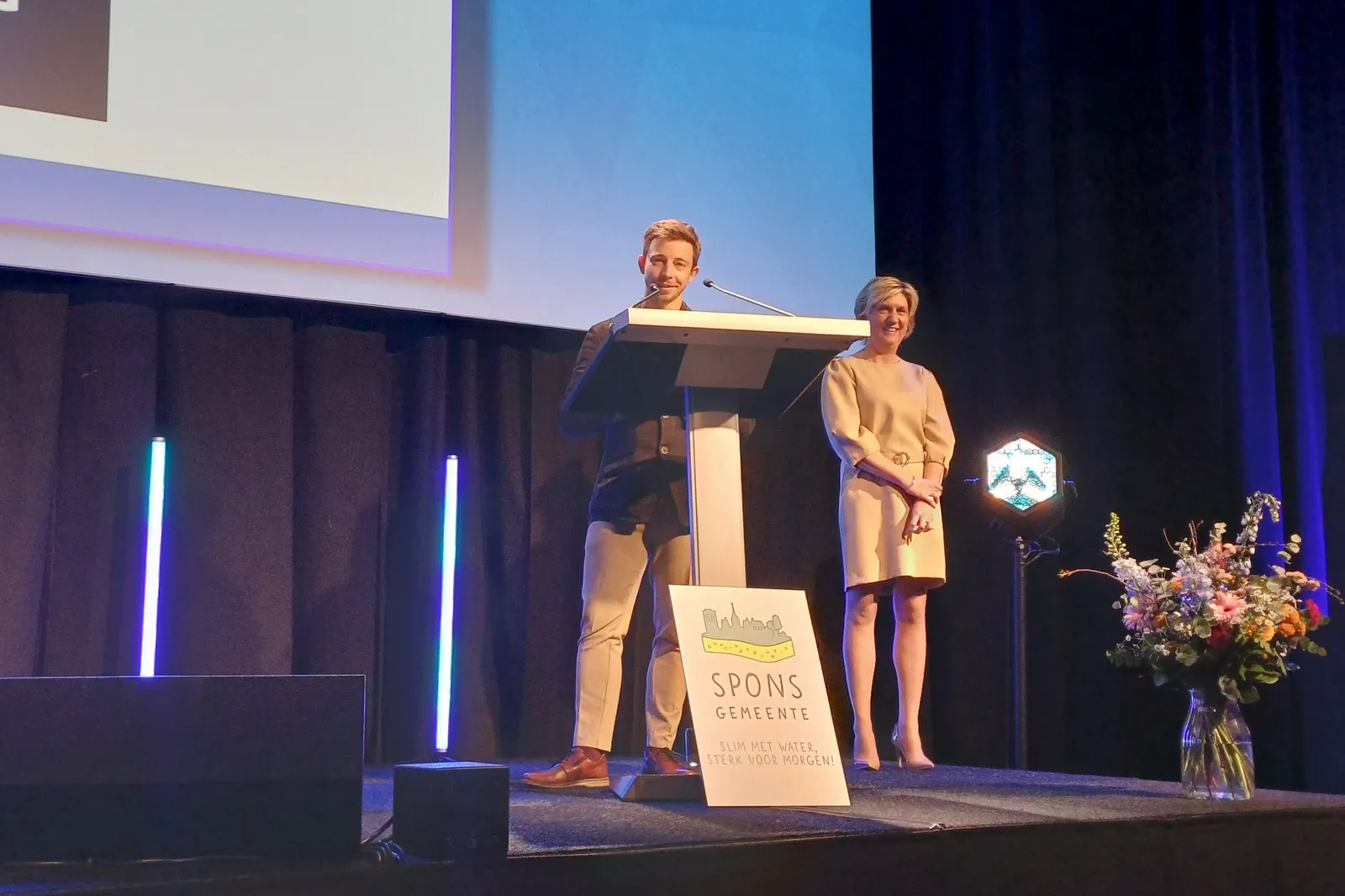
First awards in 2027
The sponge label therefore shows which municipalities are already working to reduce future risks. Wantens: “A jury will soon assess applications, and the first Sponge Municipalities will be named from 2027. There will be several levels, from a basic label to more ambitious programmes. Recognition will be valid for four years at a time.”
More information at Sponsgemeente.be
Question about this story? Ask your question
Keep following this
Get an email when a new story is published. No account needed.
- ThemeSpace for water and green infrastructure
- SubjectGeneral







