









Road construction courses are growing in popularity
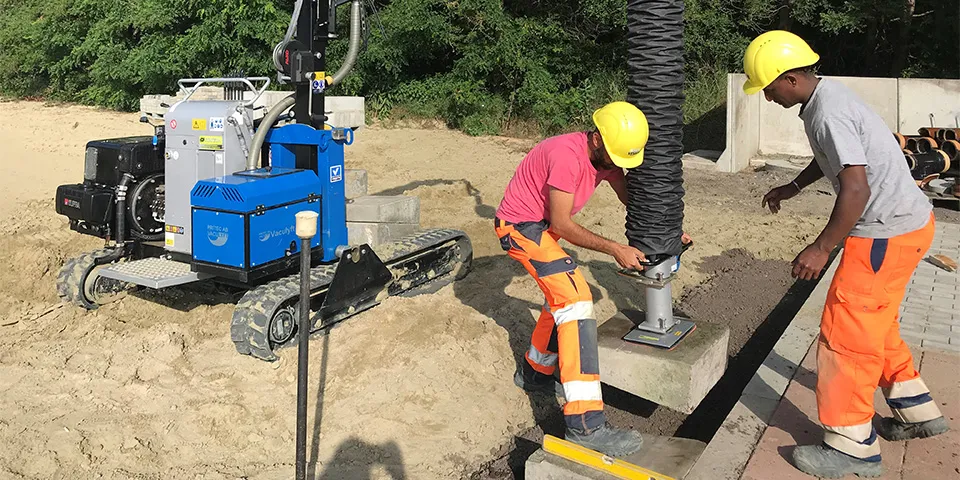
Road workers ensure that thousands of people reach their destinations safely every day. The sector is currently struggling with a shortage of skilled, qualified workers, which is a major problem. In response to the ever-growing demand for new recruits, VDAB is investing heavily in road construction training.
Earthworks, laying sewers, giving squares and streets a new lease of life, small and large infrastructure projects… Road workers play a crucial role in our daily lives. But finding enough suitably qualified workers is no easy task. The construction sector has more than 12,000 vacancies. It is no surprise, then, that road builders and operators of concreting and asphalt-laying machinery are once again on VDAB’s list of shortage occupations in 2019. There is a shortage in terms of both numbers and workers’ skills and experience. On the one hand, too few people are coming through from education and training. On the other, there may be enough jobseekers, but they are not suited to the specific working conditions involved, such as shift work, pay, unhealthy or physically demanding work, stress or atypical employment status.
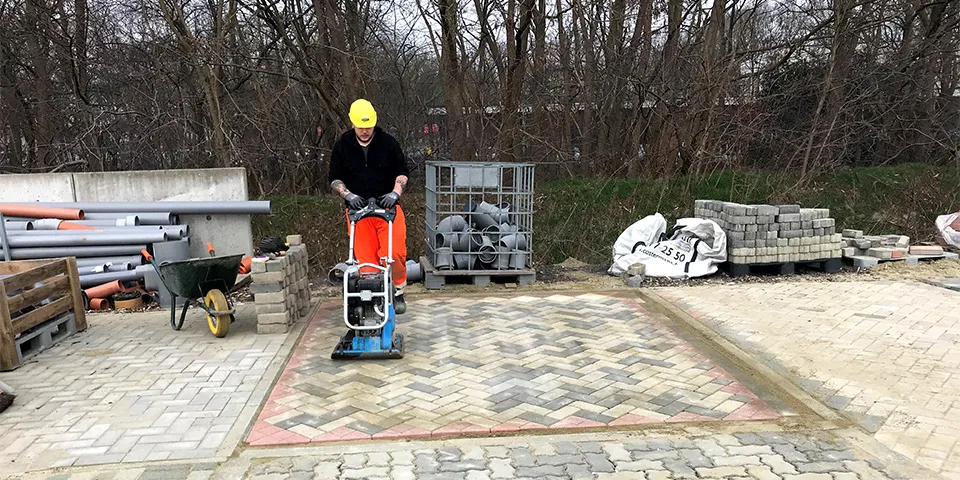
Both the range of training courses and interest in them are growing.
A wide range of courses
VDAB is well aware of market demand and is therefore investing heavily in road construction training. “The range is very broad, from house connections to sewer construction, and from preparing the sub-base to laying the finished surface,” says Bjorn Mertens, a road construction instructor at VDAB. “The full range for both jobseekers and employees is listed on the VDAB website. We can also tailor training to the needs of a company. In consultation with VDAB, a company puts together a package to suit its own requirements. VDAB’s biggest challenge is to meet employers’ needs as effectively as possible. Candidates need to be trained efficiently so they can quickly get to work in the sector.”
It is clear that the number of courses in the road construction sector is growing. Bjorn Mertens says: “The strong demand for workers is driving growth in the range of courses. At the same time, interest in training is also increasing because there is plenty of work in the road construction sector. The two go hand in hand. For example, the road construction foreman course is very popular. Trainees learn to interpret and set out plans, measure out work and use GPS.”
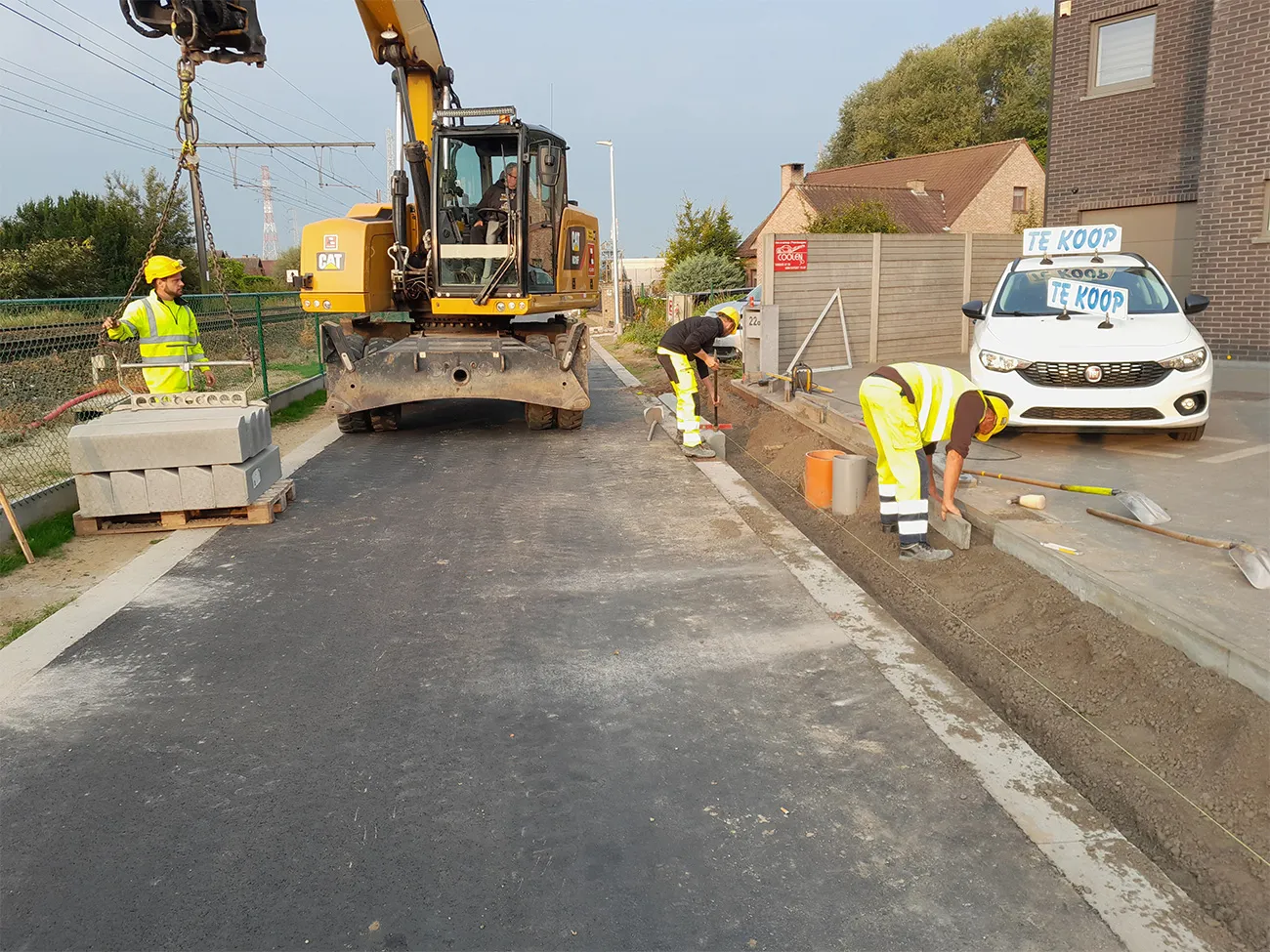
Road builders and operators of concreting and asphalt-laying machinery are once again on VDAB’s list of shortage occupations in 2019.
Fully up to date
VDAB is also aware that digitalisation and innovation are playing an increasingly prominent role in the construction sector. “We have already bought a lot of new tools this year,” says Bjorn Mertens. “We update and modernise our courses wherever possible. We recently acquired a simulator for road construction machinery, a vaculyft (a suction cup used to place heavy precast elements without lifting them), a GPS device, a field book, a total station and a new type of hand tamper. We have to keep up with all the new tools used in road construction. Falling behind is certainly not an option for a training centre like VDAB.”
Promoting the courses
VDAB’s commitment to road construction is clear from the extra efforts it makes to promote its courses. Bjorn Mertens says: “We certainly do our best to reach both jobseekers and employees. We organise information sessions, promote our courses in various places and network with companies and recruitment agencies so that applicants with no experience can still find work after training. We would like to give an extra boost to the option of training tailored to a company’s needs. These courses are effective and lead directly to employment.”
“Our collaboration with the sector and partner organisations is also extremely important for attracting new candidates and helping trained course participants move into work. We are keen to offer work placements under our training scheme: 10 working days on the job under a VDAB contract, free of charge to the company. These placements provide the ideal transition between training and employment. Our trainees can usually stay on and have the chance of securing a permanent contract after their placement,” concludes Bjorn Mertens.
Een zakelijke vraag aan VDAB? Get in touch
Companies in this story
Keep following this
Get an email when a new story is published. No account needed.
- ThemeFuture-proofing roads and railways
- SubjectGeneral
- CompanyVDAB







