









Reconstruction of the R1, Antwerp | Modular bridges keep traffic moving during Oosterweel works on Linkeroever
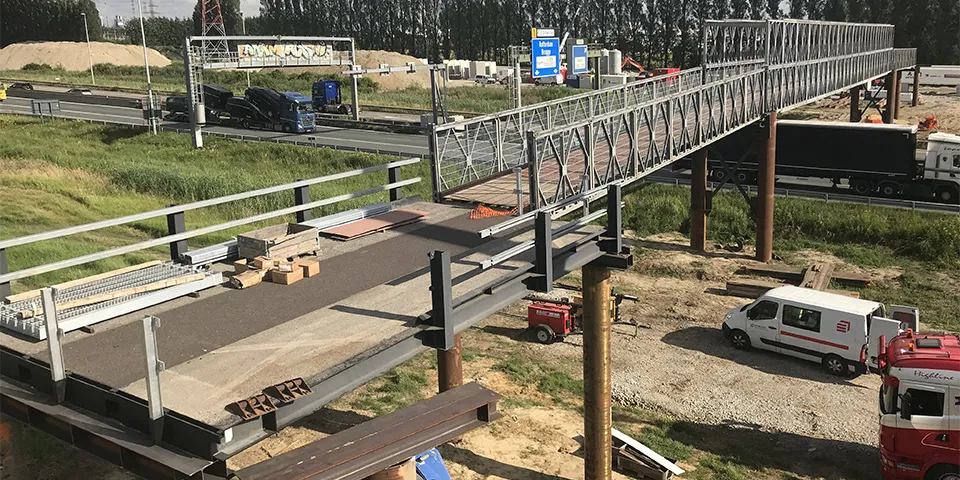
To minimise disruption to traffic during major works on Linkeroever for the reconstruction of…
To minimise disruption to traffic during the major works on Linkeroever to reconstruct the Antwerp Ring (R1), Dutch company Retro Bridge will install nine temporary bridges. “We have also developed a new crash barrier configuration specifically for this project,” the company says.
The modular bridges will be installed on and around the interchange near Zwijndrecht, on the eastern side of Antwerp. The works are the first of five subprojects for the Oosterweel connection, which will reconstruct and complete the Antwerp Ring. The other contracts have not yet been awarded. “The joint venture will renovate and modify the interchange on Linkeroever so that it can later be easily connected to the new tunnel under Antwerp, which will complete the Oosterweel connection,” says Han Kastermans, managing director of Retro Bridge. “The interchange includes several connecting roads to the E17 and E34 that will be reconstructed or rerouted. Traffic must of course continue to flow, which is why the temporary bridges are needed.”
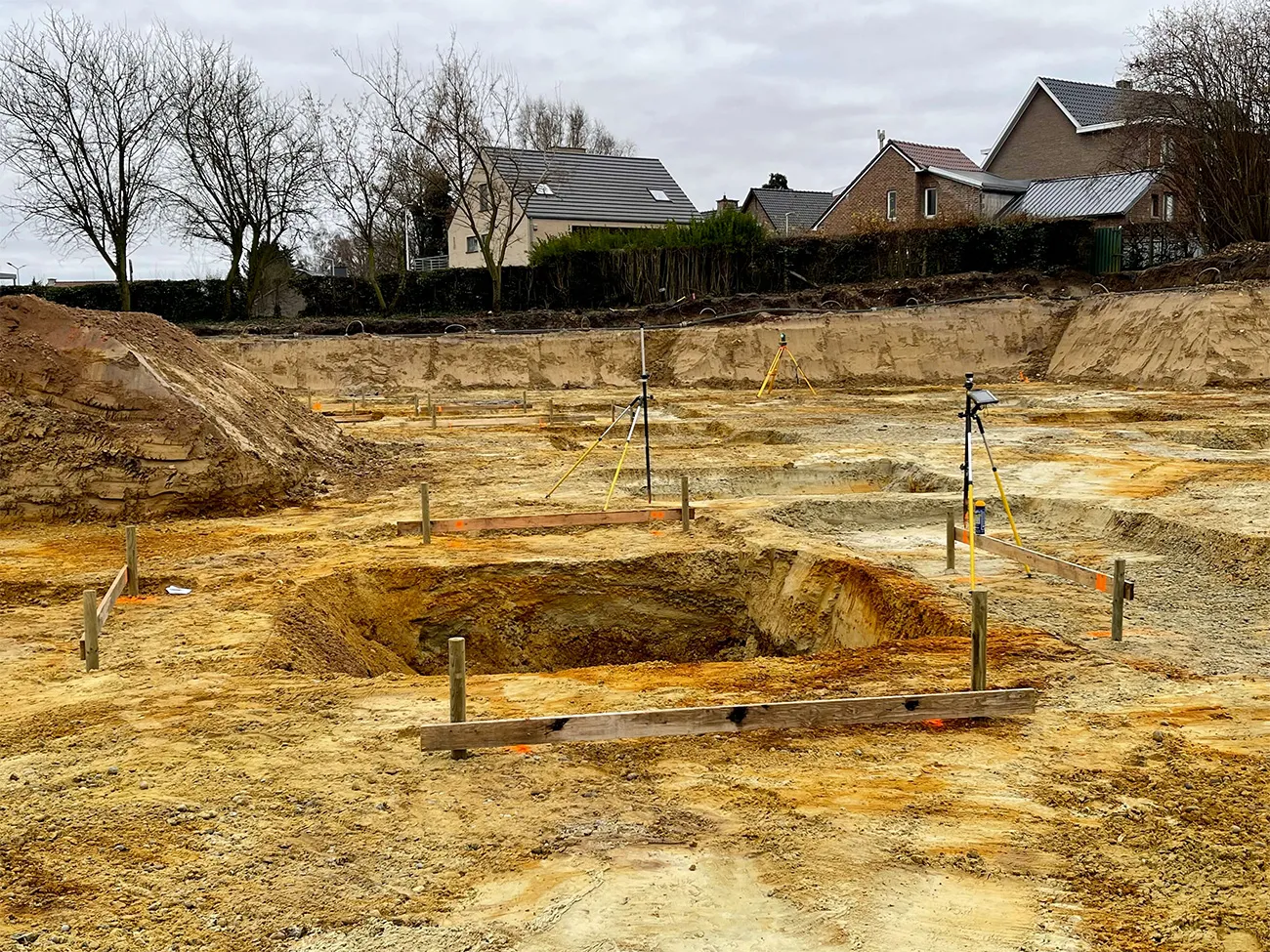
The modular bridge systems will remain in service until 2023.
First bridge installed
Retro Bridge recently installed the first two temporary bridges. These are a combined pedestrian and cycle bridge more than 300 metres long over the E34, and a modular Retro Heavy Bridge (RHB) system measuring 40.5 m long and 7.5 m wide. Over the next six months, seven more bridges will follow. “There will be two more RHB systems, one comparable to the bridge we installed during the construction holiday and another measuring 75 m long and 7.5 m wide; two Retro Beam Bridge (RBB) bridges, one 19 m long and the other 10.5 m long, both 7.5 m wide; and three Retro Light Bridge (RLB) bridges. These will also all be 7.5 m wide, with two measuring 34.5 m long and one 27 m long.”
“Seven of the bridges have a single clear span. The 75 m bridge consists of two sections, 40.5 and 34.5 m long. The 326 m pedestrian and cycle bridge also consists of several spans, including one spanning 48 metres over the E34. This made the installation of those last two bridges more challenging.”
New crash barrier
“The client also stipulated that the crash barriers on the temporary bridges had to be designed to meet capacity class H2W2. We did not have a crash barrier of this type, so we developed one ourselves for use on motorways. Several experts were involved in the design, including Technisch Buro De Heer from Vlaardingen, Liège-based GDTech and DAV NORDIC from Denmark. The new crash barrier has a crash-test certificate and CE marking. Since we had to develop a completely new crash barrier anyway, we took the opportunity to incorporate a drainage system, a unique design. All the temporary bridges on this project will be fitted with the barrier, except, of course, the pedestrian and cycle bridge.”
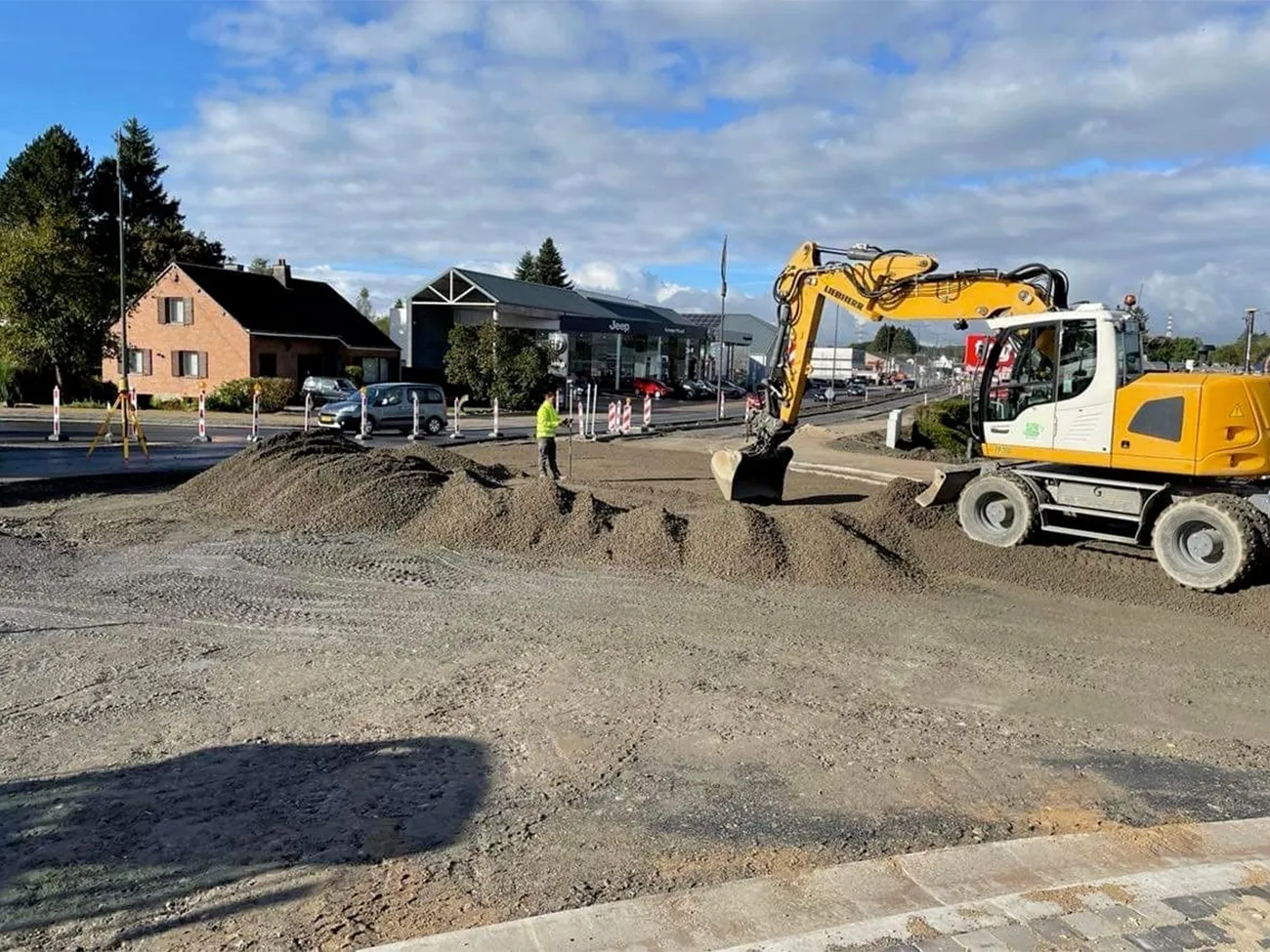
They will then be dismantled and moved to another project.
In service until 2023
The modular bridge systems will remain in service until 2023. “After that, we will dismantle them and move them to another project. We have offered six of the nine bridges to the contractor consortium under a buyback arrangement rather than a rental contract. Since those six bridges will be used for more than three years, it is cheaper for the client to own them temporarily. At the end of the agreed usage period, we will buy them back at a fixed price. This saves the client money, and there are no issues if the project runs over schedule.”
Retrobridge rents out its modular bridge systems across Europe. “Standard modules allow us to meet the specified requirements in almost every case. All components comply with the Eurocode load models,” concludes Han Kastermans.
Question about this story? Ask your question
Keep following this
Get an email when a new story is published. No account needed.
- ThemeExtending the life of bridges and tunnels
- SubjectGeneral







