Giant track renewal train upgrades high-speed line
Text Infrabel / Niels Rouvrois Beeld Infrabel
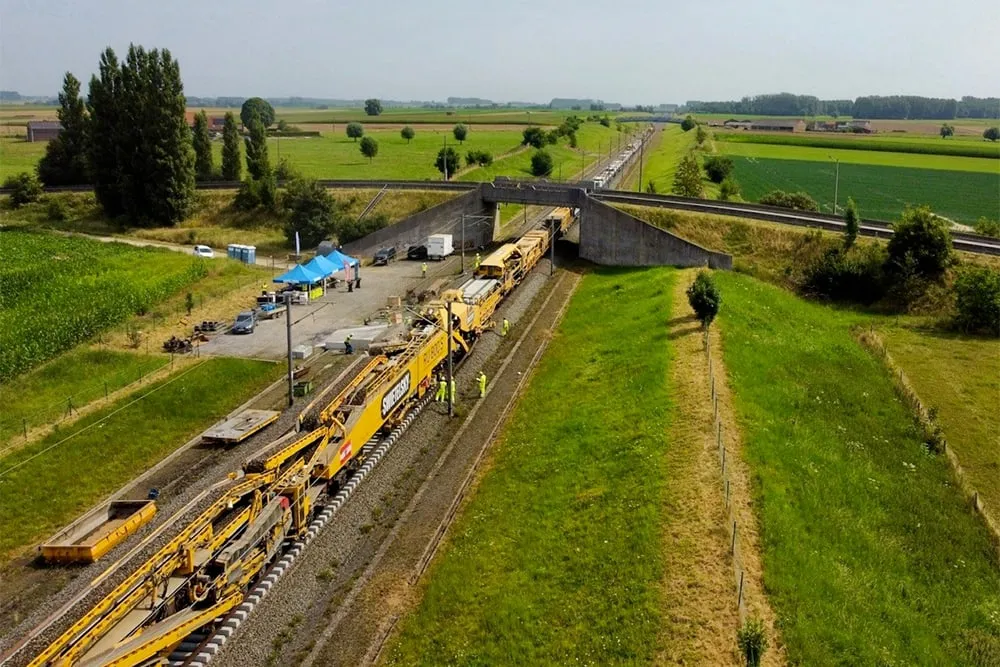
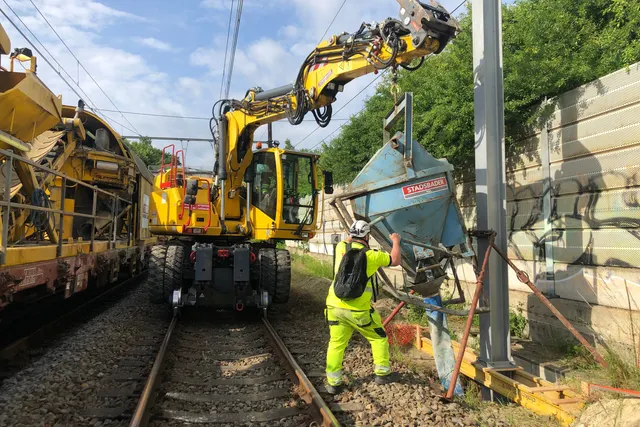
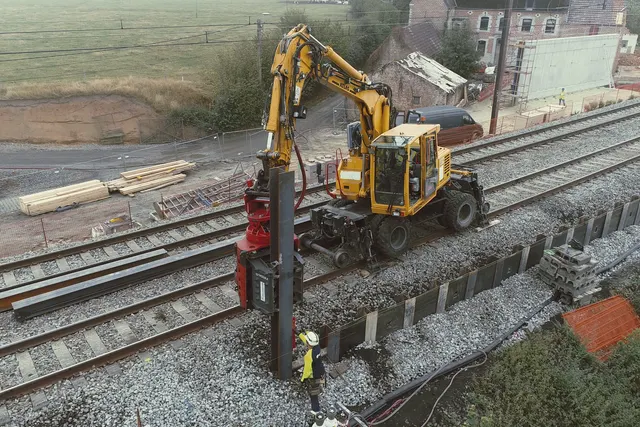
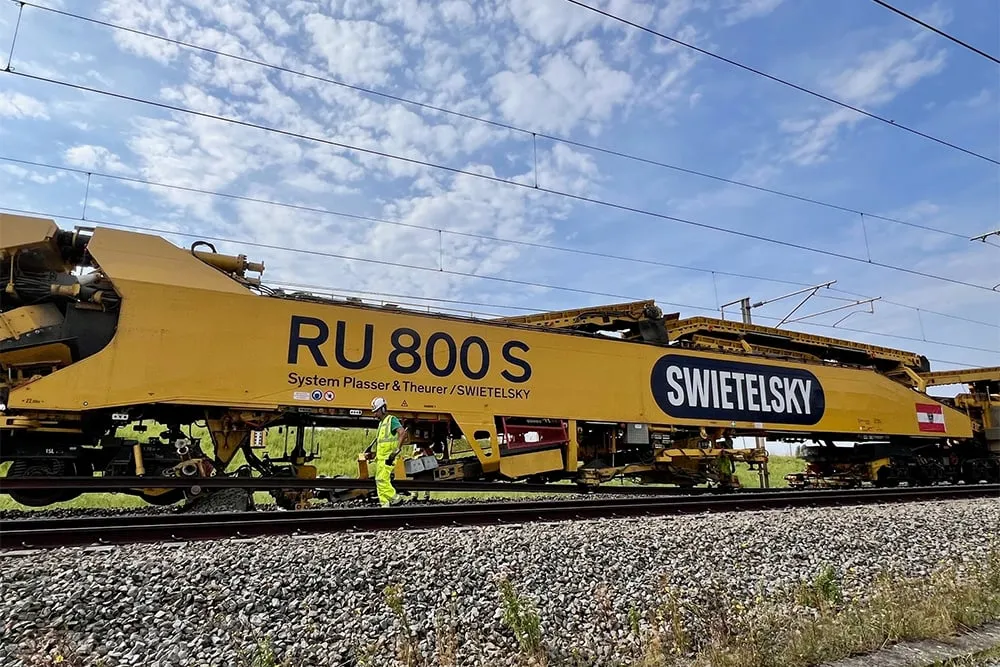
From 12 to 30 August, one of the 2 tracks on the High-Speed Line (HSL) between Brussels and the French border was completely renewed over a distance of 17.6 km using a track renewal train nearly a kilometre long. The rail contractor was Swietelsky Rail Benelux, which deployed its ‘factory on wheels’ for the work: the RU 800 S renewal train. It was followed by the 4X tamping machine, the EM-SAT measuring train and the BDS to bring the track into its exact position. This neatly completes the first phase of a four-year project. The project is part of the ten-year renewal of the entire Line 1.
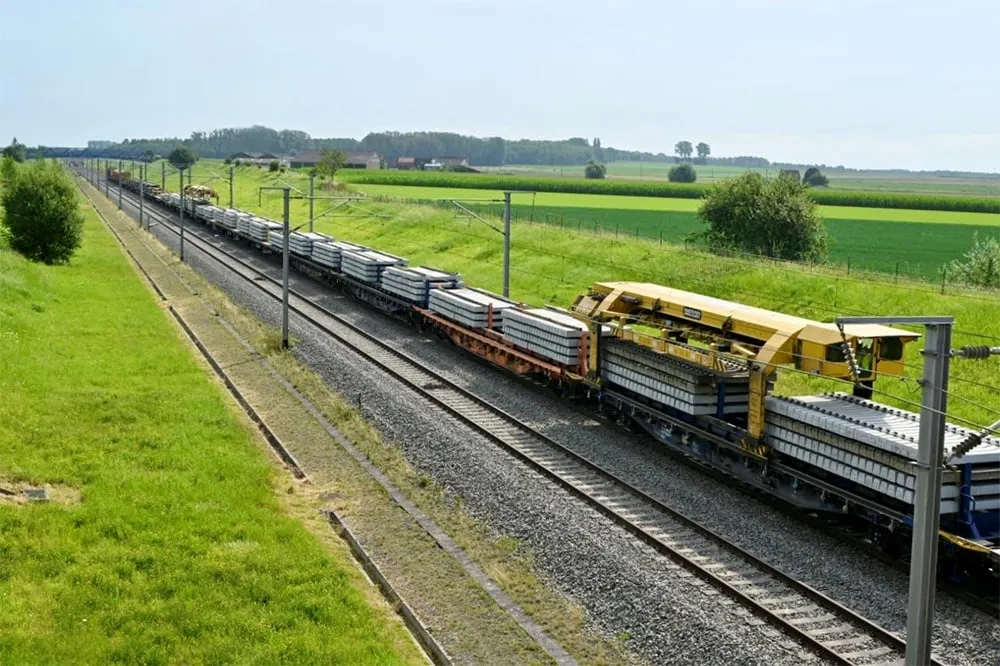
HSL1 entered service in 1997, making it the oldest high-speed line on Belgium’s high-speed rail network. Every day, around a hundred trains travel along this route between Belgium and France at 300 km/h, carrying passengers to Great Britain, the Netherlands and Germany. It is therefore crucial that this heavily used rail infrastructure, which is vital to the competitiveness of rail in Europe, remains fully operational. The work will be carried out over a period of around ten years. The first phase, a 17.6 km section between Tourpes (Leuze-en-Hainaut) and Brugelette, began early in the morning on 12 August. Traffic in both directions was completely suspended until 30 August.
Ninety technicians working round the clock
In total, Swietelsky and its subcontractors installed no fewer than 35.2 km of new rails and around 30,000 new sleepers, and calibrated 45,000 tonnes of ballast beneath the tracks. To get the job done, Swietelsky called on a true champion in this field: the RU 800 S, an Austrian track renewal train. More than 1 km long and weighing 4,000 tonnes, this train can be deployed on large-scale rail projects anywhere in Europe. This is only the second time it has been used on the Belgian rail network.
250 m of track per hour
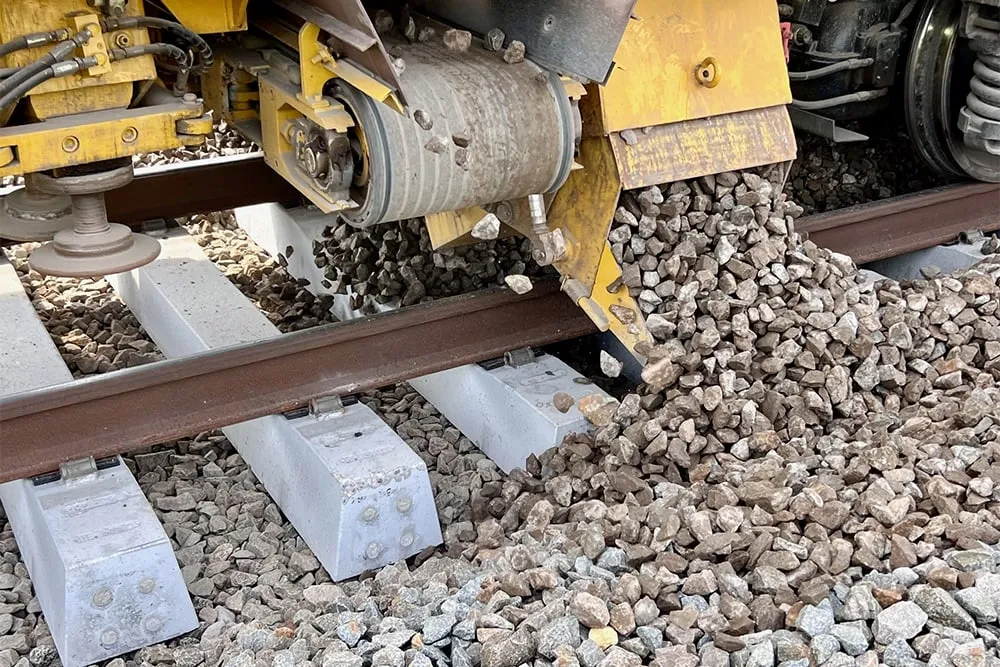
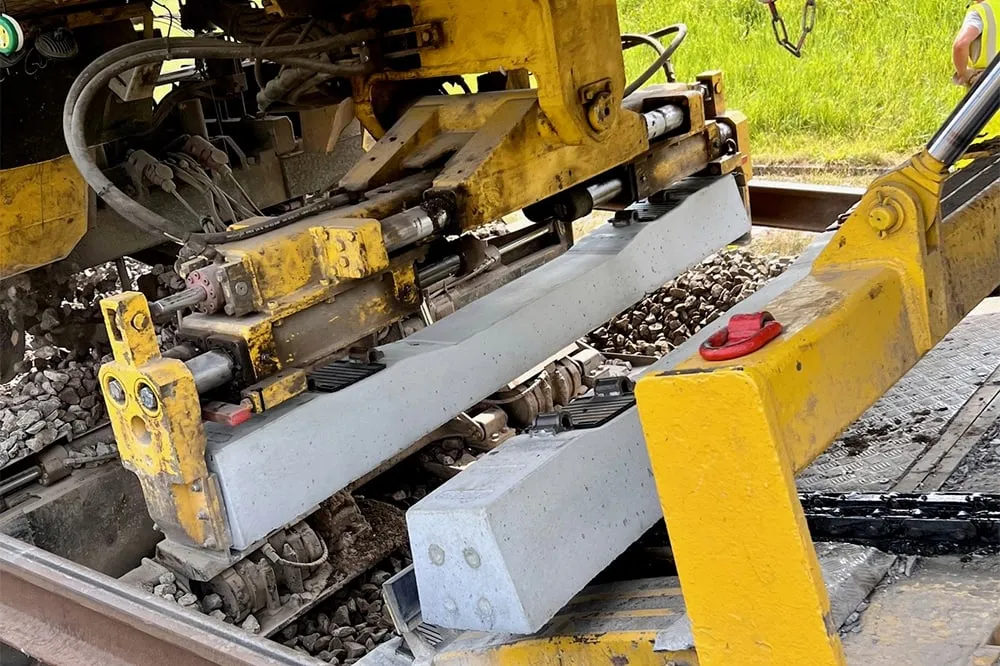
This Swietelsky train is fitted in the middle with a 200 m-long renewal unit. It moves the rails apart, lifts the old sleepers and excavates the old ballast before screening it. In one continuous operation, the train then levels and prepares the formation so it can lay the new sleepers and spread the cleaned ballast. The rails are then put back in place. No fewer than 20 technicians operate the train together, renewing as much as 250 metres of track per hour.
Given the scale of the work and to ensure staff safety, it was decided to suspend traffic completely until the early hours of 30 August. Gertjan van Niftrik of Swietelsky said: “The challenges in this phase were considerable: a large work area with few access points, a short window for major logistical movements, an adjacent track that remained live, and people of different nationalities and languages who all had to pull together.”
HSL 1 must be fully renewed by 2035. Work will also be carried out at night, without passengers noticing, and train services will be suspended for an average of two weeks each summer. The total budget for the work is €310 million, as set out in Infrabel’s 10-year renewal programme, approved by the federal government in December 2022.
On behalf of Infrabel, Swietelsky Rail Benelux will renew a further section of approximately 13km in 2025. “Swietelsky is positioning itself as an ideal partner for projects of this kind. Our major strengths are high-performance, high-output machinery; skilled staff with extensive knowledge of their machines; excellent preparation down to the smallest detail; and a motivated project team that gets all the parties involved over the finish line,” concludes Gertjan van Niftrik.
Question about this story? Ask your question
Keep following this
Get an email when a new story is published. No account needed.
- SubjectRail engineering