









Pipe jacking minimises disruption on Ghent tunnel projects
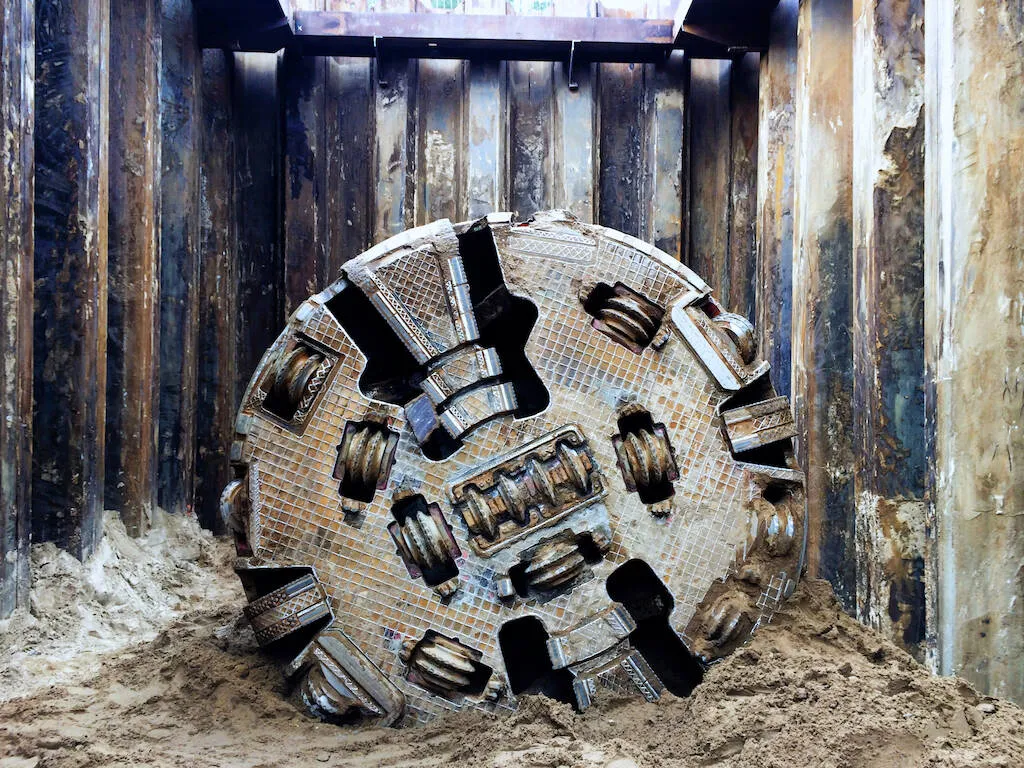
Anyone heading to Dampoort or the docks in Ghent is likely to come across teams from Denys.
The construction group is working on two very similar tunnelling projects there. The pipe-jacking technique used by the company minimises surface disruption on both projects.
On Vliegtuiglaan, near Grootdok, Denys worked as a subcontractor to Persyn from March 2020 to July 2020 on a solution to flooding in Oostakker and Sint-Amandsberg. Pipe jacking installed a pipeline with a diameter of 2,5 metres beneath the road surface, to carry discharged rainwater to the dock. This size is unusual in Flanders, but was needed to provide sufficient storage capacity. “Climate change means we have to carry out more and more projects like this,” explains Dirk Derycke, head of the Tunnelling works department at Denys. “Using underground pipe jacking allows us to minimise disruption at the surface, while also reducing our environmental footprint. We do not need to lower the groundwater table, and we move much less earth.”
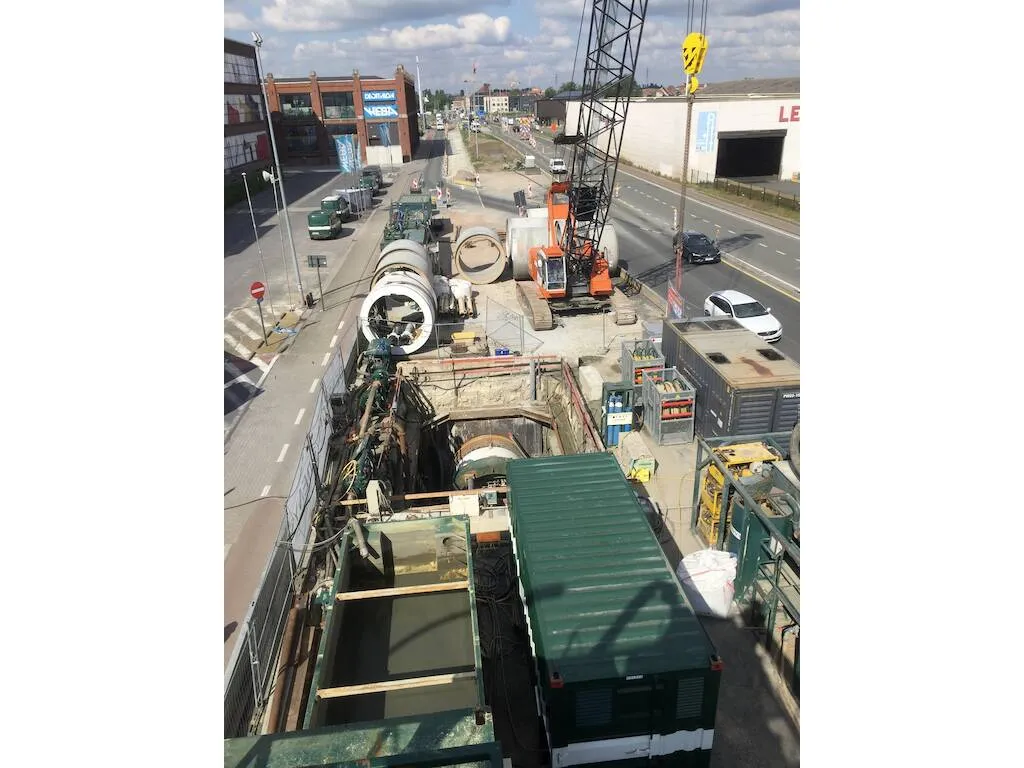
Persyn constructed the shafts, into which Denys lowered a tunnel boring machine. “We then pushed it into the ground using hydraulic jacks,” says Dirk Derycke. “As we progressed, we lowered more tunnel segments into the shaft and jacked them into the ground behind the boring machine. Meanwhile, the cutterhead excavated the soil ahead of it. At the same time, we pumped clean water forwards through pipes. This mixed with the soil and was extracted using other pumps.” Weak ground Denys had to cover a distance of 300 metres to the reception shaft. This was connected to the sewer and the overflow pipe leading to the dock. The work therefore caused little disruption along the way. Dirk Derycke says: “We often use pipe jacking on projects where there are obstacles at the surface, such as canals or railway lines. The pipeline needs to be installed deep enough underground, but otherwise there are few restrictions on using the technique. In Ghent, though, we encountered a very weak layer of ground, an old peat layer, at a certain depth. We first had to stabilise it by injecting material from above, to prevent the pipes from sinking later on.”
Dampoort
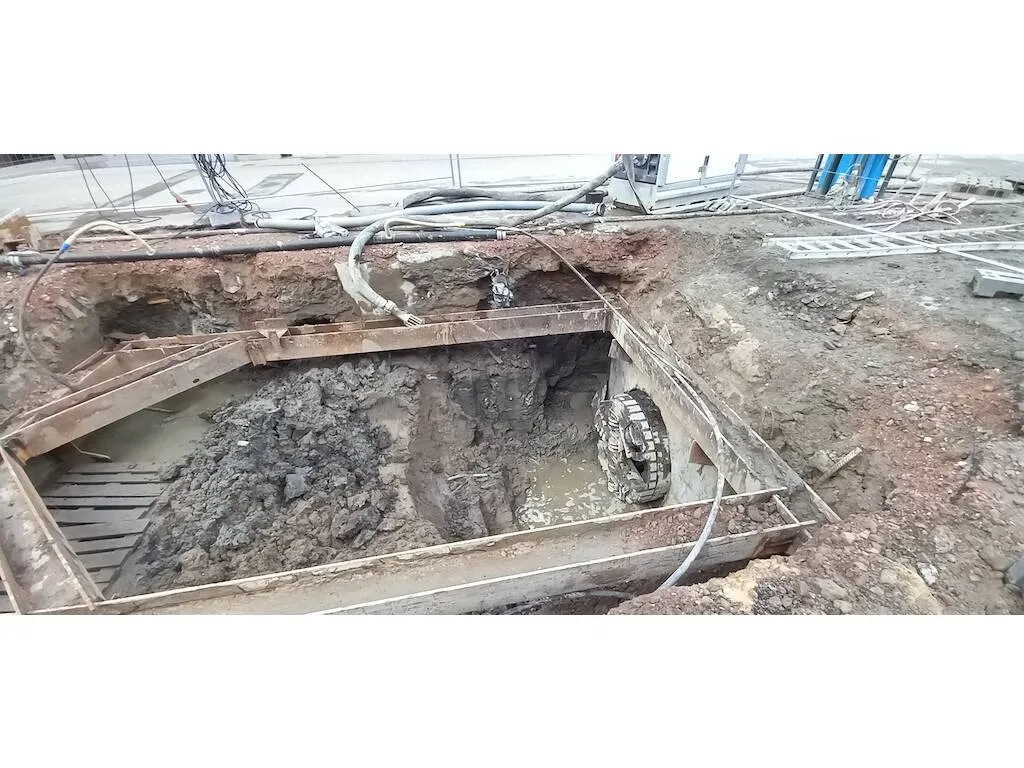
Another advantage of pipe jacking is that it avoids the need to lower the groundwater table, an approach that is subject to increasingly strict restrictions. This was also one of the reasons the project partners chose the same technique at Dampoort in Ghent, where the entire sewer network is being replaced. Denys is carrying out the underground works as a subcontractor to Stadsbader, on behalf of AWV. “We use secant piles to construct the shafts,” says Dirk Derycke. “We then excavate them, after which divers pour a floor using underwater concrete. This avoids dewatering problems, reduces the risk of subsidence and minimises the impact on the surrounding area.”
14 shafts
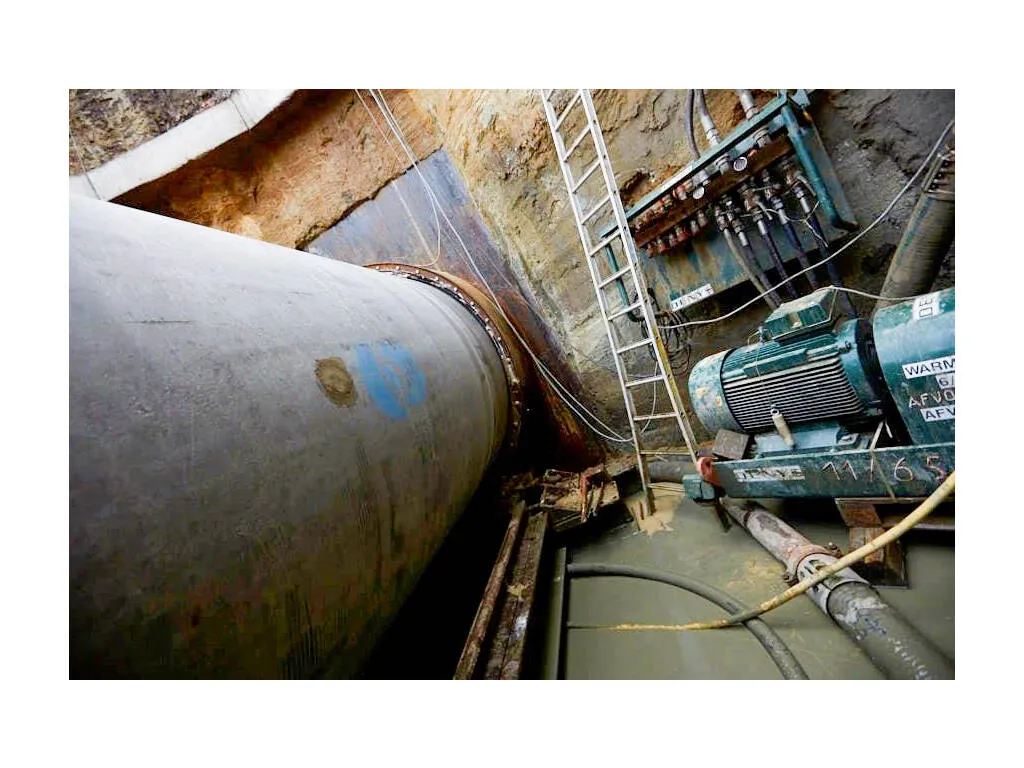
Pipe jacking also ensures minimal impact on this project. The contractor is providing 14 shafts at Dampoort, a large number for a project of this kind. Without pipe jacking, AWV would have had to close the entire traffic interchange for a period, but that is no longer necessary. Once the shafts have been constructed, pipe jacking will be carried out from shaft to shaft, using diameters ranging from 600 millimetres to 2 metres. “Here too, we are dealing with a poor layer of soil, which means we have to stabilise it before starting to bore the tunnel,” says Dirk Derycke. “So the projects do have quite a lot in common.”
Question about this story? Ask your question
Keep following this
Get an email when a new story is published. No account needed.
- ThemeExtending the life of bridges and tunnels
- SubjectGeneral







