









Mobile concrete laboratory for a unique Oosterweel project
High-end testing equipment ensures the right concrete quality
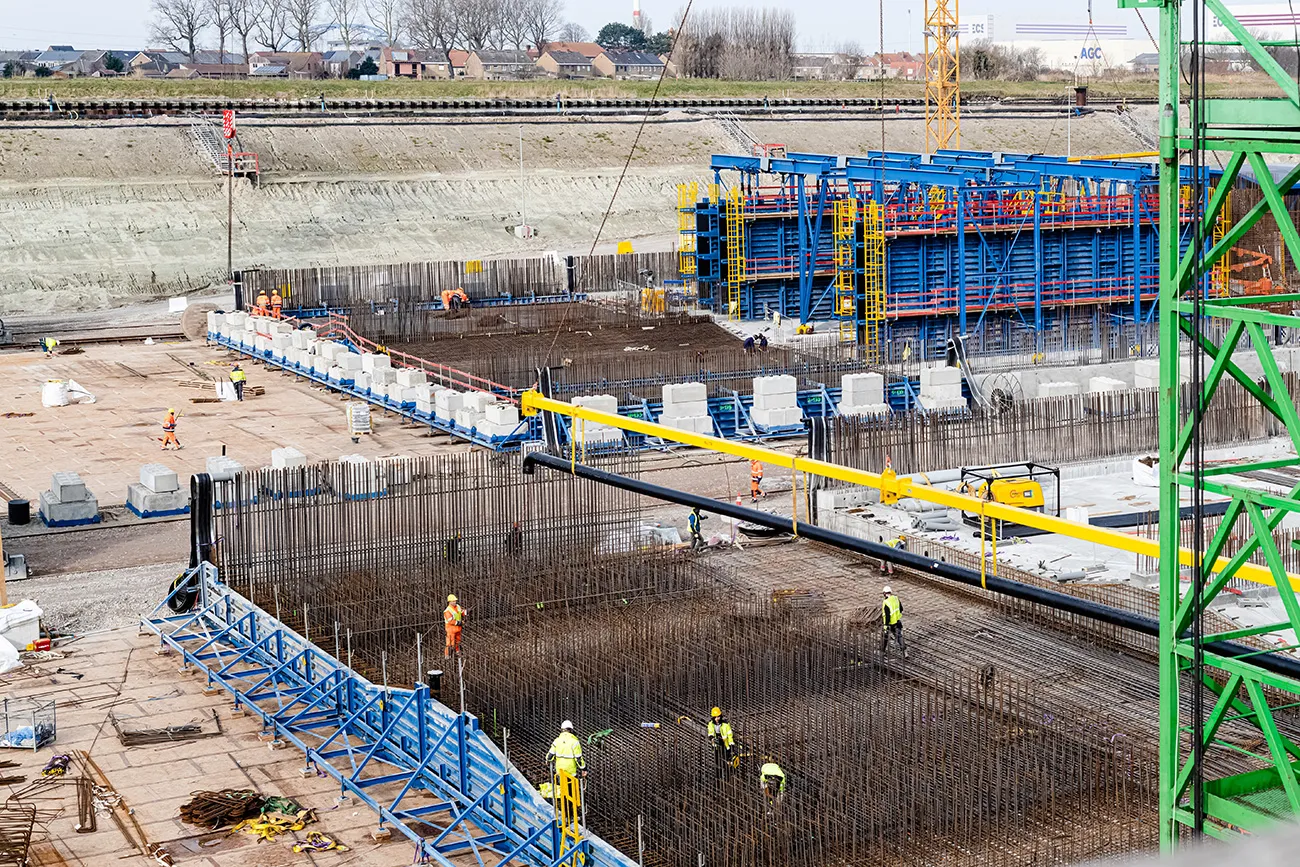
In a brand-new construction dock at the Port of Zeebrugge, THV COTU, comprising Besix, DEME, Jan De Nul and Stadsbader Contractors, is building eight concrete tunnel elements for the much-discussed Oosterweel Link. Once completed, the elements will be towed via the North Sea and the Western Scheldt to Antwerp, where they will ultimately be joined to form the new Scheldt Tunnel. The approximately 200,000 m3 of concrete required for the project is being produced by Declercq Stortbeton at a temporary batching plant next to the construction dock. HiLAB ensured that the mobile laboratory was also fitted out with all the necessary equipment in good time.
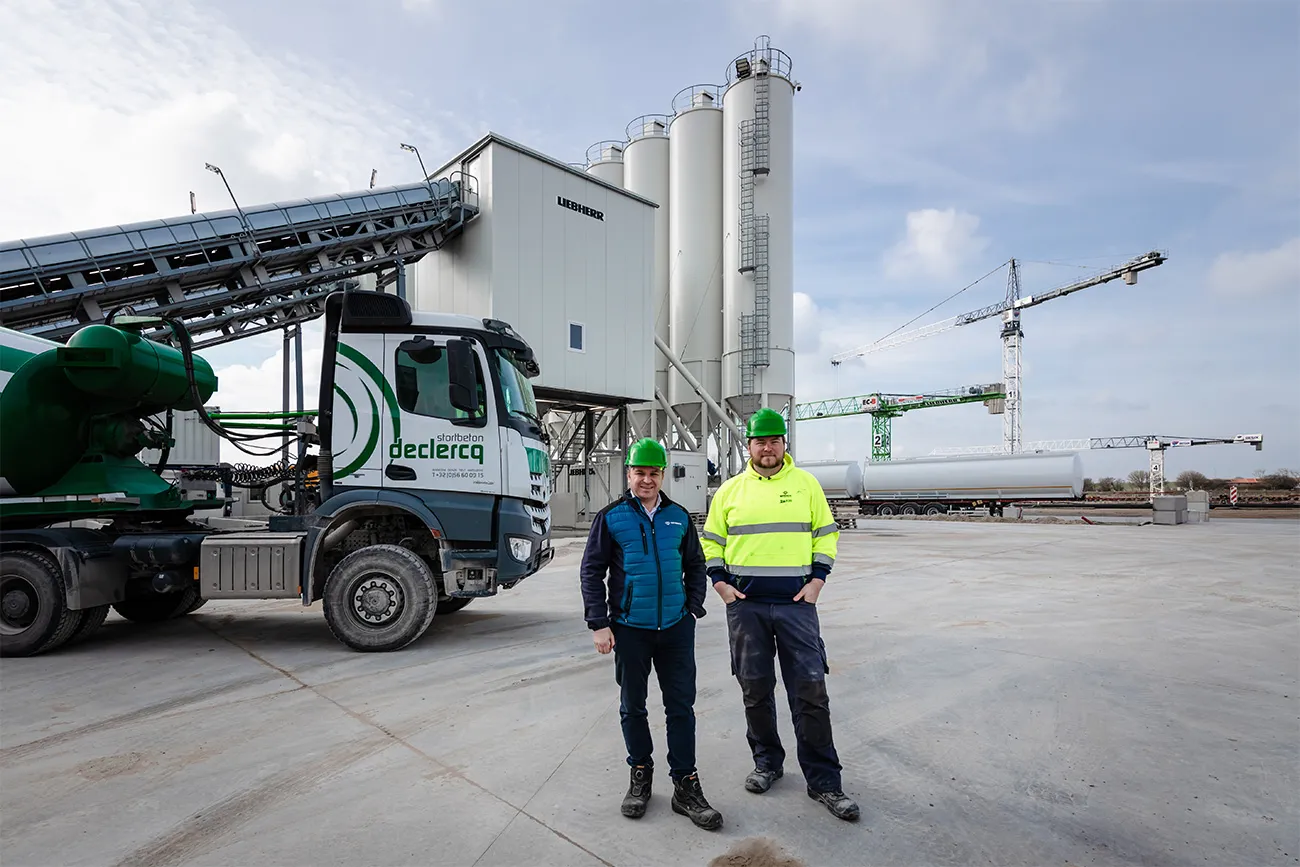
“200,000 m3 of concrete means 20,000 truckloads,” says Tom Vermeersch, quality manager at Declercq Stortbeton, emphasising the scale of the project. “Transporting that on public roads would inevitably cause disruption. And that’s before you even consider the delivery of raw materials. So there was a strong case for a temporary batching plant on site. Raw materials are now delivered by ship, and the mixers drive straight from the plant onto the site. This also means that the concrete is always placed fresh, and that we can act immediately if, for example, a different concrete grade is needed. Since we have installed not one but two mixers, operational reliability is also assured. When we soon have to carry out large pours here three days a week, that will be no unnecessary luxury.”
High quality requirements
The quality requirements for the concrete are certainly exacting. Tom Vermeersch: “A tunnel like this is built to last at least 100 years. You obviously don’t achieve that with standard concrete. We therefore agreed the specific mix design with an external concrete technologist. Particular requirements include a chloride content of no more than 0.2%, compared with the standard 0.4%, and the unit weight is also extremely important. The tunnel elements have to be towed to Antwerp while floating. Everything has been calculated and adjusted accordingly, so any deviation from the specified value is out of the question.”
A shipping container becomes a laboratory
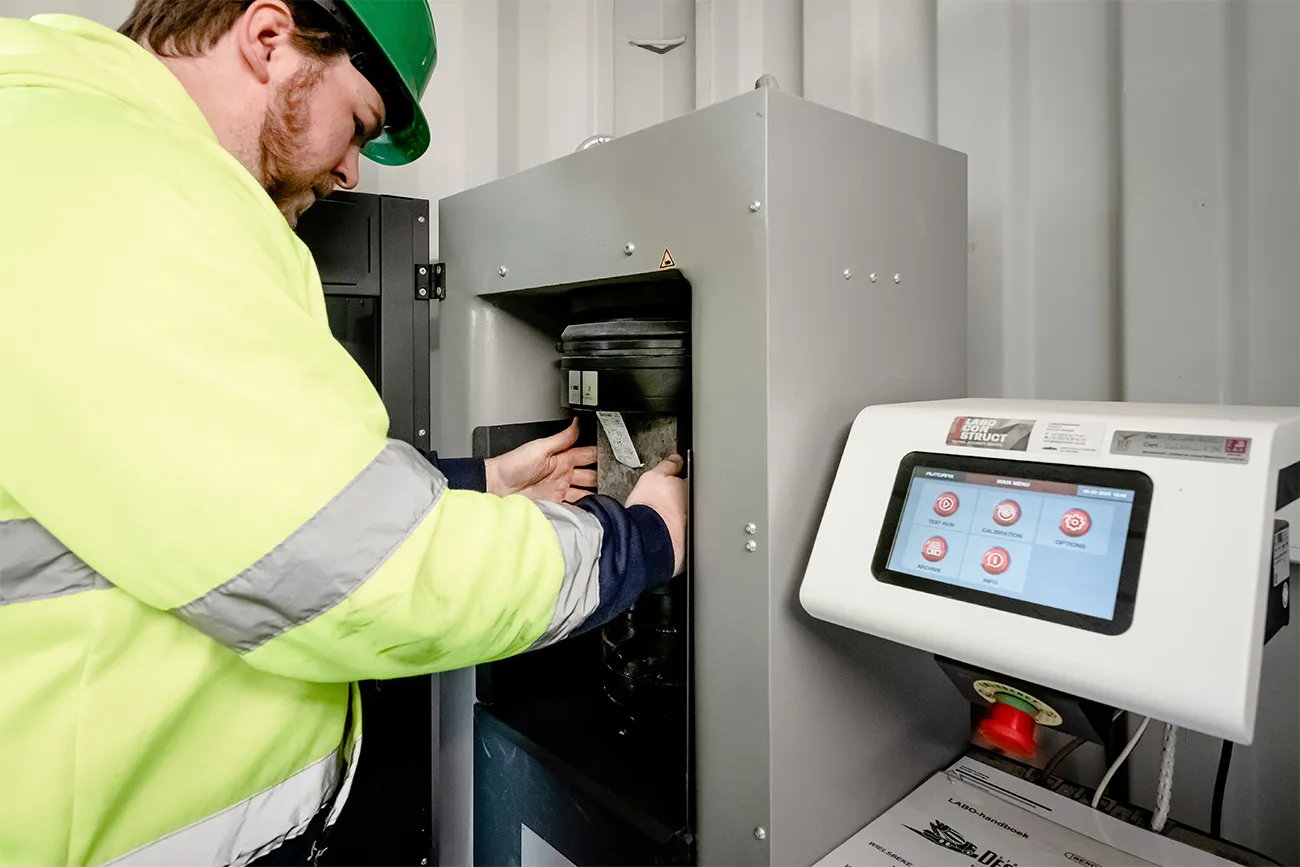
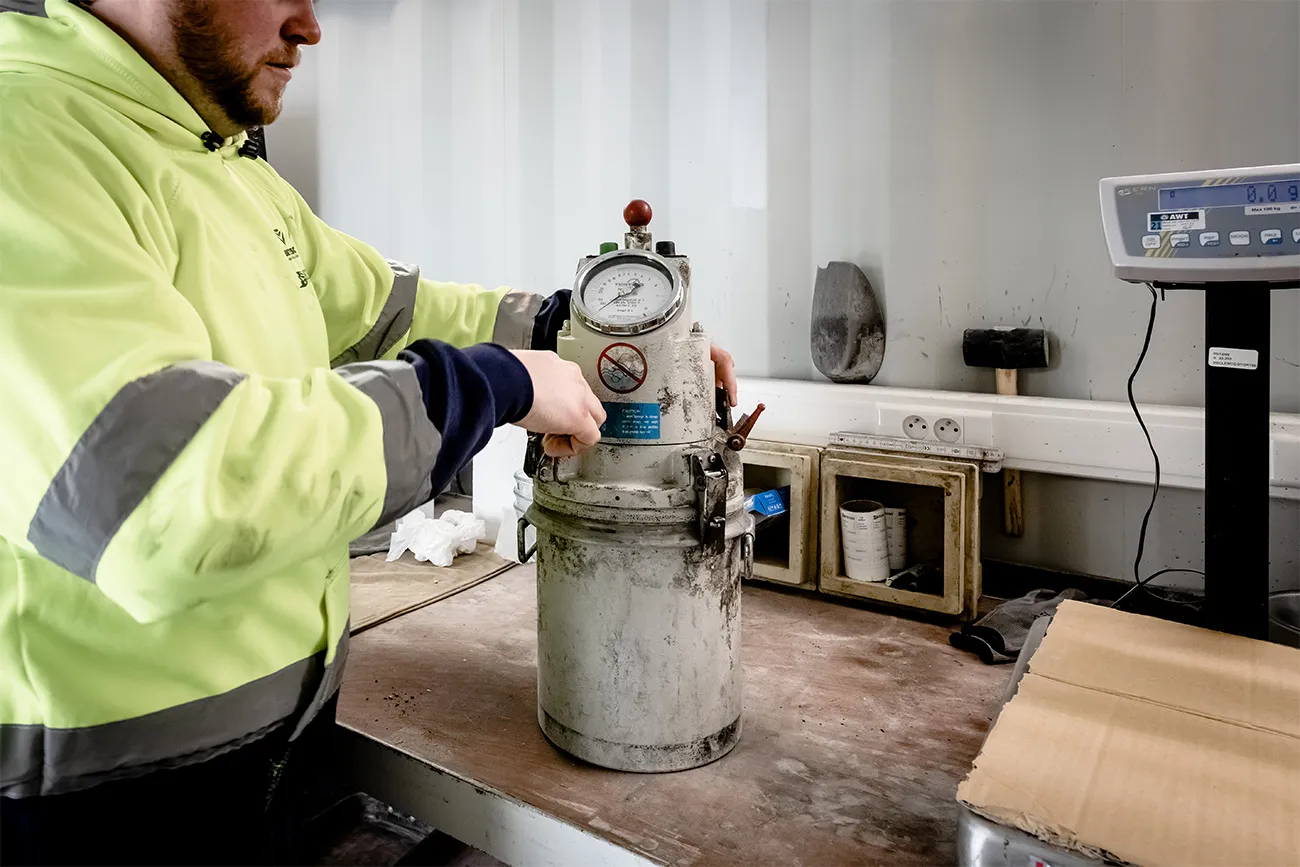
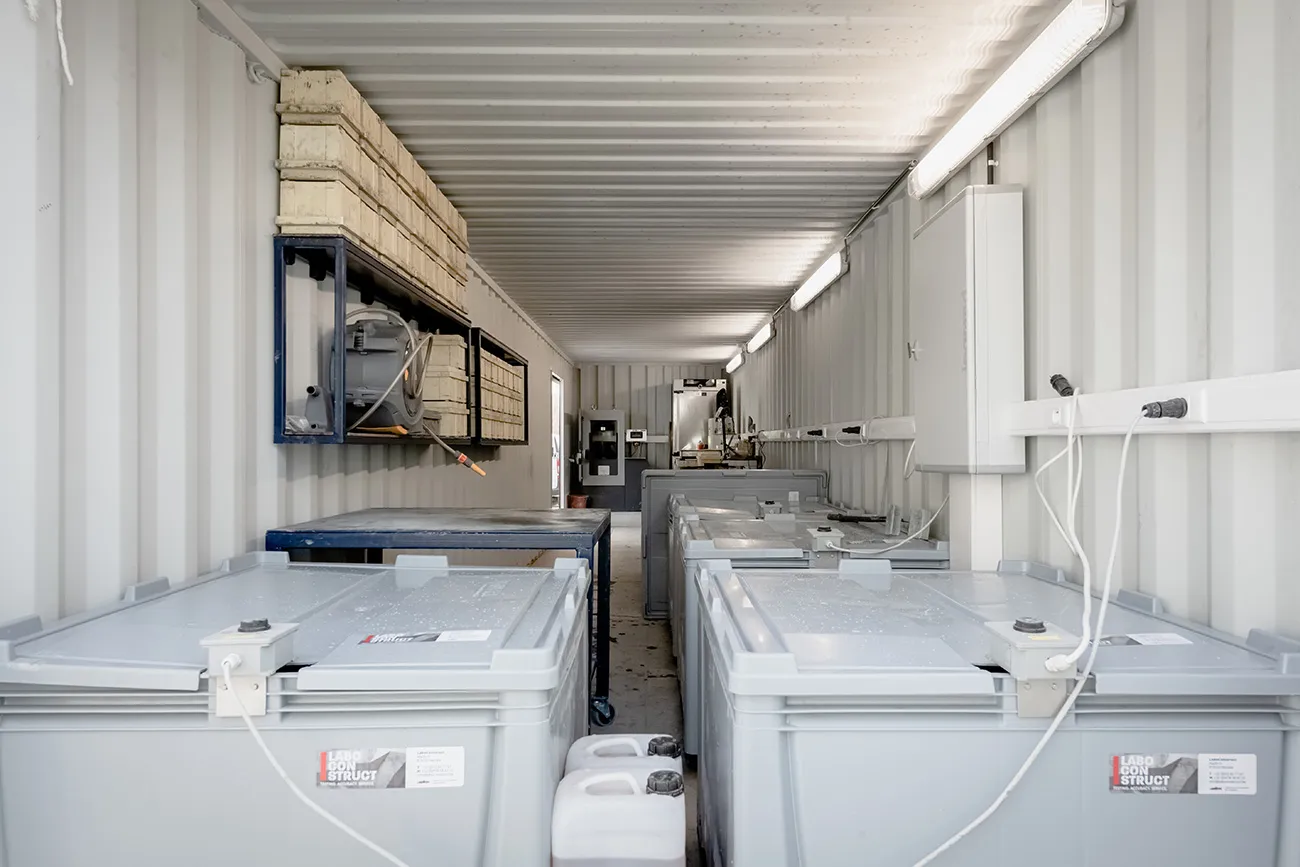
To ensure the required quality, the concrete is tested at several stages. When they arrive on site, the raw materials undergo incoming inspection, and their moisture and chloride content are also measured regularly. During production, samples of fresh concrete are taken both at the batching plant and on site, and their slump, water-cement ratio, air content and unit weight are measured. Once hardened, the concrete undergoes a compression test and its water absorption is measured. The samples are kept in water baths at a constant temperature of 20°C.
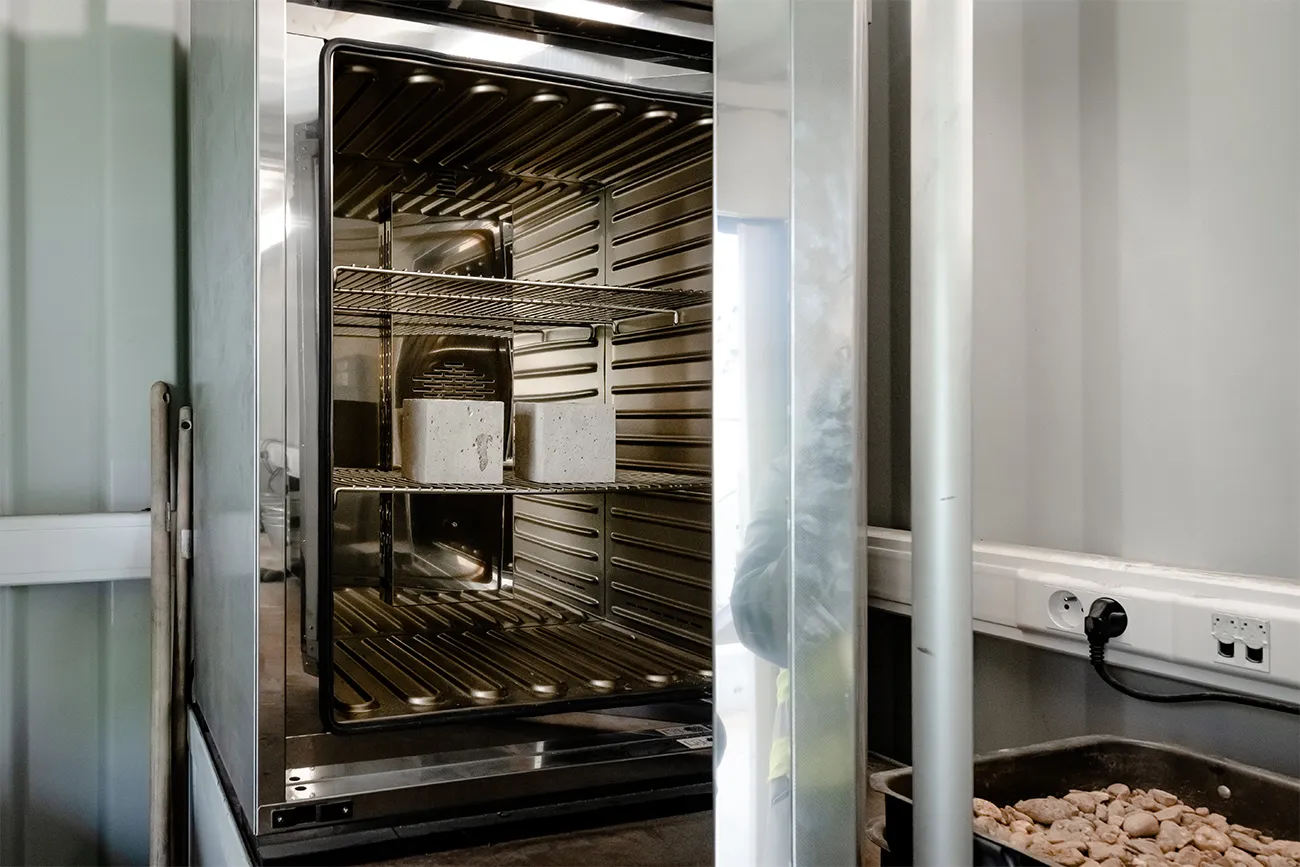
Tom Vermeersch: “Some of the samples are sent to an external laboratory for testing; the rest are tested here on site. We set up a mobile laboratory for all this. In principle, it’s no more than a shipping container, but it is fitted out with high-end testing equipment.” This equipment was supplied by HiLAB, formerly LaboConstruct, which provided the mobile concrete laboratory with, among other things, humidity-controlled rooms, a vibrating table, an air content meter, a fully automatic Controls compression testing machine, a Kern scale and a Memmert drying oven.
Straightforward approach
“What is particularly striking is how quickly we were able to get all this done,” says Tom Vermeersch. “The batching plant itself was built in just two to three months, so we had to move quickly with the laboratory too. From previous collaborations, HiLAB had already supplied equipment for several of our permanent laboratories, we knew we could rely on them. Like us, they believe in an open structure and short, direct lines of communication. That keeps things moving smoothly and means you know you can count on each other.”
“That applies after the sale, too. At one point, for example, a problem with the fan caused a short circuit in our oven. It was repaired immediately under warranty, with no waiting period. If necessary, I’m convinced HiLAB would have offered us a replacement unit in the meantime. That’s exactly what matters: they understand our needs and work with us to find solutions,” concludes Tom Vermeersch.
Question about this story? Ask your question
Who worked on it
Oosterweelverbinding in Brugge
- tijdelijke betoncentraleDeclercq Stortbeton
- mobiel betonlaboHiLAB
Keep following this
Get an email when a new story is published. No account needed.
- ProjectOosterweelverbinding
- ThemeExtending the life of bridges and tunnels
- SubjectGeneral
- CompanyDeclercq Stortbeton
- CompanyHiLAB







