









Making concrete more sustainable: innovation, precast concrete and the future of construction
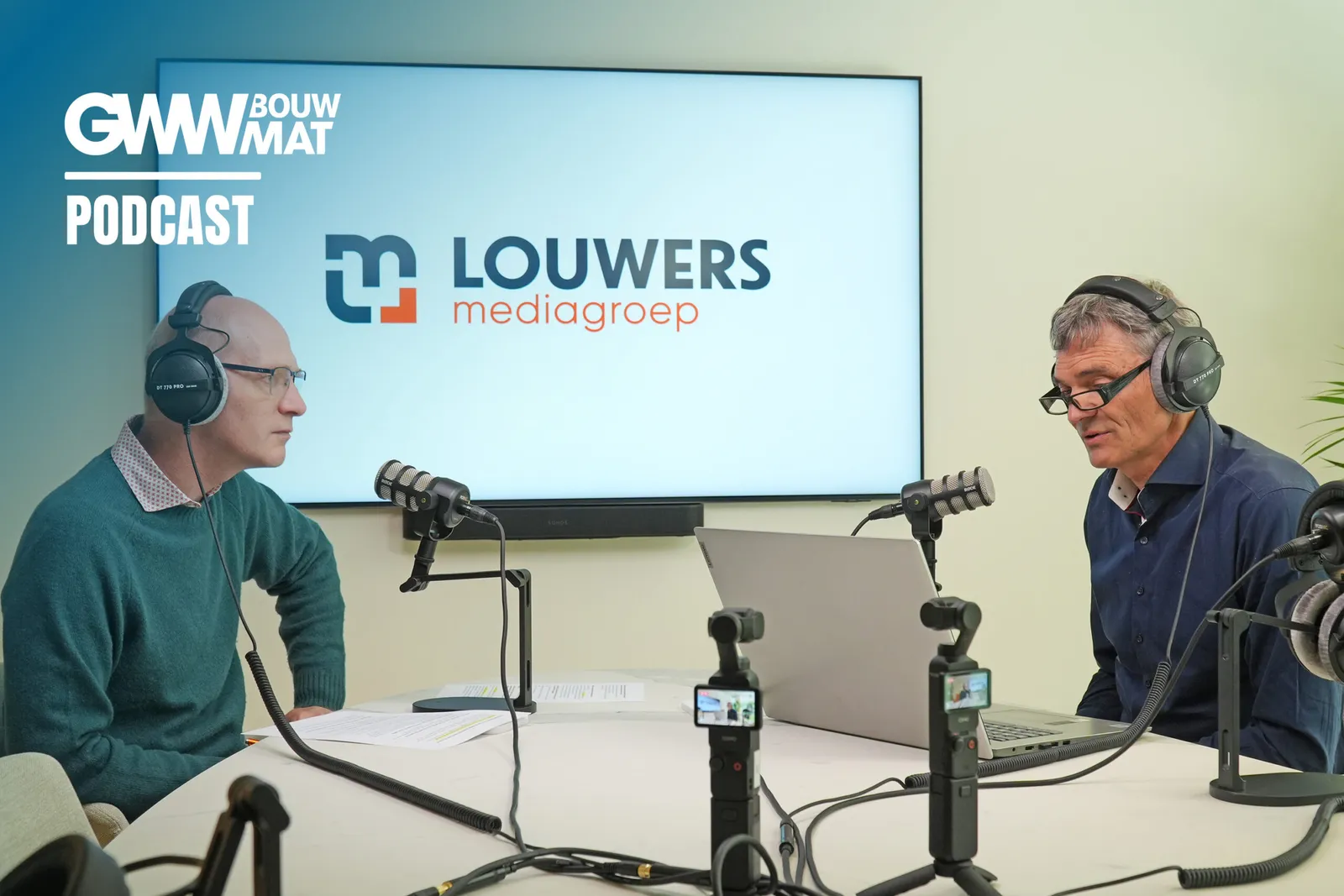
Concrete remains an indispensable construction material, but the sector faces a major challenge: drastically reducing CO₂ emissions while continuing to focus on quality, sustainability and innovation. In this episode, host Björn Crul talks to Jacky Chalon, director of the technical department at Béton de la Lomme. They discuss the benefits of precast concrete, new product developments, ESG, circular construction, innovative types of concrete, and the move towards low-carbon and even carbon-negative concrete.
Full transcript
All chapters (24)
- Introduction: concrete and the sustainability challenges
- Immediate and delayed demoulding
- The different product families
- Products made using delayed demoulding
- Standard products and made-to-measure work
- The benefits of precast concrete
- The quality of precast concrete
- How concrete quality has evolved
- ESG as a management model
- How participation drives innovation
- The three R&D workstreams
- Improving existing products
- New finishes and materials
- Green Wall elements
- Concrete with a Corten steel look
- Expanding the range
- Rectilom® adhesive blocks
- Recessed joints and ergonomic improvements
- The next generation of sustainable concrete
- Concrete as a sustainable construction material
- Persistent misconceptions about concrete
- The future of concrete
- Prospects for the future of Béton de la Lomme
- Closing
Introduction: concrete and the sustainability challenges
Björn Crul Hello, listeners. Today’s podcast focuses on concrete, an essential material for the construction sector. However, producers face the challenge of making this building material more sustainable. An estimated 8% of global CO2 emissions are linked to concrete production. The sector is therefore undergoing a major transformation. What developments are under way, and which innovations are gaining ground? My name is Björn Crul, and today I’m putting those questions to Jacky Chalon. He is director of the technical department at Béton de la Lomme. Hello, Jacky, and welcome. Tell us, what types of concrete do you produce at your company today?
Jacky Chalon In general, there are two types of concrete used by all precast manufacturers, because there are two demoulding methods. The first is immediate demoulding. This is possible with relatively dry concrete, which is mechanically pressed into the moulds. The products are then immediately removed from the moulds and dried in drying chambers. This type of demoulding allows the moulds to be filled and emptied several times a day, usually using automated machines such as block presses.
Immediate and delayed demoulding
Björn Crul You also have another process where things happen a little more slowly.
Jacky Chalon That’s right. With delayed demoulding, liquid concrete is poured into the moulds. Demoulding only takes place once the concrete has fully hardened. That means just one or two cycles a day, depending on how quickly it hardens.
The different product families
Björn Crul Those are the production processes, but what products do they result in?
Jacky Chalon All our building blocks are immediately demoulded. We have three types of building block. First, our full range of standard masonry blocks. We also produce Stepoc® blocks. We are the manufacturer of these well-known formwork blocks, which we have been producing for more than thirty years and have become experts in. We have built up a great deal of expertise in our products, as well as in our technical support, such as studies and advice on installation. We also produce a third family of concrete blocks: Rectilom® adhesive blocks. We were the first in Belgium to offer these concrete blocks for bonding rather than laying with mortar.
Read the full transcriptCollapse transcript21 chapters remaining
Products made using delayed demoulding
Björn Crul You mentioned delayed demoulding earlier. What products does that process produce?
Jacky Chalon We use this liquid concrete to produce our L-shaped elements and various other products, such as copings, bus shelters and other made-to-measure items.
Björn Crul So I imagine we’ve often seen Béton de la Lomme products in our streets without really noticing them.
Jacky Chalon Yes, that’s right.
Standard products and made-to-measure work
Björn Crul Precast concrete is, by its nature, a highly standardised building material. Is there also scope for made-to-measure products for projects that need them?
Jacky Chalon Precast concrete consists mainly of standard products, because the principle is to mass-produce them in order to offer low prices. Unique items are more likely to be formed on site. Even so, we are trying to offer more scope for bespoke work by further expanding our range of sizes and finishes.
The benefits of precast concrete
Björn Crul What are the main benefits of precast concrete products for contractors?
Jacky Chalon First and foremost, the price. Let me give you an example. Take our L-shaped elements. Their price per cubic metre is roughly the same as that of ready-mixed concrete delivered by a mixer truck. But it’s not really a fair comparison. Our L-shaped elements are fully formed units with precise dimensions and reinforcement. This shows that prefabrication is not expensive. Casting on site would cost at least twice as much.
The quality of precast concrete
Björn Crul Is there also a difference in quality?
Jacky Chalon Yes, absolutely. In the factory, we have much better control over the quality and processing of the concrete. The concrete is also processed immediately after mixing. All of this makes precast concrete better than concrete cast on site.
How concrete quality has evolved
Björn Crul Concrete is now a standard building material. If we compare today’s product with the one from, say, twenty years ago, has its quality improved too?
Jacky Chalon Yes, absolutely. Liquid concrete mixes are now self-compacting. They no longer need to be vibrated. They have an almost perfect density, minimal water absorption and greater strength. This has also significantly improved their durability.
ESG as a management model
Björn Crul You’ve just mentioned an important word: sustainability. Of course, that applies not only to products or construction methods, but also to the way your company operates day to day. I understand that almost two years ago, you introduced a management model based on ESG: environmental, social and governance factors. Could you tell us a little more about it?
Jacky Chalon It’s a management model that isn’t geared towards maximising profits. Profit is obviously necessary, but not at the expense of staff wellbeing or the environment. It is also a participatory model, with employees who wish to do so having a say. They can take part in management decisions. In practice, we have three working groups: R&D, commercial and production. Essentially, we make use of our collective intelligence by pooling our ideas and building on those of others. This brings together everyone’s experience and knowledge.
How participation drives innovation
Björn Crul I can see how valuable that must be for the company. What impact has it had on your ability to innovate?
Jacky Chalon First, we get ideas that we wouldn’t have thought of ourselves. We’ve also noticed that our employees’ mindset and attitude have become more positive. Everyone is willing to do things better and bring about positive change. We’ve found that there is a desire to innovate here that we didn’t have before.
The three R&D workstreams
Björn Crul I imagine that’s very important for an SME with around sixty employees. What specific projects is the R&D department working on today?
Jacky Chalon We’re currently working on three main areas: improving our existing products, developing new products and creating the next generation of concrete.
Improving existing products
Björn Crul Let’s take a closer look at each of those areas, Jacky. What sort of quality improvements are you working on, for example?
Jacky Chalon We’re currently working a lot on expanding and improving our range of L-shaped elements using new production equipment. We’re also looking for new finishes, because grey concrete does not age as well aesthetically. Concrete is highly durable structurally, but that isn’t always true aesthetically. Over time, concrete changes colour due to carbonation and soiling. It can also turn green fairly quickly. That’s why we already offer exposed aggregate concrete, where the aggregates are visible and more resistant to change.
New finishes and materials
Björn Crul Are there any new products that will be added to the range?
Jacky Chalon Yes, that’s right. We have elements with a genuine natural stone cladding. This natural stone finish is, of course, much more elegant and durable than grey concrete. We will also soon, after the summer, be introducing concrete made using textured mould liners, possibly in other colours.
Green Wall elements
Björn Crul The appearance of concrete is becoming increasingly important, including in architectural projects. I’ve seen that you also offer, for example, vegetated walls.
Jacky Chalon That’s right, those are our Green Wall elements. They have openings in the vertical face where flowers or plants can grow. Their roots draw nourishment from the soil behind the elements, in the infill material. The result can be a colourful, lively and attractive wall.
Concrete with a Corten steel look
Björn Crul Speaking of aesthetics, you’re also bringing out a product with a Corten steel look.
Jacky Chalon Yes, that’s right. We have been granted an exclusive licence in Belgium for concrete with a finish that looks like Corten steel. The surface oxidises, creating a rust-like appearance that does not stain and remains stable.
Expanding the range
Björn Crul There’s more in the pipeline, isn’t there, Jacky?
Jacky Chalon Yes, that’s right. To start with, we’ll produce steps and kerbs for landscaping, as an addition to our range of L-shaped elements. Those kerbs will also have a Corten steel look. We’re still considering what to do after that.
Rectilom® adhesive blocks
Björn Crul It’s a real drive for innovation, with investment in R&D leading to all these new products. For example, you’ve also developed masonry solutions using bonded blocks, called Rectilom®. What difference does this product make for the people using it on site?
Jacky Chalon Adhesive blocks are a real step forward for traditional masonry, because Rectilom® blocks can be laid more quickly. That improved productivity also makes the job more profitable for the contractor. Another advantage is that a wall built with bonded Rectilom® blocks is stronger than a traditionally laid masonry wall. That’s because the masonry adhesive is three times stronger than conventional mortar.
Recessed joints and ergonomic improvements
Björn Crul You also mentioned Rectilom® blocks with recessed joints earlier. I’d never heard of those before. What are recessed joints?
Jacky Chalon They are chamfered edges along the sides of the blocks, giving the wall the appearance of traditional masonry. It looks better when the wall is to remain exposed. We’ve also recently added gripping points to the blocks, making them easier to lift and install.
The next generation of sustainable concrete
Björn Crul We’ve already touched on this, Jacky. You’re also innovating to develop more sustainable products and production processes. What does that mean in practical terms?
Jacky Chalon It is about greener concrete with a better carbon balance. As you said earlier, concrete is responsible for a great deal of CO2 emissions. This is due to the production of cement, more specifically clinker, a key ingredient produced at temperatures of over 1,400 degrees. That is why we are currently testing alternative binders, so that we can use less cement, or even none at all. The next generation of concrete will also need to contain recycled materials. Raw materials such as sand and even crushed stone are becoming scarce. This could become a problem in the coming years. That is why circularity will be absolutely essential.
Concrete as a sustainable construction material
Björn Crul Looking at all these developments in your sector, it is clear that concrete is becoming an even more technically complex product, but also a material that is much better suited to the environment in which it is used. That fits perfectly with the trend towards an even more sustainable approach, too?
Jacky Chalon Concrete is already much more sustainable today, and the trend is for that progress to continue. For example, we have elements for agricultural silos that will be acid-resistant in the future.
Persistent misconceptions about concrete
Björn Crul Is the general public already coming round to this way of thinking? Or are there still preconceptions about concrete that you find a bit frustrating?
Jacky Chalon Concrete is indeed often given an overly negative environmental image. Unfortunately, some of its positive properties are overlooked, meaning that its true environmental balance is not taken into account. For example, people forget that concrete has a long service life, which reduces its environmental impact. They also forget about the carbonation of concrete. This is a natural chemical process in which concrete reacts with the carbon dioxide in the air. In this way, concrete reabsorbs some of the CO2 emissions. Over its full service life, this absorption can reach around 30% of the emissions generated during production. That is certainly not insignificant. It is also worth knowing that cement kilns burn waste, such as hospital waste and old tyres. If cement plants did not exist, separate incinerators would probably have to be built. All these factors must therefore be included in the environmental balance of concrete. And we should not forget that low-carbon cement types will soon be coming onto the market.
The future of concrete
Björn Crul Looking ahead to the future, is this the direction we are moving in? Materials with even better performance, lower CO2 emissions and perhaps more applications?
Jacky Chalon The future of concrete has already begun. Concrete will indeed become increasingly low-carbon. In some cases, it will even be carbon-negative. In other words, concrete will absorb more carbon dioxide than it emits during production. Concrete and cement will probably be produced differently, but concrete will continue to be used extensively. It is easy to place, can take almost any shape, and is strong and durable.
Prospects for the future of Béton de la Lomme
Björn Crul Concrete is an industry that needs to be based close to its local market. Are you optimistic about the future prospects for Béton de la Lomme?
Jacky Chalon Personally, I think we still have plenty of potential in Wallonia. Our Flemish competitors are sometimes strong, but we are determined to innovate, stand our ground and move forward.
Closing
Björn Crul Jacky, we need to start wrapping up. What I take away is that the concrete sector, and your company in particular, is undergoing a major transformation to develop more sustainable and technically complex products that meet market needs. Research and innovation remain key priorities. That has become very clear today and will continue to be so in the future. That brings this podcast to a close, dear listeners. For more information, visit bouwenaanvlaanderen.be. Until next time.
Keep following this
Get an email when a new story is published. No account needed.
- ThemeMaterials with a lower environmental impact
- SubjectGeneral







