









Major renovations begin on four large tunnels
Work on more than 20 tunnels since 2020
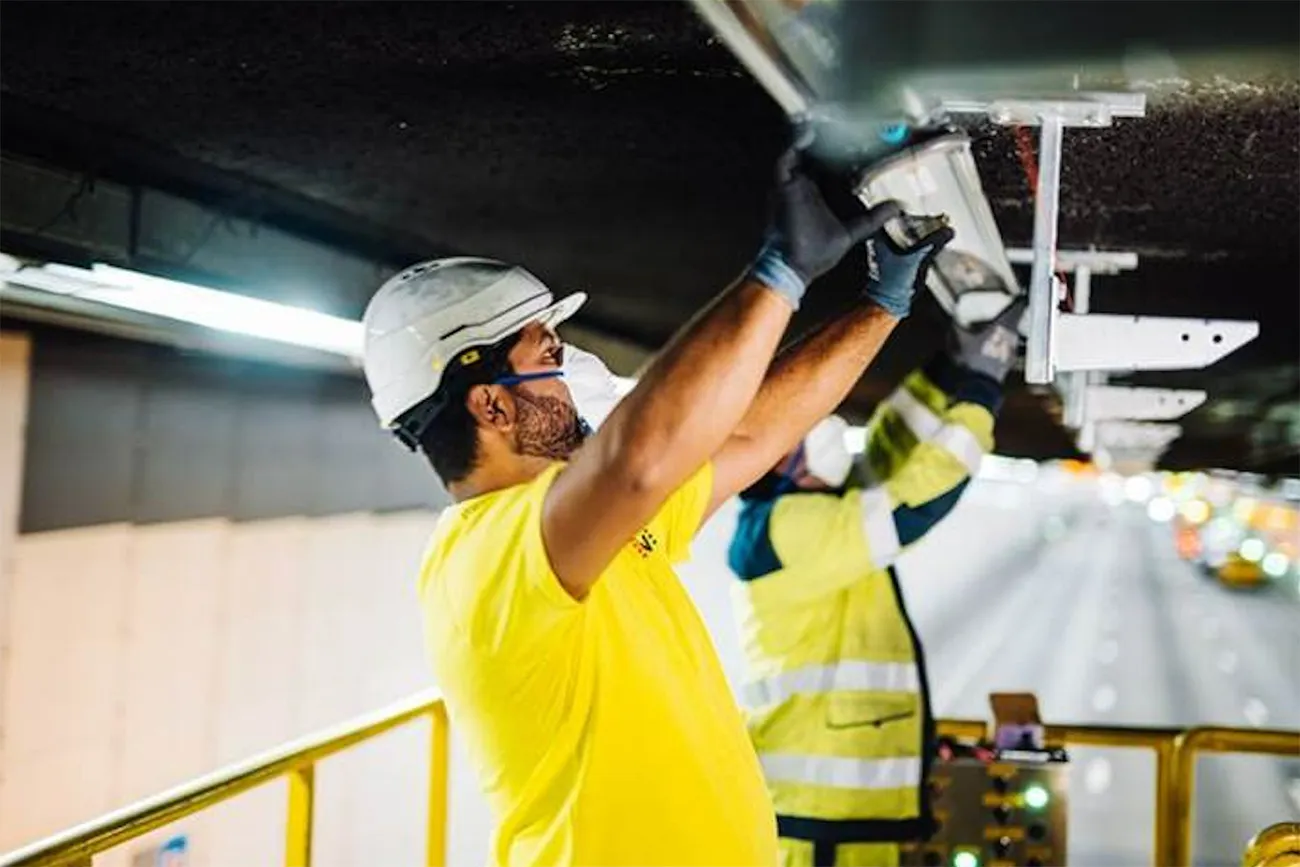
Maintenance and renovation work on tunnels is gathering pace. This year alone, work is under way in six Flemish motorway tunnels, including four major renovations that have either started or are being prepared. Agentschap Wegen en Verkeer (AWV) also worked on all its tunnels during the past legislative term, carrying out everything from minor to major interventions. The agency improved tunnel safety and carried out repair work and LED lighting upgrades, representing a total investment of more than 270 million euros during this legislative term.
Flanders has 22 major tunnels, 6 of which are on the trans-European transport network (TEN-T). Improving tunnel safety is becoming increasingly important as traffic grows busier and heavier. An average of 478,000 (international) vehicles travel through the tunnel bores each day, many of them heavy international goods vehicles. Most tunnels in Flanders date from the 1960s and 1970s. Given rising traffic volumes and the latest requirements for safety, technology and sustainability, renovation work and upgrades are becoming essential.
Major renovations begin on four motorway tunnels
Full renovation work is starting this year in one motorway tunnel and continuing in another. The Beverentunnel recently received planning permission for a major renovation, which will begin this summer. Work on the major renovation of the Leonardtunnel is continuing. Major renovations are planned for two other motorway tunnels, the Vierarmentunnel and the Rupeltunnel, and studies are getting under way.
Alongside the major renovations, work is also taking place this year in the Craeybeckxtunnel to upgrade its ventilation and low- and high-voltage systems. Like the Rupeltunnel, the Craeybeckxtunnel is also being fitted with LED lighting. The Zelzatetunnel’s service building is being renovated. An emergency passage is being built in the Vierarmentunnel, allowing emergency services to reach the other carriageway bore safely in the event of an incident. The total investment for 2024 amounts to 106 million euros.
Work carried out in all tunnels since 2020
“During the past legislative term (2020-2023), work was carried out in all Flemish tunnels, representing investment of just under 166 million million euros,” says the Flemish Minister for Mobility and Public Works. “The safety of key tunnels on the motorway network was improved during the past legislative term with a closure system combining barriers and dynamic lane control signals.”
Projects to detect dangerous goods transports in real time are also under way in the Tijsmanstunnel and Beverentunnel. These were all major, intensive projects.
In Antwerp, the Kennedytunnel was fitted with new LED lighting, a new fire-resistant lining and new fire-water connection points. The Tijsmanstunnel received new emergency doors and a new fire main. Smaller works were also carried out in the Waaslandtunnel, including the installation of a dry fire main. The Sint-Annatunnel (the Antwerp pedestrian tunnel) was fitted with permanent surveillance, and its historic lifts were restored.
In Flemish Brabant, emergency doors were installed in the Vierarmentunnel, alongside a series of electromechanical and civil engineering works. Work was also carried out in the Leonardtunnel ahead of its major renovation.
In East Flanders, a series of measures was taken to prevent rear-end collisions when traffic suddenly backs up in the Beverentunnel. The transport of dangerous goods was restricted there, and various concrete repairs were carried out ahead of the major renovation. The infrastructure around the tunnel was modified to improve traffic flow through it.
Finally, over the past four years, investment and maintenance work has been carried out in almost every tunnel. This included asbestos removal from service rooms, roof repairs, replacement of network switches and radio rebroadcasting systems, and the installation of loudspeakers and fire detection systems.
Working with the emergency services
The work is needed to improve the condition of the tunnels, but also to prevent incidents or reduce the risk of an incident escalating. In 2023, there were 326 accidents in tunnels, and the tunnel desk at the Flemish Traffic Centre handled more than 1,000 incidents.
AWV is also working with the emergency services on the Flemish Tunnel Guideline, which sets safety standards for the construction, management and use of tunnels. Recently, multidisciplinary emergency exercises were held in the Margaretatunnel and Zelzatetunnel together with local authorities, emergency response zones and police services.
Question about this story? Ask your question
Keep following this
Get an email when a new story is published. No account needed.
- ThemeFuture-proofing roads and railways
- SubjectGeneral







