









Major commissioning weekend in Brussels South zone set to be a tour de force
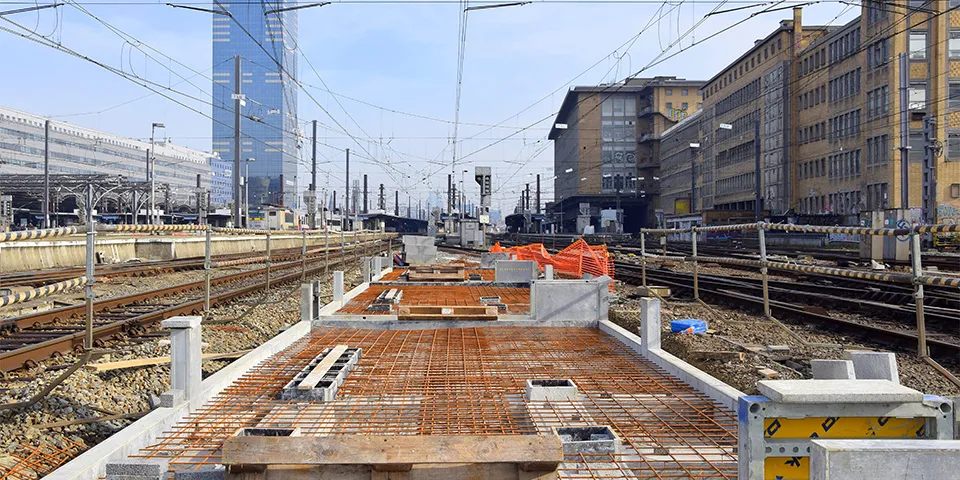
In the night from Thursday 31 October to Monday morning 4 November, Infrabel will begin an exceptionally large commissioning weekend in the Brussels South zone, covering no fewer than 22 tracks. The operation, a logistical and technological tour de force, is being carried out by Strukton Rail. “We are calling on the entire Strukton Rail workforce for this project,” the company says.
The North-South connection was officially opened in 1952 and is the most important junction on the Belgian rail network. Almost 1,200 domestic and international trains pass through it on weekdays. Renewing the entire signalling system involves replacing all the existing point machines and signals. In total, this means 46 signals and the motorised operation of 170 points in the outer track layout, as well as 93 fixed and switchable beacons, 307 ACAT cabinets and 41 audio-frequency track circuits. The upgraded signalling system will double the number of components and provide fully computerised control of rail traffic, which is expected to improve both the reliability of the rail network and passenger safety.
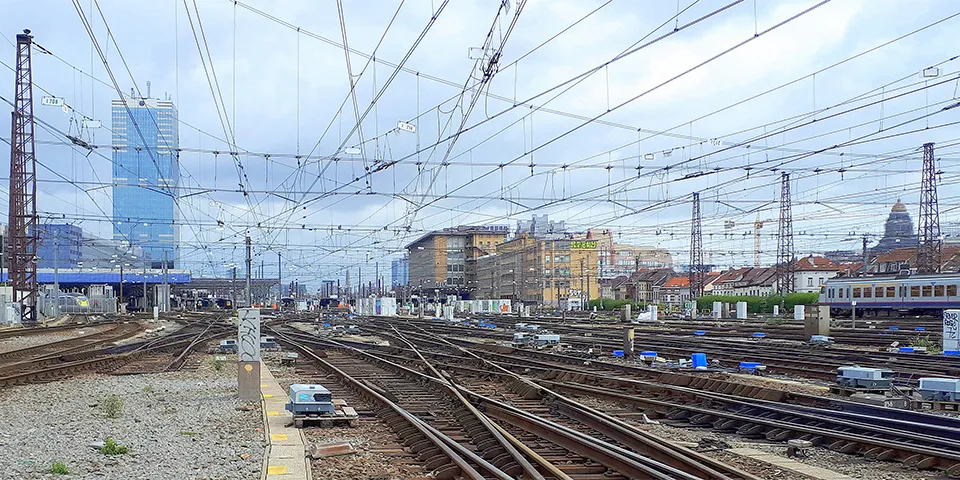
In the night from Thursday 31 October to Monday morning 4 November, Infrabel will begin an exceptionally large commissioning weekend in the Brussels South zone, covering no fewer than 22 tracks.
A lot to do, very little time
In Strukton Rail, Infrabel found the ideal partner to bring this complex project to a successful conclusion. “We have a great deal of work to carry out in a very short space of time,” says project manager Stefan Beni. “We will be working in several shifts. Around 60 of the 170 point machines will be replaced in advance, and another 60 will have to be replaced during the first night when the tracks are made available to us. Six domestic and two international tracks must already be back in service by the morning of Friday 1 November, so it will be a crucial night.”
This project is part of a larger contract, which Strukton has been involved in since 2016. “We are used to large rail projects, but in terms of commissioning, this is an exceptionally large undertaking,” says operations manager Dominique Vleminckx.
“Not in terms of area, but because of the logistical complexity. It requires a long and essential period of preparation. We have been in close consultation with the client since last year, and have been intensively planning our own work since the beginning of this year. That is precisely why this project is ideally suited to Strukton Rail. Logistical preparation and detailed planning are embedded in our company culture.”
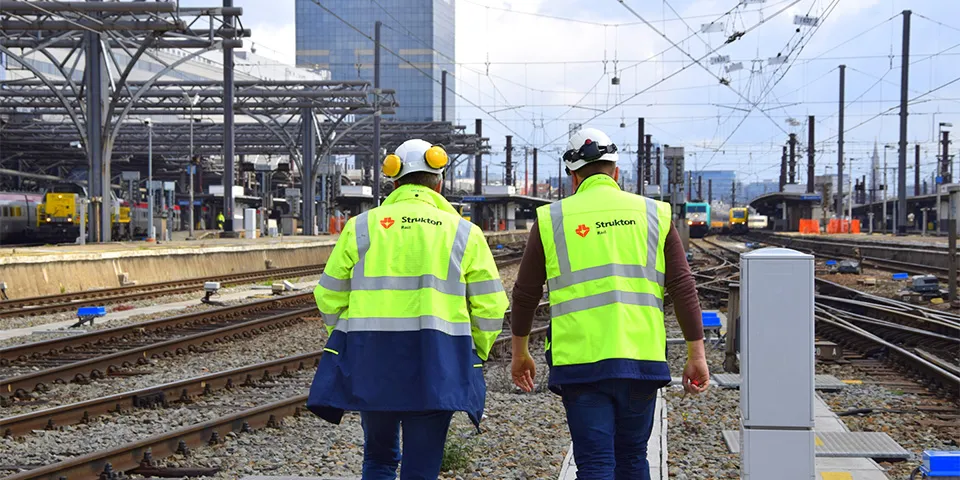
The operation, a logistical and technological tour de force, is being carried out by Strukton Rail.
Motivated employees
For the commissioning weekend, Strukton is calling on almost its entire workforce, both manual and office staff. Dominique Vleminckx: “The response has been strong. Everyone realises how important it is for Strukton to bring this to a successful conclusion. But of course, you cannot take it for granted that someone from accounts or administration will come and work on site.” Site manager Gunther Van Belle adds: “We will have around 200 people on site during the first night. Perhaps 60 workers will be enough for the remaining nights. That does not include the people on standby or those who are not working on site. The strong commitment of all our employees also immediately demonstrates Strukton’s great strength on projects like this: across our three divisions, Track, Signalling and Overhead Lines, we can call on motivated people with the right expertise.”
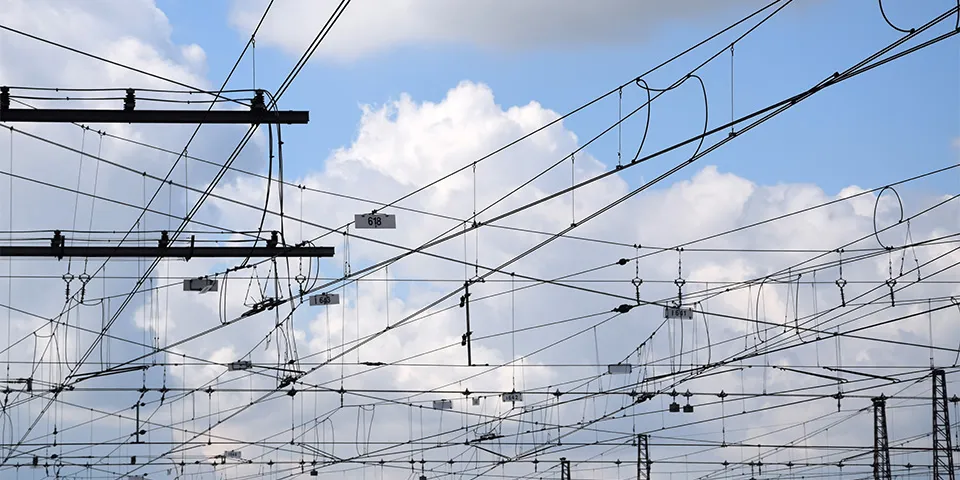
The upgraded signalling system will double the number of components and provide fully computerised control of rail traffic
Additional training
In the weeks leading up to the commissioning weekend, the various teams, each with their own work zone and specific tasks, will receive additional training and be briefed on site in advance. But despite the tight preparation and planning, there are still a few factors beyond Strukton’s control. “Everything depends on the tracks being made available and the time we actually get to carry out the work. That remains an unknown until the very last moment,” says Stefan Beni. “The same goes for the weather,” adds Gunther Van Belle. “Conditions could well be unfavourable at that time of year. But unless unexpected problems arise that are beyond our control, we will be thoroughly prepared.”
Question about this story? Ask your question
Keep following this
Get an email when a new story is published. No account needed.
- ThemeFuture-proofing roads and railways
- SubjectGeneral







