









Knowledge sharing and regulations take centre stage at VLARIO’s provincial contact day
Text and images Niels Rouvrois
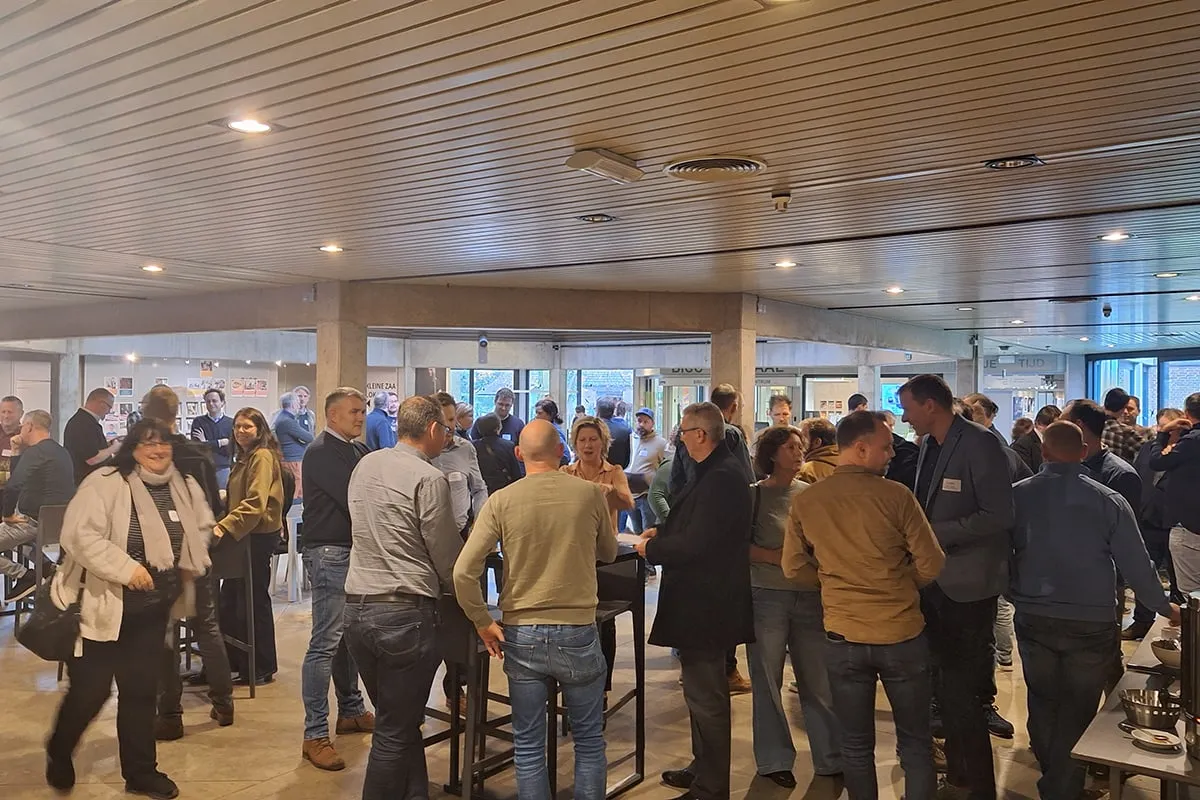
In November, the five Flemish provinces once again hosted the traditional VLARIO contact days. This year’s venues were Aarschot (14/11), Brugge (18/11), Kruisem (21/11), Peer (26/11) and Turnhout (28/11). At these provincial contact days, VLARIO aims to reach all stakeholders in each province, including local authorities, other public bodies, engineering consultancies and contractors … The aim: to inform them about the latest developments in the sewerage and wastewater treatment sector. GWW attended the event in Peer.
VLARIO continually gathers knowledge through consultation and knowledge sharing with its various market partners. One of VLARIO’s aims is to share this knowledge as widely as possible, and the provincial contact days provide an ideal setting. This year again, VLARIO presented a programme rich in content, covering topics from river basin management plans and the new Standard Specifications 250 to decentralised treatment and the effective operation of infiltration facilities.
River basin management plans
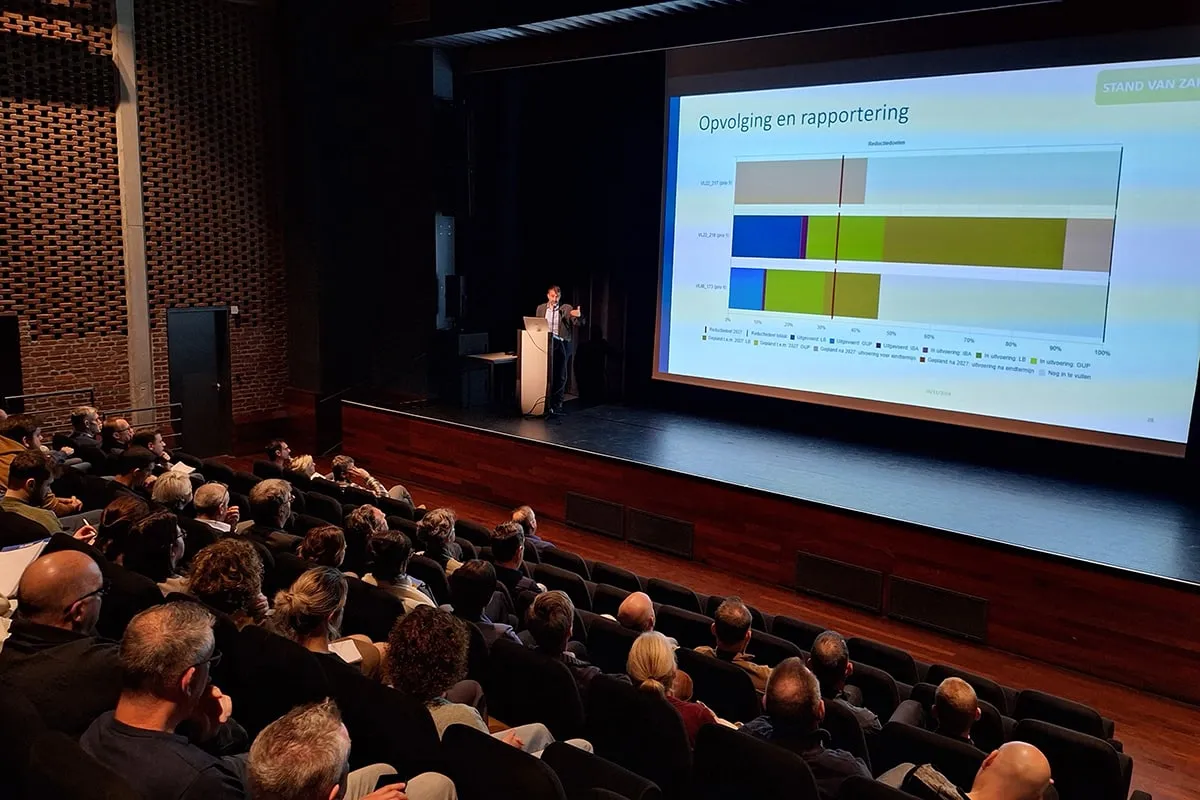
Marc Van Verre, a representative of the Flemish Environment Agency and programme coordinator for SGBP4 (river basin management plans), discussed the impact of the river basin management plans on local authorities. The management plans for the Scheldt and Meuse river basins set out what Flanders will do to improve the condition of its rivers and groundwater and to protect us better against flooding. The plans implement the European Water Framework Directive (2000), the Floods Directive (2007) and the water policy memorandum, which provides direction for the river basin management plans.
On 1 July 2022, the Flemish Government adopted the 2022-2027 river basin management plans for the Scheldt and Meuse and the accompanying programme of measures. “Over the past fifteen years, we have made good progress,” says Marc Van Verre. “A number of water bodies that were in poor condition are now improving. Europe sets out directives for us, and that broad framework is very helpful, but we need to look primarily at ourselves and clearly define our own challenges. The river basin management plans are therefore integrated plans for Flanders. At local authority level, financial and technical feasibility is assessed. In 2025, local authorities are expected to assess the feasibility of the targets they set previously and adjust them where necessary.”
Standard Specifications 250
Francis Poelmans, researcher at OCW and chair of the VLARIO working group on materials and quality, examined the relevant amendments to Standard Specifications 250. Tim Blockx (Fluvius), from the VLARIO working group on private wastewater drainage and rural areas, then outlined the new obligations under the Flemish Codex on Spatial Planning (VCRO) concerning decentralised treatment, and how local authorities should address them. From 1 January, for example, construction will no longer be permitted in certain circumstances without prior wastewater treatment. The regulations clearly distinguish between building or rebuilding on the one hand, and subdividing land on the other.
Tim Blockx: “For an environmental permit application submitted from 1 January 2025 for a land subdivision that creates more than 1 additional building plot, and for the construction or reconstruction of more than 9 residential units, provision must be made for wastewater treatment infrastructure. This applies where no project providing for a connection to wastewater treatment infrastructure is planned within 6 years. The wastewater treatment infrastructure may be provided collectively or individually. It may be managed privately or transferred to the sewer operator.”
Water infiltration
Water infiltration was, of course, also on the agenda. Vincent Wolfs, chair of the VLARIO working group on design and calculations, discussed the monitoring results from the use of 4 infiltration facilities. Particular attention was also given to the ‘depaving around street gullies’ project. The idea is to depave underused space around street gullies and replace it with green verges. This gives water time to infiltrate the ground instead of being carried away immediately. As the existing gully remains in place, costs are kept down and excess water can still drain away. This approach helps not only to tackle flooding and drought, but also contributes to a greener, cooler and more vibrant environment.
VLARIO Innovation Award 2025
Are you ready to showcase your innovation in water management and sewerage? VLARIO invites you to take part in a unique opportunity: an inspiring platform where companies and public authorities alike can present their innovative solutions for municipal water management and sewerage. This is your chance to share your innovation, show what you can do and make an impact in a rapidly changing sector! For more information and to register: www.vlario.be.
Question about this story? Ask your question
Keep following this
Get an email when a new story is published. No account needed.
- ThemePeople and expertise in infrastructure
- SubjectGeneral







