









How the cement industry is building a climate-neutral future
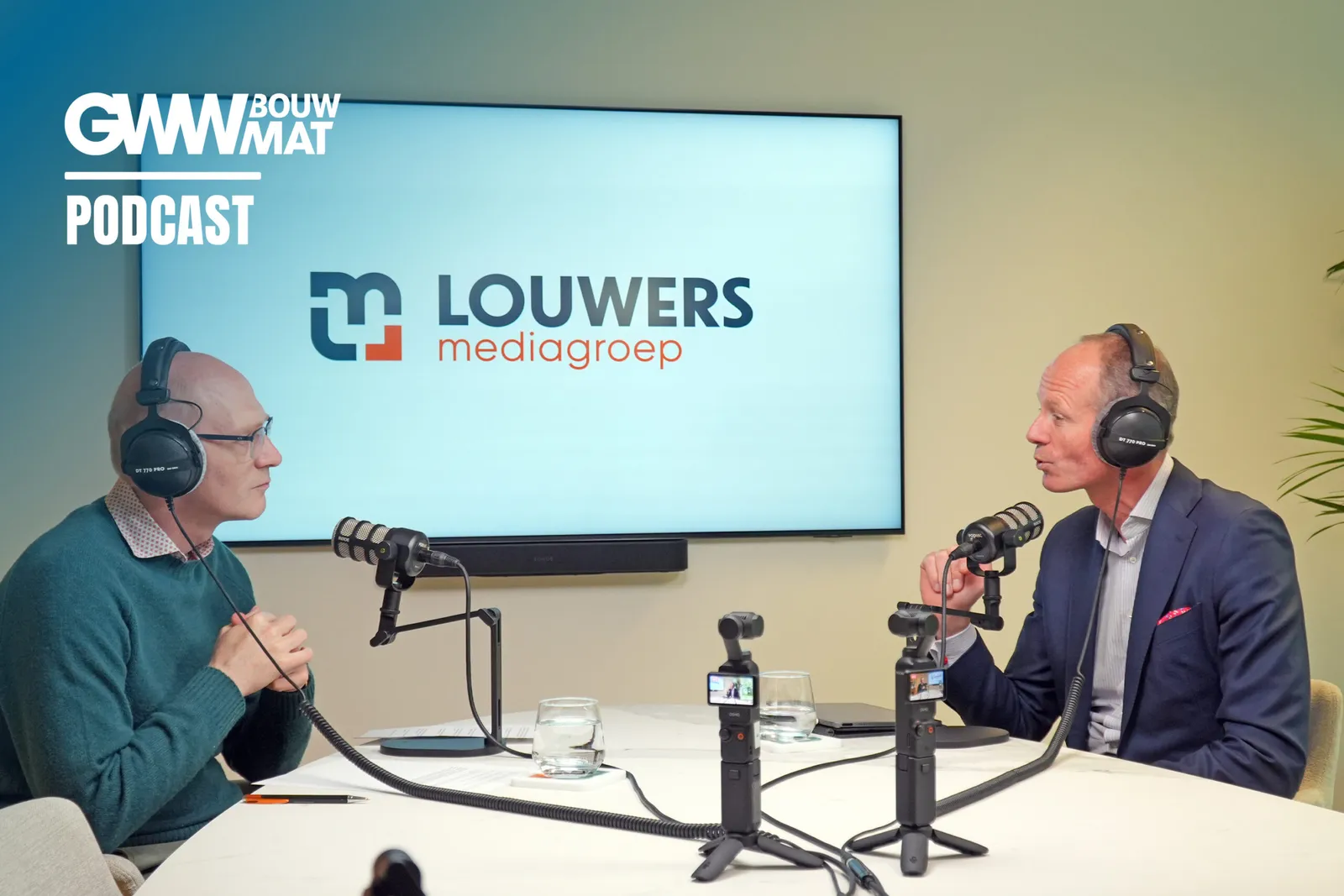
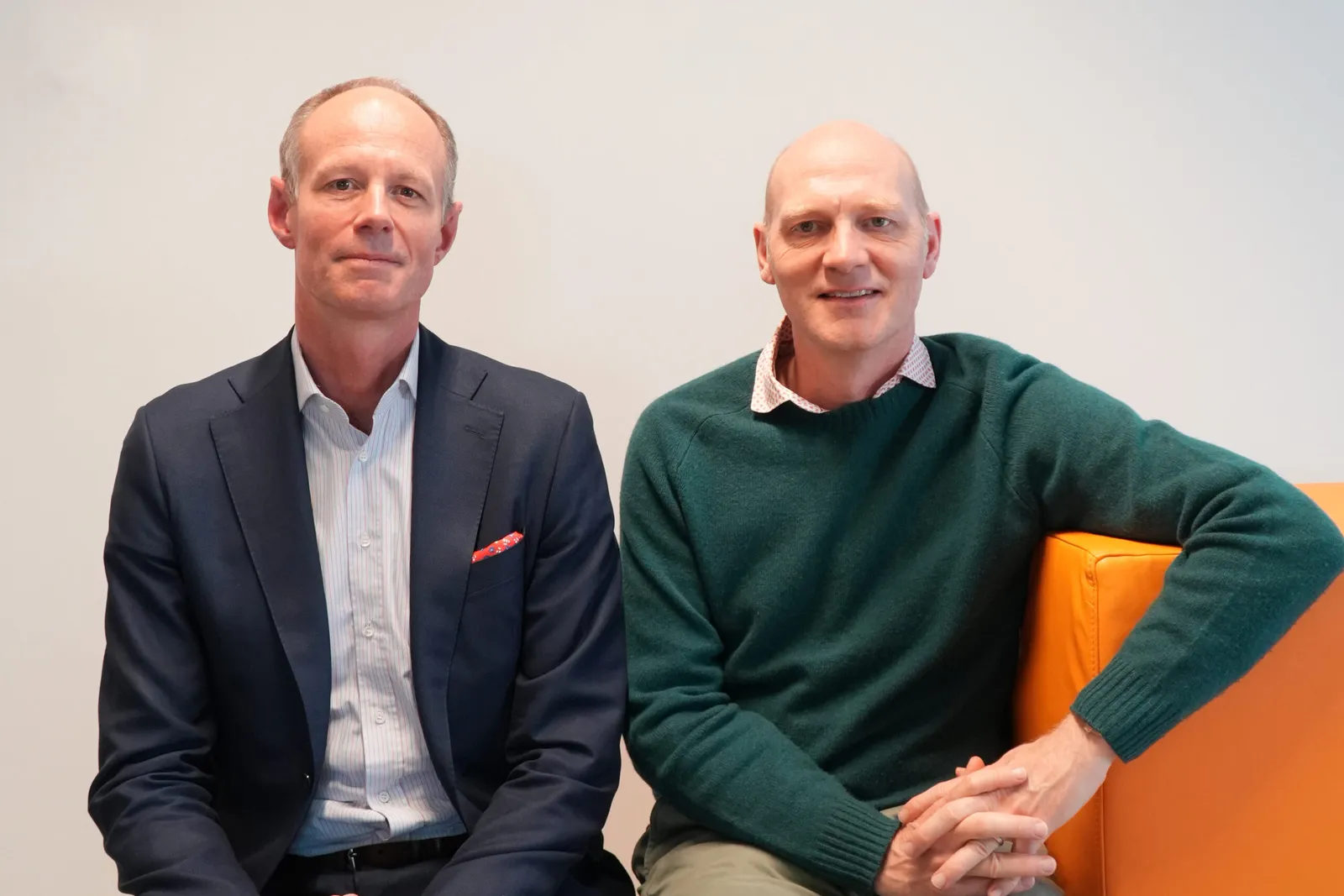
Cement is the foundation of almost every construction project, but it also faces a major climate challenge. Host Björn Crul speaks to Hervé Camerlynck, director of FEBELCEM, about the future of the Belgian cement industry. They discuss how the sector is pursuing CO₂ reduction, the circular economy, innovative types of cement and technologies such as carbon capture, with the aim of becoming climate-neutral by 2050. The challenges, investments and economic opportunities for Flanders also feature prominently.
Full transcript
Alle hoofdstukken (19)
- Introduction
- What is cement?
- CO2 emissions from cement
- Putting the environmental impact into perspective
- Are there alternatives?
- The roadmap to climate neutrality
- Capturing and storing CO2
- The first steps towards 2050
- Cement and the circular economy
- Circular construction in practice
- Renovation and reuse
- A reference project
- The role of FEBELCEM
- The sector’s main challenges
- Difficult decisions
- What does the future hold?
- Will cement change?
- Economic opportunities for Flanders
- Closing remarks
Introduction
Björn Crul Hello, listeners, and welcome to a new podcast. Whether it is motorways and bridges we drive over, or buildings where we live and work, one material is always present: cement.
We invariably associate cement and concrete with strength and robustness, but much less with sustainability and environmental awareness. And yet that is precisely what the sector is working hard on today: reinventing itself in response to climate change, through production, low-carbon solutions and initiatives that support the circular economy.
Where do things stand, and how quickly is this evolution progressing? I’m Björn Crul, and my guest today is Hervé Camerlynck, director of FEBELCEM, the federation of the cement industry.
Hello, Hervé, welcome.
Hervé Camerlynck Hello, Björn.
What is cement?
Björn Crul Hervé, if you had to explain to someone outside the industry exactly what cement is and why it is so important in construction, what would you say?
Hervé Camerlynck Cement is essentially an artificial stone. It was invented as an alternative to masonry. It was a revolution. Building with concrete made it possible to create any shape using a robust, easy-to-use construction material that is also available locally.
Cement is, in fact, the binder that gives concrete its properties. It binds aggregate, sand and water together. Cement was therefore the means of producing concrete.
Can we now imagine building without concrete? No, that is not possible. Cement is truly indispensable to the construction value chain.
CO2 emissions from cement
Björn Crul Cement is often singled out when it comes to sustainability. Why is that?
Hervé Camerlynck To produce cement, clinker must first be produced. This takes place in kilns at around 1,450 degrees.
A great deal of energy is needed to reach that temperature, but a chemical reaction also takes place as the clinker forms. This is the decarbonation of limestone. It produces calcium oxide and CO2, which accounts for a large share of emissions.
Björn Crul Yes, because it is also a very energy-intensive product.
Hervé Camerlynck Energy also plays a part, but the chemical reaction is the main factor. For energy, for example, we can use biomass or biomass waste instead of fossil fuels. That can help us address some of the CO2 emissions. But the chemical reaction is unavoidable.
Read the full transcriptCollapse transcript16 more chapters
Putting the environmental impact into perspective
Björn Crul Does this mean that the general public has a somewhat distorted view of cement’s environmental impact?
Hervé Camerlynck The focus on CO2 emissions is justified. It is an important issue. But otherwise, cement is produced locally using local raw materials. It is also a way of using non-recyclable waste to heat the kilns.
Apart from that, it is a very pure material that is produced locally.
CO2 emissions from cement in Belgium account for around 3% of total CO2 emissions. That is obviously not insignificant.
By comparison, transport and the heating of buildings together account for around 20% of CO2 emissions in Belgium.
Cement therefore has a significant role, but we must also remember that building without cement is not possible. The entire construction sector depends on the production of cement and concrete.
Are there alternatives?
Björn Crul That is really the first question you might ask. Are there alternatives to cement? Is there another material that can perform the same function?
Hervé Camerlynck No… There are alternatives. Projects are under way to develop alternative binders. The problem is often whether they can be scaled up.
Every year, 16 to 17 million cubic metres of concrete are produced in Belgium. That is just in Belgium, so it is a huge volume.
Alternatives do exist, but often only for a few cubic metres or a few hundred cubic metres.
Scalability is therefore extremely important.
And the raw materials for concrete, such as limestone, are readily available in Belgium. That is a major advantage today, at a time when sovereignty and reducing dependence on foreign supply chains are constantly being discussed.
We are also less dependent when it comes to energy, because we mainly use non-recyclable waste to heat the kilns and are therefore less exposed to gas or oil prices.
The roadmap to climate neutrality
Björn Crul A roadmap has been drawn up to achieve net-zero emissions by 2050. What does that ambition mean in practice, and what are the main actions you are putting in place?
Hervé Camerlynck The roadmap is structured around three groups of levers.
The first group consists of traditional industrial levers. We are working on alternative fuels and kiln performance so that we use less energy to produce clinker.
The second group concerns cement compositions and formulations. Belgium is known for using CEM I and CEM III. I will not go into detail, but we are now working on further clinker substitution.
For decades, for example, blast-furnace slag has been used as a substitute. We are now also looking for other substitutes, including calcined clay.
The third group of levers consists of genuine breakthrough technologies: Carbon Capture and Storage.
Capturing and storing CO2
Björn Crul Or going a step further: Carbon Capture and Utilisation. That is about capturing, storing and reusing CO2. What specifically could that mean for your sector?
Hervé Camerlynck Under the roadmap, around 50% of the effort to reduce CO2 emissions will come from Carbon Capture and Storage or Carbon Capture and Utilisation.
That is a significant contribution. It is extremely important, but it also involves huge investments.
The technologies for capturing CO2 already exist. That is one thing. But the next step is transporting the CO2. Once it has been captured, what do you do with it?
It is purified, and the plan is to transport it by pipeline to Antwerpen or Zeebrugge and from there on to storage sites in the North Sea, in depleted oil or gas fields.
That transport infrastructure does not yet exist. This means we cannot decide on it alone. An entire value chain needs to be built.
The first steps towards 2050
Björn Crul 2050 may seem a long way off, but action needs to be taken today to meet those targets. What does that mean for your sector now?
Hervé Camerlynck Since 1990, the average carbon footprint of cement has been reduced by around 30%.
Today, we are at around 520 kilograms of CO2 per tonne of cement, compared with around 750 kilograms in 1990.
The aim, of course, is to reach net zero. So there is still a lot of work to do.
We are working hard on traditional industrial investments. That is already under way.
With cement compositions, we want to move towards much greater clinker substitution. Standards will also need to be amended to achieve this. That takes time, but we are working hard on it.
Our role as a federation is also to put pressure on the authorities so that the regulatory framework evolves and the infrastructure for CO2 transport is delivered.
Cement and the circular economy
Björn Crul There is also an increasing focus on the circular economy, so that natural resources are not depleted. How does this fit with the cement industry?
Hervé Camerlynck Cement has actually been at the heart of the circular economy for a long time.
I mentioned blast-furnace slag earlier. It is a good example of the circular economy. It is a by-product of steel production.
Today, we are going much further still.
Non-recyclable waste is also used as fuel in cement kilns.
In addition, the fine fraction of recycled concrete can be reused in cement production.
This is truly at the heart of the cement sector.
Circular construction in practice
Björn Crul The changes taking place in the cement industry cannot really be separated from the transition under way in the construction sector itself. Is circular construction fundamentally different today from, say, twenty years ago?
Hervé Camerlynck Today, the principles of circular construction are genuinely embedded among architects and clients.
One of concrete’s major strengths is its robustness.
A concrete structure is not designed to last thirty years, but hundreds of years, if properly built.
Renovation and reuse
Björn Crul That is probably why we are now seeing so many renovation projects that retain the concrete structure and, for example, convert offices into homes.
Hervé Camerlynck Exactly.
It is not always straightforward, but it is happening more and more often.
This is also being considered in new projects. Architects are designing buildings to be much more flexible, so that they can be more easily repurposed in the future.
The aim is to keep the impact as small as possible.
Reuse and recycling are now truly the foundation of construction.
A reference project
Björn Crul You and your members work on this day in, day out. Can you give an example of a project where you would say: this is where we are fundamentally changing something in the sector?
Hervé Camerlynck For me, the ZIN project in Brussels’ Northern Quarter is a true reference project.
That project avoids the poor practices of the 1960s and 1970s.
A large part of the existing structure was retained.
Another part of the structure was recycled, and some of the concrete was also recycled for a completely new building.
The building serves as offices for the Flemish Government on the one hand, and also includes homes.
All aspects of new construction practices are evident in this project.
The role of FEBELCEM
Björn Crul Meanwhile, the transformation towards a more sustainable cement industry is continuing. What role does FEBELCEM itself play in that transition? How do you help your members?
Hervé Camerlynck We have three main roles.
The first is to help evolve the regulatory framework. We put pressure on administrations and ministers’ offices to ensure that decarbonisation remains a priority.
We also look for ways to reduce the risks associated with our members’ major investments.
This is done, for example, through mechanisms such as Carbon Contracts for Difference, in both Flanders and Wallonia.
The second role is communication.
We need to explain to all the stakeholders in the construction value chain what is happening with cement and concrete.
We need to make it clear that cement can become climate-neutral in the future.
New materials, such as calcined clay, can also have implications for contractors. These are matters we need to communicate about.
Thirdly, we play an important role in standardisation. We help introduce new types of cement and concrete, building consensus among the various experts in the process.
The sector’s main challenges
Björn Crul What could still hold this process back today?
Hervé Camerlynck One major obstacle is the fact that investment in carbon capture carries a great deal of risk.
These investments, worth hundreds of millions of euros, need to be made, yet there is currently no viable business case to justify them.
That is why mechanisms to reduce the risk of these investments are essential. Mechanisms such as Carbon Contracts for Difference are genuinely needed.
Another challenge is the occasional impression that ambitions for decarbonisation are waning somewhat.
Our message as the cement sector is precisely that we absolutely must press on with decarbonisation. We don’t need to wait or hesitate. We simply have to do it.
Difficult decisions
Björn Crul What difficult decisions does your sector have to make today?
Hervé Camerlynck Above all, it’s those huge investments.
The so-called Final Investment Decisions (FIDs) need to be made.
Companies will invest once the infrastructure for transporting CO2 is in place.
On the other hand, the CO2 transport operator, Fluxys, will only invest when there is sufficient certainty that cement producers will build facilities to capture CO2.
That is a classic chicken-and-egg situation at the moment.
Those are the difficult decisions that need to be made now. I don’t know whether that will happen this year, next year or perhaps not until 2028. But we are now in that crucial period.
Björn Crul Is everyone making progress at the same pace, or are there still significant differences?
Hervé Camerlynck Of course, companies have different structures, different financing options and sometimes different decision-making models.
But they all share the same vision.
That means that within a few years, all clinker plants in Belgium will have carbon capture facilities.
The vision is the same.
What does the future hold?
Björn Crul Hervé, looking ten years ahead, to around 2035, what will the construction sector look like, and what role will you play?
Hervé Camerlynck I think the construction sector will still be very active.
The need will remain. The number of households is growing, and we are facing a housing crisis.
So many more homes will need to be built.
There will also continue to be a major need for infrastructure. Just think of the Oosterweel connection, as well as many other infrastructure projects.
Our role as a supplier will remain the same: to provide a reliable construction material that architects and contractors can depend on, and that will also be climate-neutral.
Will cement change?
Björn Crul Will it still be the same cement we know today?
Hervé Camerlynck Broadly speaking, yes.
There may be a few minor changes to its composition or to the way concrete is used, but in principle it will remain much the same.
I think it is mainly on-site practices that will evolve. Perhaps more precast concrete will be used and less ready-mixed concrete.
But otherwise, broadly speaking, it will remain much the same.
There is still a great deal of work to be done in construction.
Economic opportunities for Flanders
Björn Crul Looking at this from an economic perspective too, what opportunities does it offer Flanders?
Hervé Camerlynck Developing infrastructure for CO2 transport is a significant opportunity for Flanders.
Cement plants are mainly located in Wallonia, but this CO2 infrastructure will be useful for the entire industrial fabric, in both Wallonia and Flanders.
CO2 can then be transported further via Antwerp and Zeebrugge.
We are at a turning point, comparable to the construction of the major canals in the late nineteenth and early twentieth centuries, such as the Albert Canal.
That is the kind of moment we are experiencing today.
Closing remarks
Björn Crul We have talked at length about the sector’s challenges and what you are working on today. Are you still optimistic about the future?
Hervé Camerlynck Yes, absolutely.
I have been director of FEBELCEM for six years now, and the positive momentum is still there.
When I look at developments over the past six years, I can see that a great deal has already changed.
That progress will continue.
I think we can meet this climate challenge. It is achievable.
As a sector, we can play a strong role and succeed.
Björn Crul Hervé Camerlynck, thank you for this fascinating conversation.
Hervé Camerlynck Thank you.
Björn Crul And what I’ll take away, ladies and gentlemen, is that cement plays a central role in the sustainable transformation of the construction sector, at the intersection of climate challenges and an industrial future.
Thank you for your attention. Until next time.
Keep following this
Get an email when a new story is published. No account needed.
- ThemeMaterials with a lower environmental impact
- SubjectGeneral







