









Glass-reinforced plastic solutions for infrastructure projects are gaining popularity
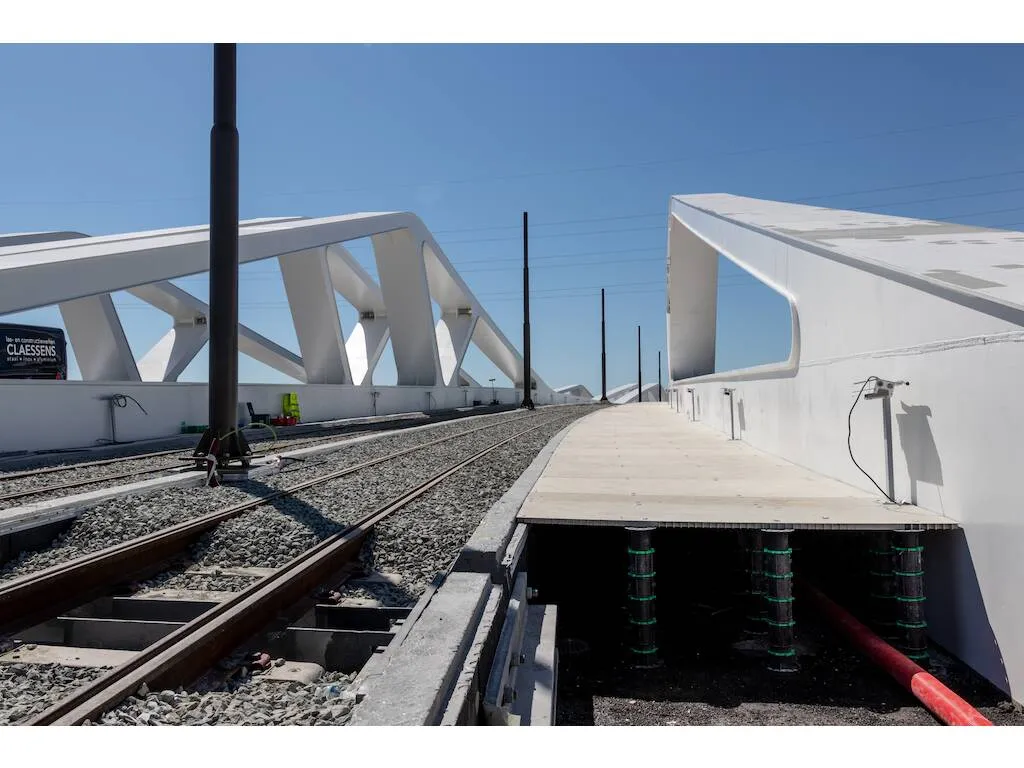
Gratings, profiles, handrails and platforms made from glass-reinforced plastic (GRP) are increasingly being used for bridges, locks and maritime walkways. “Thanks to its chemical resistance, excellent corrosion resistance and non-conductive properties, the applications are practically unlimited,” says Jan Swyngedouw, business unit manager at plastics specialist CGK Group.
CGK Group, originally specialising in the manufacture and supply of chemical storage equipment, has for many years positioned itself as a plastics specialist. Its work spans industry and construction through to the infrastructure and maritime sectors. The CGK Martime & Infra Constructions department also offers a full range of installation accessories, including specially adapted M, C and round stainless steel clamps, as well as custom stainless steel connectors. “Our own installation teams also use GRP profiles, plastic box-section reinforcements and a complete range of paving supports, enabling us to offer our customers complete solutions,” explains Jan Swyngedouw. “Thanks to GRP’s chemical and excellent corrosion resistance, our products are used in processes involving hazardous substances and in the maritime sector for safety and infrastructure. Our gratings also have a very long service life and require little maintenance, which is why they are used in various other sectors too. We can offer something for every business.”
Wide range of applications
GRP bridges and bridge deck boards have been in use for some time, but traditional steel platforms and gratings are also increasingly being replaced by GRP. Thanks to their low weight, handrails, complete staircases, platforms and walkways can easily be installed on existing structures. Jan Swyngedouw says: “GRP deck boards and walkways are also maintenance-free, durable and environmentally friendly, lightweight, resistant to mould, easy to adapt and install on site, and can simply be fitted with anti-slip properties.”
Solre-sur-Sambre
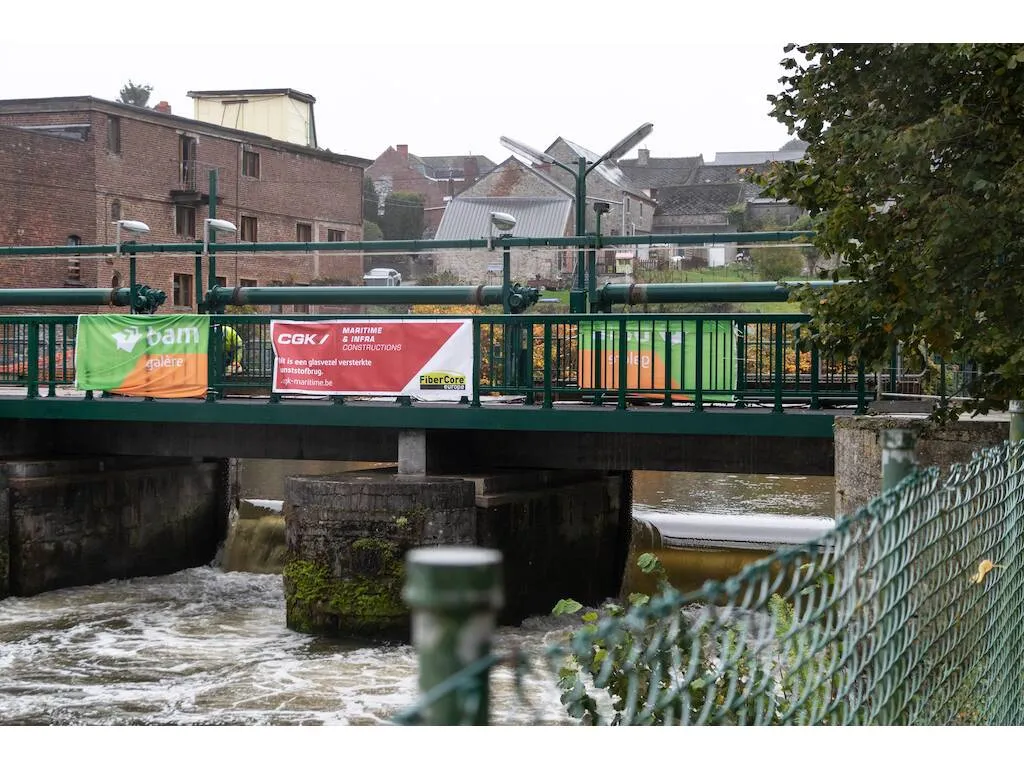
One of the projects for which CGK Group recently supplied GRP solutions was in Solre-sur-Sambre (Hainaut), in collaboration with BAM Galère. CGK also fitted two GRP bridges at a historic site, each measuring 14 x 2 m, with maintenance-free GRP handrails. The choice was determined by the low weight, maintenance-free nature and durability of the GRP materials used. Jan Swyngedouw says: “Although this is a pedestrian bridge made up of two sections, we also build short road bridges with a load-bearing capacity of up to 60 tonnes, using concrete piers already in place on site. For longer spans, we use a concrete or steel substructure topped with a plastic deck. In all cases, the main advantage of our system is the extremely lightweight structure.”
Theunisbrug
Another example is Theunisbrug in Antwerpen, delivered in collaboration with Artes Roegiers. For this bridge, CGK Martime & Infra Construction supplied and installed Isophthalic GRP gratings measuring 38 x 38 mm, with a thickness of 30 + 3 mm and a closed top layer with sand grain finish. The 2 GRP tram evacuation routes were curved and installed on paving supports to bridge a height of 600 to 850 mm. The entire structure was secured and mounted to the concrete structure using rubber pads to prevent vibration. GRP was chosen, among other reasons, for its ideal strength-to-weight ratio and because the panels can be lifted without a crane during maintenance work.
Rail sector
CGK Group can also point to several strong reference projects in the rail and water sectors, including the supply and installation of orthophthalic resin cover gratings for cable ducts carrying utility services in Herstal, in collaboration with Kristof Papeleu from Geraardsbergen. Another project was on the Aalter-Beernem and Beernem lines, in collaboration with De Bonte, Van Hecke from Waasmunster, where the gratings were used to cover infiltration ditch elements. The covers will serve as a possible escape route for passengers in the event of an evacuation. The walking surface must have virtually no level changes or large openings, so as not to impede evacuation. The design of the channels and gratings was developed to ensure they fit together perfectly. The gratings’ low weight also makes it easier to maintain and clean the ditch elements. “For these two railway projects, the decisive factors were above all the low weight, quick installation, maintenance-free nature and electrical insulation properties of GRP,” says Jan Swyngedouw.
Water sector
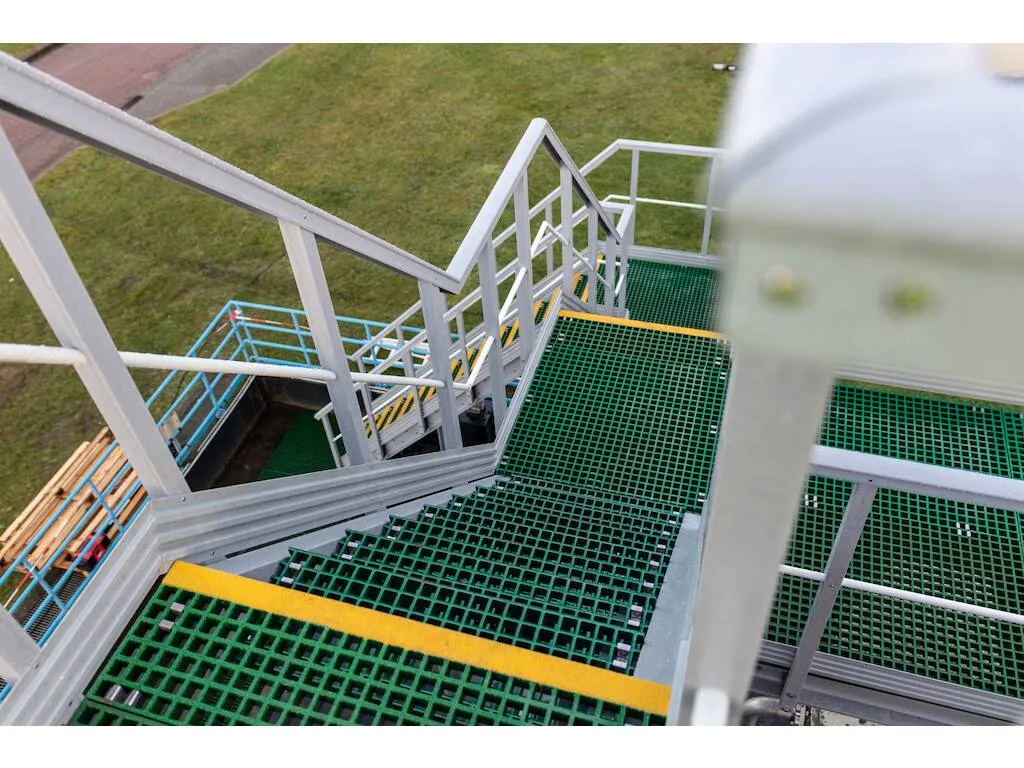
At De Gavers water production centre in Harelbeke, CGK is installing four single-wall tanks for De Watergroep in a concrete bund lined with PE. Jan Swyngedouw says: “GRP platforms, gratings and handrails were installed alongside and on top of the tanks. We also provided GRP stairs to allow access to the tank roofs. These structures have fairly stringent load and deflection requirements and required thorough strength calculations.”
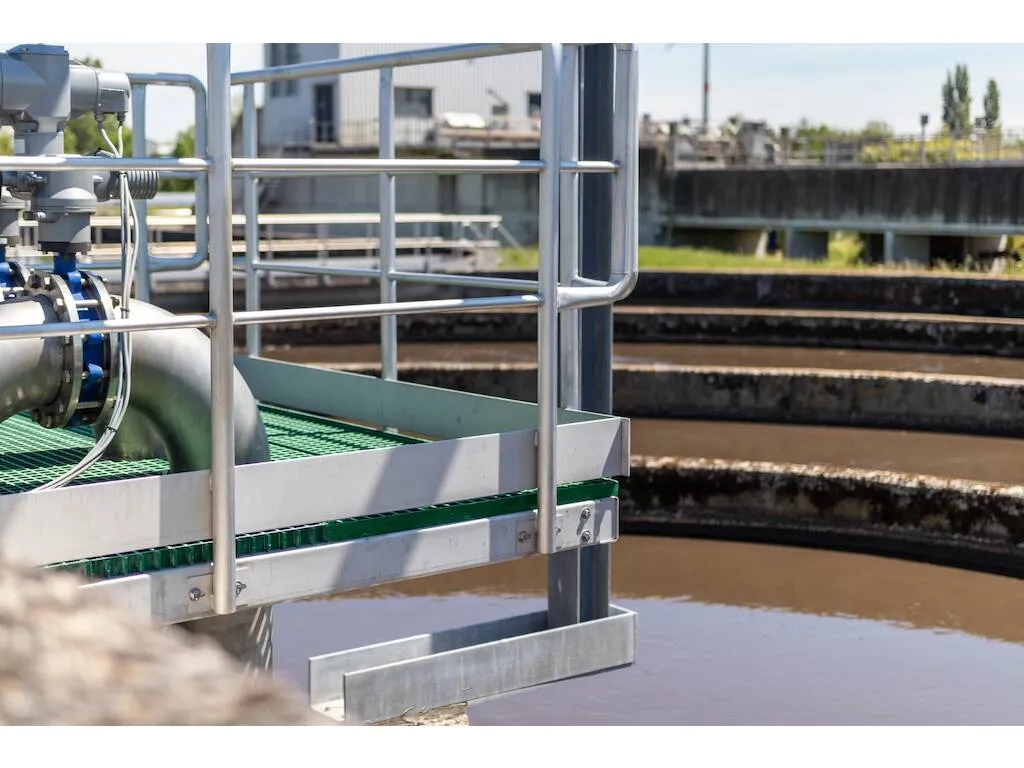
Aquafin also approached CGK for its site in Brugge. Its aim was to provide safe access to the automatic shut-off valves installed on its wastewater pipes. CGK therefore devised a solution in the form of a platform accessed by a ladder. “We installed a total of 8 platforms with the necessary handrails and ladders, made from stainless steel, to ensure sufficient strength. We chose GRP (glass-reinforced plastic) walkways because of their high chemical resistance, as they can withstand corrosive fumes from wastewater,” concludes Jan Swyngedouw.
Question about this story? Ask your question
Keep following this
Get an email when a new story is published. No account needed.
- ThemeExtending the life of bridges and tunnels
- SubjectGeneral







