









Fort Sint-Filips site transformed following complex redevelopment
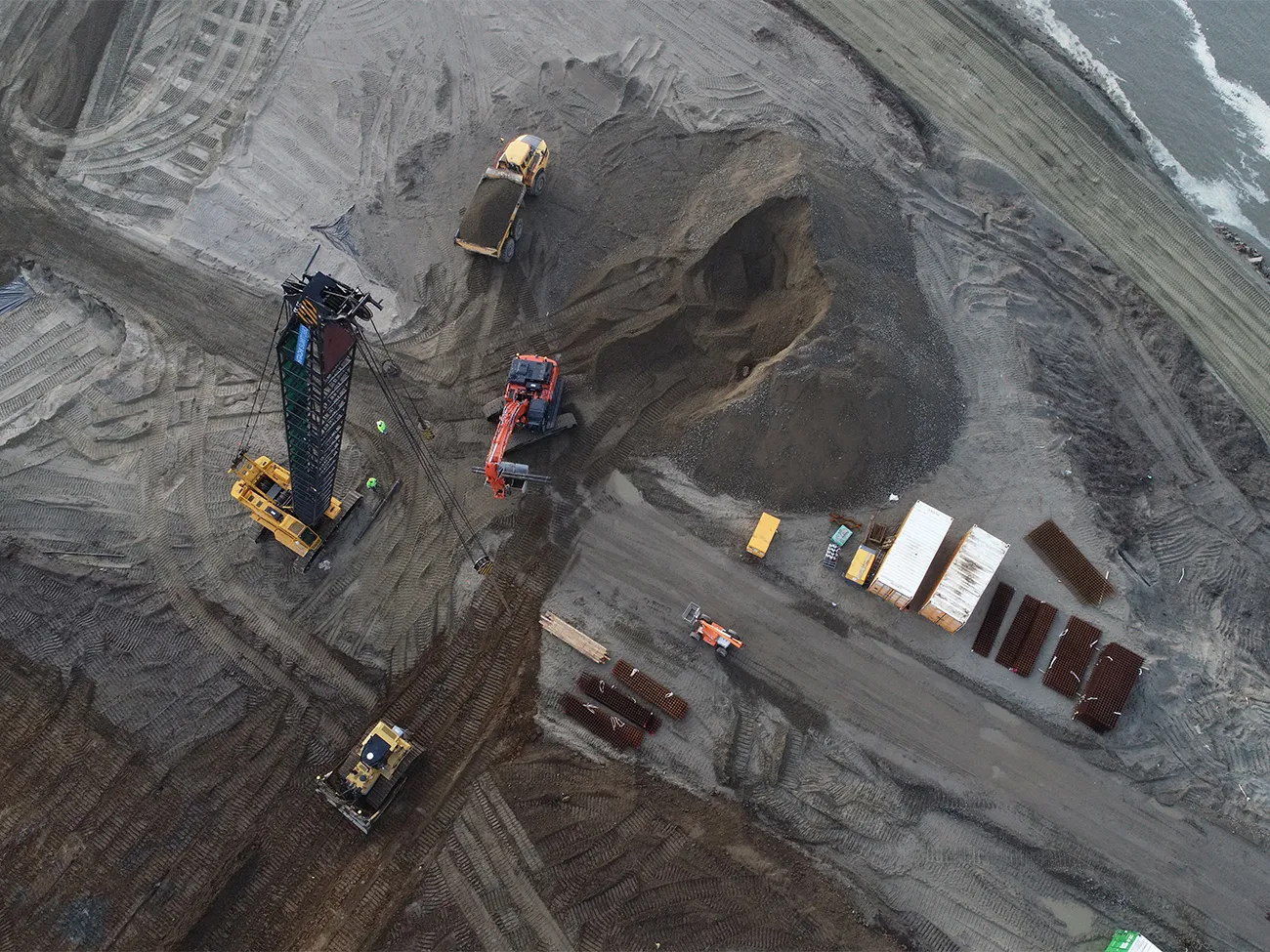
The redevelopment of the site around Fort Sint-Filips on the right bank of the Scheldt has been completed after two years. Following the clean-up of contamination on the site, De Vlaamse Waterweg nv and Port of Antwerp commissioned a dike and a new, higher flood defence to protect the city and the port’s industrial areas from high water levels on the Scheldt. The works took more than 2 years and were carried out by Jan De Nul, Envisan and DEME Environmental as contractors. “It is the overall complexity that makes this project so special and rewarding,” says Steven De Coen, civil engineering project manager at Jan De Nul.
The transformation of the site is part of the Sigmaplan, which aims not only to protect against flooding but also to restore river habitats. A dike and flood defence wall were therefore built around the site, designed to withstand the future impacts of climate change. Over the past two years, Jan De Nul, Envisan and DEME Environmental tackled this heavily contaminated port site on the right bank of the Scheldt: the fort was encapsulated, the dike around the site was raised, and a new, higher flood defence was built to protect the city and the port area behind it.
Remediation works
“Before this work could go ahead, the severe historical contamination first had to be safely contained within an underground, watertight bentonite-cement wall,” explains Steff Van Cauwenberg, remediation project manager at DEME. “The nearby stormwater basin and the surrounding site were also remediated. The project was initially awarded to DEME Environmental and Envisan. But because it involved much more than remediation works and was also part of the wider Sigmaplan, we were able to draw on other areas of expertise within Jan De Nul and DEME. This enabled us to offer the clients a complete, end-to-end solution, working with all the subsidiaries. Soetaert, for example, was brought in for the foundation and piling works and the construction of the cement-bentonite wall. All soil that could be treated was processed at DEME’s soil treatment centres.”
New habitats and a circular groyne
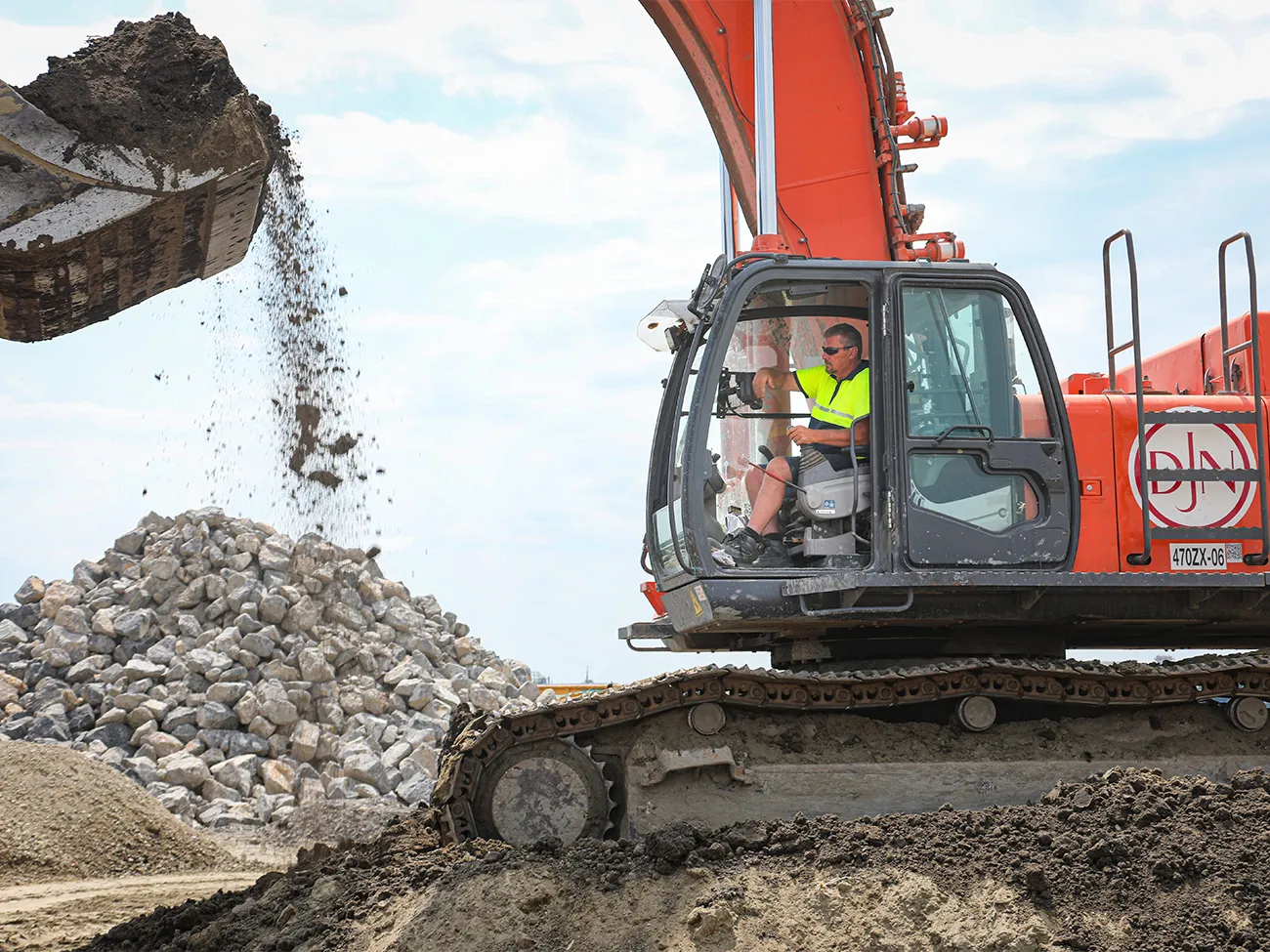
Just beyond the fort, a low stone groyne was also built. This tidal groyne lies perpendicular to the direction of flow, locally slowing the current. This reduces the risk of the mudflats and salt marshes being washed away. Formed by the ebb and flow of the tide, these habitats are important for biodiversity in and around the Scheldt. The result is 20 hectares of valuable tidal habitat. To build the groyne, Jan De Nul and DEME reused dredged material already present on the site.
Complexity
The project was exceptionally complex, presenting a considerable challenge even for renowned, experienced contractors such as Jan De Nul and DEME. Steven De Coen says: “No project is straightforward, but here we were faced with an unusual degree of complexity and a wide variety of works on a single site. Coordinating all those activities in terms of location and timing was certainly no easy task. That was undoubtedly the biggest challenge, but it is also what you look back on with great satisfaction. Alongside the overall complexity, there were also some highly specialised technical issues, such as demolishing the fort and remediating the pond. We were able to draw on the necessary expertise within Jan De Nul and DEME Environmental.”
All in-house
The redevelopment of Fort Sint-Filips required expertise across a range of disciplines, including civil engineering, environmental works and hydraulic engineering. The fact that DEME and Jan De Nul can draw on in-house experience and know-how across all these disciplines is a major advantage. “We can handle that complexity, which brings significant added value for the client. There is just one point of contact, there are no conflicts of interest, and ‘best for project’ always comes first. We are certainly proud of the end result. Looking at aerial photographs from before and after the works, you can see that the whole site has undergone a significant transformation, for the better,” concludes Steff Van Cauwenberg.
Question about this story? Ask your question
Wie aan Fort Sint-Filips werkte
- bodemsaneringsdeskundigeABO nvMentioned in Major remediation project at the Fort Sint-Filips site well under way
- consortiumJan De NulMentioned in Major remediation project at the Fort Sint-Filips site well under way
- clientDe Vlaamse Waterweg nvIn this story
- clientPort of AntwerpIn this story
- contractorDEME EnvironmentalIn this story
Keep following this
Get an email when a new story is published. No account needed.
- ProjectFort Sint-Filips
- ThemeStrengthening waterways and coastlines
- SubjectGeneral
- CompanyDe Vlaamse Waterweg nv
- CompanyPort of Antwerp
- CompanyDEME Environmental







