









Ford Sites Remediation, Genk | Remediation of Ford sites on track
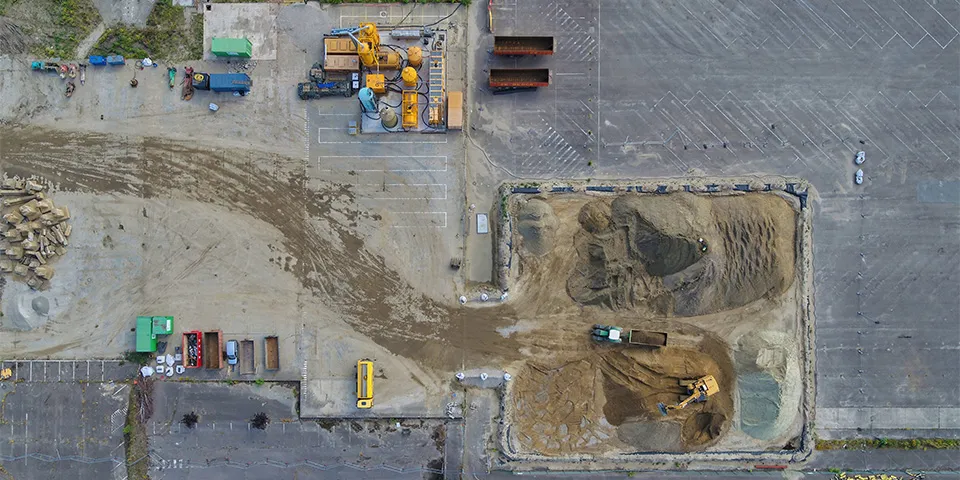
Soil remediation work on the former Ford site in Genk is well under way. THV Ford 2020, formed by DEME, Aertssen, Mourik and Aclagro, is leading the works, which involve cleaning up five delineated hotspots. “Remediation is progressing according to schedule, thanks to thorough preparation and smooth cooperation within the joint venture and with the client, De Vlaamse Waterweg,” says Sven Van Elsen, project manager at THV FORD 2020.
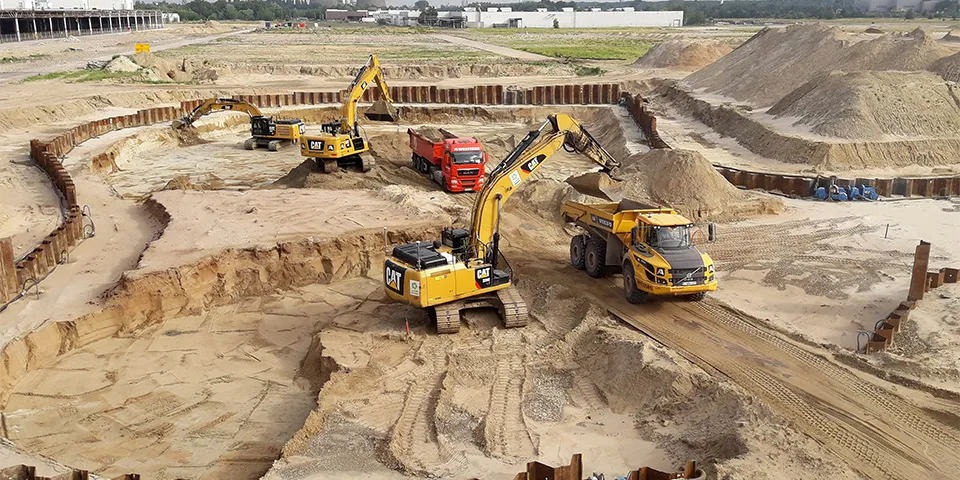
Three of the five hotspots are being excavated within sheet-pile walls.
At the end of 2015, Flanders became the owner of the former Ford Genk site. Six months later, the Ford Genk Masterplan got under way. This partnership between Flanders, Stad Genk and De Vlaamse Waterweg aims to transform the former industrial site into a thriving new economic hub for value-added logistics companies and manufacturing businesses.
Demolition work in the summer of 2017 marked the next phase in the redevelopment of the site. In February 2019, THV Ford 2020, a consortium comprising DEME, Aertssen, Mourik and Aclagro, began the soil remediation work. “When the Flemish government became the owner of the Ford sites, part of the land was sold to a developer. Those sites still have to be demolished, along with a smaller remediation project. The other part was demolished in 2017 on behalf of De Vlaamse Waterweg,” explains Sven Van Elsen.
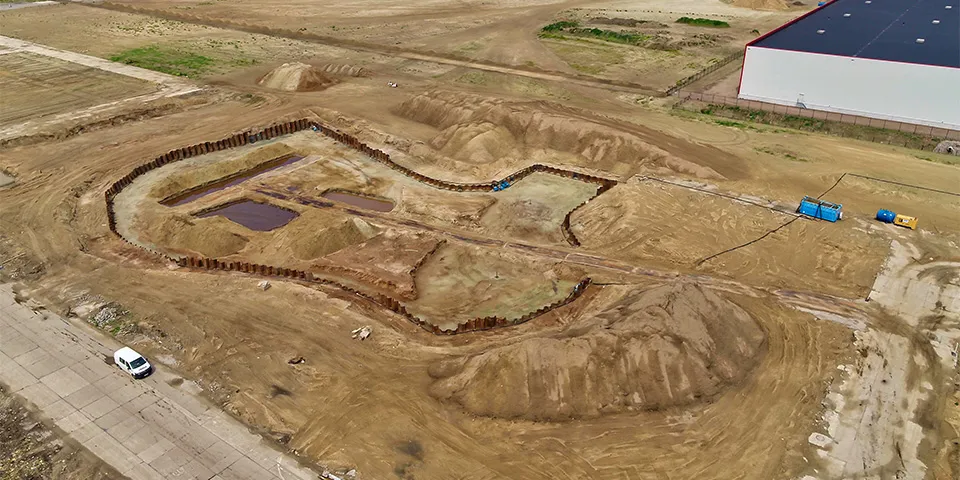
A clear and detailed preliminary investigation was crucial to ensuring the work proceeded smoothly.
Integrated approach
THV Ford 2020 is currently carrying out soil remediation work on the part of the site that has already been cleared. Sven Van Elsen says: “Before we could start remediation, we first carried out some above-ground demolition work, including removing the underground foundations. In February, we began clearing out the buildings and removing asbestos. The demolition itself was carried out selectively, to recover as much material as possible. The joint venture has worked as an integrated team from day one. This approach pays off, and is also necessary given the client’s tight deadline. We are also very satisfied with our cooperation and communication with De Vlaamse Waterweg.”
After the demolition work, the joint venture began the actual remediation of the site last spring. A clear and detailed preliminary investigation was crucial to ensuring the work proceeded smoothly. The investigation was carried out by Tractebel and ABO Group, which also form a joint venture on this project. “Tractebel and ABO Group did an excellent job and delineated the five hotspots that need to be excavated,” says Sven Van Elsen. “These hotspots had already been identified in previous investigations, but were mapped in greater detail at the start of this year to minimise the risk of unforeseen obstacles.”
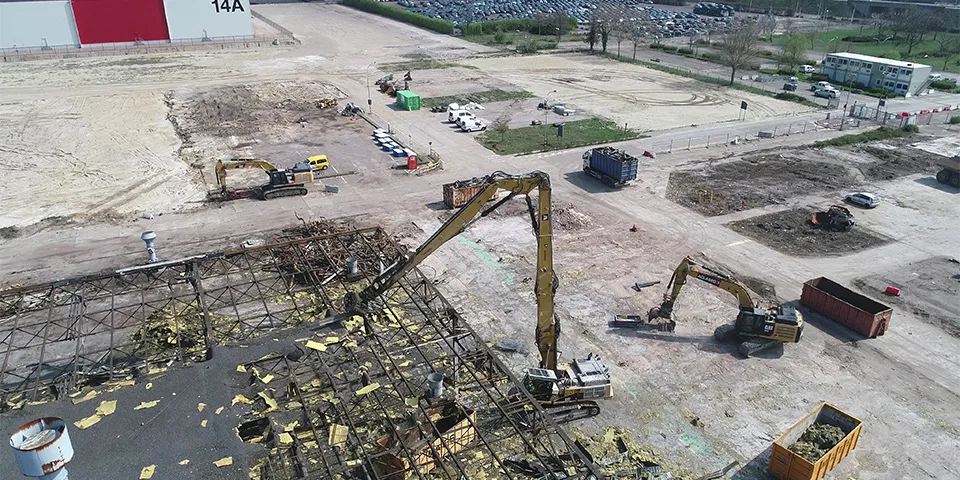
Some above-ground demolition work was first carried out before remediation could begin.
On schedule
At the end of April, THV FORD 2020 installed the first sheet-pile walls. Sven Van Elsen says: “Three of the five hotspots are being excavated within sheet-pile walls. To remove the contaminated material in each hotspot completely, it is very important that the walls are positioned correctly. As there is also a large amount of contaminated groundwater on site, a water treatment plant was installed at the end of April. The preparatory work continued until around the end of May, and excavation at depth began in June. The first two hotspots, enclosed by the same sheet-pile walls, were excavated before the construction holiday. The sheet piles were then withdrawn and installed around the next hotspot. The excavated soil is being taken to the GRC Zolder soil treatment centre.”
The remediation work is scheduled for completion in 2020, and given the current rate of progress, the deadline is certainly achievable. “That is partly thanks to the detailed preliminary investigation. Given the former superstructure, it is not easy to investigate the entire site thoroughly in advance, but so far we have not encountered any unexpected problems. All the parties in this joint venture are experienced in large, complex projects, but planning and coordination remain a challenge when it comes to carrying everything out as smoothly and efficiently as possible. Although four different parties are working on site, everyone sees it as a single joint project. We can rely on one another and complement each other. This is certainly an example of transparent and enjoyable cooperation,” concludes Van Elsen.
Question about this story? Ask your question
Keep following this
Get an email when a new story is published. No account needed.
- ThemeUsing and protecting the subsurface
- SubjectGeneral







