









Flemish Minister Peeters launches MIA: Mobility Innovation Approach
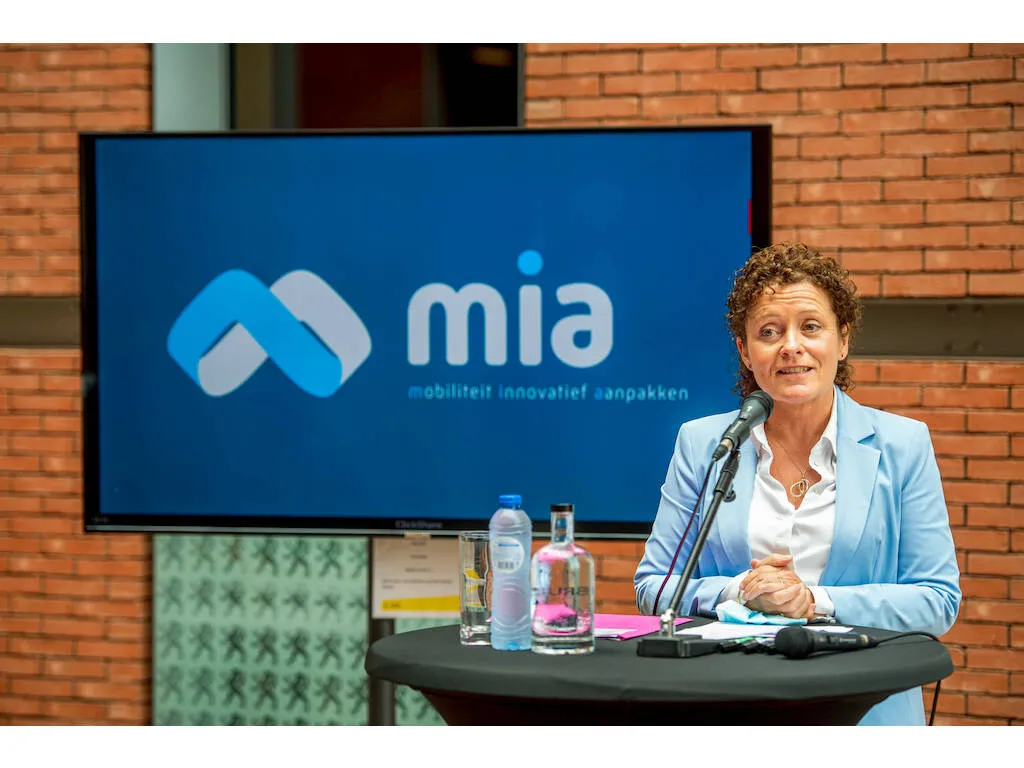
Flemish Minister for Mobility and Public Works Lydia Peeters launched MIA: Mobility Innovation Approach at the end of June. Through this new governance approach, Minister Peeters aims to speed up the implementation of infrastructure measures to improve road safety. “We need to put an end to the abundance of rules, service orders and complex, time-consuming procedures when it comes to infrastructure works,” says Minister Peeters.
Minister Peeters: “It not only causes resentment and frustration, but also costs lives. For me, the goal of zero road casualties is a daily objective. With the figures now stagnating, an innovative approach is absolutely essential. The slow train will not get us there. I want to take my place in the cockpit of a high-speed train, the MIA Express.” Testbeds are being set up in the provinces of Limburg and West Flanders to trial the MIA approach. A wide-ranging consultation with local authorities and police zones revealed one thing very clearly: there is no shortage of initiative or goodwill, but a multitude of rules, service orders and often complex, above all time-consuming procedures frequently stand in the way of an efficient approach to infrastructure improvements aimed at enhancing road safety. “We now know where the dangerous junctions and unsafe cycle paths are,” says Minister Peeters. “The problems are known, but they are not being addressed quickly enough. That causes not only frustration and disillusionment, but also casualties. We can no longer tolerate road users becoming victims of bureaucracy. There is no point in investing more in road safety if red tape stands in the way of rapid action.” To address this problem, Flemish Minister Lydia Peeters today launched MIA, or Mobility Innovation Approach. “In two testbeds, in West Flanders and Limburg, we are experimenting with the proactive detection of unsafe road situations so that we can prevent certain junctions from becoming black spots on endless lists,” says Minister Peeters.
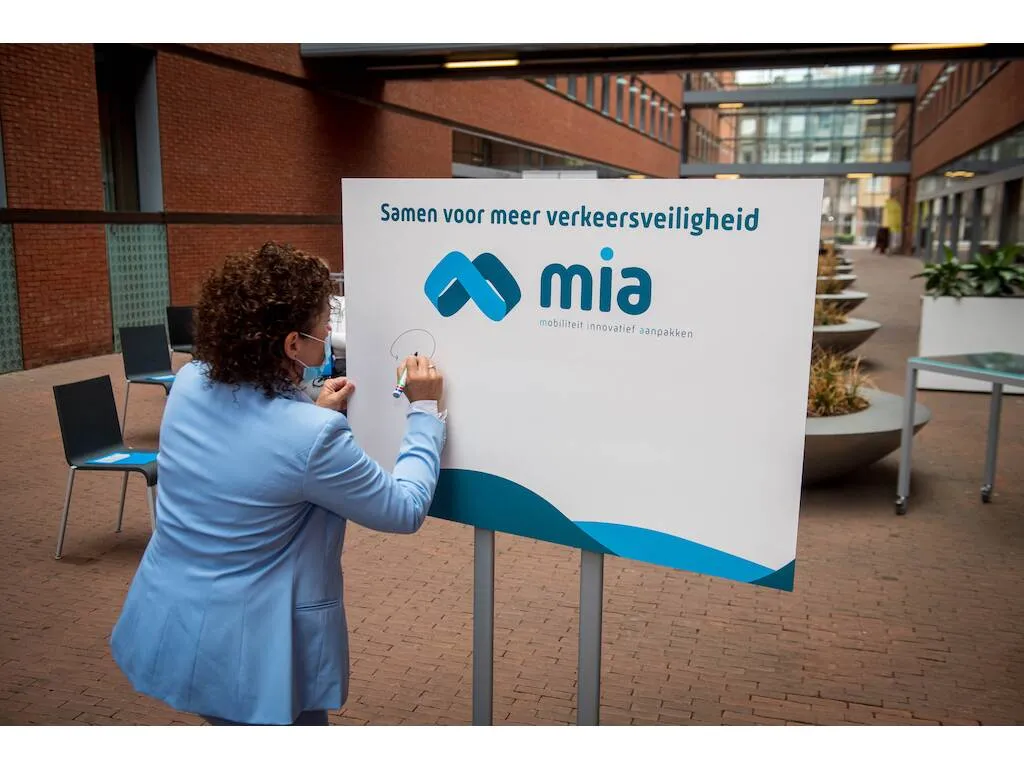
Four workstreams in each testbed
Four major research workstreams are being launched in each MIA testbed, covering the entire process of an infrastructure improvement, from the first report to breaking ground. Workstream 1 involves experimenting with the proactive detection of unsafe locations, meaning risks are identified before casualties occur. New technology will be used for this, including sensors, drones and electronic camera surveillance, as well as several online platforms where members of the public can report traffic risks. In Limburg, this workstream is supported by IMOB (UHasselt), and in West Flanders by the MOW Data Science Team. Workstream 2 focuses both on addressing known unsafe locations and on learning how to do so more quickly and effectively. These are experiments in an accessible approach, which also involves training and supporting small local road builders and engineering consultancies. Together, they develop a practical implementation proposal based on a concept design. Workstream 3 focuses on legal and administrative simplification. On 28 May, the so-called MIA Decree was approved by the Flemish Government. It establishes a temporary regulatory sandbox. The decree makes it possible to derogate from existing regulations for small-scale infrastructure works to address dangerous locations on regional roads and encourage cycling. “A road user gains nothing from being told that the cycle path is managed by the municipality and the junction by the Flemish Region, or that a safer cycle path will take years to build because a small strip of land needs to be expropriated,” says Minister Peeters. This workstream is supported by Hogeschool PXL, which has extensive expertise in simplifying the administrative aspects of construction processes. Finally, Workstream 4 is entirely dedicated to professionalising contractors and road builders, led by Confederatie Bouw. The focus is on developing new methods and processes. Testbeds provide an opportunity to experiment and gain experience. If the evaluation is positive, the approach will be extended to the rest of Flanders.
Timescale
The first MIA testbed opened in Limburg after the construction holiday. Proactive detection using drones and camera surveillance is being rolled out at 8 locations across the province. The online public-reporting platforms are being trialled in 5 municipalities in Limburg. Work is also starting at known unsafe locations. The first MIA works will be visible on the streets of Limburg in October. The MIA works in the province will run for two years. The final handovers are scheduled for December 2023.
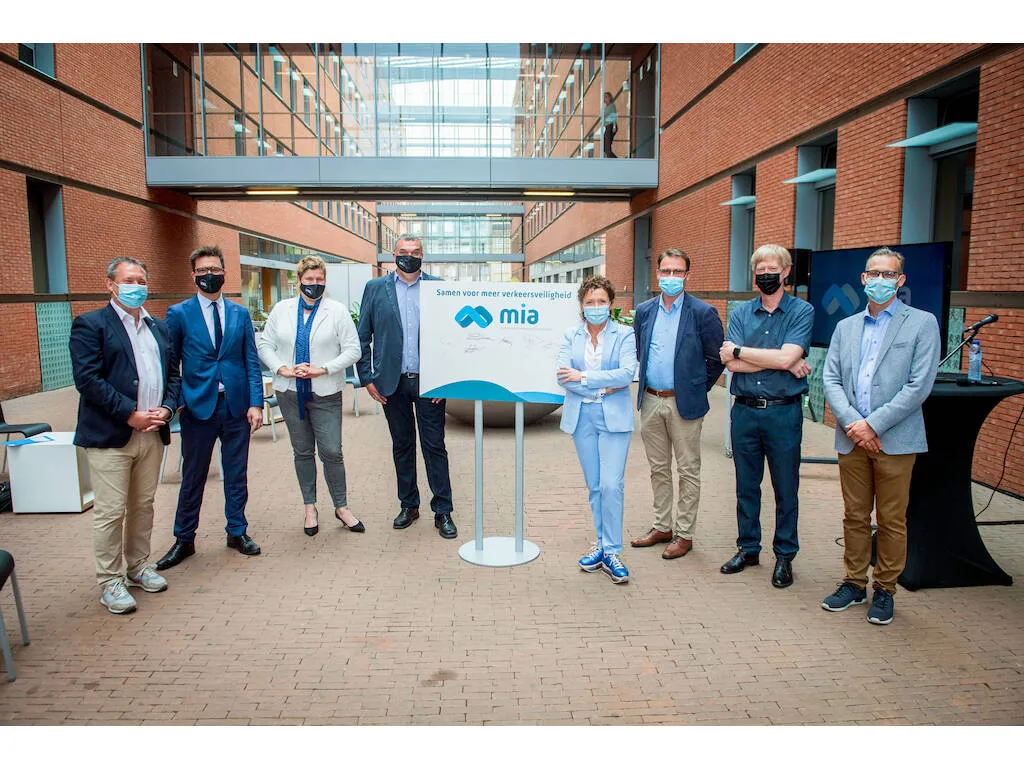
MIA partners
MIA is innovative not only because it speeds up and simplifies processes, but also because of the way it brings different stakeholders together: UHasselt, Hogeschool PXL, Confederatie Bouw Limburg, Agentschap Wegen & Verkeer Limburg and Vervoerregio Limburg. The stakeholders share a common mission: to reduce the number of road deaths and serious injuries in Flanders to zero as quickly as possible.
Question about this story? Ask your question
Keep following this
Get an email when a new story is published. No account needed.
- ThemeFuture-proofing roads and railways
- SubjectGeneral







