









“Flanders could save 15% on construction materials by doing more to promote reuse and recycling”
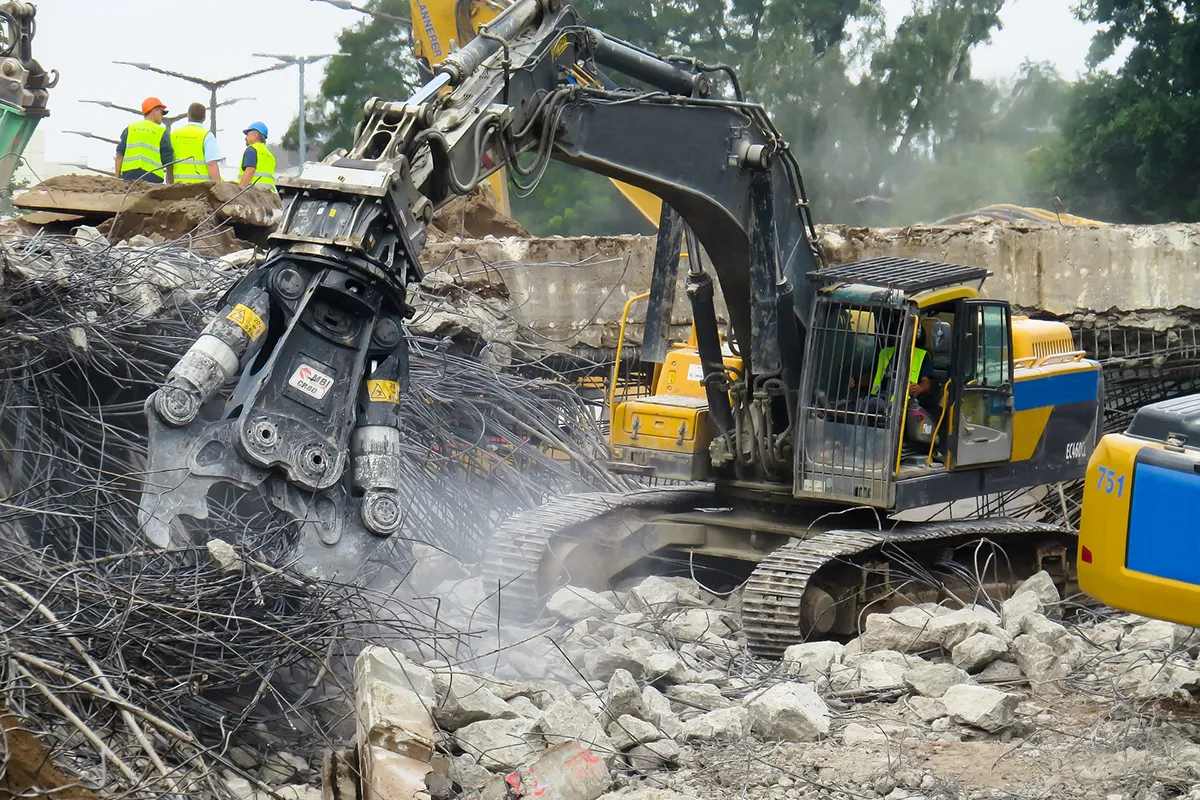
Buildings at the end of their useful lives can provide far more materials
The Flemish construction sector needs around 100 million tonnes of construction materials every year to build enough homes, schools, healthcare facilities, offices, roads and other infrastructure.* However, primary raw materials for these products are becoming increasingly scarce and expensive, and processing them requires a great deal of energy.** By recovering more materials from construction and demolition waste, we could save 15 million tonnes a year.*** This can be achieved by sourcing as much as possible from buildings at the end of their useful lives that are due for demolition, then recycling the materials into new products or dismantling them for reuse. Today, just 1% of demolition waste is dismantled and reused. That has to change. Recycling, particularly of rubble, is already well established, but its applications need to be expanded and improved.
“Flanders has an ageing building stock, and its infrastructure also needs to be renewed. This will release millions of tonnes of materials that we can no longer treat as waste. If we recycled and reused everything, we could reduce the construction sector’s material footprint by 15%”, says Caroline Deiteren of Embuild Vlaanderen.
“Circular demolition and construction are therefore becoming essential. Not only to reduce our footprint, but also as a prerequisite for a strong construction sector and a resilient Flanders. Many raw materials used in new construction products are energy-intensive to produce, and geopolitical conditions also make their supply chains vulnerable. Reuse and recycling make us more independent”, says Deiteren.
The Flemish construction sector is already a champion of low-grade recycling of construction and demolition waste.**** For example, 95% of rubble is recycled for use in applications such as road foundations. Together with the Flemish Government, the sector wants to take the next step: within five years, half of these low-grade applications should be replaced with high-grade ones. This could include recycling facing bricks for use in new buildings. Better still is to dismantle materials for reuse. But this is still in its infancy: just 1% is dismantled and reused.***** Examples include reusing complete timber structures and ceiling tiles. However, this requires a fundamental change in working practices.
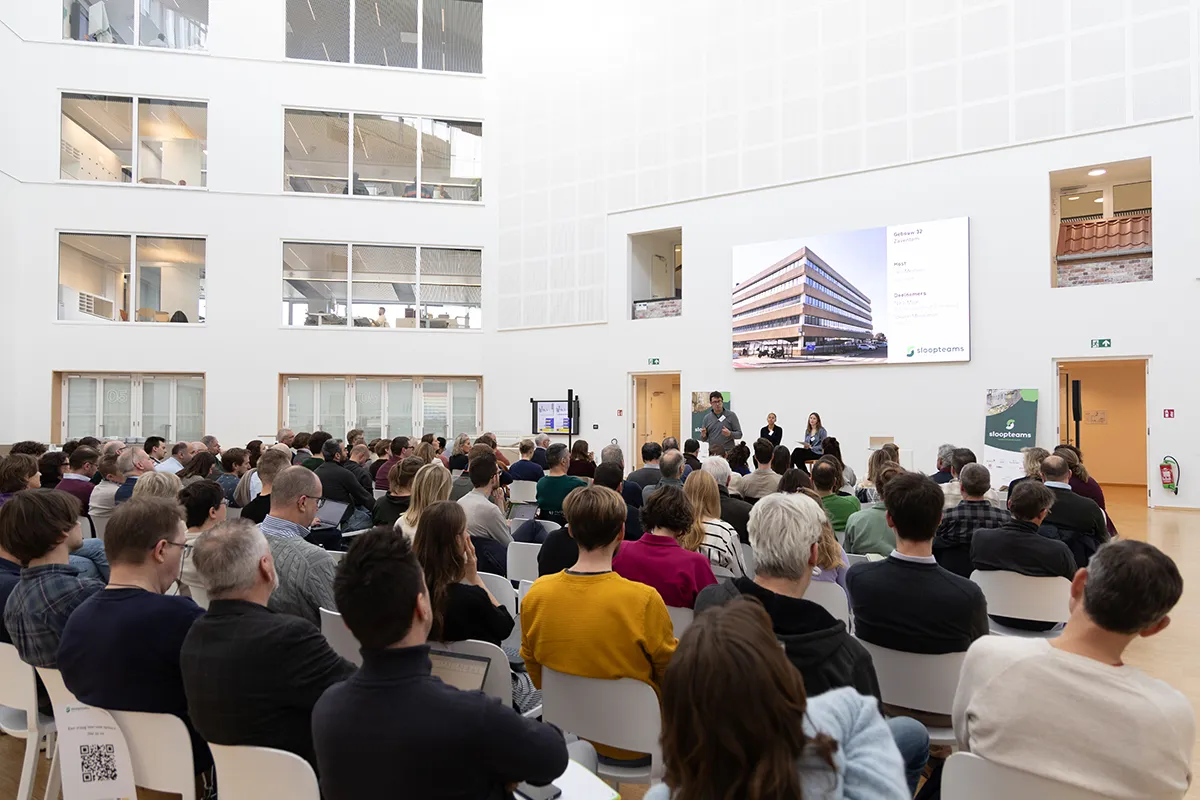
One demolition team makes all the difference
Over the past three years, Embuild Vlaanderen and Buildwise, the construction sector’s knowledge centre, have investigated how things could be improved and what is needed to make circular demolition the norm. Their findings show that the only way forward is to appoint a single demolition team at the start of every demolition project, bringing together all parties, from the client and architect to the demolition contractor and supplier. This gives an immediate overview of the materials with potential for reuse and recycling, the options for finding a market for them, and how storage and logistics should be organised. Recently, a hospital in Mechelen and an office building at Brussels Airport were demolished using this method, achieving climate benefits of 6,800 and 19,200 kg CO2 eq. respectively. That is equivalent to driving 30,000 and 85,000 km respectively in a petrol car.****** How much is 1 kilogram of CO₂? Doe Duurzaam
“Materials from demolition are still too often treated as waste. But we can no longer afford to do that. Half of all the raw materials used in Flanders go to construction. So every brick counts. But sustainability requires a long-term vision, while today demolition often has to be carried out quickly and cheaply, without considering the residual value of materials. That is why pilot projects are so important. Public authorities can also help by making circular demolition teams a priority in tenders”, concludes Caroline Deiteren.
The ‘Living Lab Circulaire Sloopteams’ project is an initiative of Embuild Vlaanderen, Buildwise, NAV, Tracimat, stad Mechelen, demolition contractor Aclagro, Rockwool and Resulation (Knauf). It is supported by VLAIO. On 9 December, the project’s results will be discussed with around 150 construction-sector participants at a closing event. The new guide to circular demolition teams and the platform with information for professionals are available here: https://buildwise.direct/circulairslopen
*Source: Materialenvoetafdruk | Vlaanderen.be, noting that 50% of raw materials used go to construction)
**Sand, extracted mainly for cement production, is becoming very scarce (Time is running out for sand, https://www.vrt.be/vrtnws/nl/2019/07/13/wetenschappers-waarschuwen-voor-een-dreigend-tekort-aan-zand/)
Globally, cement recycling requires 3% of energy consumption and accounts for 7-8% of CO2 emissions. (Recycled cement production energy consumption optimization, ScienceDirect, Life cycle assessment of material footprint in recycling: A case of concrete recycling, ScienceDirect)
In 2019, the construction sector in Europe was responsible for (Waarom is het belangrijk? | Vlaanderen Circulair):
- 40% of greenhouse gas emissions such as CO2
- 50% of energy consumption
- 50% of material flows
***Source: Proeftuin circulair bouwen
****Source: Geen duidelijke trend voor circulariteitsgraad van het materiaalgebruik in Vlaanderen
****Source: The FCRBE project shows that currently 1% of all materials recovered from buildings are reclaimed for reuse (in Europe).
****** Pilot projects:
As part of the Living Lab Circulaire Sloopteams research project, we worked with circular demolition teams on the following demolition projects:
- For the demolition of the Zwartezustervest hospital in Mechelen, a material flow analysis was drawn up based on the demolition follow-up plan (SOP). This helped the client identify which materials could be carefully dismantled for high-grade recycling or reuse. In this project, for example, 33.6 tonnes of structural timber and 25 tonnes of bluestone were dismantled for reuse. Together, this reduced CO2 emissions by 6,886 kg CO2 eq.
- For the demolition of an office building at Brussels Airport, the demolition team helped not only to identify the potential for reuse and recycling, but also to find buyers for the recovered materials. In this project, no fewer than 9,400 m² of ceiling tiles were installed by Akoestiekfabriek. They were reused in schools as acoustic panels, reducing CO2 emissions by 19,200 kg CO2 eq.
Question about this story? Ask your question
Keep following this
Get an email when a new story is published. No account needed.
- ThemeMaterials with a lower environmental impact
- SubjectGeneral







