









Financial support for five projects bundling inland waterway transport to Flemish seaports
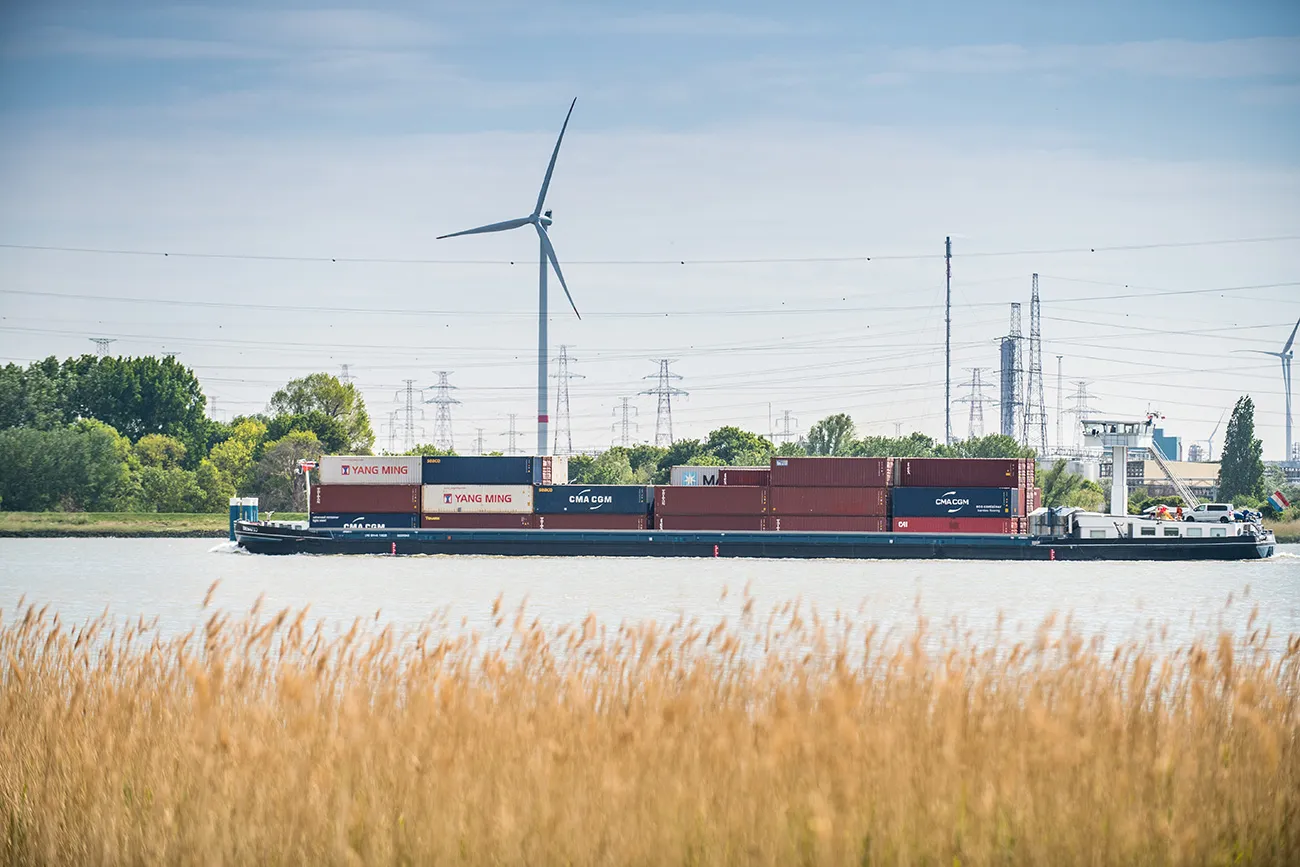
Improving access to the Flemish seaports and easing pressure on the road network is the aim of the Inland Waterway Impulse Programme, a partnership between the Department of Mobility and Public Works (MOW), Port of Antwerp-Bruges, North Sea Port and Lantis. As part of the programme, the Flemish Government recently approved five projects, on the initiative of Flemish Minister Lydia Peeters. The projects are intended to improve intermodal services to and from the Flemish ports through new corridor shuttles.
Boosting inland waterway transport
The Inland Waterway Impulse Programme is intended to provide temporary support to the inland waterway transport sector through the Flemish Government (the Department of Mobility and Public Works and Lantis), Port of Antwerp-Bruges and North Sea Port. Earlier this year, inland terminals, barge operators and other intermodal partners were invited, through a market consultation, to develop collaborative projects (‘corridor shuttles’ and ‘terminal-hub shuttles’) on the various routes to and from Port of Antwerp-Bruges. The aim is to make container barge handling at the maritime terminals more reliable and reduce waiting times in the port. Cooperation between inland terminals in the hinterland is an important prerequisite. A more attractive inland waterway service helps shift freight from road to water. Lantis, the client for the Oosterweel works, is fully backing this measure, which forms part of the ‘Minder Hinder campaign’ to reduce congestion on Antwerp’s Ring Road.
Selected consortia
Nine project consortia submitted applications. Five project proposals for new corridor shuttles were ultimately selected. For the first year, the project partners have made up to € 2 671 959,95 in subsidies available. The participating terminals will set up regular inland waterway services between maritime terminals and inland terminals located along the same corridor. Under each partnership, containers will be consolidated on a single ‘corridor vessel’, comprising a push boat and a barge, on the various routes to and from Port of Antwerp-Bruges.
Lydia Peeters, Flemish Minister for Mobility and Public Works: “Over the next four years, this programme will make more than €2.5 million available each year to further encourage the shift from road to inland waterway transport, expand services and improve the reliability of container barge transport. This partnership should improve the performance of the entire logistics chain to and from the Flemish seaports. We are giving transport between our Flemish seaports and inland terminals a boost and creating efficiency gains for businesses. By 2030, the aim is to increase the share of container transport by inland waterway to and from the Port of Antwerp to 42%.”
Question about this story? Ask your question
Keep following this
Get an email when a new story is published. No account needed.
- ThemeExtending the life of bridges and tunnels
- SubjectGeneral







