









Feedback from the 13th International Conference on Concrete Pavements in Minnesota
Text and images FEBELCEM
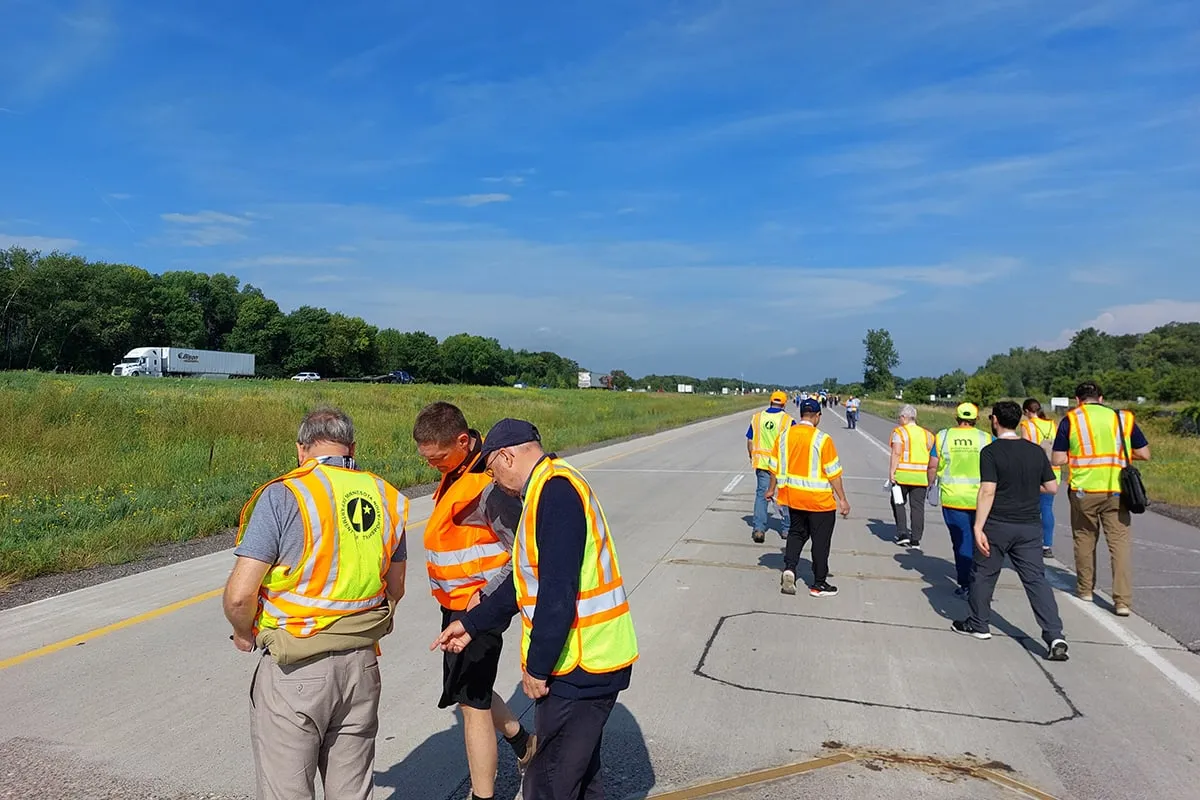
While Europe is consciously investing in reducing the carbon footprint of cement, concrete and road construction, the rest of the world is not standing still. This is particularly true of the U.S.
From 25 to 29 August 2024, Minneapolis, (Minnesota, U.S.) hosted the 13th edition of the quadrennial concrete pavements conference, organised by ISCP (International Society for Concrete Pavements). Building on a tradition dating back to 1977, the event brought together more than 380 experts and professionals from 21 countries around the world to share insights and developments in concrete pavements through 80 technical presentations, 10 workshops, several poster sessions and a number of technical visits. Belgium was represented by a four-member delegation: Dr Ir Audrey Van der Wielen and Dr Ir Elia Boonen, both from OCW, Dr Ir Anne Beeldens from AB-Roads and Ir Luc Rens from FEBELCEM. Together, they gave 3 podium presentations and presented 1 poster.
The conference theme was “Innovative Paths Toward Lower Carbon in Concrete Pavements”, a highly topical subject in the U.S., just as it is in Europe. Elia Boonen’s presentation fitted this theme perfectly. He presented the results of (part of) the Belgian NEOCEM research project: “Evaluation of the suitability for use of ternary cements with carbonate fillers or calcined clays: concrete compositions subjected to de-icing salts”.
Unlike in Belgium, where blast furnace cement (CEM III/A) is the standard choice for pavement concrete, “Portland cement” (CEM I) is predominantly used in the U.S., where its high clinker content also results in a high CO2 footprint. However, this is gradually changing, with “PLC” (Portland-limestone cement) being used more widely. This is comparable to European CEM II/A-L, which uses limestone filler to replace some of the clinker. In the U.S., however, it is more common to use additives or SCMs (Supplementary Cementitious Materials) directly in the concrete mix rather than in a blended cement. As in Belgium, these are usually fly ash or blast furnace slag.
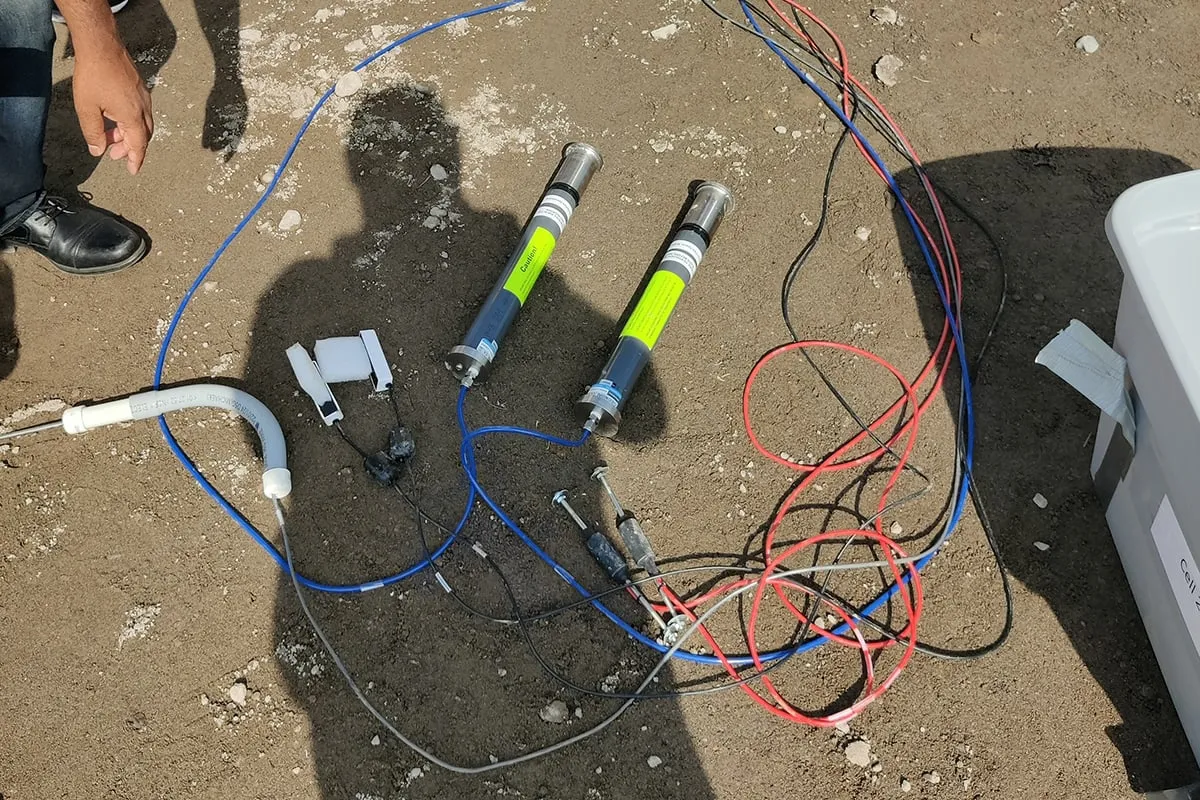
More broadly, the challenge is to develop new concrete mixes with a lower global warming potential (GWP) while maintaining or exceeding the long-term performance of conventional mixes. Various initiatives are under way to address this. At one workshop organised by the government, specifically the FHWA (Federal Highway Administration), a series of recommendations was put forward on binder types and content, optimising aggregate grading and specifying concrete mixes on a performance basis. In a closely related workshop, research launched by the Minnesota Department of Transportation (MnDOT) in partnership with the National Road Research Alliance was presented. This collaboration between government and researchers includes the construction and testing of 16 experimental trial sections at the Minnesota Road Research Facility, the renowned “MnROAD” test site. During the conference, participants visited MnROAD, where they saw the extensive range of test sections and associated monitoring. As well as checking fresh and hardened concrete, the pavements themselves are closely monitored using a wide range of sensors, and the durability of the test sections is also assessed. A technical advisory panel worked with suppliers of the various binders to select the mixes. Most are based on Portland-limestone cement combined with fly ash and/or slag and/or natural pozzolans and/or calcined clay. Environmental data for all these materials were collected and provided to the advisory panel. MnDOT is committed to communicating transparently about this research and is open to continuous improvement. Over the next three years, further research will provide performance updates and detailed laboratory test results to assess the real-world application and durability of these concrete mixes. The findings will be made publicly available.
This was just one of the many topics covered at the conference in Minneapolis. Events of this kind create a dynamic and engaging environment for all participants and remain essential to promoting innovation and international collaboration.
Question about this story? Ask your question
Keep following this
Get an email when a new story is published. No account needed.
- ThemeMaterials with a lower environmental impact
- SubjectGeneral







