









Farewell gas-discharge lamps, welcome LED: energy savings equivalent to the consumption of 6,150 households
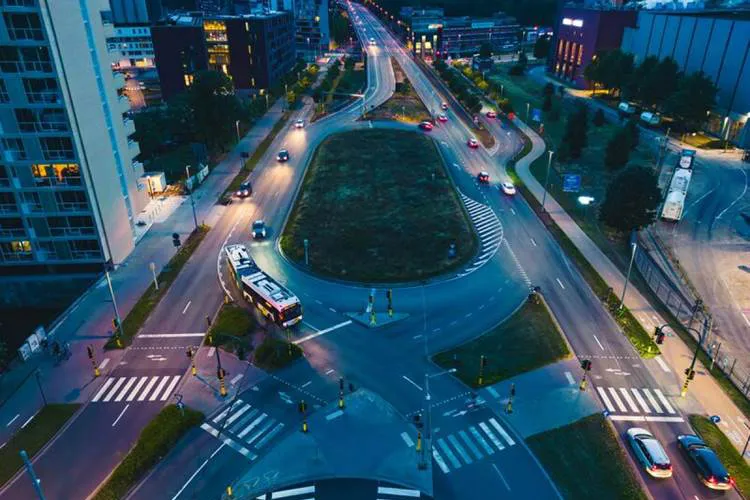
Work starts tomorrow on 24 lighting columns on the Brussels Ring near Wezenbeek-Oppem, one of many projects converting motorway lighting to LED by 2027. By switching motorways and regional roads to LED, the Agency for Roads and Traffic (AWV) is saving energy, reducing its ecological footprint and preparing its installations to adjust lighting to real-time weather and traffic conditions. Around 27% of the lighting has already been converted.
The conversion enables smarter, more energy-efficient lighting, but does not change the lighting policy, the guidelines that determine where and when the lights are on. “We switch off our lights only where this is compatible with road safety,” explains Flemish Minister for Mobility and Public Works Lydia Peeters. “This limits light pollution and energy consumption. However, around 65% of our motorways need permanent or dynamic (temporary) lighting to ensure road safety. Regional roads also often need lighting, for example to make pedestrians and cyclists sufficiently visible.”
Smarter lighting based on weather and traffic
By replacing gas-discharge lamps with LED, AWV is reducing energy consumption while preparing its public lighting for the future. Director-General Kathy Vandenmeersschaut sees the LED conversion as a key part of the shift towards more sustainable infrastructure: “We are targeting energy savings of at least 35% of our total consumption. On motorways, that amounts to savings of around 4 GWh per year, comparable to the annual energy consumption of 1,150 households. On regional roads, the conversion will save around 17.5 GWh per year, comparable to the annual energy consumption of 5,000 households.”
All new lighting units installed as part of the replacement programme will also be fitted with remote monitoring and control modules. During roadworks, incidents, the use of peak-hour lanes or bad weather, the road authority can switch the lights on or off remotely. LED also means it is no longer a choice between ‘on’ and ‘off’: the lights can be dimmed too. For example, lighting can be reduced during quieter periods, such as the middle of the night.
Conversion progressing faster than planned
By the end of 2023, almost the entire stock of around 18,000 low-pressure sodium (LPS) lighting units on motorways had been converted to LED. Work also began on converting the remaining approximately 22,000 high-pressure sodium (HPS) units. “All motorway lights will be LED by 2027, three years earlier than set out in the Flemish coalition agreement. This represents a total investment of €32 million in motorways, a large part of which is funded through the European Union’s RepowerEU programme,” says Minister Peeters.
The conversion of the 78,000 lighting units on regional roads, which began in 2021, is also in full swing, with 22% converted by the end of 2023. On current projections, the programme will be completed by the end of 2024. The total investment in regional roads is €84.5 million, as part of the Flemish Resilience recovery plan.
BREAKDOWN BY PROVINCE*
- Antwerp: around 11% converted on regional roads (1,900 units)
- Limburg: around 25% converted on regional roads (3,300 units)
- East Flanders: around 31% converted on regional roads (5,500 units)
- Flemish Brabant: around 15% converted on regional roads (1,900 units)
- West Flanders: around 26% converted on regional roads (4,500 units)
Four tunnels already converted to LED, seven more planned
Tunnel lighting is also being converted to LED. The lighting in the Bolivartunnel (Antwerp), Sint-Annatunnel (Antwerp), Vierarmentunnel (Tervuren/Kraainem) and Kennedytunnel (Antwerp) has now been converted. The LED conversion alone at the Kennedytunnel is expected to save 280 MWh a year, equivalent to the consumption of 94 households.
The Beverentunnel (Beveren) and Leonardtunnel (Tervuren) will also be fitted with LED lighting as part of their full refurbishment. The Craeybeckxtunnel (Antwerp), Tijsmanstunnel (Antwerp), Rupeltunnel (Boom), Wevelgemtunnel (Wevelgem) and Zelzatetunnel (Zelzate) are also in the pipeline. European funding is also being made available for the latter.
___
*Figures for January 2024
Question about this story? Ask your question
Keep following this
Get an email when a new story is published. No account needed.
- ThemeFuture-proofing roads and railways
- SubjectGeneral







