









Construction sector in full transition towards sustainable dewatering
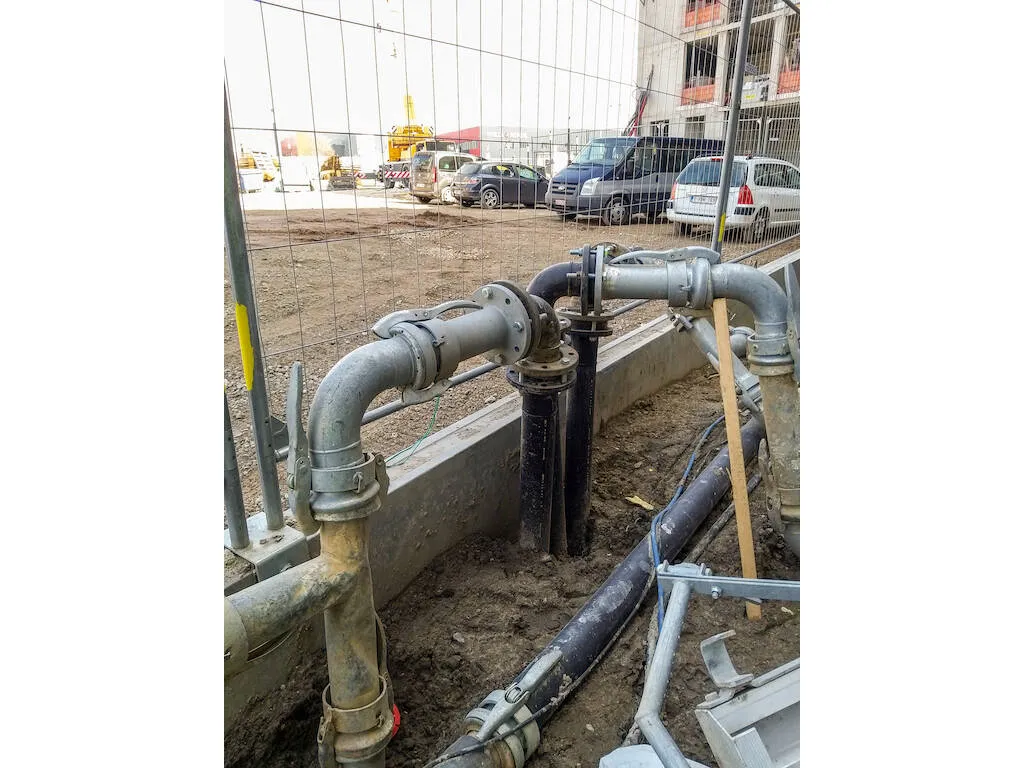
Building houses and apartment blocks, and constructing roads and sewers, often requires groundwater to be pumped out temporarily. In recent years, the sector has made considerable efforts to manage this more sustainably. The challenges are to pump out less water and discharge less into the sewer system. With stronger joint efforts from all construction stakeholders, including clients, local authorities, engineering firms, designers and regulators, we can make significant further progress. It is important to properly assess the need for dewatering from the design stage of a construction project and to develop a well-considered approach tailored to the project.
“The sector has been in full transition for some time, working with all the stakeholders in the construction process. In doing so, the construction industry is embracing the principles of the dewatering cascade, identified together with the Flemish Government: reduce, return, infiltrate and reuse,” says Marc Dillen, director-general of the Vlaamse Confederatie Bouw (VCB).
A more sustainable approach to dewatering requires full cooperation between all stakeholders in the construction process. According to the VCB, options for reducing water use and for returning, infiltrating and reusing water are best explored earlier in the construction process. The design and study phase of a project offers more scope to assess the potential of these techniques, determine the technical and economic conditions, and identify the quality of the dewatering water and the precautions required. Recent WTCB research shows that dewatering water must be handled with care and that reuse often needs to be subject to restrictions, for example for health reasons and/or to prevent damage to sanitary installations. This thorough approach from the design phase also creates a level playing field for all contractors at tender stage. When developing their concept, clients have more time to investigate how water volumes can be reduced, which options for beneficial use can be applied on a larger scale, and how discharges into sewers can be avoided.
Marc Dillen: “We therefore urge both private and public clients to carry out the necessary studies from the concept stage, to apply for the environmental permit for dewatering themselves wherever possible, and to consult local authorities in advance about options for discharging dewatering water. Clients often spend a long time obtaining an environmental permit for their project. However, they often fail to account for the further research and preparation required afterwards for the contractor to obtain a separate environmental permit specifically for dewatering. This often causes delays to the works. This issue was also raised as part of the ongoing evaluation of environmental permits.”
The VCB also urges local authorities to consider how the right solutions can be developed for all construction works in their municipalities, particularly in urban centres. These could include collective infiltration areas and agreements with potential users of uncontaminated dewatering water. A lack of space is a major obstacle on smaller plots in urban areas, making return or infiltration impossible. In practice, contractors also find that there is often little interest in taking dewatering water for reuse. Local authorities can support construction companies in finding a market for it, so that the pumped water is put to beneficial and consistent use. One example is the project in Leuven, where water from the construction site is used in Stella Artois production processes.
“Contractors can further reduce the amount of water pumped by making maximum use of automatic controls, so that water is pumped only when groundwater levels are too high and pose a risk to construction work. Drilling companies report that this reduces the amount of water pumped by 10 to 25%, depending on the construction site. The sector is also investing significantly in best practice and sharing knowledge about innovations such as water-retaining barriers, return dewatering techniques, monitoring techniques and risk management techniques. As part of this work, a research project was recently submitted to the Flemish Government agency Vlaio, together with WTCB,” adds Marc Dillen.
Finally, the VCB stresses that dewatering must be carried out by recognised drilling companies, which must complete training and have the appropriate machinery. Unfortunately, companies that do not meet these requirements are still operating. The sector is working with the Flemish Government to eliminate these irregularities.
Question about this story? Ask your question
Keep following this
Get an email when a new story is published. No account needed.
- ThemeUsing and protecting the subsurface
- SubjectGeneral







