









Gentbrugge Viaduct Gets a New Lease of Life Thanks to Cathodic Protection
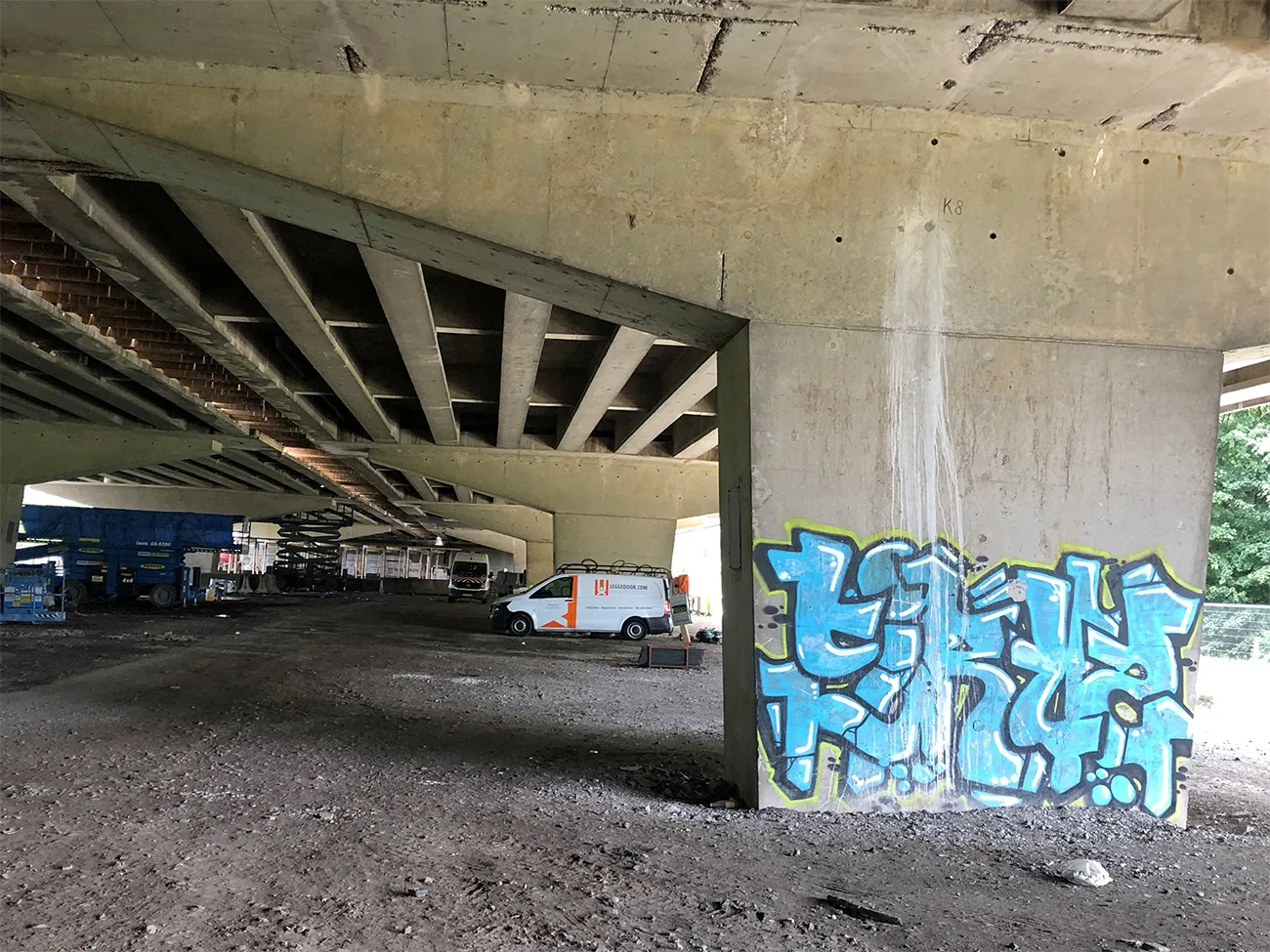
The viaduct in Gentbrugge is currently undergoing major renovation work commissioned by the Agentschap Wegen & Verkeer.
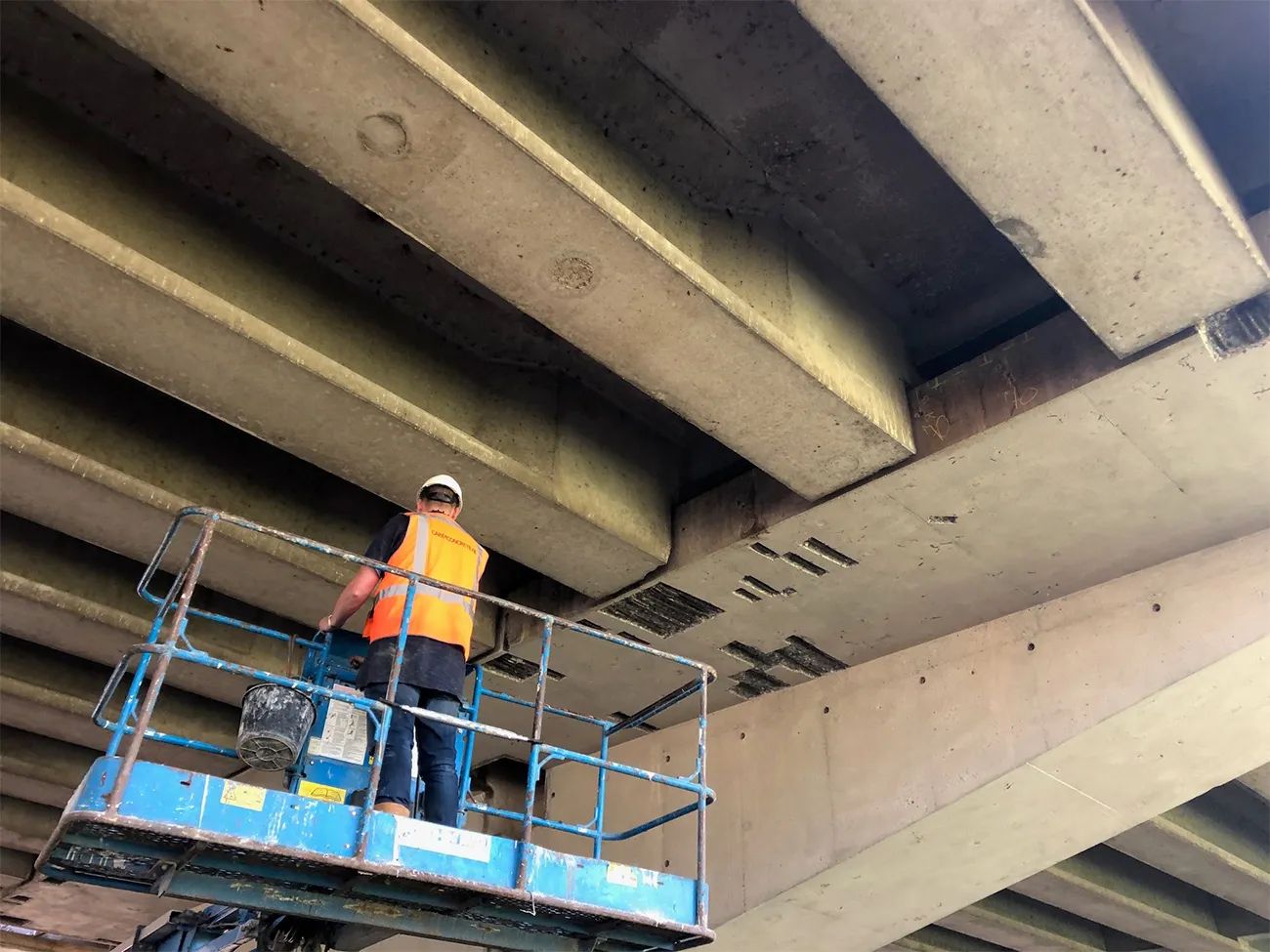
The concrete load-bearing structure is also being repaired. In addition to concrete repairs, the 94 (!) piers are being fitted with cathodic protection (CP) to halt corrosion. The complex CP system was designed by the Dutch company Care4Concrete, which is also leading the installation work. Fortius, based in Diest, supplied no fewer than 5,400 Ebonex anodes and the Camur II technology. “A great, large-scale project and a textbook example of European cooperation in the field of cathodic protection,” is the verdict from both companies.
Both the top and underside of the 1.6 km-long viaduct are undergoing extensive work under the supervision of main contractor Willemen Infra. The road surface is being renewed, along with all the joints, waterproofing, noise barriers and safety barriers. The underside of the viaduct is also being extensively repaired and fitted with cathodic protection. The Gentbrugge motorway service area is also being redeveloped. Finally, the bridge over the Scheldt is undergoing extensive renovation, both above and below. The viaduct remediation is being carried out in two major phases. In 2020, the viaduct was repaired in the direction of Kortrijk. From February to November this year, work is being carried out on the section towards Antwerp.
CP specialist
Care4Concrete and Fortius joined forces on the cathodic protection work. “Care4Concrete supplies cathodic protection for concrete in the broadest sense of the term,” says Jan Leggedoor, CEO of Care4Concrete. “Developing, designing, drawing up plans for and maintaining CP systems is our core business. We can also carry out the installation work through our contracting arm, as we are doing in Gentbrugge. Care4Concrete grew out of Leggedoor Betontechniek and has specialised in CP since 1993, when the technology was still in its infancy. We have therefore helped develop the entire digital evolution around it.
One-stop supplier of concrete protection
Care4Concrete always turns to one-stop supplier Fortius for the anodes and the electronics used to control and monitor them. “Fortius has been supplying products for concrete strengthening since 1992,” says Bert Kriekemans of Fortius. “Our products range from cathodic protection solutions, such as sacrificial anodes and impressed current systems (Ebonex anodes, Zebra and conductive coatings), to polymer reinforcement bars, which are also used because they do not corrode or conduct electricity. We also supply externally bonded carbon-fibre reinforcement systems for strengthening structures. Around 10 years ago, CP was still relatively unknown in Belgium. Some of the first applications of impressed current cathodic protection and sacrificial anodes were the restoration of the Boerentoren in Antwerp, using 9,000 Ebonex discrete drilled-in anodes in 2012, and the renovation of the Vilvoorde Viaduct in 2011, for which Fortius supplied Galvashield XP2 sacrificial anodes.”
Efficient Ebonex anodes
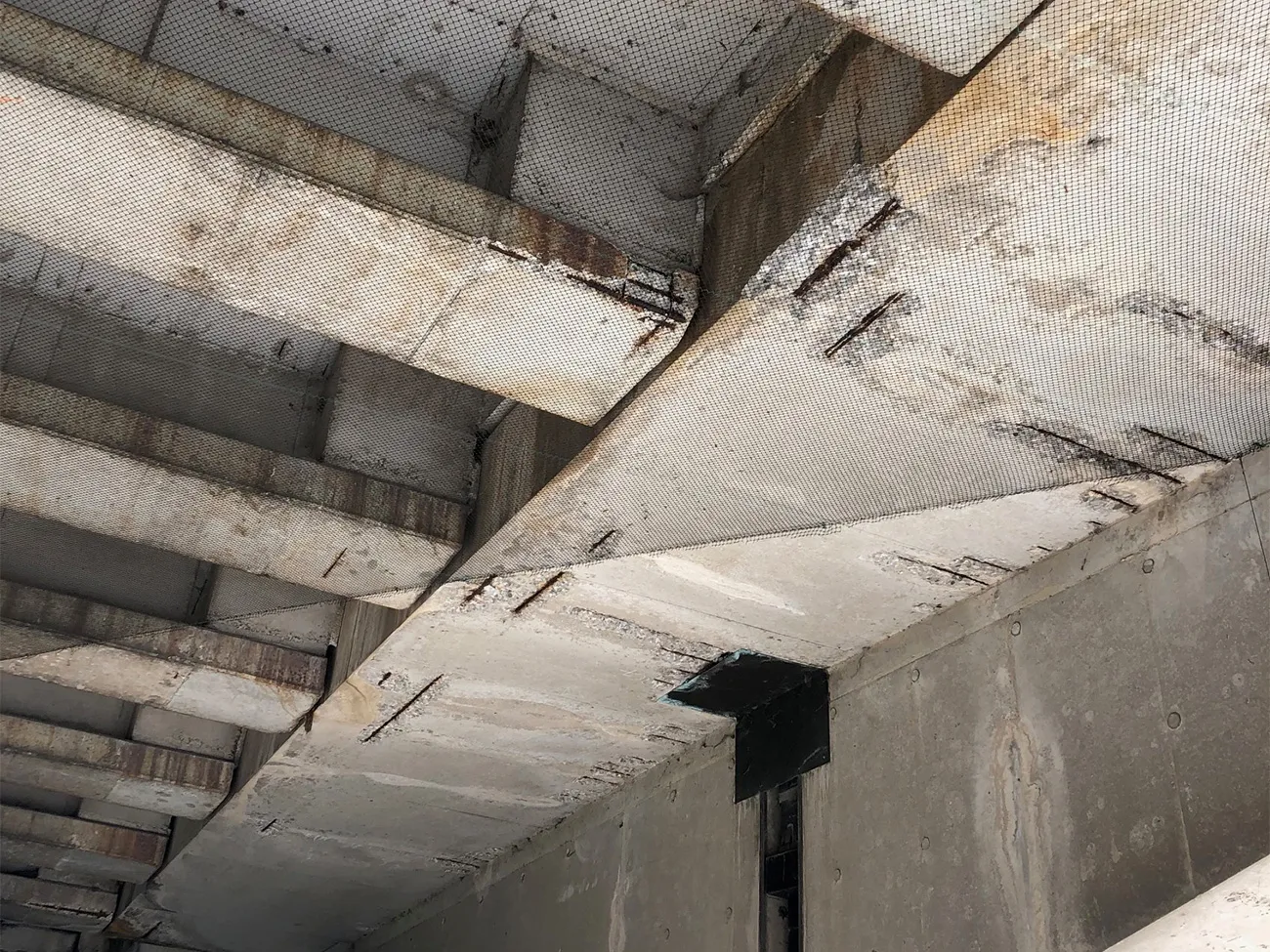
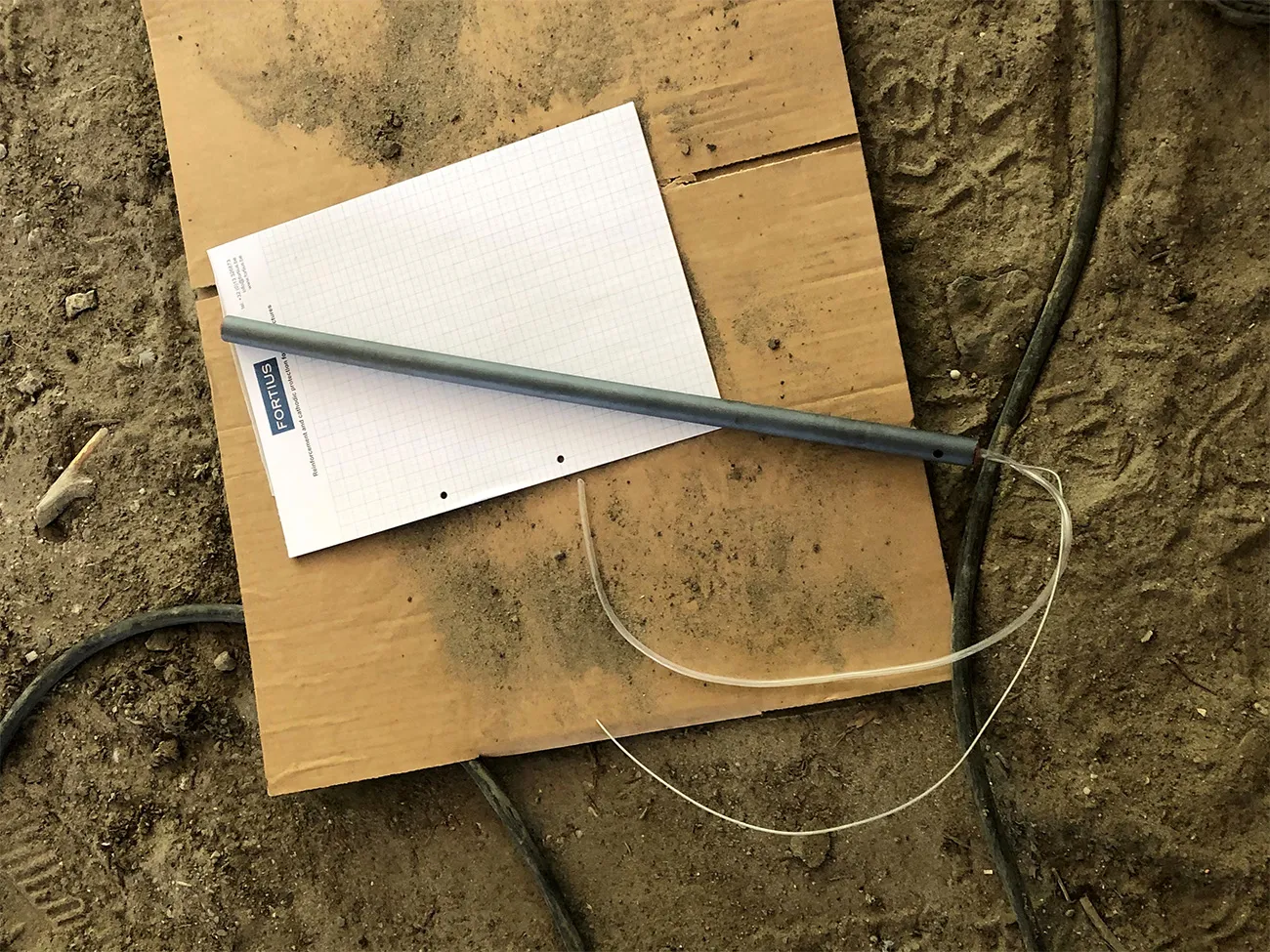
For the Gentbrugge Viaduct, Fortius supplied Car4Concrete with Protector’s Camur II electronics and Ebonex anodes from Vector Corrosion. Whereas sacrificial anodes release zinc to protect the reinforcement, impressed current anodes such as Ebonex protect it by means of an electric current. Bert Kriekemans explains: “Sacrificial anodes do not require monitoring, but the downside is that the zinc in the anode will eventually be used up, limiting the protection’s service life, potentially to 30 years. What is special about impressed current Ebonex anodes is that they are ceramic anodes made from Mixed Metal Oxide (MMO) titanium. This gives them a very long service life, and they can also carry a higher current. They are therefore very efficient.”
94 small projects under one roof
For Care4Concrete, the Gentbrugge project is undoubtedly a major undertaking. Jan Leggedoor says: “In short, we are responsible for both the design and installation of the CP system. Phase 1, on the carriageway towards Kortrijk, is almost complete. We are now energising the anodes there. The CP system for phase 2 is currently being installed.
We are actually working on everything at once, but in different locations: from drilling and repairing holes to pulling cables and dealing with the digital side of things. It shows how well coordinated we are. In terms of scale, this is a very large project for Care4Concrete. Despite our extensive experience, providing CP for all 94 piers is also a technical challenge for us. You should not think of it as one large contract, but as 94 separate small projects that have to be processed in a single software package and all monitored at the same time. In addition to designing and installing the CP system, Care4Concrete is also responsible for monitoring it for 5 years.”
Camur II technology
Monitoring is crucial for a system of impressed current anodes. Bert Kriekemans explains: “You are effectively applying current to the entire structure, and the corroded reinforcement will draw that current. The process needs to be monitored carefully. Protector’s Camur II technology measures where corrosion is occurring and how much current needs to be supplied. Camur II then generates reports that you can view and analyse remotely, for example from the office.” Jan Leggedoor adds: “A power cable and a cable for controlling the electronics run to each pier head. Camur is the software we have developed to control the system. In recent years, Camur technology has been developed to the point where its digital application is no longer high-tech. Workers, electrical technicians, corrosion engineers and everyone else involved in developing a CP system can work with the technology. Of course, the design, installation and monitoring must comply with current European standards.”
European cooperation
The cathodic protection of the Gentbrugge Viaduct brought together expertise from across Europe: Camur developer Protector from Norway, Ebonex anode manufacturer Vector Corrosion from Great Britain (with its head office in Canada), Care4Concrete from the Netherlands and Fortius from Belgium. Jan Leggedoor says: “Taken together, the team brings 150 years of experience in cathodic protection, which is quite something for the client. We know each other well and can rely on one another. Care4Concrete’s strength is that we always manage, one way or another, to develop a very efficient system. The costs of a CP system are mainly in purchasing, installing and connecting the anodes. If you do that intelligently, it can make a real difference. I also want to emphasise the importance of main contractor Willemen Infra on this project. I have worked in construction since ’78, and there are very few companies I have enjoyed working with as much. That is unique.”
Raising awareness
The Gentbrugge Viaduct project is an excellent reference project and a showcase for the benefits of cathodic protection in general. Bert Kriekemans says: “Fortius’s key contribution to the project is our unmatched experience and knowledge of anodes, both sacrificial and impressed current. Our flexibility and close contacts with manufacturers are also a major asset. There is still work to be done to build support for CP in the infrastructure market. Because the technology is still relatively young, not every client is familiar with it. This means we still spend a lot of time explaining and justifying every step that needs to be taken. It is a difficult process, but we are making progress. And people are gradually taking a more proactive approach to assessing the condition of our structures.”
Jan Leggedoor agrees: “We are gradually seeing awareness grow across Europe that research into ageing processes is essential. The bigger picture we need to keep in mind is how to influence those ageing processes. Conventional repairs merely shift the corrosion problem elsewhere, and we need to avoid that.”
Een zakelijke vraag aan Fortius? Get in touch
Who worked on it
Viaduct Gentbrugge in Gent, renovatie
- one-stop supplierFortius
- main contractorWillemen Infra
- clientAgentschap Wegen & Verkeer
- Camur II elektronicaProtector
- Ebonex anodesVector Corrosion
Keep following this
Get an email when a new story is published. No account needed.
- ProjectViaduct Gentbrugge
- SubjectConcrete
- CompanyFortius
- CompanyWillemen Infra
- CompanyAgentschap Wegen & Verkeer
- CompanyProtector
- CompanyVector Corrosion







