









Concrete as part of the solution
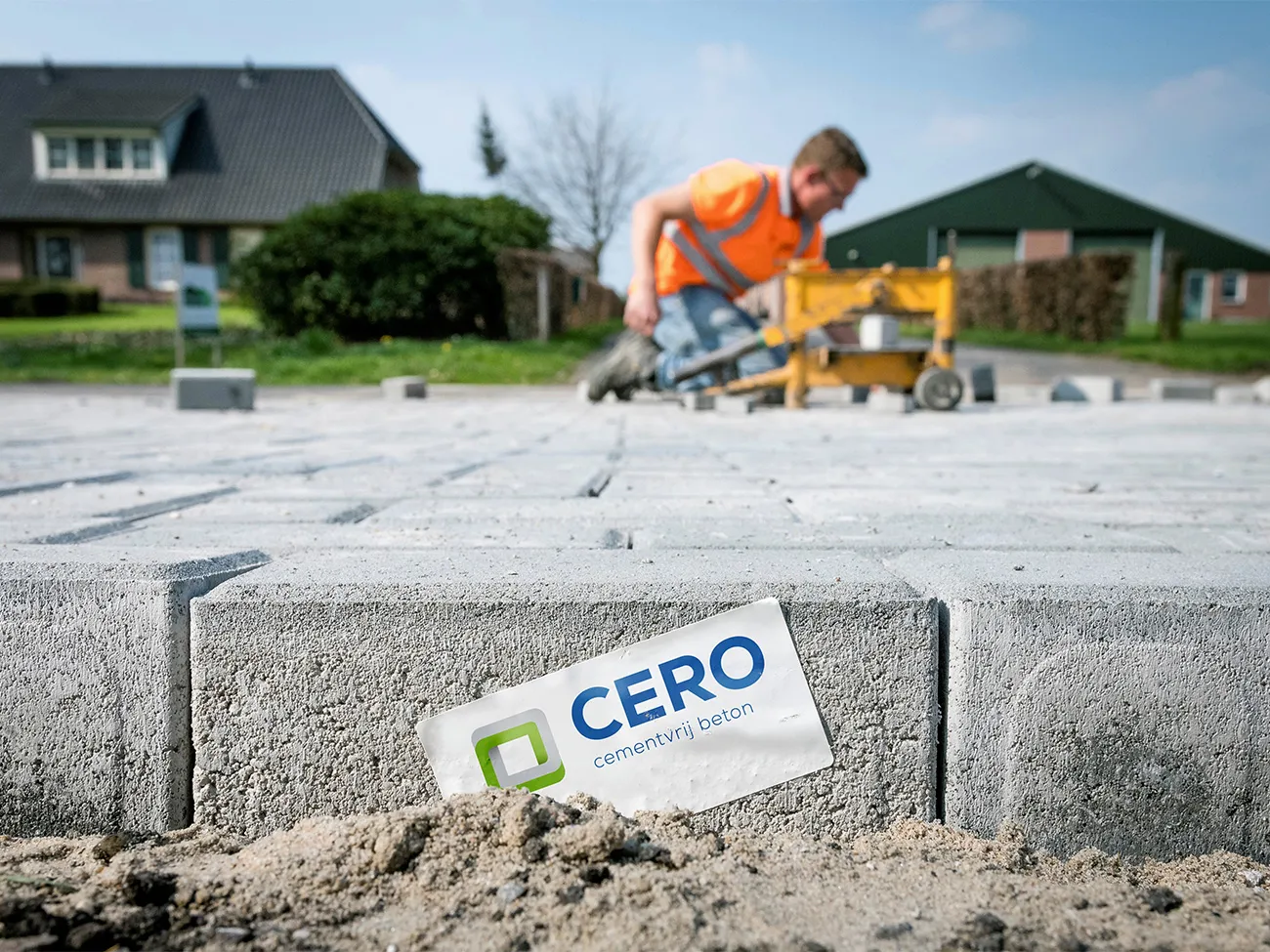
Concrete is making great strides in shaking off its, undeserved, conventional image. In the fight against global warming and the drive to bring more greenery into public spaces, (precast) concrete can play a positive role.
“Concrete is not part of the problem, but part of the solution,” says Sven Tilkin, project development manager at Stradus and a member of FEBESTRAL, the division within FEBE representing manufacturers of precast concrete products for the paving market.
FEBE is the recognised trade association for manufacturers of precast concrete products and represents the interests of the sector. The Belgian concrete industry produces a wide range of precast elements for construction, from simple, unreinforced products such as masonry blocks and paving blocks to large structural elements such as bridge beams. Within FEBE, FEBESTRAL is the division bringing together manufacturers of precast concrete products for the paving market, such as concrete paving blocks, concrete slabs, linear elements and accessories. FEBESTRAL supports the marketing of its members’ products, both technically and promotionally.
Concrete has been a mainstay as a construction material for centuries. But that does not mean it is immune to innovation. On the contrary, concrete is evolving and will continue to play a crucial role in the construction sector. “It is one of the oldest construction materials we know, and an exceptionally reliable material,” says Sven Tilkin of Stradus, a specialist in precast concrete products for creating pleasant, accessible, safe and sustainable public spaces. “Concrete is part of the solution when it comes to creating climate-resilient public spaces, which is what the bouwshift aims to achieve. Greening is certainly a good thing and necessary, but concrete also has a role to play. What is more, certain functions will always be needed, and concrete is indispensable for those.”
Design freedom
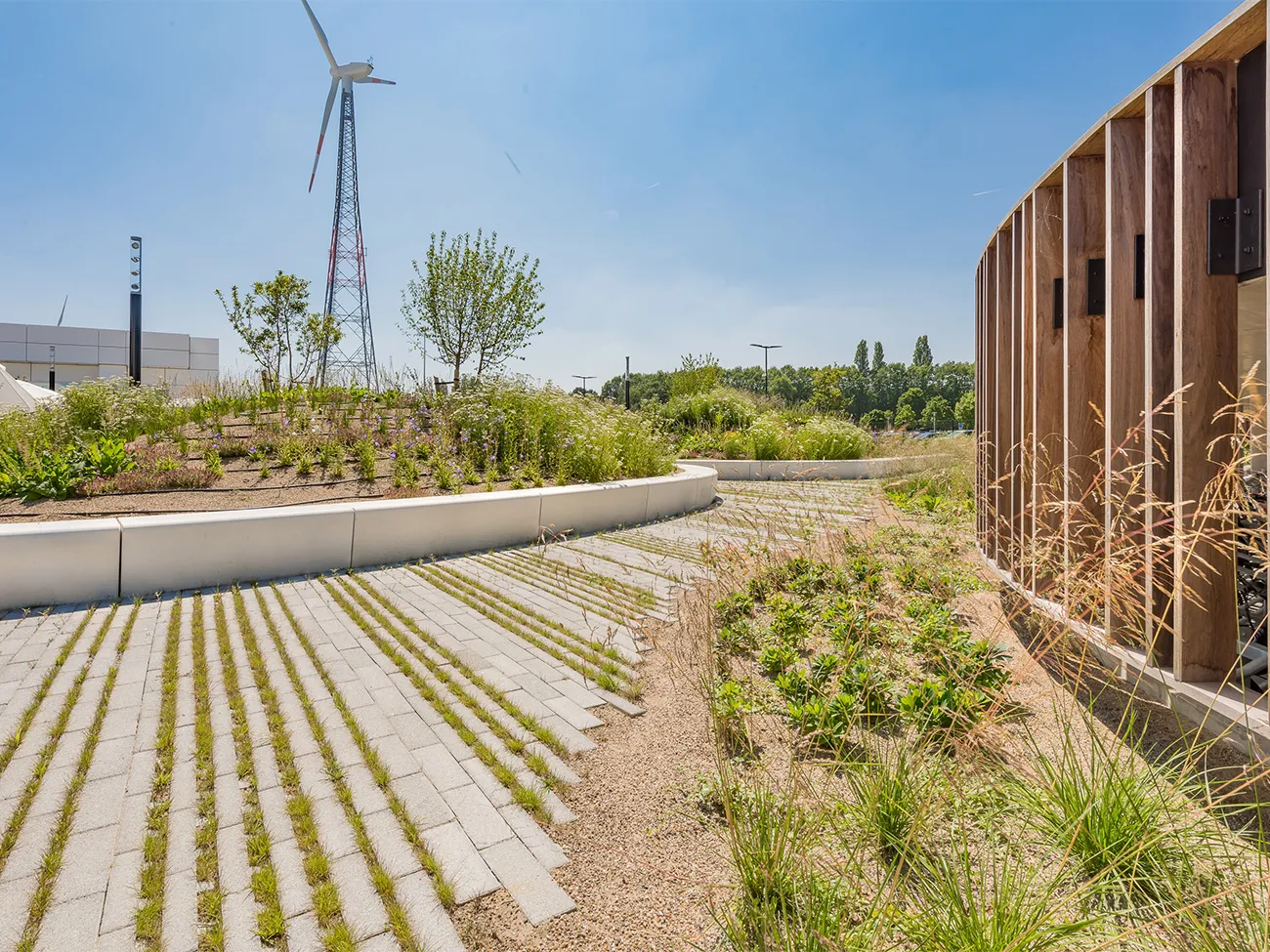
The paving sector is currently undergoing rapid change within the concrete industry. Concrete paving blocks are a versatile material with many advantages. Alongside the endless possibilities in shapes, sizes and textures, qualities such as durability, longevity and functionality have been key to their success. The market is certainly not standing still. Sven Tilkin says: “We are seeing a lot of activity, especially in permeable paving and green paving. Belgium is playing a pioneering role in this. At first, the products simply had to let water through, but later design became very important too. In 2015, for example, Stradus launched a new family of paving blocks with closed, semi-open and open variants. This allows the design to take account of what matters most in a particular location.”
Aesthetics
Finding the right balance is very important, according to Sven Tilkin: “We cannot ignore the fact that climate change is increasingly bringing the consequences home to us. That is why we are also looking at more sustainable alternatives for the composition of our concrete mixes. There are already quite a few techniques for producing concrete without cement. Stradus recently launched CERO paving, made using cement-free geopolymer concrete, with CO2 emissions up to 70 % lower than those of standard concrete products and even 35 % lower than those of products made with more sustainable types of cement. This is achieved without compromising on quality and while retaining the familiar decorative surface layers. We do still use cement in that decorative surface layer. This is deliberate, as it ensures colour stability. And aesthetics are important in public spaces. What is more, it is better to produce many popular paving blocks with a cement-free concrete base than to make a paving block that is entirely cement-free but of no interest to the market at all.”
Greening
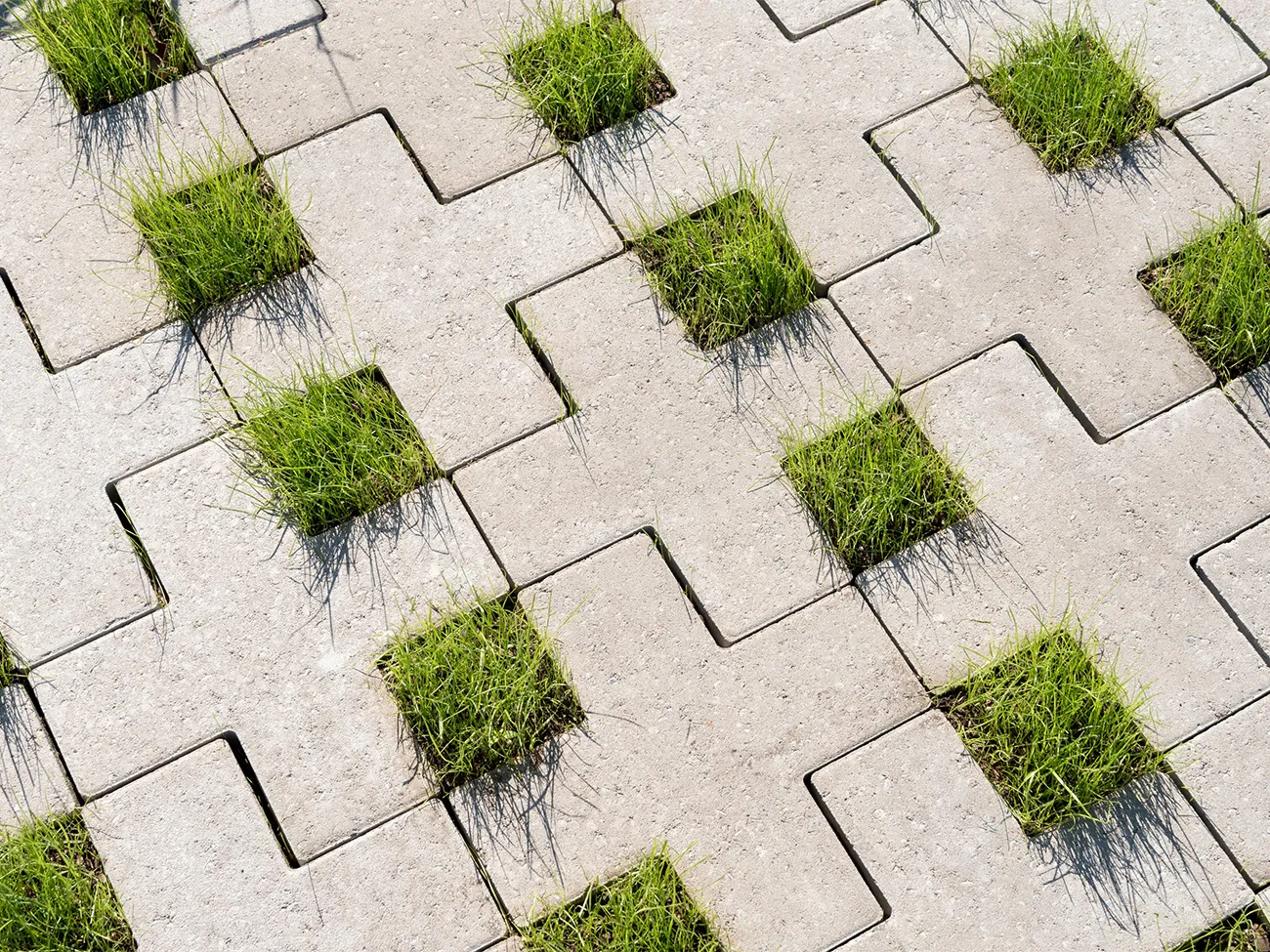
More and more local authorities and clients are prioritising greening in public spaces. “Greening is becoming an increasingly familiar sight,” says Sven Tilkin. “We are often asked about maintenance, for example for a car park paved with permeable blocks. But it is not too demanding. A little weed on a fully paved car park is much more of an eyesore than unwanted vegetation in a green car park. So perceptions of maintenance are changing too. The coronavirus pandemic has accelerated this process. Over the past year, people have come to appreciate the importance of attractive public spaces even more.”
Clearly, things are moving forward. “Not just in the case of concrete, but across the entire construction sector. The Netherlands is further ahead than Belgium when it comes to the circular economy. The Netherlands has the environmental cost indicator (MKI), which expresses a notional environmental price. The more sustainable the product, the lower its MKI value. It would be good if Belgium introduced something similar, given that price is still a major factor in tendering. As a manufacturer, of course, we do our best to contribute, but ultimately we are just one link in the chain. That is why organisations such as FEBE and FEBESTRAL are so important: a federation’s voice can carry much more weight,” concludes Sven Tilkin.
Een zakelijke vraag aan STRADUS? Get in touch
Companies in this story
Keep following this
Get an email when a new story is published. No account needed.
- ThemeSpace for water and green infrastructure
- SubjectConcrete
- CompanySTRADUS







