









CO2-neutral label: challenge or opportunity?
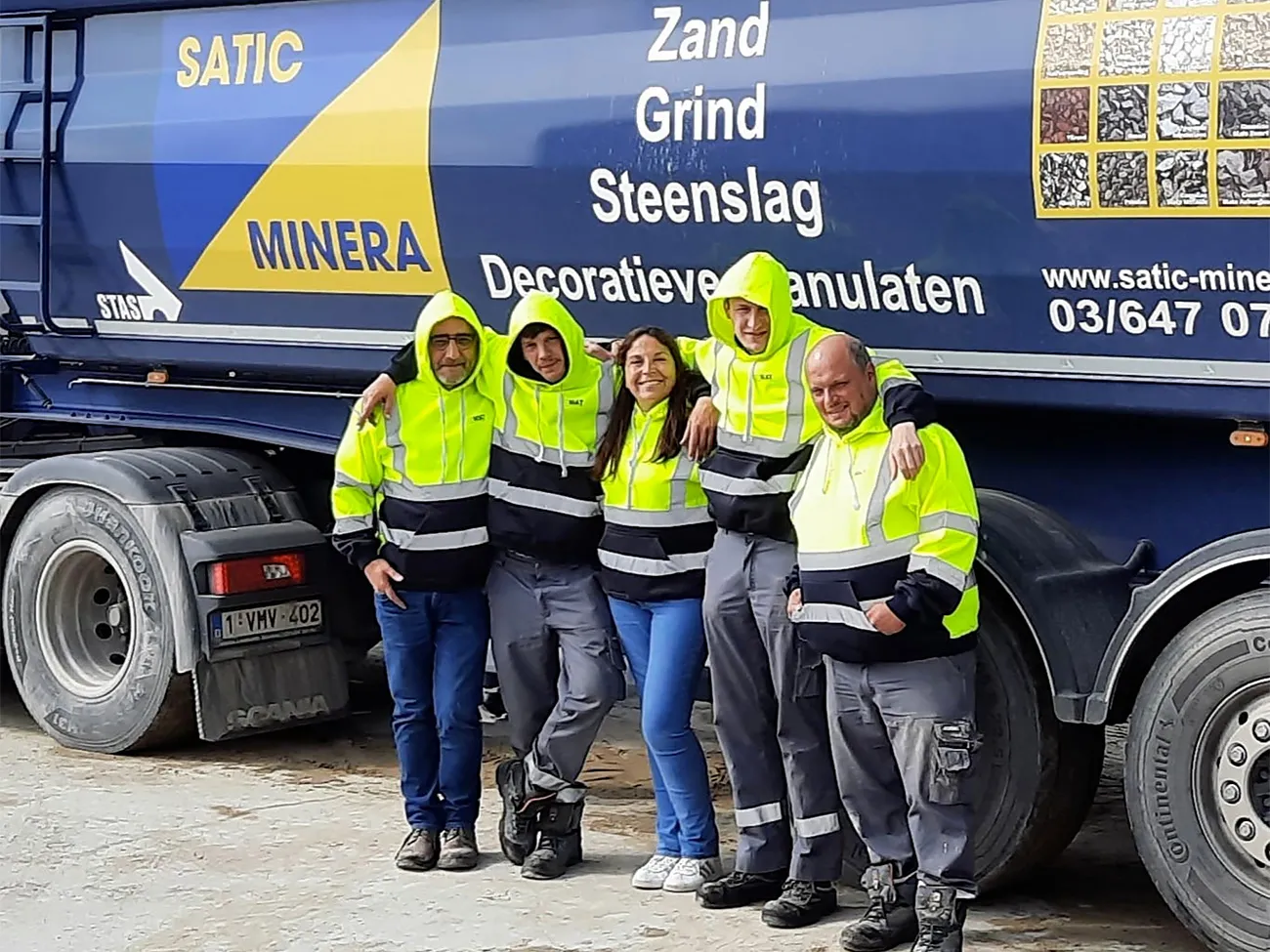
CO2 emissions must be reduced to zero by 2050, and more and more companies are pulling out all the stops to achieve this.
Ready Beton and Satic-Minera, two companies belonging to the Dutch group De Hoop Terneuzen and active in the Belgian market, are pursuing an ambitious but realistic approach.
“It is very important to approach a task like this with a vision that takes account of economic and environmental realities. Scientists talk about the ‘climate emergency’, and everyone, both inside and outside the business world, must do their bit, however small”, says Herman De Backker, managing director of Ready Beton and general manager of Satic-Minera. “We are anticipating the measures the government is taking, or will undoubtedly take in the future. We expect both our clients and customers to increasingly demand an active approach to limiting the impact of our activities on our surroundings and the environment as much as possible and, where feasible, to working in a CO2-neutral way. In the Netherlands, ‘green procurement’ is already well established. Tenders for public works are assessed using the MKI (Environmental Cost Indicator), and companies wishing to compete must achieve a good score.”
From quarry to construction site
The designers of the business plan for reducing emissions started from the typical characteristics of the two Belgian subsidiaries’ activities. Satic-Minera is active in the trading and logistics of construction materials, while Ready Beton produces ready-mixed concrete at its plants in Rotselaar, Brussels and Anderlecht and supplies construction sites in the surrounding area. Both companies have sites with water access, including in the port of Brussels. Satic-Minera delivers raw materials to its customers by ship wherever possible, as this is the most environmentally friendly mode of transport, and by lorry when shipping is not an option.
“There are certain factors our companies cannot get around, such as the locations of the quarries and our customers. These are mainly concrete batching plants, asphalt plants, concrete factories and construction sites”, explains Jurgen Lufin, logistics manager at Satic-Minera. “They are far apart, and speed and logistics costs are important factors. Concrete from Ready Beton’s batching plants is transported to construction sites in concrete mixer trucks. Our ready-mixed concrete has to be delivered immediately.”
Jurgen Lufin: “Ready Beton and Satic-Minera want to coordinate orders themselves as much as possible, working with our logistics partners where necessary. This applies to transport by both water and road. At present, roughly 30% of lorries are estimated to run empty. We need to bring that figure down by sharing more data between companies, so that a lorry can carry a load for another company on its return journey. This is a daily challenge for our logistics staff. They work all day to keep empty runs to an absolute minimum. Combining transport loads will remain an important option for the future. For example, more rubble and cement should be transported by water.”
Reduce first, then offset
“In 2010, our group set itself the target of reducing our CO2 footprint by 20% by 2020, or 2% a year”, Jurgen Lufin continues. “We more than met our target through changes across various aspects of our operations, including energy use, failure costs, transporting raw materials by ship, internal logistics flows, fleet modernisation, reusing recycled water and surplus concrete from construction sites … We had taken the first major step. We also reviewed our energy contracts and switched them to 100% green energy. At the end of 2020, we also chose to run both our own fleet of concrete mixer trucks and our on-site machinery on CO2-neutral fuel.”
Jurgen Lufin: “These measures and operational changes reduced most of our CO2 footprint to an absolute minimum. To obtain the CO2-neutral label, we still had to offset a small residual amount of CO2 emissions by supporting a rainforest conservation project in Nicaragua. Through this, we are supporting one of the projects set up to make a sustainable contribution to the social and environmental footprint of the local population. It is an excellent example of Corporate Social Responsibility. CO2logic guided us throughout the process.”
The fight against CO2 emissions is a long-term undertaking that must involve every company, every employee and every citizen. The outcome will be a combination of many smaller measures, each bringing opportunities to optimise the way we operate.
Question about this story? Ask your question
Keep following this
Get an email when a new story is published. No account needed.
- SubjectConcrete







