









Belgian Roads Congress attracts more than 600 visitors over 4 packed days
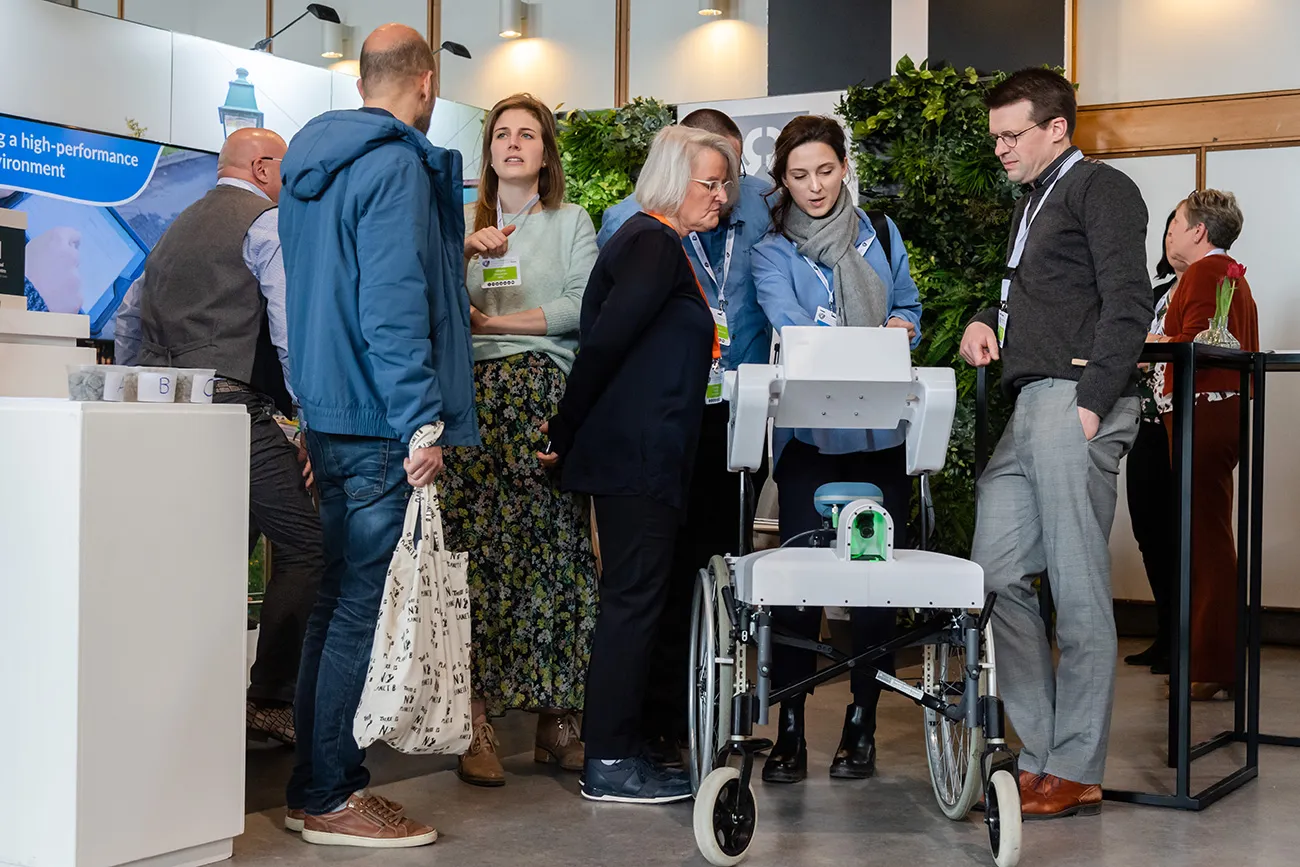
From Monday 4 to Thursday 7 April 2022, KULeuven’s Campus Gasthuisberg hosted the XXIV Belgian Roads Congress, Belgium’s foremost road construction event, held every four years. Road and network authorities, contractors, engineering consultancies, suppliers, research centres, administrations and public institutions … More than 600 visitors came together to share knowledge across four themes: innovation & digitalisation, sustainability, safety and asset management. GWW went along on day 1, when keynote speaker Peter Hellinkx, professor at the IDLab research group of the University of Antwerp and IMEC, was among those to speak.
At this edition of the Belgian Roads Congress, the Agency for Roads and Traffic (AWV) and the Belgian Road Association (BWV) took charge of the organisation. No fewer than 200 national and international speakers spent four days discussing current trends and developments in road construction. The programme also had a dedicated theme each day: innovation & digitalisation, sustainability, safety and asset management.
“Welcome to the 24th Belgian Roads Congress. We are very pleased to see everyone gathered here. Organising an event in difficult circumstances is no easy task, so I would first of all like to thank everyone who made this possible.” With these words, Tom Roelants, congress chair and Director-General of AWV, opened the congress. Roelants also took a closer look at the economic, social and climate challenges we face today more than ever, stressing the importance of better and safer road infrastructure and the power of innovation and digitalisation across the sector.
Engaging sessions & plenty of networking
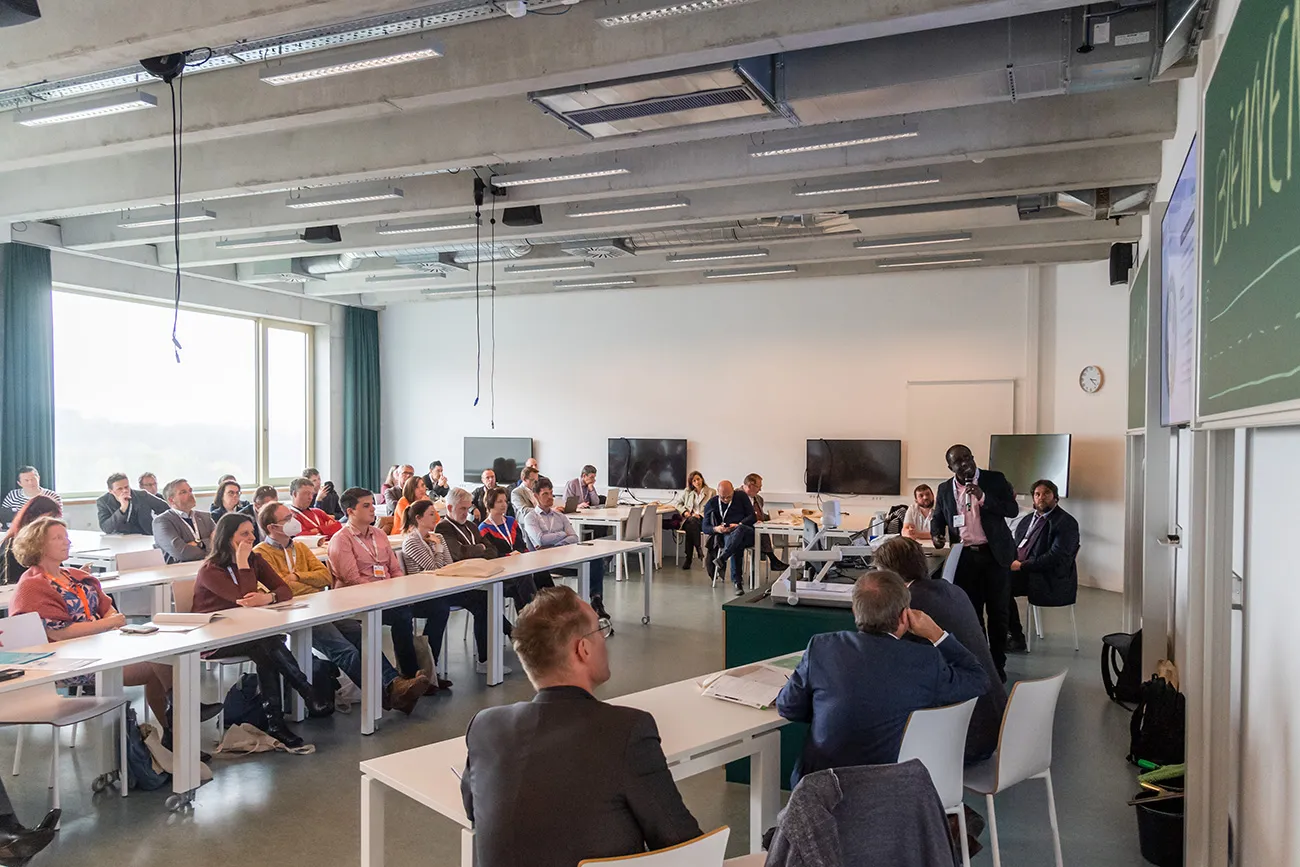
Across 60 working sessions over 4 days, participants explored new technologies in road construction, mobility and data management, and looked at the latest developments in sustainable mobility, energy and climate. Safety trends were also examined in detail, and the congress concluded with a day devoted to the sustainable management of assets, including new developments in AI and big data. Alongside the working sessions, an exhibition gave public and private sector organisations the opportunity to showcase their products and achievements. As well as the formal sessions, there was plenty of scope for informal networking during the day and in the evening, including technical tours around the city of Leuven, an exhibition featuring interactive demonstrations, product presentations and informal evening events such as a concert, a barbecue, a cultural evening at M Leuven museum and a closing reception.
Keynote address
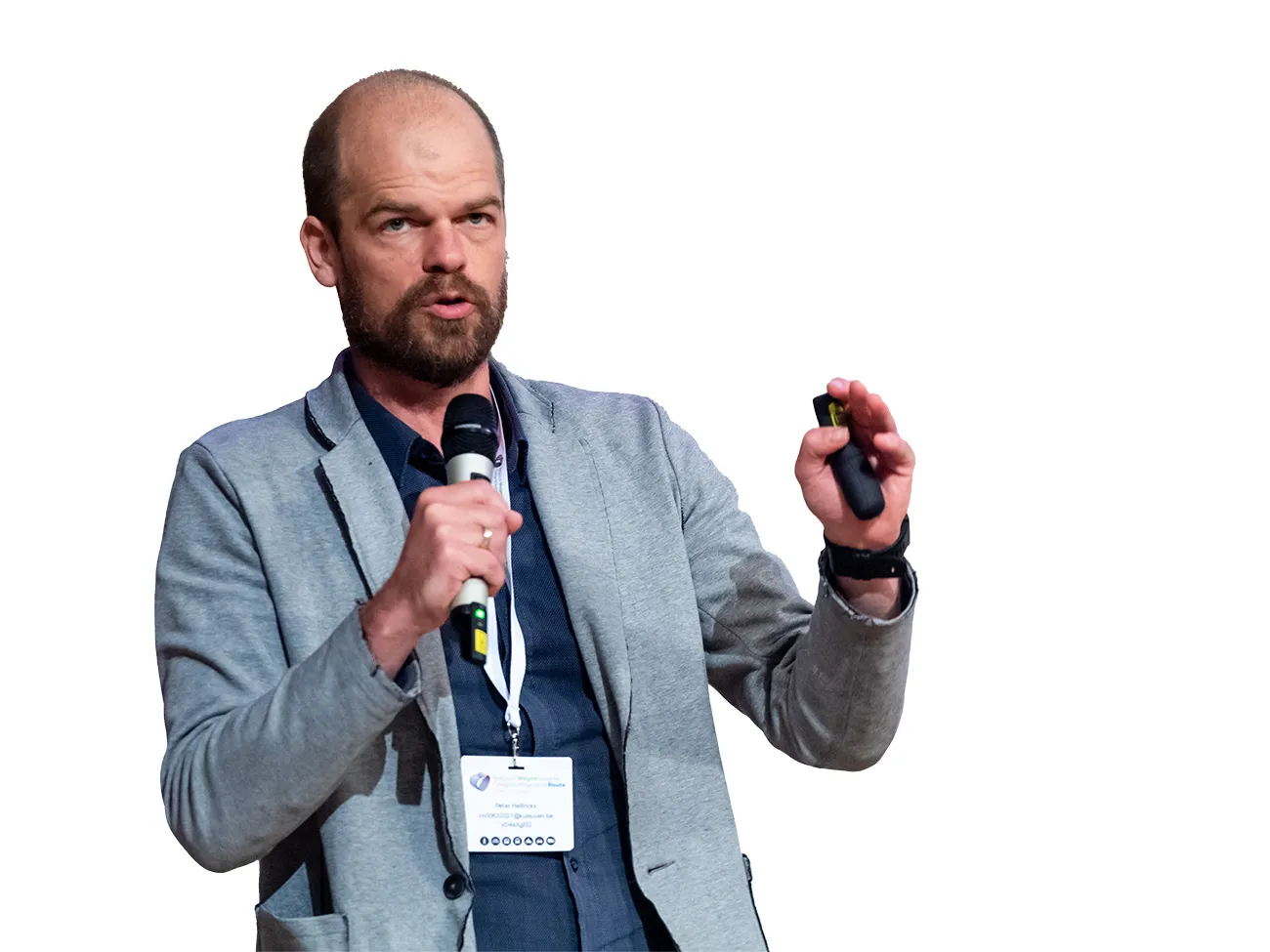
Grond/Weg/Waterbouw also headed to Campus Gasthuisberg on the opening day of the congress, where it witnessed a well-organised and well-attended event. The highlight of the day was undoubtedly the keynote address by Peter Hellinckx, professor at the IDLab research group of the University of Antwerp and IMEC. Hellinckx spoke animatedly about technical, but also highly topical, subjects such as Artificial Intelligence (AI) and the Internet of Things (IoT). “There is a wealth of data and intelligence, and the technologies are available. We need to make our processes more precise, autonomous, safe and sustainable. This certainly applies to the road construction sector too. Three key technologies that can make a difference for everyone are the Internet of Things, Artificial Intelligence and high-performance computing,” he said, among other things.
Industry 4.0, robotics and micromobility
Innovation & digitalisation took centre stage on day 1, and this common thread was also clear in the session programme. The term Industry 4.0, for example, came under scrutiny. A combination of intelligent computer systems, the Internet of Things and the Internet of Systems is making the Fourth Industrial Revolution possible. With intelligent machines digitally connected to one another and able to access ever more data, factories and industries are becoming more efficient, productive and economical. Road construction is no exception to this new digital evolution.
Robotics was also discussed at length. New technologies that will help shape the future of the construction sector are currently being developed and implemented. One alternative to more advanced robotics is to automate traditional roadworks equipment so that it can operate autonomously or work alongside its human counterparts. Cobots, or collaborative robots, could provide a solution the construction sector needs now.
A number of awards were also presented on the final day of the congress. Ben Duerinckx (OCW) won the award for best auditorium session with ‘Robotics for the construction and maintenance of our road infrastructure’. Margo Briessinck (AWV) won the award for best workshop session with ‘Artificial intelligence and asset management systems’, while Sven Gaens (AWV) took home the award for best presentation, ‘Hard shoulders in Flanders’.
Question about this story? Ask your question
Keep following this
Get an email when a new story is published. No account needed.
- ThemeFuture-proofing roads and railways
- SubjectGeneral







