









Asphalt recycling: the importance of the perfect process chain
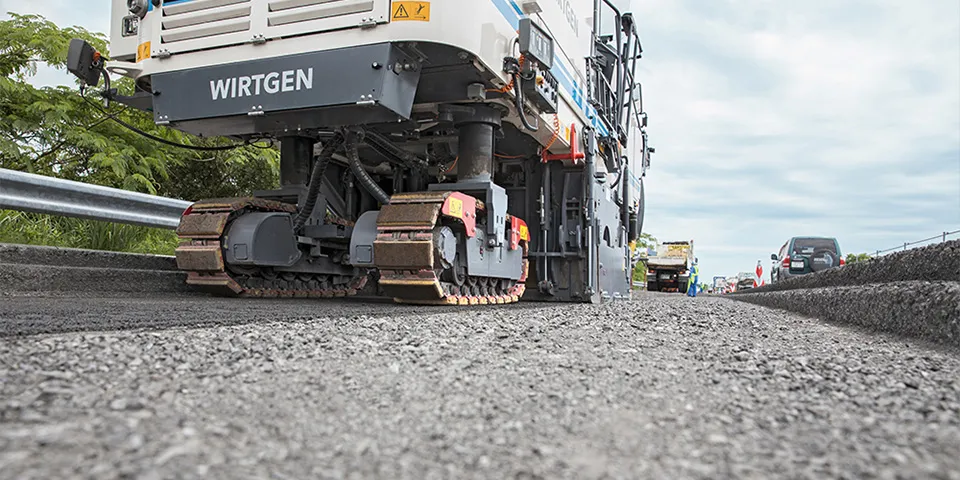
Producing road asphalt from aggregates and bitumen requires a thermal mixing process, and an asphalt mixing plant is essential. When it comes to producing this “black gold”, more and more companies around the world are discovering that reclaimed asphalt pavement, or RAP, is a valuable resource. In addition, industrialised countries are resurfacing far more kilometres of roads than they are building new ones.
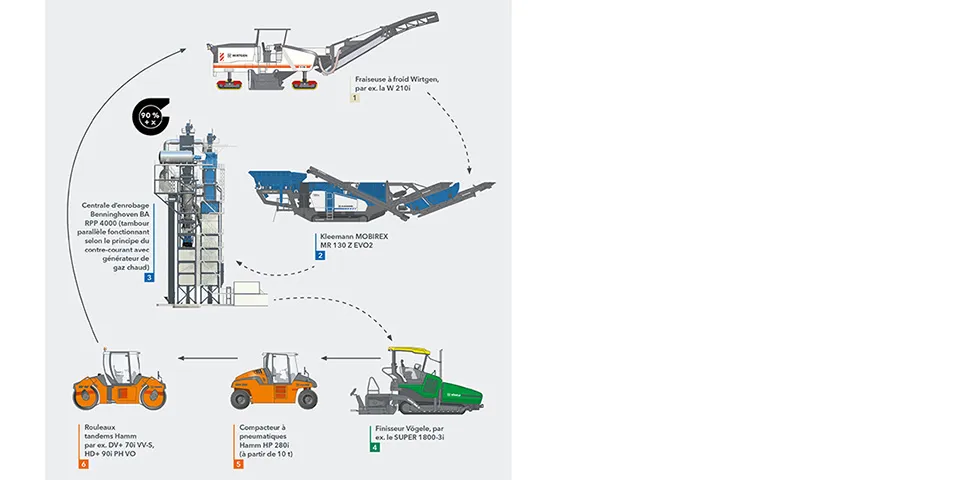
A one-stop solution for asphalt recycling, from removing old asphalt to processing, mixing and paving new asphalt. An ideal process chain helps improve the cost-effectiveness and sustainability of asphalt recycling.
This also means that millions of tonnes of asphalt are removed, a task carried out mainly by cold milling machines. They are the first link in the process chain, which continues with crushing, screening and mixing plants, and ends with pavers using the reclaimed material as part of the new road mix. Machines designed to work together, innovative processes and advanced technologies all have a major impact on the efficiency of this process chain. Smooth-running processes help improve the cost-effectiveness and sustainability of asphalt recycling.
The challenge: incorporating more RAP into the mix
In many countries, almost every lorry delivering asphalt mix to a construction site carries at least some recycled asphalt. In Germany alone, a quarter of total asphalt production in 2018 (41 million tonnes) contained RAP (10.5 million tonnes). With a total of around 12 million tonnes of asphalt pavement removed last year, this amounted to a recycling rate of 87%.
Recycling old asphalt is an economic necessity if natural resources are to be conserved. The industry is therefore continually seeking ways to optimise processes at asphalt mixing plants. One of the main approaches is to increase the proportion of RAP in all the different mixes produced using “hot and cold” processing technologies. Using the maximum amount of old asphalt not only protects the environment, it also has a positive effect on asphalt mix prices.
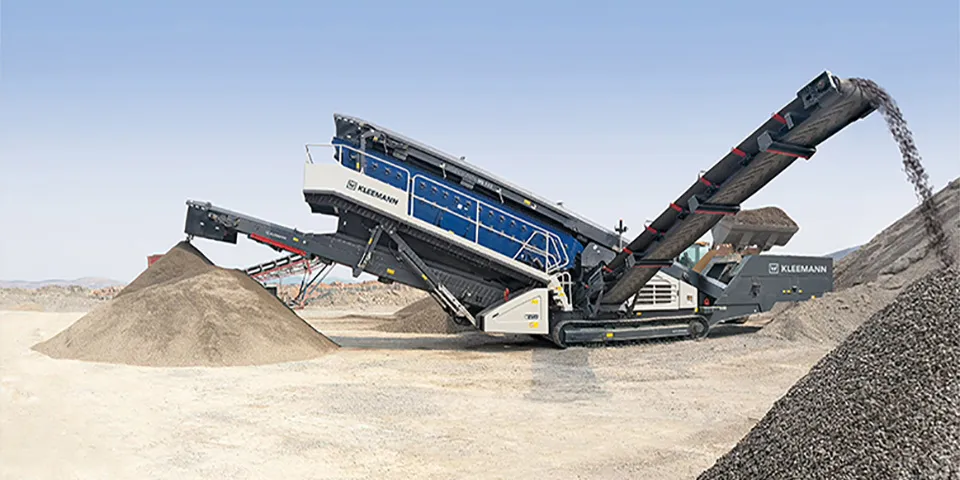
Screening plants such as the MOBISCREEN MS 953 EVO screen the milled material to achieve an optimal particle size distribution curve, making it possible to increase the amount of RAP added to the asphalt mix.
In the traditional parallel-flow recycling method, the temperature is limited to 130°C because of exhaust gas emissions. However, the exhaust gas temperature is physically higher, leading to greater energy consumption and the need for additional dust extraction. In this case, white aggregates must be superheated to achieve a mixing temperature of 160°C.
The solution: the counterflow method, a recycling rate of 90 + X%
Unlike conventional parallel-flow recycling drums, a recycling drum with a hot gas generator heats the recycled material indirectly using the counterflow method. This means that the material flows through the drum towards the heat source. This makes it possible to achieve higher material temperatures while lowering the exhaust gas temperature. The discharge temperature of 160°C matches the temperature required for further processing, while the exhaust gas temperature is approximately 100°C, above the dew point. The process is only possible with a hot gas generator, because direct firing would burn the recycled material and make it unusable. The burner, hot gas generator, recycling drum, extraction hood, and recirculation and exhaust air system are all designed to work in perfect harmony. One benefit is that the white aggregate no longer needs to be superheated, resulting in a significant reduction in energy consumption. Counterflow recycling significantly reduces emissions, as required by Germany’s Technical Instructions on Air Quality Control, and achieves a recycling rate of 90 + X%, depending on the quality of the recycled material. This makes investing in this green and efficient technology particularly attractive.
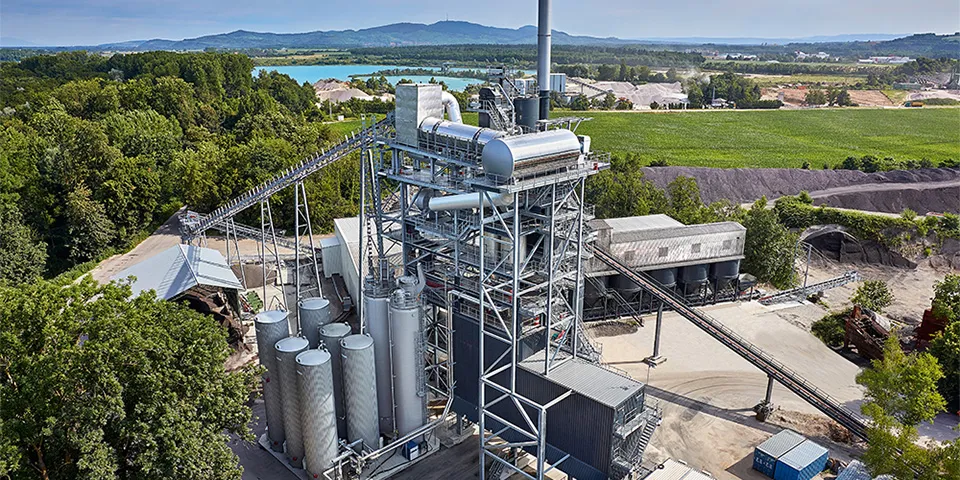
Asphalt mixing plants such as the stationary BA RPP 4000 produce up to 320 tonnes of asphalt per hour. With counterflow recycling using a hot gas generator and a recycling rate of 90 + X%, the new mix can contain around 300 tonnes of RAP, depending on the recipe.
The technology becomes even greener when upstream process steps, processing the particle size distribution and milling the asphalt, are carried out using the latest processes and technologies.
Screening plants: an ideal particle size distribution increases the amount of RAP added
The maximum theoretical amount of RAP that can be added to the mix depends largely on its particle size distribution, or, in other words, on the quantity, size and composition of its constituent particles. One aim is therefore to match the particle size distribution of the crushed RAP as closely as possible to the desired curve for the final asphalt product. This is where mobile screening plants come in. They enable mixing plants to process up to 80% of reclaimed asphalt (milled material) directly. This significantly reduces process costs compared with reprocessing all the milled material.
If all the material is to be reprocessed, including the remaining oversized particles, impact crushers with a secondary screening unit can also be used.
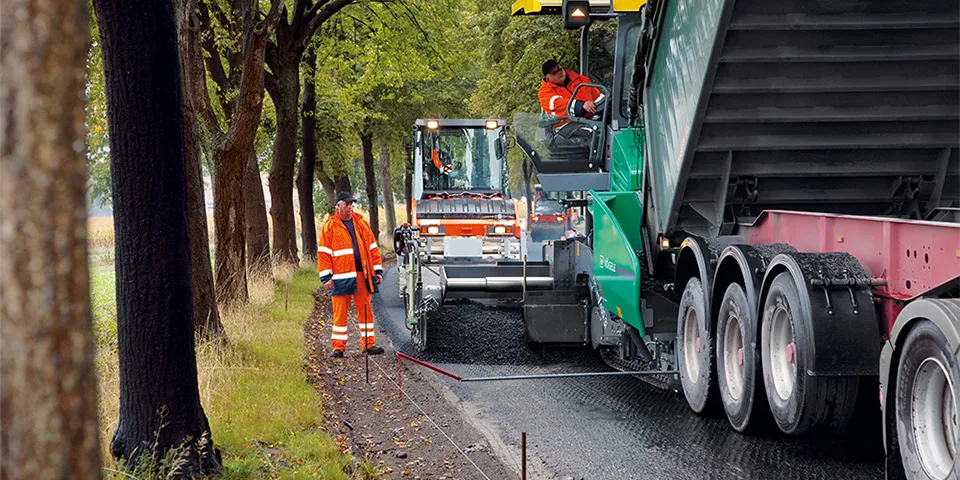
Pavers such as the SUPER 1800-3i, tandem rollers such as the HD+ 90i PH VO or DV+ 70i VV-S, and pneumatic tyre rollers such as the HP 280i lay and compact recycled asphalt at the end of the process chain.
Intelligent milling for cost-effective and sustainable recycling
First, however, the RAP must be recovered by removing the individual layers of the road structure. Milling the asphalt in layers with cold milling machines allows the milled material from each mix type to be fed back into the material cycle for reuse, according to its structural suitability and quality characteristics. Selectively recovering the surface, binder and base courses alone offers considerable environmental and financial benefits.
Intelligent milling technology further increases the cost-effective reuse of milled material at the asphalt mixing plant. This is largely thanks to the load-dependent water spray system on cold milling machines. In this system, the water required to cool the milling tools varies according to engine load and milling speed. Water consumption can be significantly reduced by activating the water system automatically when the milling drum is operating, or switching it off when milling stops. Specifically, this can cut water consumption by up to 20%. This extends the service life of the milling tools, reduces how often the cold milling machine’s water tanks need to be refilled, and shortens downtime. This benefits not only the milling machine operator, but also the chief mixer responsible for the asphalt mixing plant. They benefit from lower water consumption because it means the milled material has a 3-4% lower residual moisture content per tonne of asphalt. Without the latest milling techniques, the residual moisture content would be higher.
The formula for the drying process required to produce new asphalt at the mixing plant is simple: material that is 1% drier saves 1 litre of fuel oil per tonne of finished asphalt during further processing into recycled asphalt, while also reducing CO2 emissions because the process uses less energy.
Question about this story? Ask your question
Keep following this
Get an email when a new story is published. No account needed.
- ThemeFuture-proofing roads and railways
- SubjectGeneral







