









A sustainable revolution in Sint-Andries (Bruges) with fibre-reinforced concrete
Text Kris VandekerckhoveImage Adfil
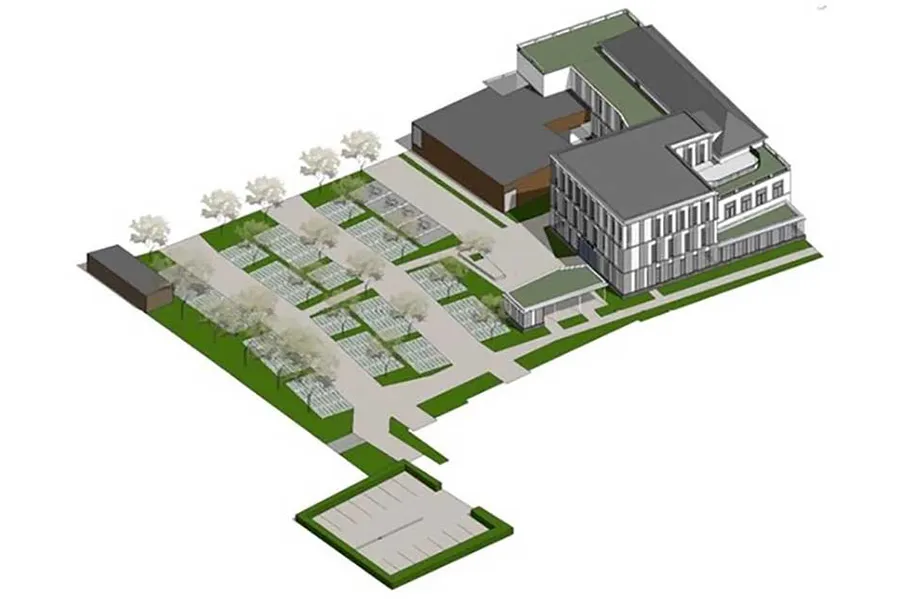
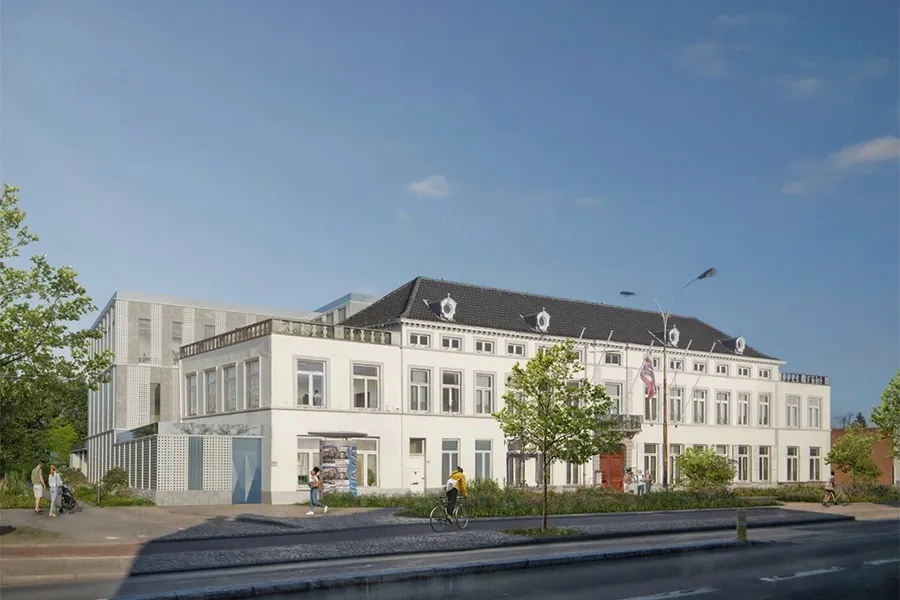
The town hall in Sint-Andries (Bruges) is set for a major refurbishment. The administrative centre, which houses both the City’s Customer Services department and the police, no longer meets modern requirements. In recognition of the building’s historic significance, part of it will be renovated. The old mansion on Gistelse Steenweg will be retained. This building, together with the two adjoining wings, will be refurbished and repurposed.
The renovation focuses on energy efficiency, the environmentally responsible use of materials and energy, and sustainability. The building will serve as a model project for the city of Bruges, as it will be heated entirely without fossil fuels. Main contractor ARTES approached Adfil to help deliver some of the concrete works efficiently and sustainably …
Eco-innovation with Durus EasyFinish fibres
Adfil, a leading developer and manufacturer of high-quality fibres for reinforcing ready-mixed concrete, sprayed concrete and precast elements, is the global market leader in its sector. Its Durus EasyFinish product, ATG-certified since 2018, is a macro-synthetic fibre increasingly used as a sustainable, corrosion-resistant alternative and/or complement to steel reinforcement.
Durus EasyFinish fibres can make a crucial contribution to the sustainability of construction projects. They often provide a more environmentally friendly and cost-effective solution. This is backed by Adfil’s Environmental Product Declaration (EPD), which it has held since early 2020 and which indicates the product’s favourable impact on the CO2 footprint of concrete structures.
Fibre-reinforced concrete: lighter, faster and more sustainable
Steven Anseeuw, Technical Sales Manager at Adfil: “The macro-synthetic fibres we have developed offer several notable benefits. First, the fibres are added at the concrete plant, saving a considerable amount of time and therefore speeding up construction. The concrete plants also ensure the correct dosage. They are more sustainable too, as they are chemically inert and reduce shrinkage cracking, helping to protect any remaining steel reinforcement and extending the service life of the structure. The cost difference compared with, for example, a floor slab or topping with conventional steel reinforcement is currently around 30 to 50 per cent. In addition, CO2 emissions are up to 90 per cent lower than with a traditionally steel-reinforced floor slab or topping. That is particularly important if you want to play a significant role in most public-sector contracts today. The Dutch CO2 Performance Ladder system is now also active in Belgium. It is a certifiable management approach that encourages companies to reduce CO2 emissions systematically across their operations, projects and supply chains. This independent certification scheme allows companies to obtain certification on a voluntary basis. Artes is certified, so it has every incentive to use sustainable techniques and products on its sites, including Durus EasyFinish.”
Four concrete applications
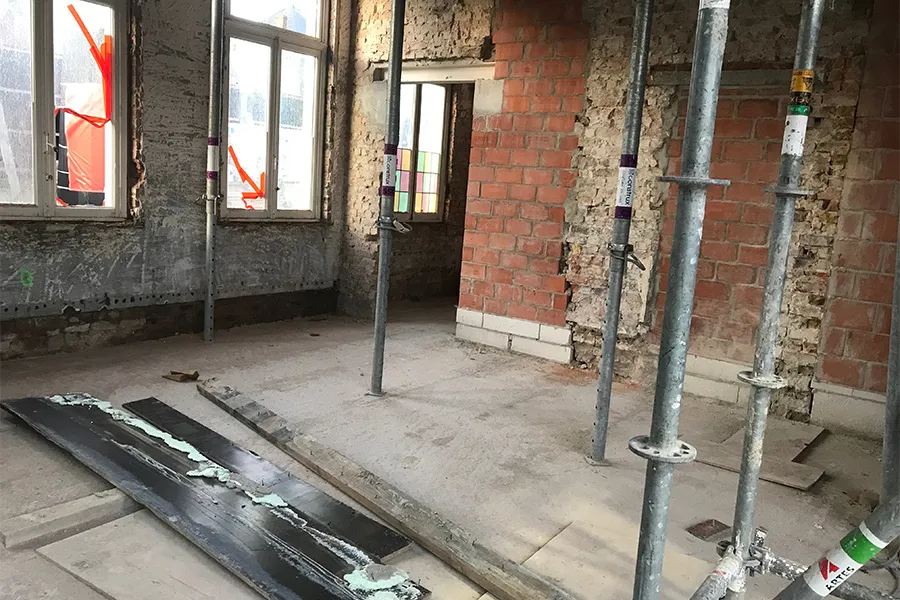
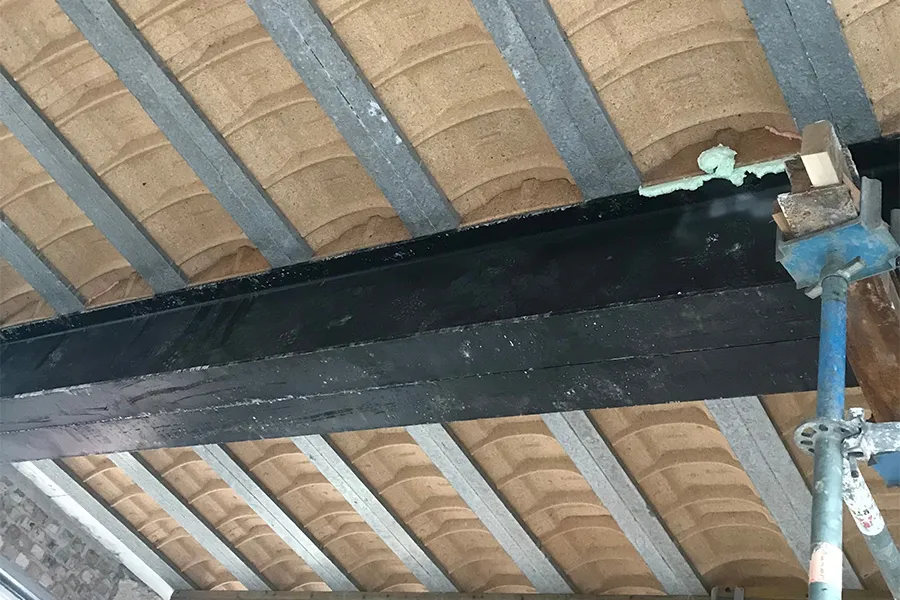
Steven: “The first phase involved pouring the foundations in the old section. The new foundation slab, insulation and screed will follow. Toppings were also laid on the vaults in the new section. In the section being renovated, Rectolight® pots and beam system were then used, topped with a Durus EasyFinish fibre-reinforced topping, to renew the floors. On the other side of the section being renovated, steel dovetail sections were installed, also with a Durus EasyFinish fibre-reinforced topping. This brought the total across the project to four different reinforcement applications using our macro-synthetic reinforcing fibres.”
Chemically inert fibre reinforcement
Steven Anseeuw explains that the use of macro-synthetic reinforcing fibres is still developing in the Belgian market. Unfortunately, there is still a degree of unfamiliarity: “There are many applications where steel can be replaced entirely by Durus EasyFinish, or at least optimised in hybrid systems combining steel with Durus EasyFinish. Unlike steel reinforcement, our fibres are chemically inert and reduce shrinkage cracking, making them particularly suitable for applications where watertightness is important or concrete elements are in contact with chemically aggressive environments. They are therefore used today in applications including basement walls, swimming pool walls, jointless floor slabs, water treatment structures, foundations and tunnels, where in many cases they even outperform steel.”
Question about this story? Ask your question
Who worked on it
Gemeentehuis Sint-Andries in Brugge
- main contractorARTES
- macro-synthetische vezelsAdfil
Keep following this
Get an email when a new story is published. No account needed.
- ProjectGemeentehuis Sint-Andries
- ThemeExtending the life of bridges and tunnels
- SubjectGeneral
- CompanyARTES
- CompanyAdfil







