The Oosterweel interchange: a crucial but complex link
Text Joris Hendrickx Beeld Sweco
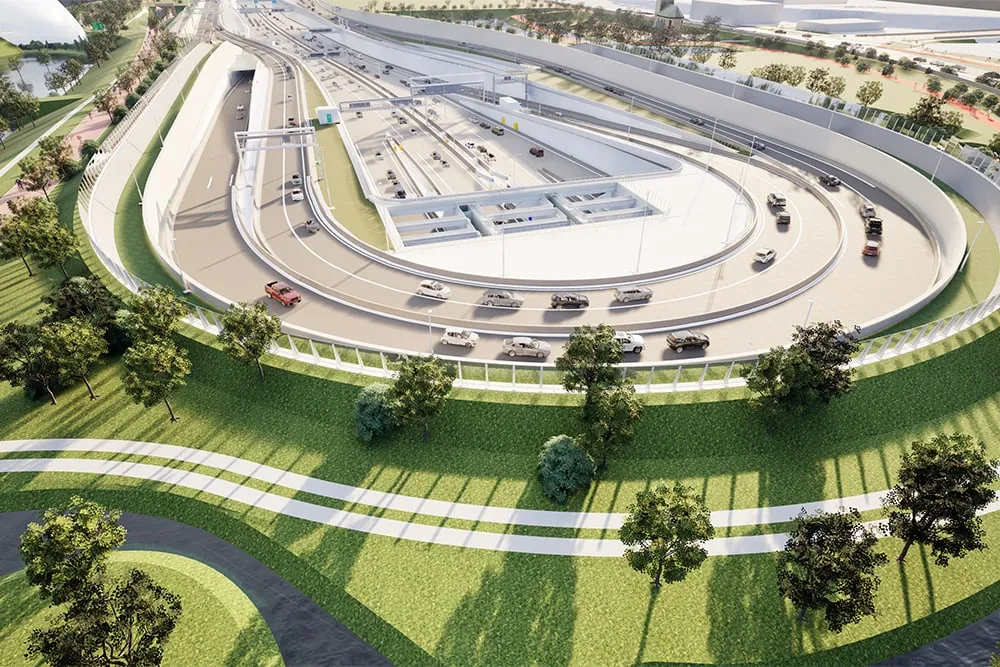
Due to its complexity and scale, the Oosterweel connection is one of Belgium’s most ambitious infrastructure projects. Engineering, architecture and consultancy firm Sweco plays a central role in the project’s success, including the delivery of the crucial Oosterweel interchange. We spoke to Benjamin Tytgat and Ramses Verachtert.
What will the Oosterweel interchange do?
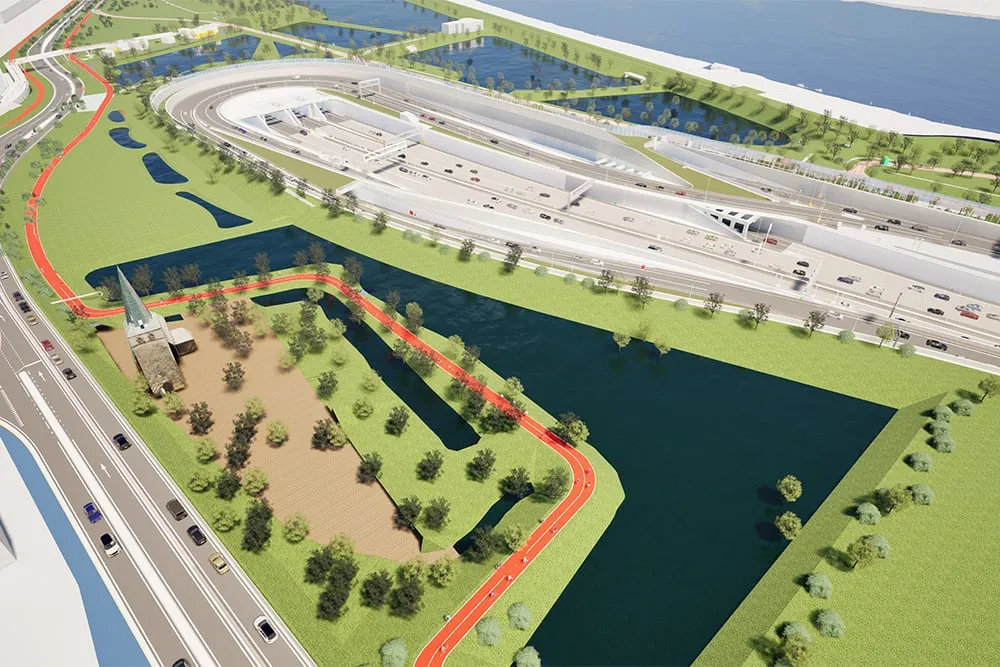
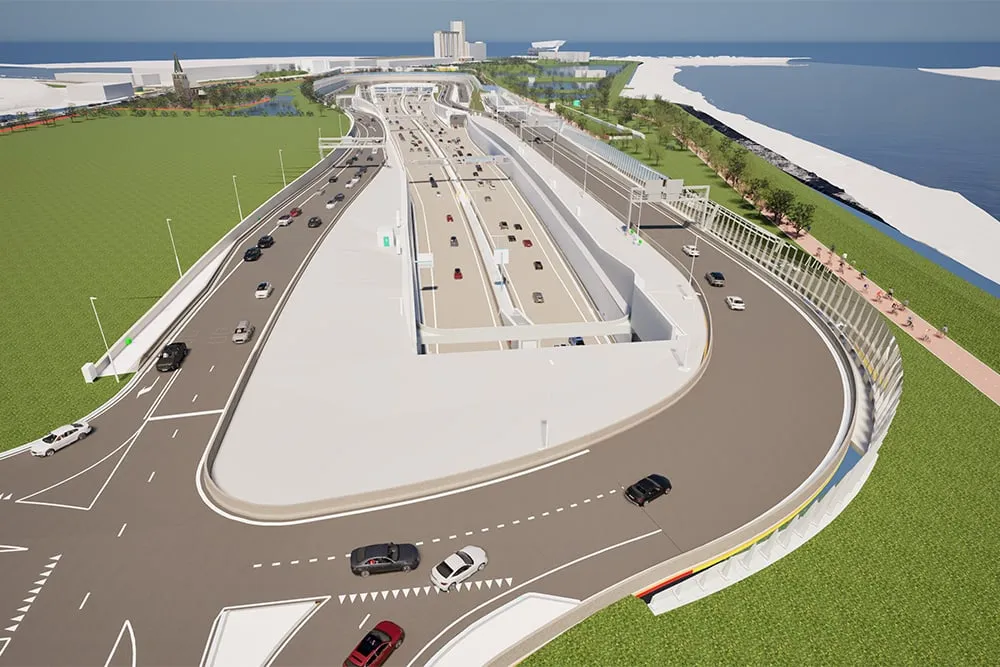
Benjamin Tytgat: “The Oosterweel interchange is part of the Oosterweel connection and is located on the right bank of the Scheldt. The purpose of this junction is to provide better access to the port and the north of the city. It also connects the Scheldt Tunnel to the Canal Tunnels, making it an essential link in completing the R1 ring road. The works are also being used to create Ringpark Noordkasteel, a recreational area with a swimming lake which, together with 17 other projects, will improve quality of life around the Antwerp ring road.”
What is Sweco’s role in this sub-project?
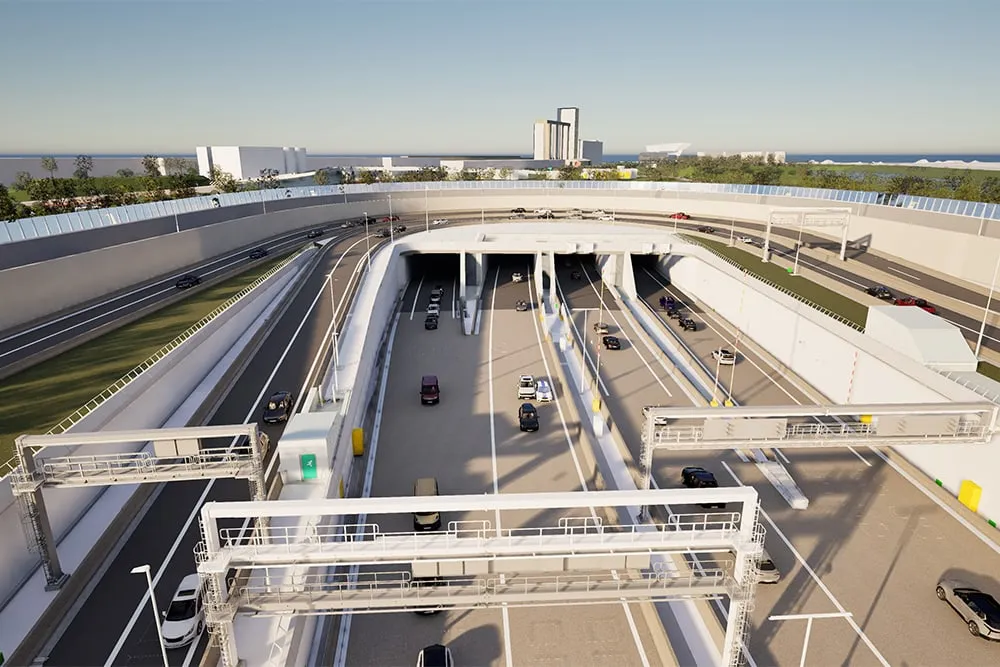
Benjamin Tytgat: “Sweco acts as consultant and design firm for the Rinkonîen consortium, comprising contractors Stadsbader, Mobilis TBI, CIT Blaton, Artes Group and Boskalis. We are responsible for the design of the polder structures, the stacked tunnel and the road layout, and assist the contractors with the technical development of these designs. We work with them to identify improvements, carry out the structural calculations and prepare the calculation reports and construction drawings.”
What made the preparation for this project so unique?
Benjamin Tytgat: “For the first time in our country, the contractors on an infrastructure project were involved from the design stage, with their input incorporated straight away. The Oosterweel interchange is a highly complex project, so it is vital to ensure that the contractors support the design and that it can be delivered in practice. To that end, we included more extensive design tasks in the final design, enabling a smooth transition to the construction design.”
How does the sheer scale of this project present a challenge in its own right?
Benjamin Tytgat: “Large dimensions naturally come with high costs. By working closely with the construction teams, we were able to take this fully into account during the design. For example, the construction sequence was worked out in detail in advance, so there was no need to add extra contingency margins.”
Ramses Verachtert: “The large dimensions also meant dealing with much greater forces. As a result, we could not readily rely on standard solutions and often had to think creatively. The excavation pits are no less than 25 metres deep and 30 metres wide. Large steel struts are needed to support the surrounding walls and keep them upright, but these are not available on the market. We therefore specified steel pipes of the kind also used for offshore wind turbine foundations. Delivering an excavation pit of this size required us to find the optimum sequence for the different excavation and dewatering stages, as each stage can have a significant budgetary impact.”
What role did the challenging site conditions play?
Ramses Verachtert: “The project is in a built-up area, close to the historic SAMGA building, which must not be damaged by the works. By adapting the design and construction sequence, we are minimising settlement and vibration as far as possible. In addition, the depth of our excavation pits takes us down into the ‘Boom clay layer’. This behaves differently from ordinary sandy soil and can swell over time. Such complex behaviour is not always easy to predict, so we prepared several option studies, each with different scenarios and calculations.”
How are you using data and technology to optimise this project?
Ramses Verachtert: “We had to use various software packages to calculate the different parts of this project, and then make sure they could be linked together. The results from one programme needed to be usable as input for another.”
Benjamin Tytgat: “The more you calculate, the more detailed you can be and the more detailed design solutions you can apply. To make this possible, we wrote scripts to automate coordination and collaboration between the different software packages.”
Ramses Verachtert: “We can certainly automate some of the similarities between parts of this project, but there is also a wide variety of calculation sections, each with its own specific challenges that require a tailored approach. The Oosterweel interchange project also clearly has interfaces with other sub-projects in the Oosterweel connection. We therefore had to coordinate our calculations and software with those teams as well.”
Question about this story? Ask your question
Keep following this
Get an email when a new story is published. No account needed.
- SubjectRoad construction