Roads and Traffic Agency clears more than 1,300 tonnes of fly-tipping and litter from Flemish roads
15 offenders fined after inspection operation at Drongen parking area
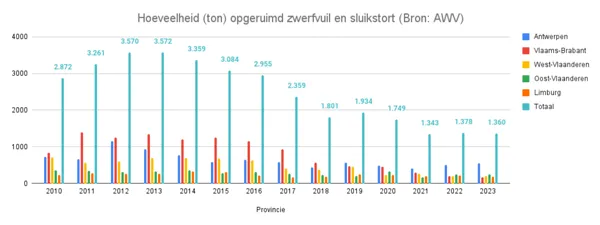
The Roads and Traffic Agency (AWV) cleared no less than 1,360 tonnes of fly-tipped waste and litter from Flemish motorways and regional roads in 2023. Fly-tipping and litter remain a major social problem. However, the situation has improved over the past 5 years thanks to ongoing efforts.
A huge amount of fly-tipping and litter
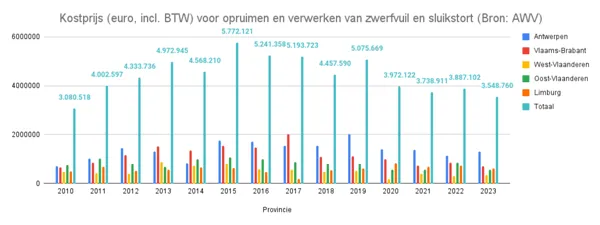
Last year, AWV collected 1,360 tonnes of fly-tipped waste and litter from Flemish motorways and regional roads. “Although the amount collected decreases year on year, the clean-up operations cost the public purse a great deal,” says the Flemish Minister for Mobility and Public Works. The total cost for 2023 was 3.5 million euros.
The cost of clearing illegally dumped waste is paid from the general budget for maintaining roads and cycle paths. Kathy Vandenmeersschaut, Director-General at AWV, gives some examples of how that money could be put to better use: “With 3.5 million euros, we could give all our hedges an extra trim over the course of a year, maintain all our cycle paths one extra time, or mow more than a quarter of all our verges, ditches and grass areas.”
Three-pronged approach is paying off
AWV is taking a three-pronged approach to tackling litter and fly-tipping, focusing on raising awareness, issuing fines and clearing waste.
Awareness-raising campaigns are held every year in partnership with Mooimakers, the Flemish initiative against litter and fly-tipping. These include the use of poster boards along motorways. In addition, 12 regional inspectors can issue a formal report against anyone caught fly-tipping. Regular clean-ups are also carried out along regional roads and motorways, and at service areas such as motorway parking areas without a petrol station and car parks for carpooling.
The key is to clean up regularly, because rubbish attracts more rubbish.
Bins are emptied two or three times a week, with an extra collection possible during busy periods. Motorway parking areas with commercial operators, such as petrol stations, are maintained by the concession holder.
“Fly-tipping and litter remain a persistent social problem. However, ongoing efforts have led to a clear improvement over the past 5 years. For example, the amount collected has fallen by almost 30% since 2019,” the minister explains.
Working with the emergency services
Regional inspectors regularly carry out checks at so-called hotspots. The end of a holiday or long weekend often means extra illegally dumped household waste at motorway parking areas. For this reason, additional checks were carried out this afternoon at the motorway parking area in Drongen, in collaboration with the federal road police. During the operation, 15 people were caught fly-tipping red-handed.
Question about this story? Ask your question
Keep following this
Get an email when a new story is published. No account needed.
- ThemeFuture-proofing roads and railways
- SubjectRoad construction