Oudsbergen business park gets a makeover with concrete paving
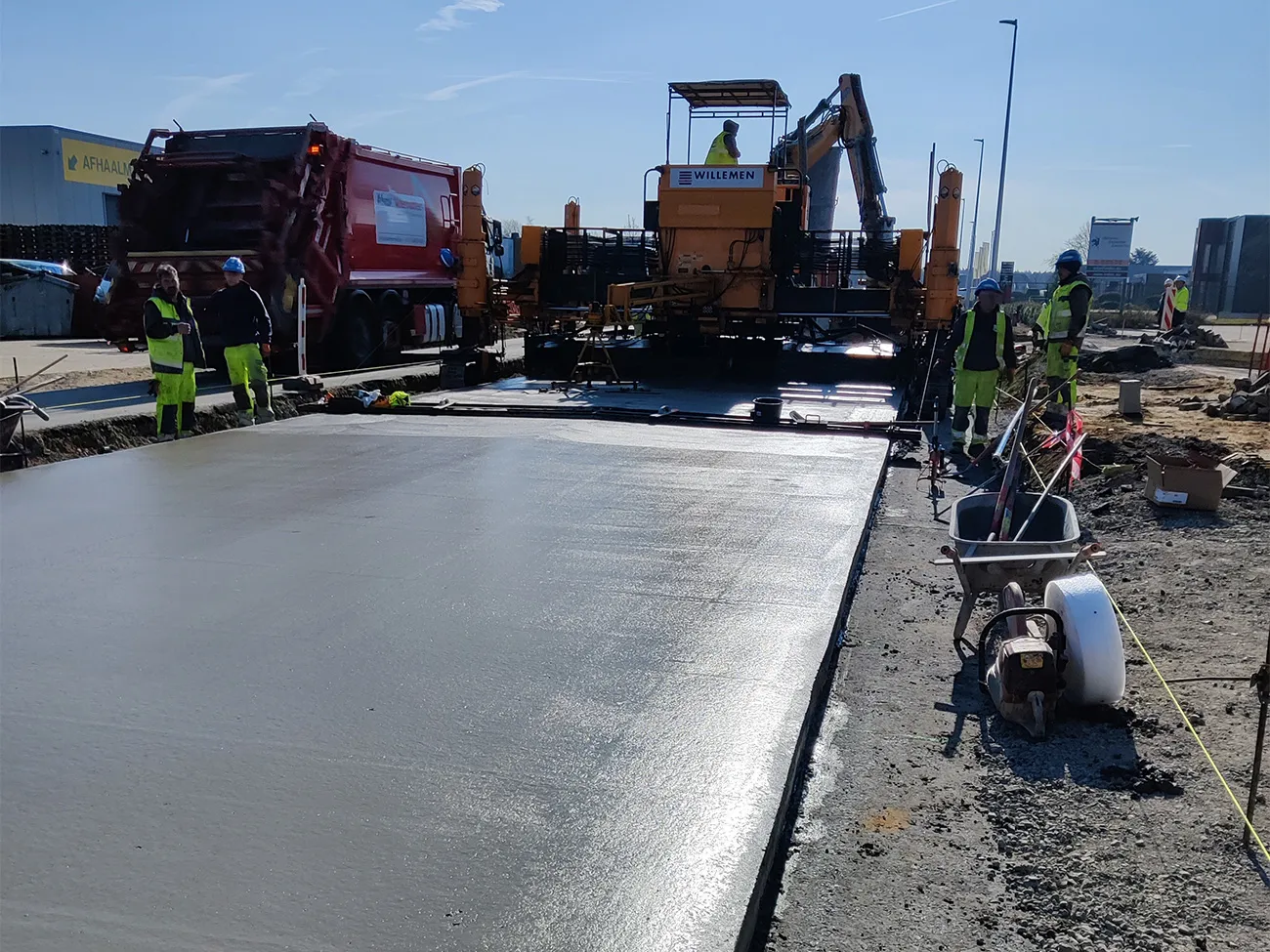
The business park in Oudsbergen, formerly Opglabbeek, is undergoing a major renovation. Contractor Willemen Infra began sewerage and roadworks there last year. Cyclists, motorists, buses and heavy goods vehicles will soon be able to get around the industrial estate more easily and comfortably.
The ageing road surface on the Oudsbergen industrial estate had been deteriorating in recent years. Subsidence meant heavy goods vehicles could no longer reach businesses easily. Reconstruction was needed, with measures to improve conditions for other road users too. One junction is being replaced by a roundabout, while other junctions are being made safer. Cyclists will get two-way cycle paths, separated from the carriageway as much as possible, as well as cycle crossings. In consultation with De Lijn, the client is also investing in improvements to and expansion of public transport.
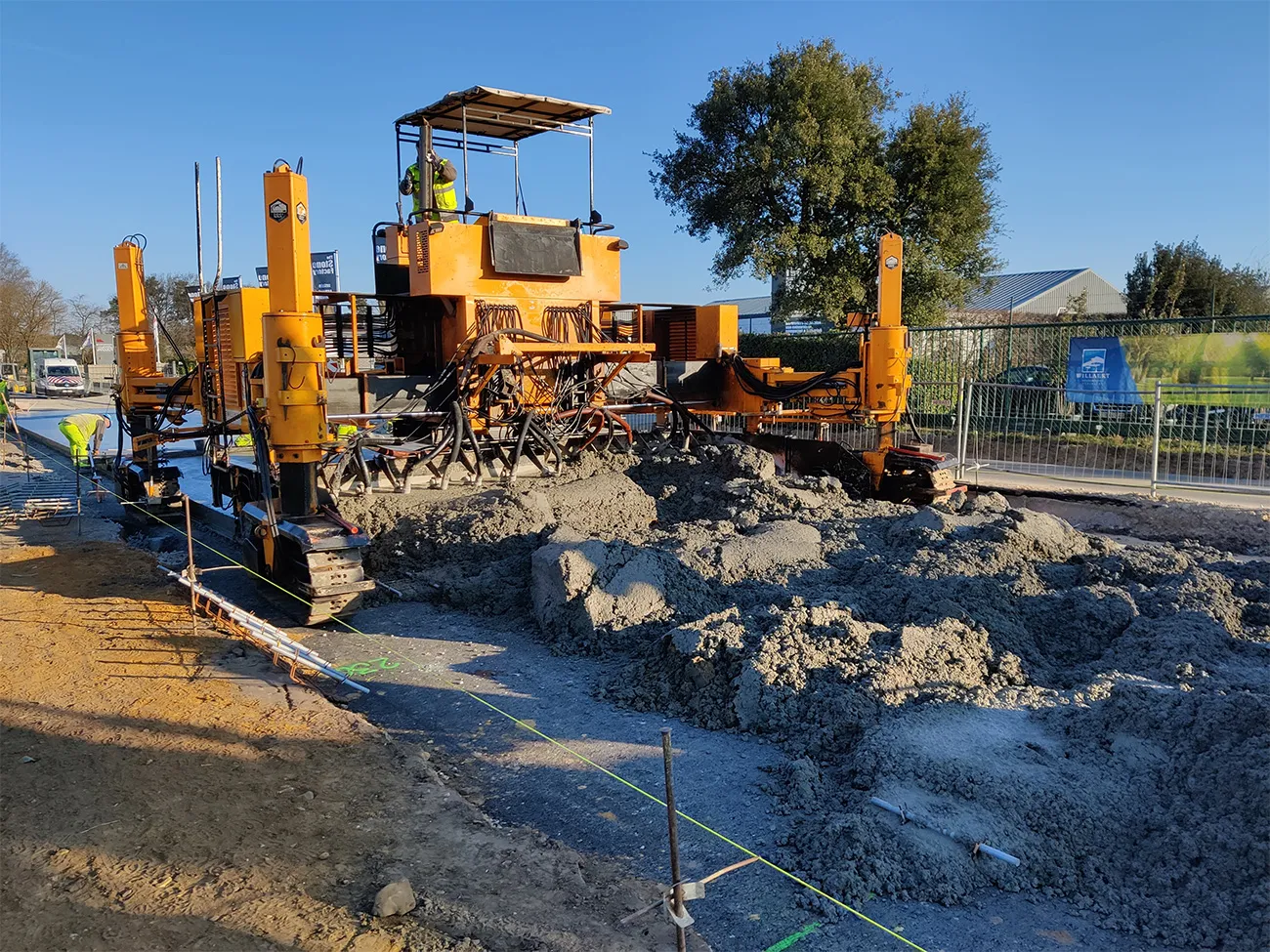
Concrete for heavy loads
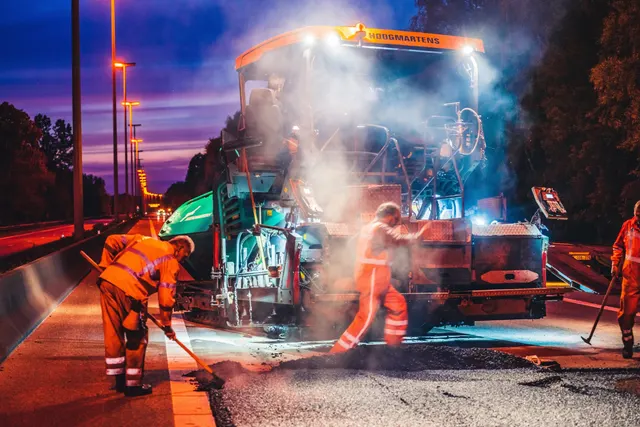
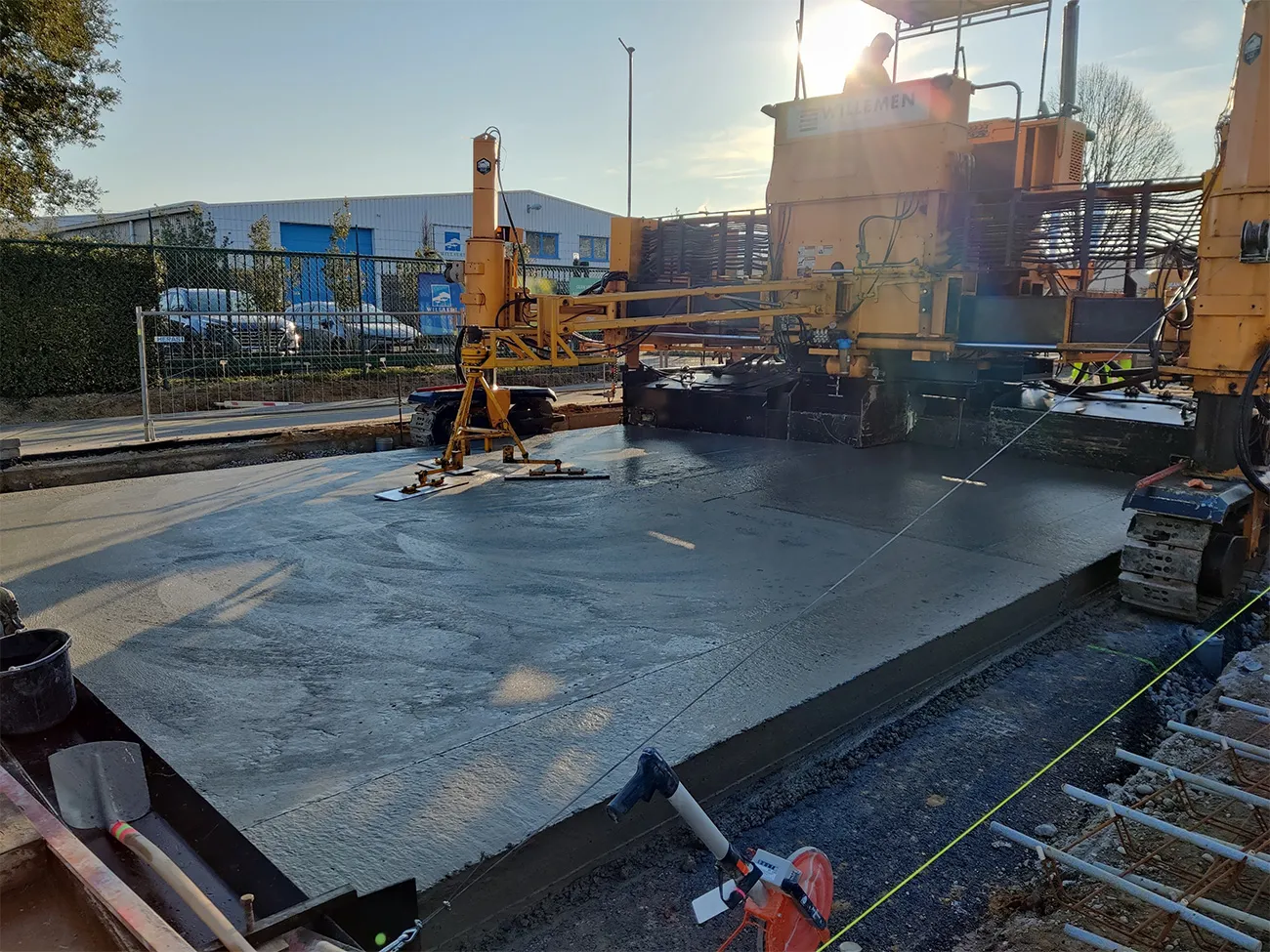
The site that Willemen Infra is to equip with new sewers and roads covers two kilometres as the crow flies. It is a large project, with many neighbouring businesses that need to remain easily accessible. Combining this with concrete paving makes the project complex, says Niels Vandevijvere, project manager at Willemen Infra. “Concrete paving provides more hard-wearing roads. This matters in the long term: with such heavy loads, you need a foundation that will last for the next 50 years. The work does take much longer, though. On a good day, we can lay 300 m of concrete paving, 6 m wide. It then has to remain closed to traffic for two weeks. With asphalt roads, two pavers can lay a kilometre quite quickly, and it is open to traffic again the next day.”
Keeping traffic flowing
The Limburg business park also lacked a separate sewerage system. The client decided to include one in the project. To keep the work manageable, it was divided into several phases. Vandevijvere explains: “The sequence we follow in each phase is to renew the sewers, prepare the disconnections, build up the foundation, lay the sandwich layers and concrete paving, then finish the areas around the businesses. At the same time, during each phase we provide a temporary road along the verge to keep traffic flowing.”
Each phase is supported by a comprehensive communications plan to prepare neighbouring businesses as well as possible. Every business also receives tailored day-to-day updates, because the impact on each one can be significant, for example when a business is temporarily inaccessible. “We put a lot of time and effort into this,” says Vandevijvere. “That is how we try to minimise disruption from this large-scale project as much as possible.”
Tent on the roundabout
One phase the Willemen team is looking forward to is building the continuously reinforced roundabout. It is the most challenging part of the project, both to construct and in terms of access to neighbouring businesses. “We are literally working our way towards that phase now. Everyone is eager to get started and, hopefully, finish the roundabout before the construction holiday. We have already promised to put up a tent there to celebrate the start of the construction holiday,” Vandevijvere concludes with a laugh.
Question about this story? Ask your question
Keep following this
Get an email when a new story is published. No account needed.
- ThemeFuture-proofing roads and railways
- SubjectRoad construction