FRP bridges as a sustainable, circular solution
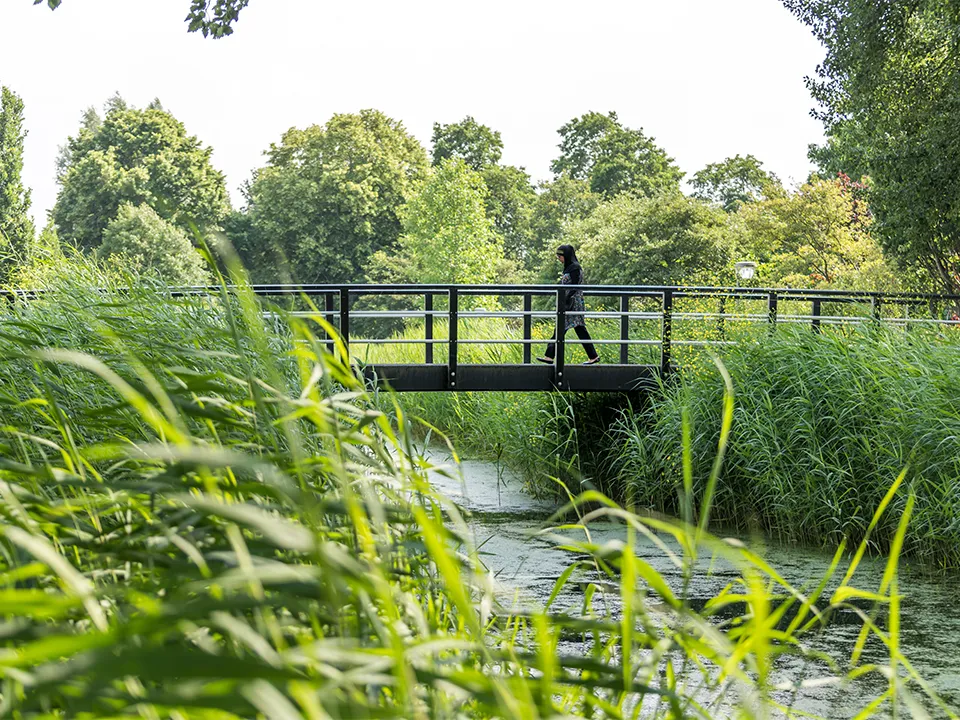
Many bridges, quay walls, locks, roads and flood defences will reach the end of their design or functional life in the coming years.
Action is needed, and making the right choices will be crucial. “We need to be willing to compare the total cost and environmental impact of a conventional bridge with those of a composite bridge,” says Jan Swyngedouw, business unit manager at plastics specialist CGK Group.
CGK Group, originally specialising in the manufacture and supply of chemical storage materials, has established itself as a plastics specialist over the years, serving sectors from industry and construction to infrastructure and maritime. A key area of CGK Group’s business is fibre-reinforced polymer bridges. Composite is an excellent material not only for new bridges, but also for repairs. Another advantage is its strong performance in areas such as recycling and circularity. Jan Swyngedouw: “Can we demonstrate, using fibre-reinforced composite bridges, optimisation models for replacement decisions, life-extending maintenance and maintenance intervals in an asset management context? That is a question we absolutely need to ask.”
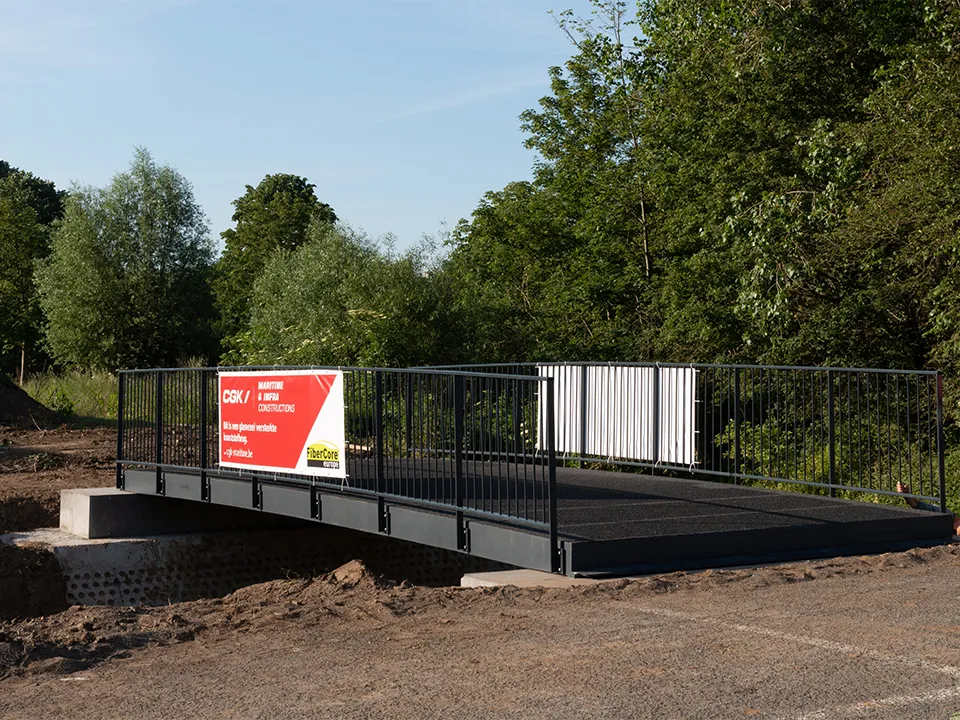
Life Cycle Cost analysis
The costs of an infrastructure asset include planning, construction, operation and management, and demolition. A Life Cycle Cost (LCC) analysis identifies all costs over an asset’s entire life. This covers construction costs as well as management and demolition costs. The method can be used, among other things, to inform decisions and determine the optimum time for replacement.
Jan Swyngedouw: “The design costs of composite bridges are no higher or lower than those of traditional bridge construction methods. Construction costs are similar, or slightly higher to purchase, but lower for installation. The operating and inspection costs of composite bridges are equal to or lower than those of conventional bridges, while demolition costs are neither higher nor lower. Finally, maintenance and replacement costs are considerably lower for composite bridges, partly thanks to their extremely long service life. Fibre-reinforced plastics are also unaffected by temperature damage, salt attack, UV radiation and so on. The initial construction costs of a composite deck may be slightly higher, though by no means always, but the substructure is lighter, installation is quicker and easier, transport loads are lighter, and only one transport movement is needed to deliver a bridge, resulting in significantly lower CO2 emissions.”
Maintenance and reuse
Composite naturally has a very long service life, so no life-extending maintenance measures are needed, meaning there is virtually no risk of its service life being shortened. Composite also scores highly in terms of reuse. Despite their size, the bridges are installed at the construction site in a single operation. This means they can be relocated at any time, both within the 100-year life of the project and after that period. Composite bridges have an expected service life of more than 100 years.
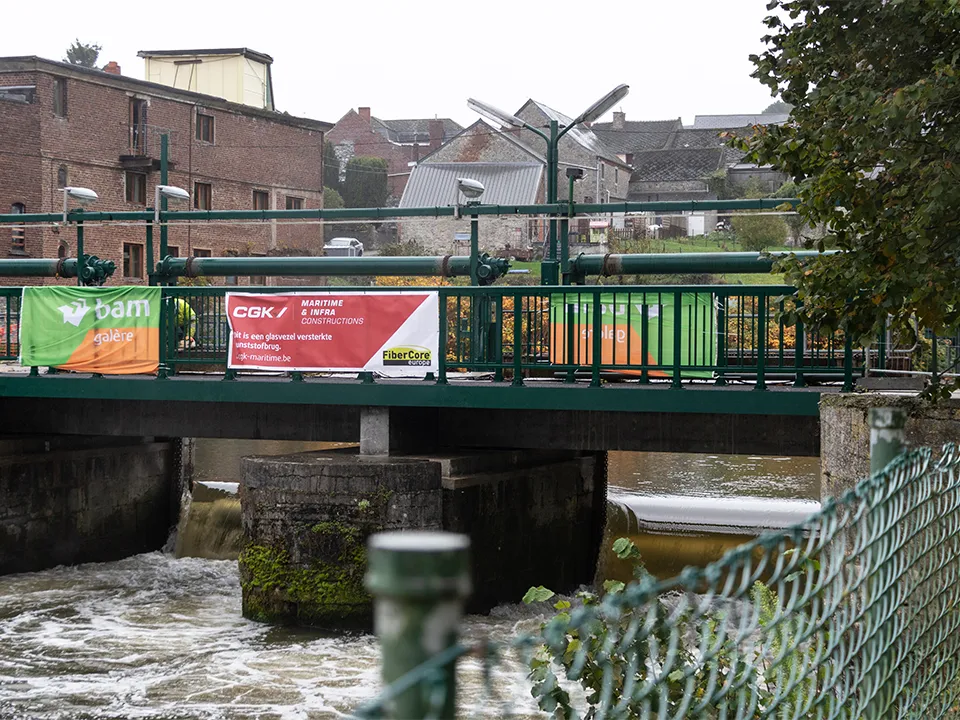
Remanufacturing and recycling
A third important aspect of circularity is remanufacturing. Composite is easy to work with and can be processed in many ways to change its shape and function. In time, bridges can be adapted for use as a bridge or bridge deck at another location, or for an entirely different application.
Finally, composite can also be recycled. For example, a shredder can reduce the material to a form that can be used in other products, such as roadside posts and planks. Another developing process, known as pyrolysis, uses energy to recover both the resin and the glass. Composite is also classified as a recyclable product under European regulations. Jan Swyngedouw: “So the argument that composite cannot be recycled certainly does not hold water. The technology is developing very rapidly in this area.”
SUREbridge
Bridge repairs are needed across the country, and SUREbridge, Sustainable Refurbishment of Existing Bridges, offers a sustainable composite-based alternative. Launched in 2016, SUREbridge is one of the key initiatives under Infravation. Rijkswaterstaat, Chalmers University of Technology (Malmö, Sweden), AICE Consulting S.R.L. and University of Pisa worked closely together on the project. Using InfraCore® Inside technology from Rotterdam-based FiberCore Europe, the project avoids the demolition and rebuilding of concrete bridges while increasing their capacity and functionality. The existing bridge deck is stripped back, after which the existing concrete structure is strengthened by adding an extra composite compression zone on top and additional carbon-fibre reinforcement at the bottom. This significantly extends the service life, with little or no maintenance required in the years ahead.
“That is why it is vital to carry out a thorough analysis of the entire structure, including associated work and installation, for both composite bridges and conventional structures. The whole life cycle of the asset must be taken into account, not just the price and environmental impact of purchasing the bridge deck,” concludes Jan Swyngedouw.
Question about this story? Ask your question
Keep following this
Get an email when a new story is published. No account needed.
- ThemeExtending the life of bridges and tunnels
- SubjectRoad construction