Towards more sustainable roads
Shell Construction and Road is strongly committed to decarbonisation. It has developed new bitumen variants to reduce the CO2 footprint of roadworks and help achieve the targets set out in the Paris Agreement. We spoke to Jean-Nicolas Desprez, Technical Director at Shell Construction and Road Europe.
What are Shell Construction and Road’s core activities? Why the new name?
Jean-Nicolas Desprez: “Our bitumen business has evolved considerably over the past hundred years, from our first bitumen plant in the United Kingdom in 1919 to the work we do today to create the smart roads of the future. Shell Bitumen became Shell Construction and Road in response to a changing, low-carbon world, with a sector-specific approach to construction and roadbuilding. Shell Construction and Road offers a wide range of high-quality products, from standard bitumen to specialist polymer-modified bitumen variants marketed under the Shell Cariphalte brand. Our bitumen products are used on a wide variety of road surfaces around the world, from urban roads and motorways to Formula 1 circuits and airport runways.”

So it is not just about responding to current decarbonisation regulations and tackling the challenges of CO2 reduction, but also about strengthening your company’s sustainability by anticipating future challenges and taking a long-term view. How do you fulfil this dual role?
“Shell Construction and Road is a leader in bitumen technology and holds 49 active patents for bitumen and asphalt technologies. We have established our global bitumen R&D centre in Bangalore, India, and operate a network of regional technical centres in key regions in China, France and Thailand. There, we develop new technologies that deliver stronger, more durable and more energy-efficient roads. With our pioneering innovations in coloured binders, low-temperature solutions, low-odour bitumen and underwater adhesives, we have set a new standard in our sector for these applications. There is growing interest in products such as Shell Bitumen CarbonSink, Shell Bitumen LT R (low temperature recycled), Shell Cariphalte Agesafe, Shell Bitumen Freshair (BFA) and PMB polymer modified bitumen.”
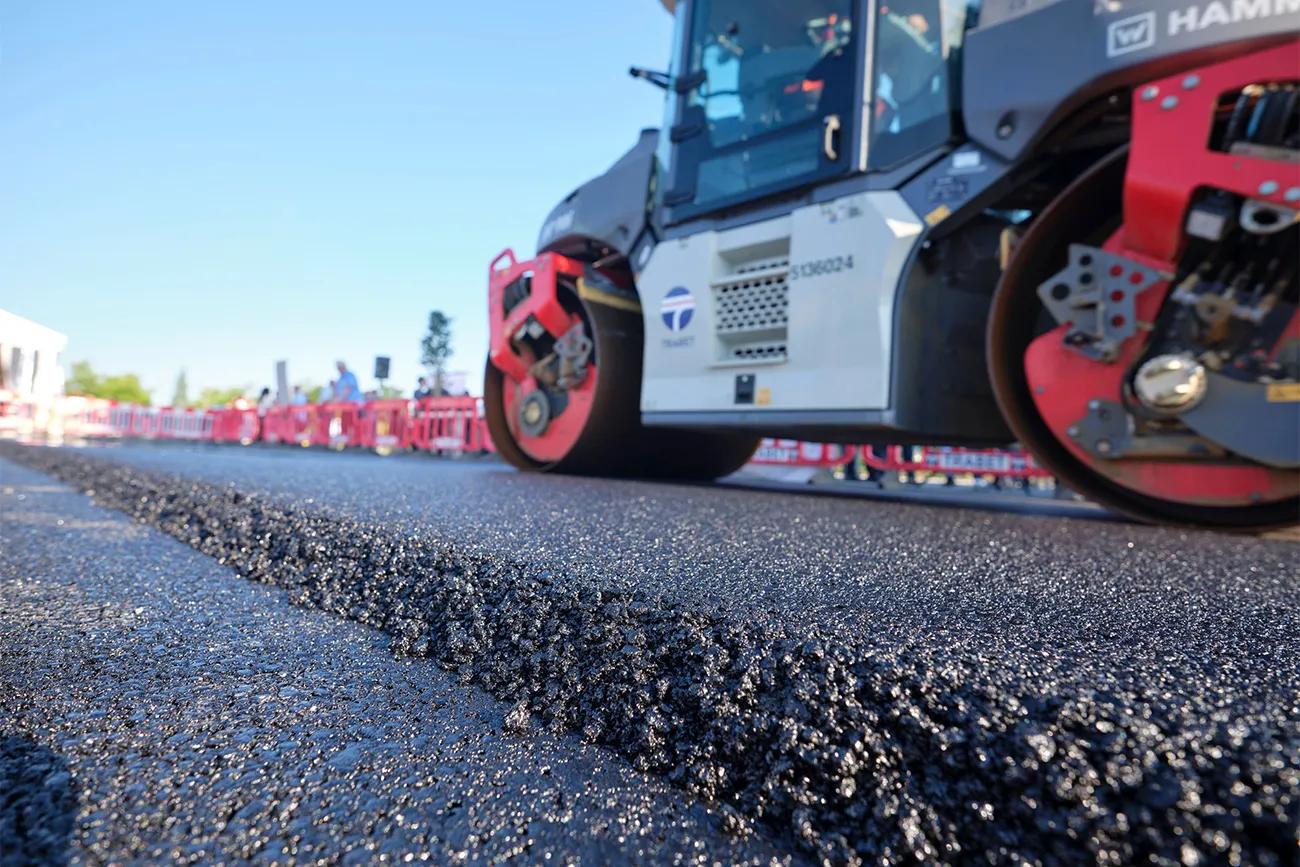
On 29 June, the new asphalt plant operated by Brumath Enrobés was officially opened in Brumath, France. Could you tell us about this ‘first’ application of Shell Bitumen CarbonSink, which attracted considerable interest from clients?
“Shell Bitumen CarbonSink was developed at Shell’s R&D centre in Bangalore and validated through a European application. It has already been used in the United Kingdom by Aggregate Industries for its SuperLow-Carbon asphalt. It is being launched in various markets for large-scale use across the global road network. Simulations have shown that Shell Bitumen CarbonSink reduces the CO2 footprint of a tonne of bitumen by up to 250 kg CO2e, and the CO2 footprint of a tonne of asphalt by up to 13 kg CO2e. This means that up to 6 tonnes of CO2e can be stored in the bitumen per kilometre of road.
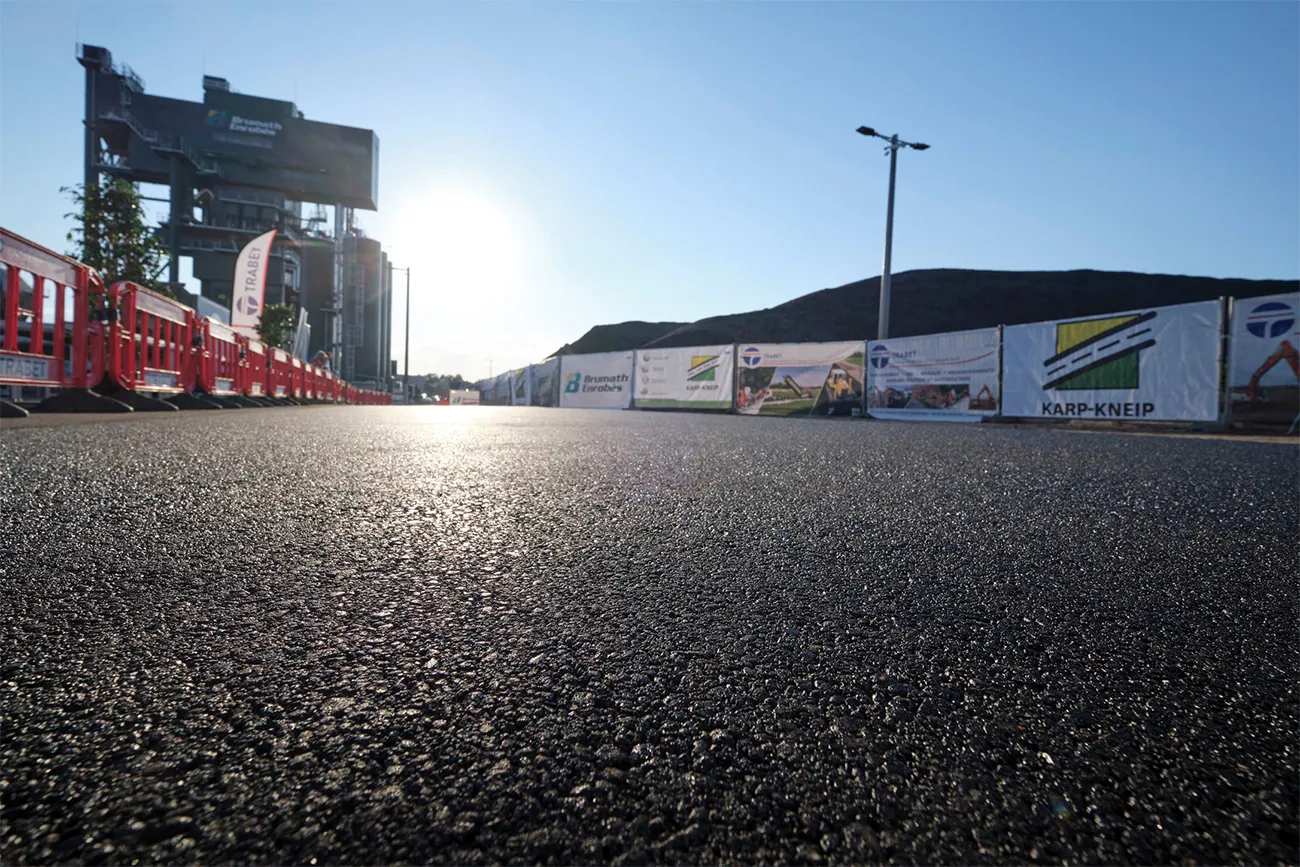
Shell Bitumen CarbonSink was used for the first time in France at the Brumath site, managed by Karp Kneip (a Luxembourg-based contractor specialising in public works) and Brumath Enrobés (an asphalt producer). The asphalt was laid by Trabet. With this new asphalt plant, equipped with the latest technologies for heating and CO2 emissions monitoring, Trabet aimed to reduce its CO2 footprint throughout the value chain. A total of 20 tonnes of Shell Bitumen CarbonSink was used for the first time in France to build the car park, and it was delivered by a truck running on bio-LNG to limit the environmental impact of transport.”
Question about this story? Ask your question
Keep following this
Get an email when a new story is published. No account needed.
- SubjectYearbook