Precast concrete: an ideal tool for delivering the construction shift

As the trade association representing manufacturers of precast concrete products, FEBE is making the case for precast concrete. With terms such as water storage and infiltration, permeable and water-passing paving, and climate adaptation more relevant than ever, precast concrete is positioning itself as an ideal answer to these challenges. We spoke to Sonja Kuypers, chair of FEBESTRAL and CEO of EBEMA, and Evert Lemmens, chair of FEBELCO and CEO of TUBOBEL Group, about the important role precast concrete can and wants to play in delivering the construction shift.
FEBE is the recognised trade association for manufacturers of precast concrete products and represents the interests of the sector. Within FEBE, FEBELCO brings together manufacturers of concrete pipes and accessories. The association represents all manufacturers of concrete products needed for the collection, transport, treatment, storage and infiltration of water. FEBESTRAL, in turn, operates within FEBE as the trade association for manufacturers of precast concrete products for the paving market, such as concrete paving blocks, concrete slabs, linear elements and accessories. FEBESTRAL and FEBELCO support the marketing of their members’ products, both technically and promotionally.
Growing popularity
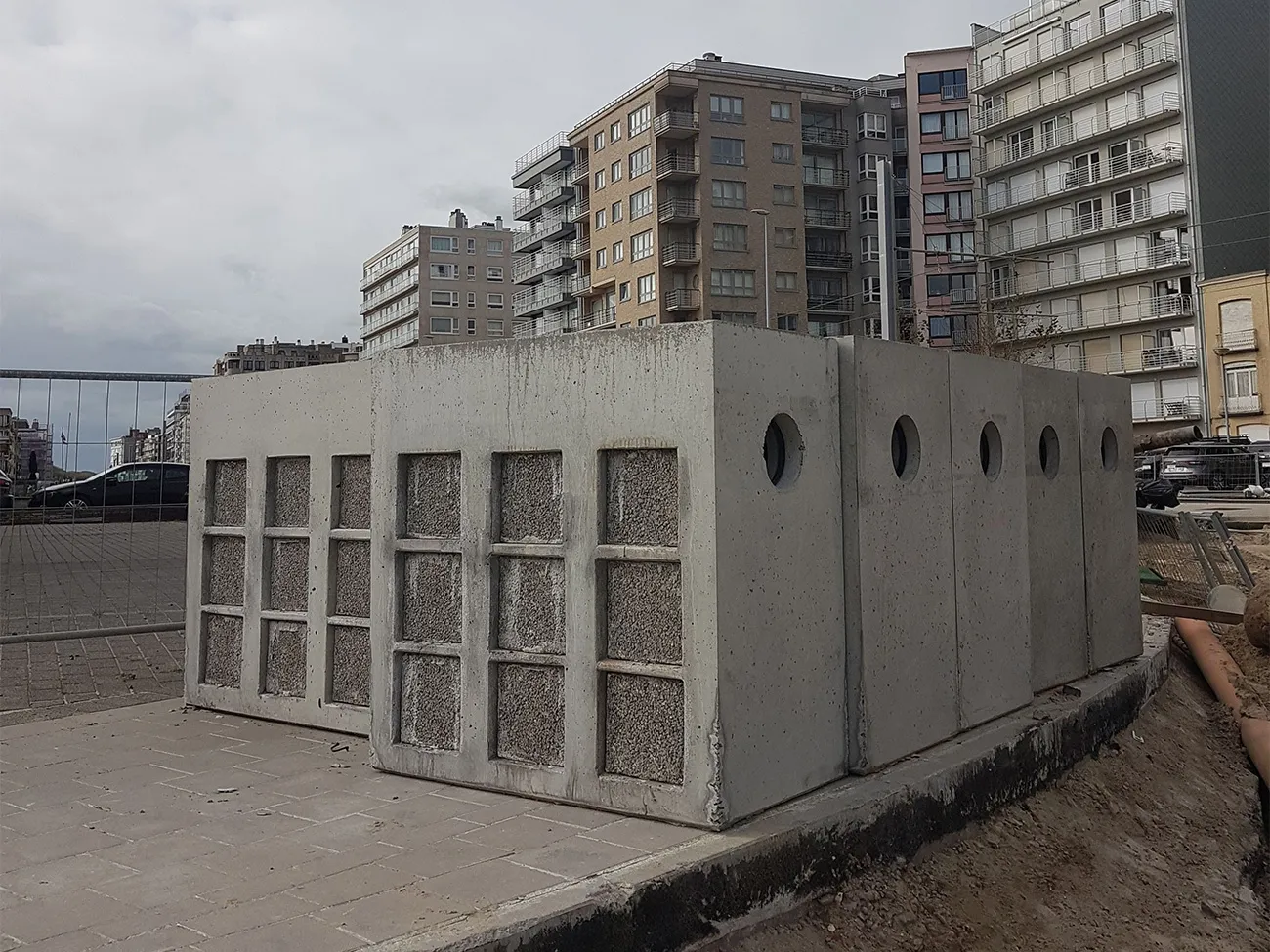
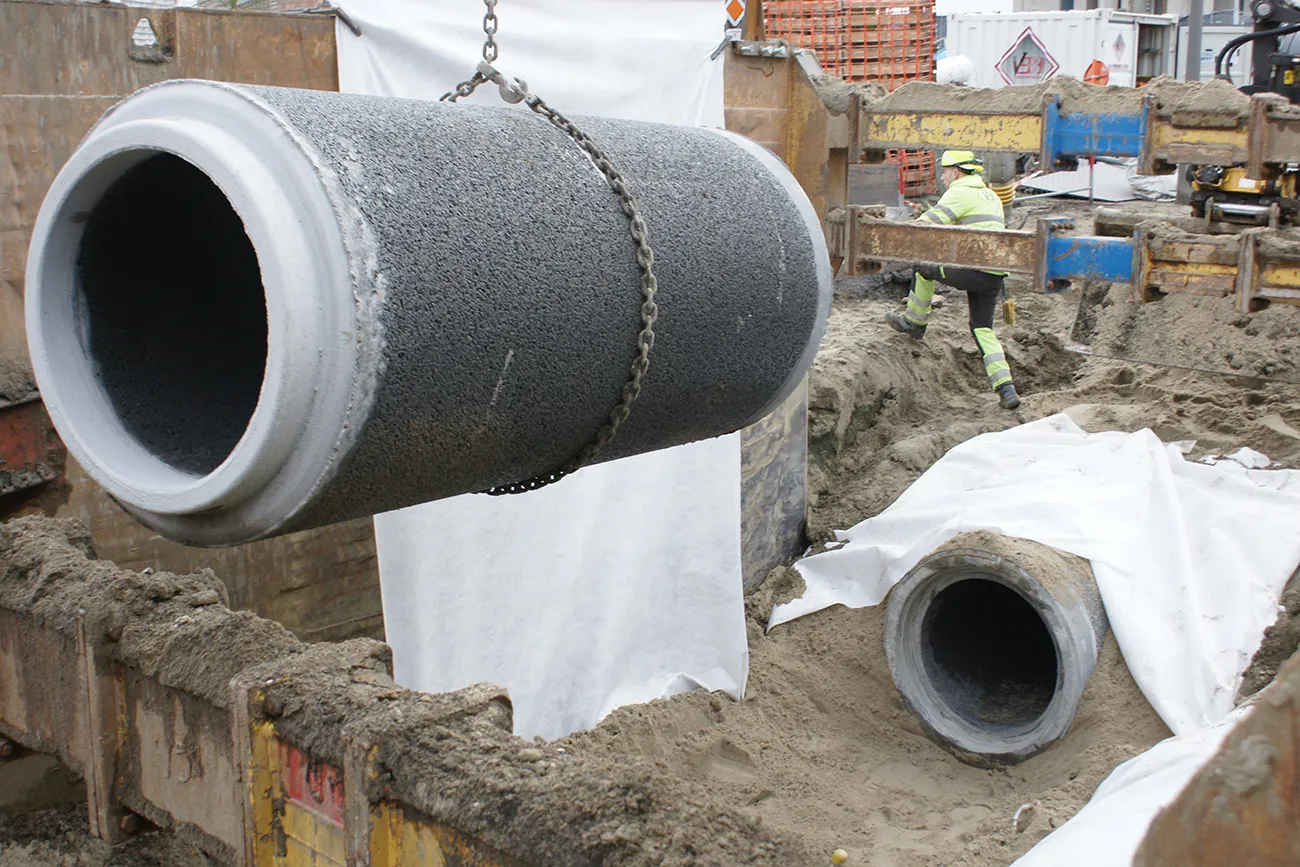
Precast concrete is proving to be an exceptionally suitable material for water infiltration and storage. More and more clients and public authorities are recognising this. Evert Lemmens: “We are seeing a growing shift away from drainage pipes and fittings that carry water away towards porous materials that allow water to infiltrate. In parallel, demand is also growing for larger diameters. Porous pipes used to have a maximum diameter of 600 mm, but today pipes of this type are also available in a diameter of 1,000 mm. It is clear that the technology for porous precast concrete products is now well established. This is driving the development of, and demand for, new products. Think of porous gullies, porous channels …”
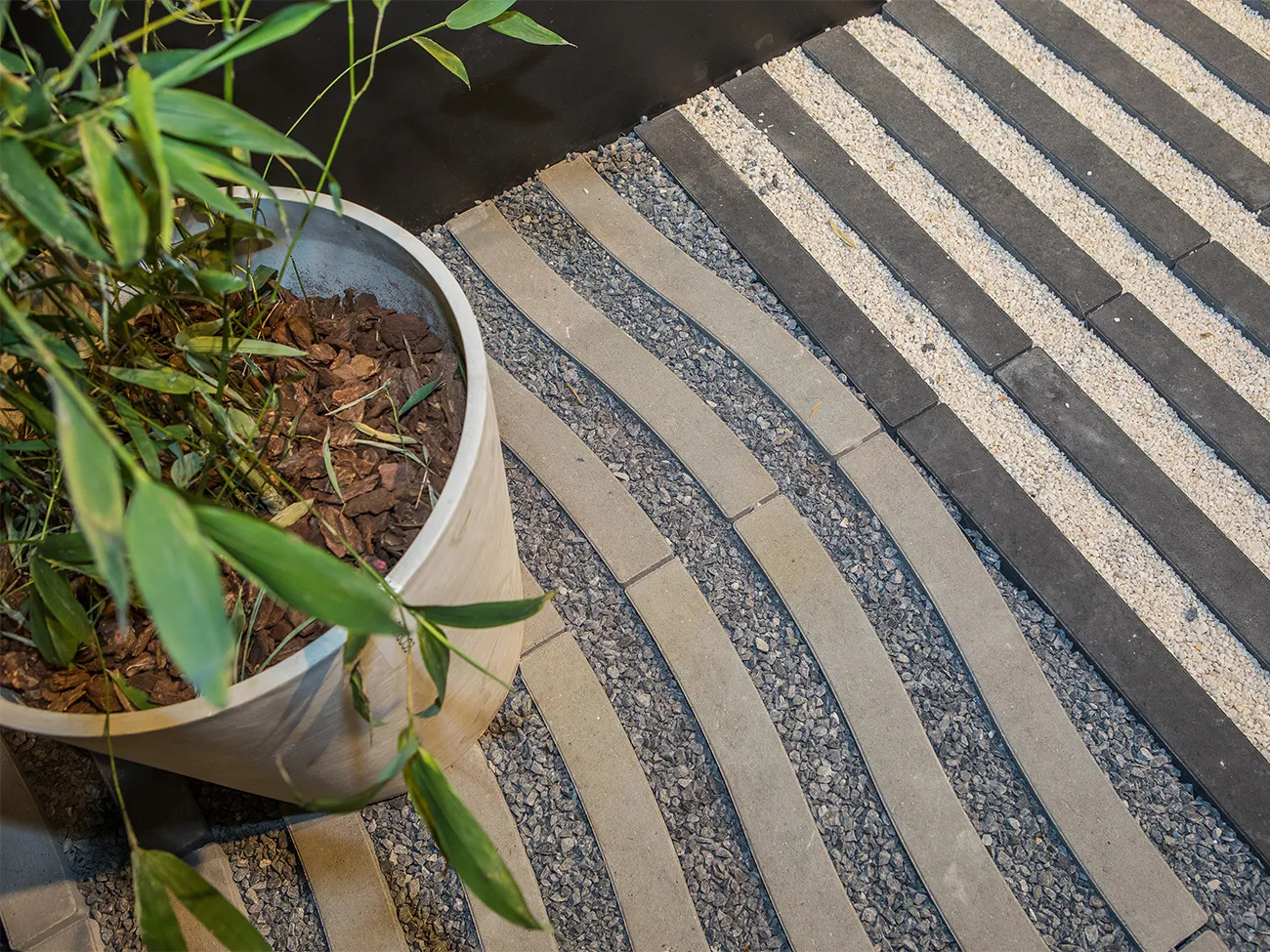
“This is a very familiar story in the paving sector too,” adds Sonja Kuypers. “Developments in permeable paving blocks have been under way for 20 years. Initially, these were limited to porous blocks, but their applications are limited because they cannot carry heavy traffic. In recent years, however, we have seen a clear move towards anything that allows water to pass through. Water has become incredibly important. It used to be seen as a nuisance that we had to get rid of, whereas now we understand that storage is crucial to help us cope with prolonged dry spells. Recent flooding has made it clear once again just how acute this problem is.”
A change in mindset
Concrete in general, and precast concrete in particular, is now proving to be an ideal tool for helping to deliver the construction shift, thanks in part to years of effort and development by manufacturers. Evert Lemmens: “We can already see that public authorities and local councils recognise the need when they issue tenders today. For example, we are seeing many towns and municipalities working on major climate-resilient projects.” Sonja Kuypers adds: “We are seeing this trend somewhat sooner in the paving sector because we also serve private customers. Members of the public are often well informed, open to the construction shift and willing to contribute ideas. Some municipalities have already introduced requirements, such as making the driveway to a home permeable. But a genuine change in mindset does not happen overnight.”
The technology for porous concrete, both above and below ground, is available, and FEBE, together with its member associations, is reaching out to clients, public authorities and users to think and develop together. Both FEBELCO and FEBESTRAL are taking up the challenge of creating consistency among manufacturers around product specifications, so that products can be developed uniformly. At the same time, bespoke solutions remain an important part of the manufacturers’ work. “We look into every specific customer request,” says Evert Lemmens. “If it is technically feasible to produce and economically viable, the possibilities with precast concrete are limitless.” Sonja Kuypers agrees: “As well as a very broad standard range, we are always open to interesting co-creations with our customers. Standard products often emerge from an initial customer request.”
Standards must not become a bottleneck
The precast concrete sector clearly has everything it needs to help create the climate-adaptive public realm of the future. Sonja Kuypers: “Where surfaces used to be paved without question, people are now considering the climate challenge, aesthetics, mobility … As manufacturers, we need to lead the way, but this is not down to us alone. More dialogue between the various bodies could speed up the process.” Standards and regulations are very important, but there needs to be more room for progress. Evert Lemmens also raises this point: “Standards can become a bottleneck for new products or technologies, but they should not. Strict standards are important, but they can also hamper innovation. Many manufacturers are currently looking at adding crushed demolition waste or recycled aggregates to their products, but current standards barely allow this. Some rules need to change quickly so that we, as manufacturers of precast concrete products, can make the greatest possible contribution.”
Een zakelijke vraag aan Ebema_LivingCity? Get in touch
Companies in this story
Keep following this
Get an email when a new story is published. No account needed.
- ThemeSpace for water and green infrastructure
- SubjectYearbook
- CompanyEbema_LivingCity