Koers: more than 100 years on the move!
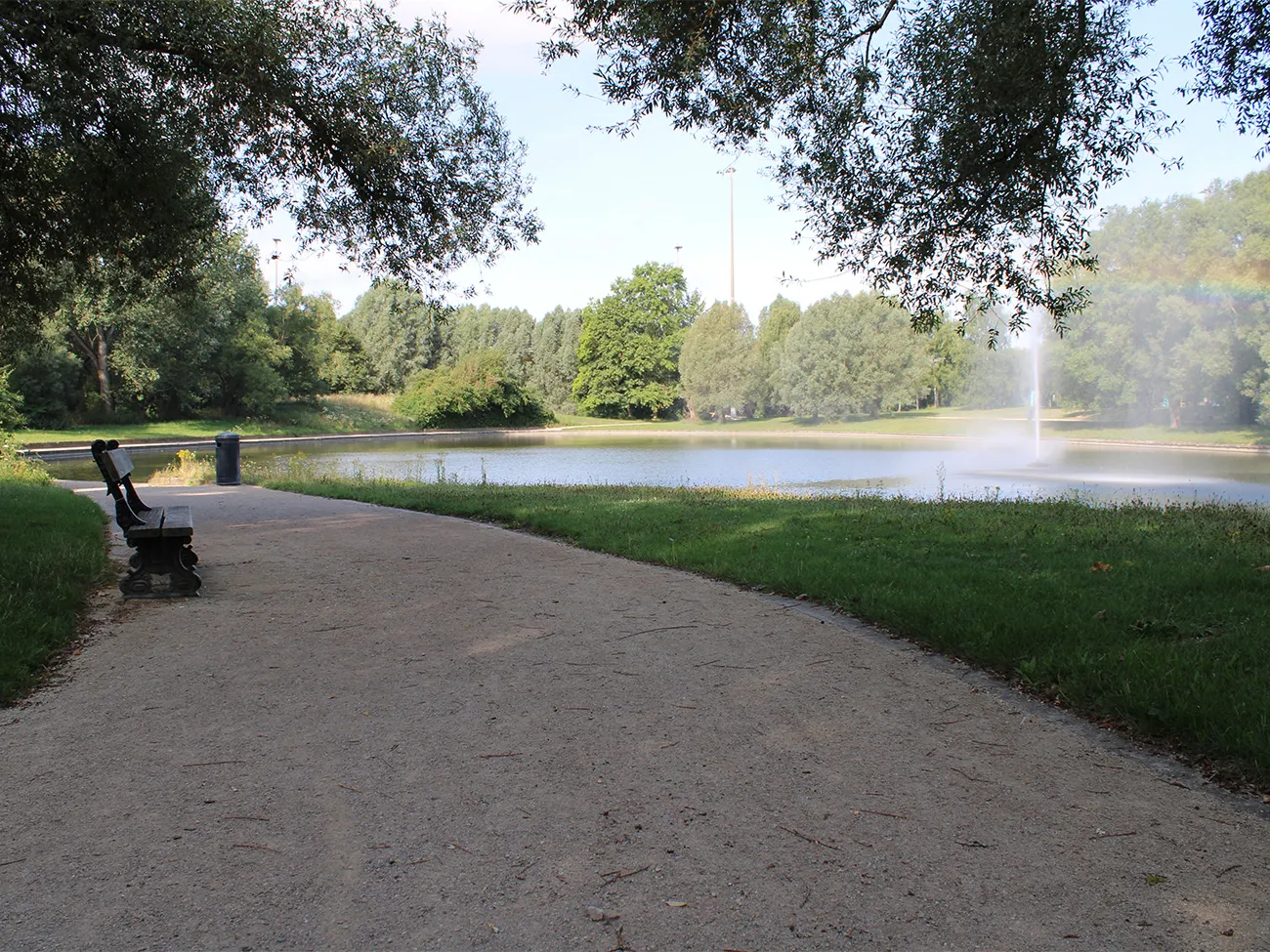
The name Koers immediately brings Koersmix to mind, Koers’s semi-bound surfacing, which is becoming increasingly well known in Belgium. Koers is originally a Dutch company, but expanded into its southern neighbour in 2014, around 8 years ago. Since then, thousands of square metres of Koersmix semi-bound surfacing have been laid in Belgium.
Koers paths are often found in recreational settings such as parks and nature reserves, or in woodland, but they are also increasingly being used as an alternative to concrete and asphalt in villages and towns. Unlike these other surfacing materials, Koers’s semi-bound surfaces do not retain heat and allow rainwater to drain away effectively. But how did Koersmix come about, how is it produced, and what is the story behind Koers? In this article, we look back at the success of this family business, which has now been around for more than 100 years.
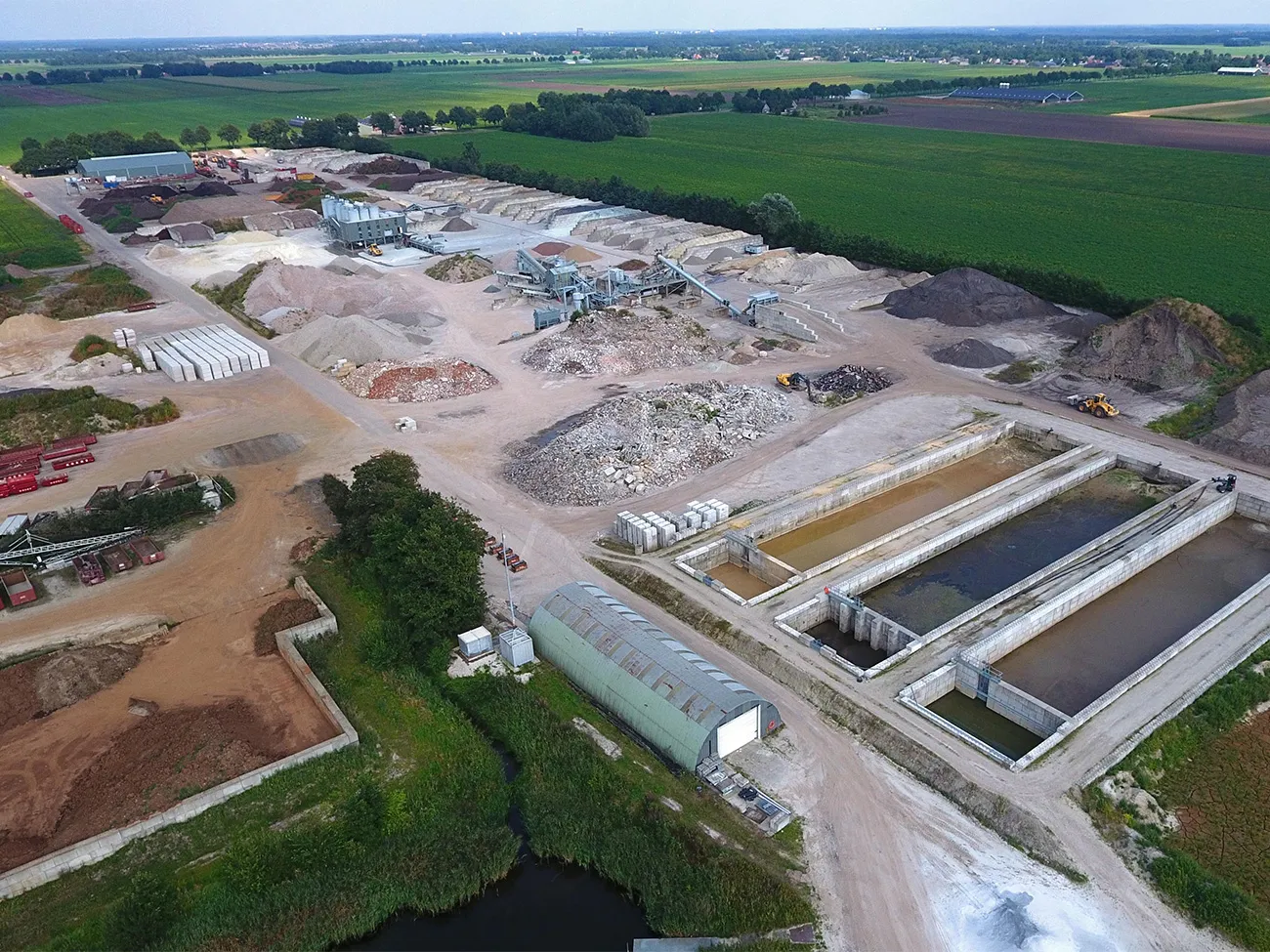
The Koers family business began more than a century ago, in 1918, as a scheduled shipping service. When the second generation took over, the vessel that had been in use until then was sold and replaced with lorries. From that point on, Koers evolved from a shipping service into a haulage company. When the third generation took the helm fifty years ago, a trading business was established alongside the transport operation. It began with a sand quarry in the north of the Netherlands, which grew into a 60-hectare production site that still plays a major role in the business today. The company decided to take on more activities itself rather than working for others. Koers began developing, producing and selling its own products.
Fourth generation
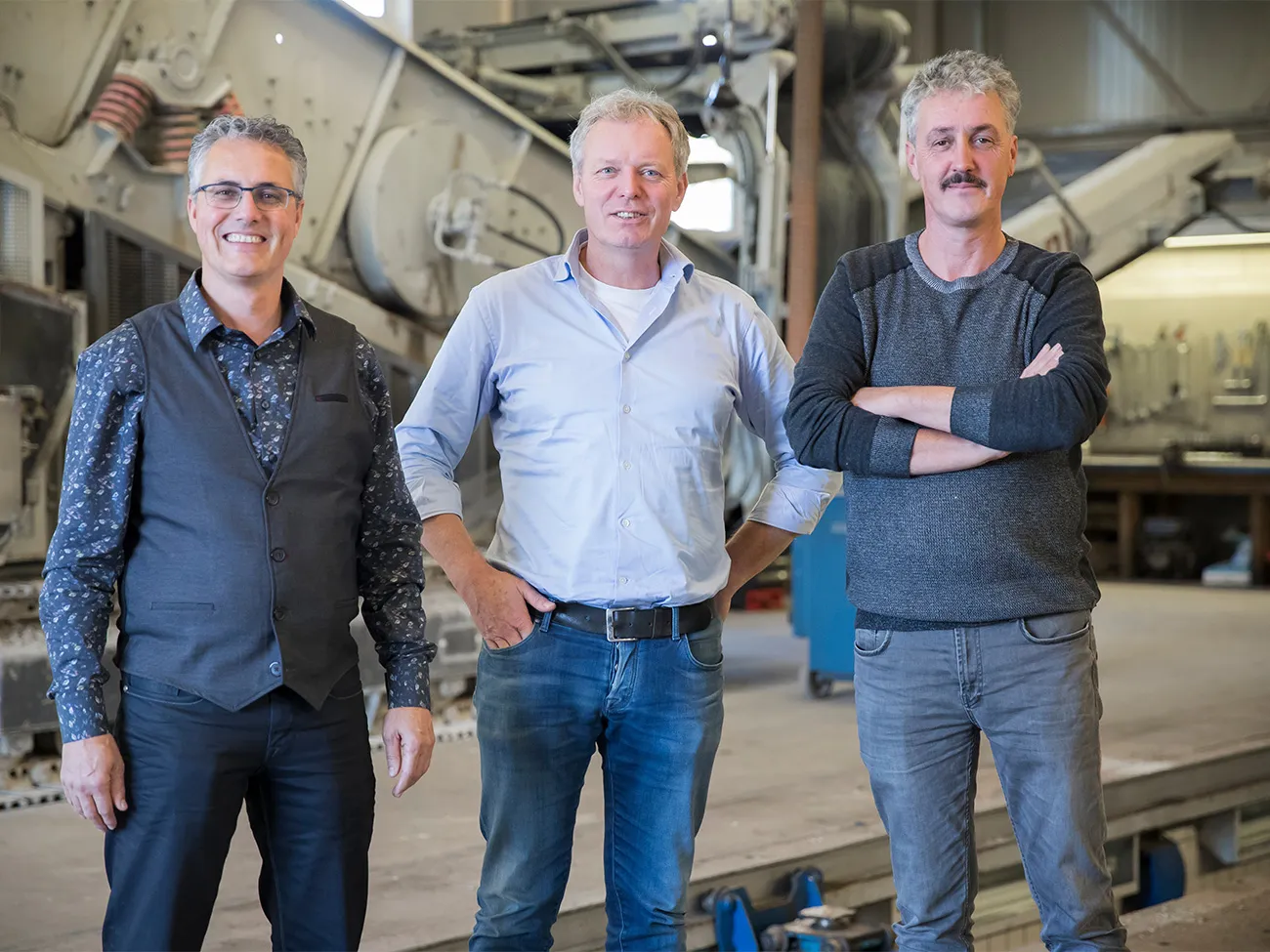
The business is now run by the fourth generation, who began focusing in particular on sustainability in the further development of both the company and its products. The company collects residual materials to reduce its environmental impact and turns them into new products that contribute to a sustainable, climate-resilient society. More than 20 years ago, the company developed an environmentally friendly semi-bound surfacing, then called KFP-mix (Koers Fiets Paden Mix). The product came about because residual materials were left over at the production site and would otherwise have been thrown away. At Koers, these secondary construction materials were given a second life and treated as new raw materials, eventually becoming new products. For environmental reasons, fewer and fewer shells were being dredged from the sea, leading to increased demand for KFP-mix. Road managers and nature organisations needed an environmentally friendly alternative to shell paths and increasingly opted for Koers products. Over the years, Koers’s KFP-mix was further developed, and new types of semi-bound surfacing were brought to market, each with its own properties, under the names “KoMex (BIO)”, “DurEko-mix (BIO)” and “KoTRec BIO”.
Koers’s semi-bound surfaces are developed in-house by trained specialists, and the company has its own laboratory and computer-controlled mixing plant. The products are manufactured at a CO2-neutral production site in the Netherlands. The company also keeps transport environmentally friendly, with all lorries and machinery running on GTL (Gas To Liquid), a clean fuel with minimal emissions.
Self-healing properties
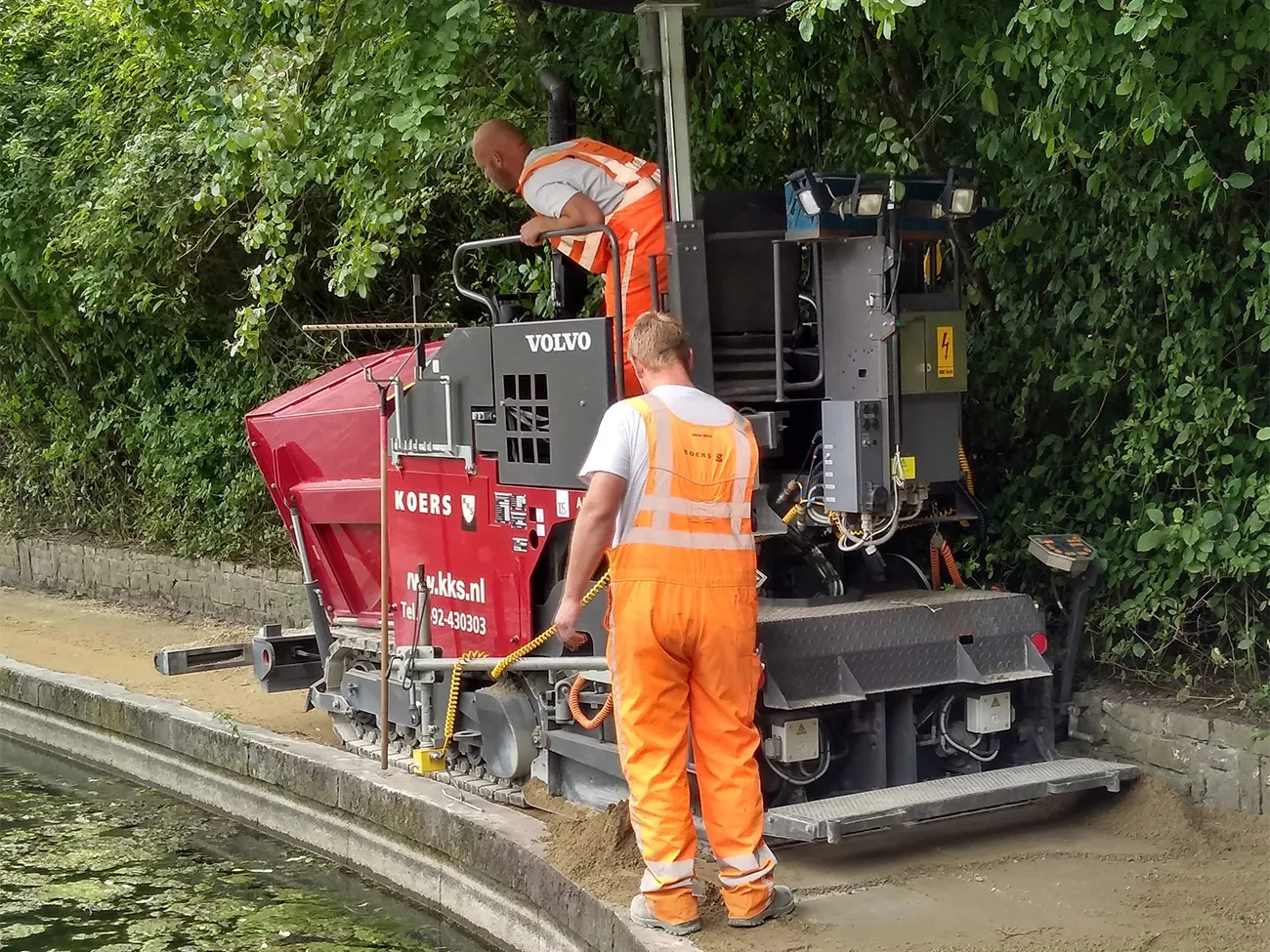
Koers’s semi-bound surfaces stand out for their self-healing properties, high erosion resistance and load-bearing capacity. They are also low-maintenance and wheelchair-friendly, do not crack under the influence of tree roots, for example, and are less prone to weed growth. This means the use of weedkillers can be drastically reduced straight away. Koersmix is an excellent alternative not only to shell paths, but also to dolomite paths. Dolomite consists almost entirely of lime, which is harmful to plants and trees. It also washes away after prolonged rainfall and sticks to shoe soles. A few years ago, the BIO variant, which also absorbs water, was launched. This semi-bound surfacing is bound with a plant-based binder and has a natural appearance. The BIO variant is suitable for many applications, including slow roads, and can also withstand heavier traffic.
Royal Warrant
Koersmix now accounts for a large proportion of the company’s turnover. Koers’s strength lies in its in-depth knowledge of its products and its ability to manufacture them to customers’ specifications and requirements. After Koers had been in business for 100 years, it received the Royal Warrant from Dutch King Willem-Alexander. This special title is awarded to small and medium-sized businesses that have been in existence for at least 100 years and have an impeccable reputation. The fifth generation is currently being trained in the business so that existing working practices can continue and remain within the family.
Question about this story? Ask your question
Keep following this
Get an email when a new story is published. No account needed.
- SubjectYearbook