









Work on the points with a gas pipeline beneath the railway
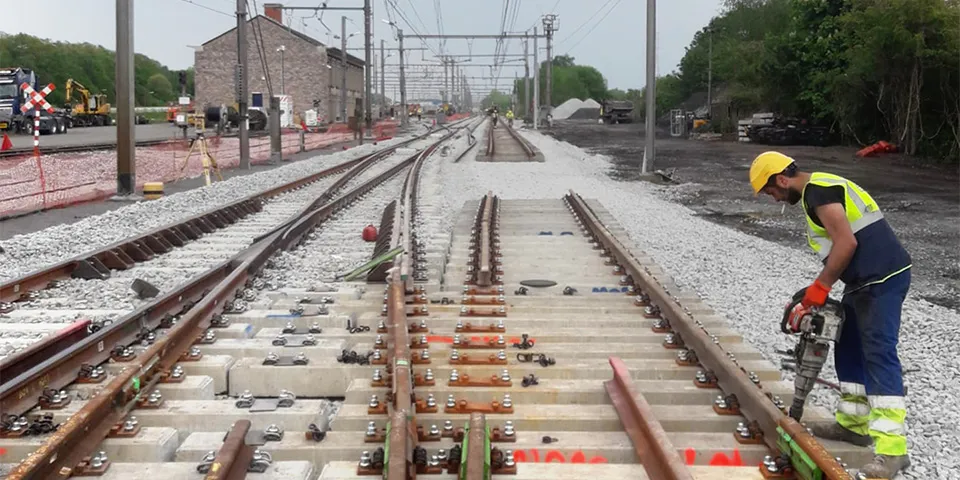
Three weekends: that was the time allocated to replacing the wooden sleepers beneath the points near Obourg station with concrete ones. That meant three weekends during which the railway would be completely closed. The work was completed right on schedule, even though a gas pipeline directly beneath the site caused a few complications.
De Witte, Vandecaveye first carried out work for NMBS in 1960, and the company is still very much involved in the rail sector today. As a railway engineering specialist, it regularly works with Infrabel, this time as a subcontractor to Strukton Rail: “The main aim of this project was to renew the four sets of points at Obourg station, but we actually did much more than that. We also shifted and relaid certain tracks, modified the associated overhead lines, carried out signalling work, fitted the new points with heating and installed drainage in the points area. All of that was part of the contract,” explains Dries Van Wanseele, project manager at De Witte, Vandecaveye.
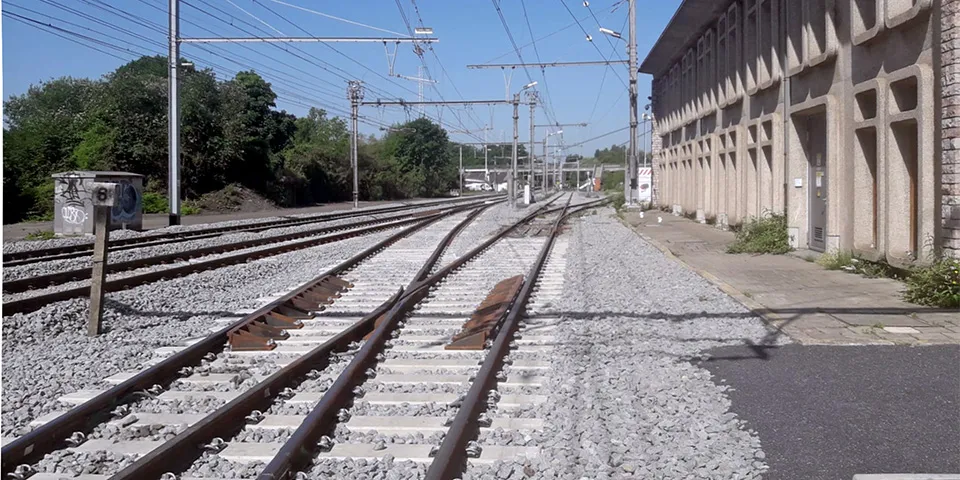
The points at Obourg station were completely renewed in May.
Thorough preparation
Most of the work had to be carried out over three TLO weekends in May, when the tracks were closed from Friday evening until Monday morning. Considerable preparation was nevertheless needed, particularly because a gas pipeline sensitive to vibration ran just a few metres beneath the site: “We knew about it from the outset, but of course it meant taking extra precautions during the preparation. In April, we brought in all the materials, dug inspection pits to locate the gas pipeline and installed some of the overhead line masts. In other words, we did all the work that would cause minimal disruption to train services. We then carried out the ‘real’ work in May, and cleared the site and removed all the materials in June.”
Digging and monitoring
Vibrations are unavoidable when working with heavy machinery, so it was crucial to monitor the condition of the pipeline closely. Van Wanseele explains: “To locate the pipe, we used our own vacuum excavator to dig inspection pits very carefully. A specialist company then took measurements on the pipe through those pits over the weekend. This meant we could intervene in good time if the results showed that the situation was unsafe. Fortunately, that did not happen, and we were able to complete the work without any problems.”
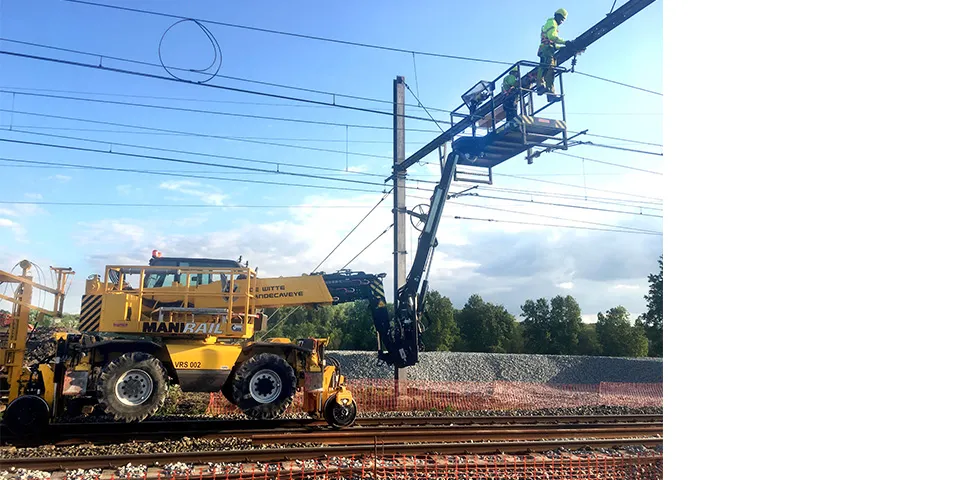
As well as renewing the points, De Witte: Vandecaveye also modified the overhead lines, among other things.
All railway disciplines brought together
The Obourg project is one De Witte: Vandecaveye is proud of: “What makes it special is that it brings together all our strengths. We work across almost every railway engineering discipline, so it’s great to be entrusted with a contract that draws on all those different areas. We carry out this kind of project quite regularly: we have completed several similar schemes in the Tournai-Charleroi-Mons region. We also have a lot of resources in-house, which means we are not heavily reliant on subcontractors. That allows us to be very flexible when planning projects, making things much easier for our clients.”
Question about this story? Ask your question
Keep following this
Get an email when a new story is published. No account needed.
- SubjectGeneral







